Val de Vie Estate

Val de Vie Estate in Paarl, Cape Winelands is an estate winery that pairs estate-grown, cellar-led production with luxury lifestyle amenities. Production emphasizes estate vineyard fruit and cellar maturation, showcased through cellar selections, a reserve blend and seasonal small-lot releases. The property is internationally recognized for residential and leisure awards, with a string of accolades between 2015–2023. Expect mineral-driven palate lines, polished oak influence, and sun-warmed berry and fynbos aromatics that unfold beside polo fields, a Jack Nicklaus golf course and riverside picnic settings.
Where the Berg River Valley Shapes the Glass
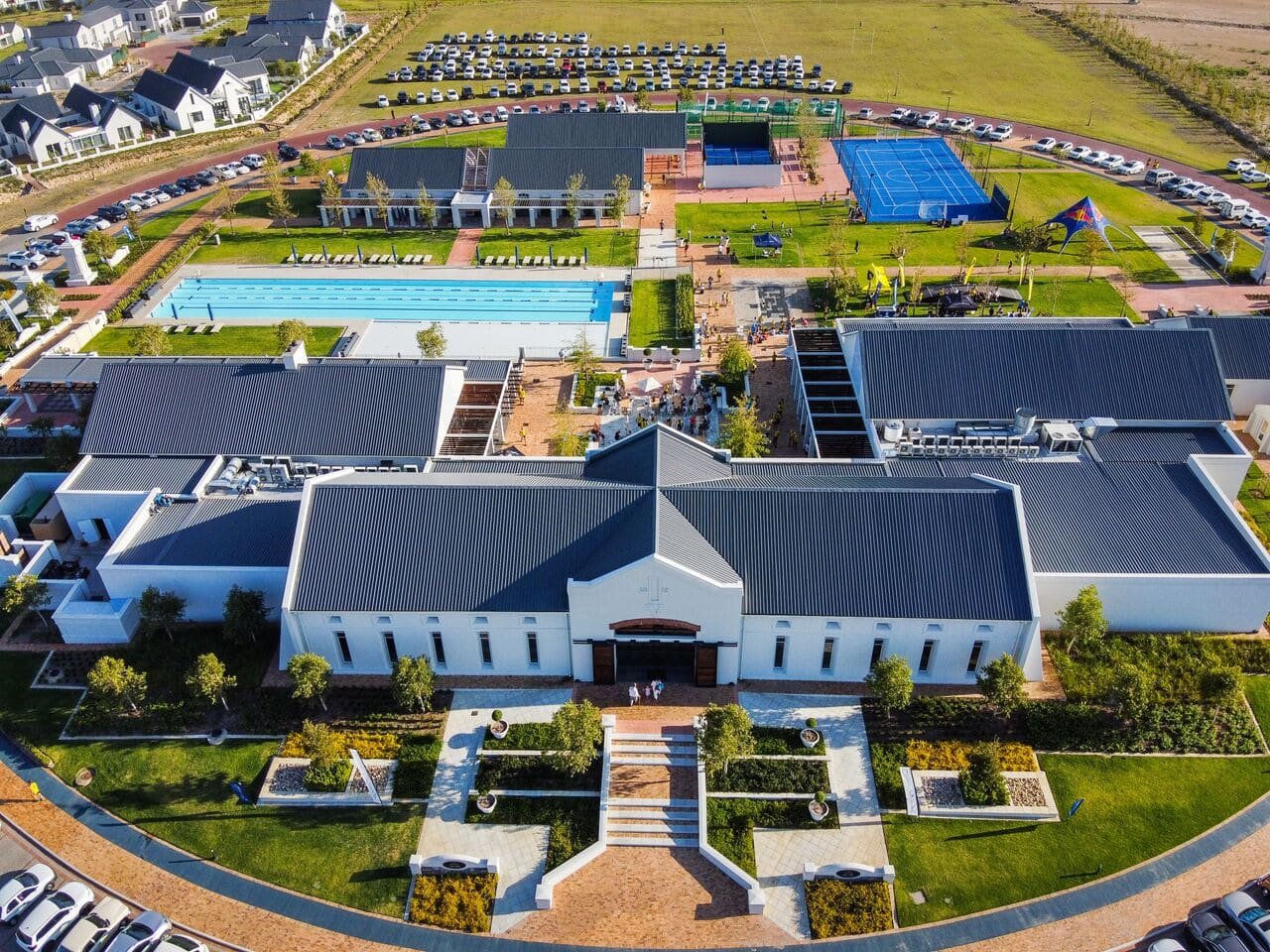
The drive along the R301 into the Paarl valley sets expectations before you arrive anywhere. The Drakenstein mountains catch morning light at angles that shift the colour of the fynbos, and the agricultural rhythm of the Cape Winelands — vine rows, orchards, horse paddocks — establishes a pace that is deliberate rather than leisurely. Val de Vie Estate sits within this geography, and the physical setting is not incidental to the experience: the Berg River runs through the property, the Simonsberg and Drakenstein ranges form the backdrop, and the estate's layout reflects the kind of land stewardship that takes generations to embed into a working property.
Paarl is, in many respects, the working interior of the Cape Winelands. While Franschhoek has leaned into destination dining and Stellenbosch has consolidated its academic wine reputation, Paarl has developed along a wider track , estates here tend to integrate residential, agricultural, and hospitality uses in combinations that smaller wine villages cannot accommodate. Val de Vie operates within that broader Paarl pattern, functioning less as a single-purpose cellar and more as a multi-layered estate where the wine, the land, and the visitor experience are meant to read as continuous rather than compartmentalised.
A Winelands Estate in Its Cultural Context
The Cape Winelands have a complicated and specific history that any serious visitor should hold in mind. The valley estates were shaped by the Huguenot settlers of the late seventeenth century, by the land grants of the VOC era, and by an agricultural economy built on deeply unjust labour conditions that extended well into the twentieth century. Contemporary Cape wine culture has been working through that inheritance , some estates more consciously than others , and the physical grandeur of the valley sits alongside those unresolved layers. Val de Vie, as an estate positioned around a premium residential and hospitality offering, occupies the high-end stratum of what has become a global luxury wine destination, which carries its own set of questions about who the landscape is now for and who it has always excluded.
That context is part of what makes the Winelands worth reading carefully rather than passively. The most engaged visitors come to Paarl understanding that the Cape's wine culture is both genuinely distinctive in its grape varieties, its soils, and its century-old vine material, and also actively evolving in its sense of cultural ownership and economic participation. The estates of the Paarl valley , from the co-operative scale of KWV Wine Emporium to the artisanal family model of Backsberg , represent different responses to that history.
Pearl 3 Star Prestige: What the Award Signals
Val de Vie Estate holds a Pearl 3 Star Prestige designation for 2025, which positions it in the upper tier of South African estate recognition under the Winelands prestige framework. The Pearl rating system evaluates estates across multiple criteria , not purely winemaking quality, but the integrated experience of a property, including hospitality infrastructure, land presentation, and the overall coherence of the offering. A 3 Star Prestige result at this level places Val de Vie in company with the more comprehensively developed Cape estates, a peer set that includes properties like Babylonstoren in Franschhoek, which has built its reputation around an equally integrated land-and-hospitality model.
For visitors calibrating expectations, the award is a meaningful signal: this is not a cellar-door-and-tasting-room operation. The scale and investment implied by a Prestige classification put Val de Vie closer to estate destinations that require a half-day or full-day commitment , properties where the grounds, the activities, and the food and wine offering are each worth time on their own terms. That positions it differently from a focused winery visit to, say, Glen Carlou, where the pull is primarily the Chardonnay and Pinot programme, or the cheese-and-wine pairing format that draws visitors to Fairview Wine and Cheese.
The Estate Format and the Paarl Peer Set
South Africa's premium wine estates have moved in two broad directions over the past fifteen years. One direction is the hyper-focused producer: small volumes, allocation-driven sales, minimal hospitality infrastructure, the wine as the entire argument. The other is the integrated estate: land, accommodation, dining, sport, and events woven into a property that competes less with other wineries and more with luxury lodges and resort hotels. Val de Vie sits firmly in the second category, and within that category it represents the Paarl valley's most developed iteration of the format.
That format has international parallels. Abadía Retuerta in Sardón de Duero operates on a comparable logic in Castile , a working wine estate with hotel infrastructure serious enough to stand alone as a destination. The difference in the Cape context is the sheer natural scale: the mountain backdrop, the river, the fynbos vegetation, and the light quality that has made this corner of the Western Cape a reference point for wine tourism globally. Val de Vie's setting amplifies the estate-resort proposition in ways that comparable European properties cannot replicate through infrastructure alone.
Among Paarl's estate options, Laborie Estate offers a useful point of comparison at a different scale , historically rooted, more contained, focused on traditional Cape hospitality. Val de Vie operates at the contemporary premium end, where the offering is broader and the infrastructure more recent. Neither is the complete picture of Paarl wine culture; together they trace the range.
Planning a Visit
Val de Vie Estate is located on the R301 Jan Van Riebeeck Drive in Paarl, approximately an hour's drive from Cape Town International Airport under normal traffic conditions. The R301 connects Paarl to the broader Winelands circuit, making it direct to combine a visit here with tastings at neighbouring estates. Given the estate's scale and the range of activities on offer, arriving mid-morning allows enough time to move between the wine offering, the grounds, and any dining before the afternoon light fades over the Drakenstein range. Booking ahead is advisable, particularly during the Cape summer season (November through February) and over the wine harvest period in February and March, when demand across Paarl's estate properties peaks. For accommodation context and alternatives in the area, the full Paarl hotels guide covers the current options across price tiers. Visitors building a wider Winelands itinerary can cross-reference the full Paarl wineries guide, the full Paarl restaurants guide, the full Paarl bars guide, and the full Paarl experiences guide for a broader view of what the valley offers beyond the cellar door. For comparison with how other premium Cape wine regions develop their estate models, Constantia Glen in Cape Town and Creation Wines in Hermanus illustrate the range of approaches in operation across the Western Cape.
Frequently Asked Questions
- What wine is Val de Vie Estate famous for?
- Val de Vie Estate's specific wine programme details, including winemaker and varietals, are not publicly confirmed in current records. The estate holds a Pearl 3 Star Prestige designation for 2025, which reflects a high-quality integrated offering evaluated across multiple criteria. Visitors seeking specific wine style comparisons should check the estate directly or consult the full Paarl wineries guide for regional context. The Paarl valley as a whole is known for Rhône-style reds, Chenin Blanc, and Cabernet Sauvignon planted in its granite and shale soils.
- Why do people go to Val de Vie Estate?
- The estate draws visitors because of its integrated land-and-hospitality offer in a setting defined by the Berg River and the Drakenstein mountain backdrop. Its Pearl 3 Star Prestige award for 2025 signals a property that operates above the standard cellar-door tier. Located in Paarl, it sits within one of the Cape Winelands' most agriculturally rich valleys, making it a logical anchor for a full-day Winelands visit rather than a brief stop.
- How hard is it to get in to Val de Vie Estate?
- Specific booking requirements, contact details, and availability information for Val de Vie Estate are not confirmed in current public records. Given its Pearl 3 Star Prestige status and position within Paarl's premium estate tier, advance booking is advisable, particularly during peak Cape summer season and harvest. Visitors should contact the estate directly through official channels to confirm access and reservation requirements before travelling.
- Is Val de Vie Estate suitable for a full-day visit rather than a brief tasting stop?
- The estate's Pearl 3 Star Prestige classification for 2025 reflects an integrated property evaluated across land, hospitality, and experience criteria , the kind of rating that corresponds to full-day destination estates rather than focused cellar-door operations. Its position along the R301 in Paarl, with the Berg River running through the grounds and mountain views on multiple aspects, supports a longer visit. Visitors treating it as a half-day minimum will get considerably more from the setting than those passing through on a multi-stop tasting circuit.
A Tight Comparison
A quick context table based on similar venues in our dataset.
| Venue | Notes | Price |
|---|---|---|
| Val de Vie Estate | This venue | |
| Fairview Wine & Cheese | ||
| Backsberg | ||
| Glen Carlou | ||
| KWV Wine Emporium | ||
| Laborie Estate |
Access the Cellar?
Our members enjoy exclusive access to private tastings and priority allocations from the world's most sought-after producers.
Access the Concierge