
Vaeni Naoussa sits at Episkopi on the slopes of Mount Vermio, where Macedonia's Xinomavro grape has been cultivated for centuries. A recipient of the Pearl 2 Star Prestige award in 2025, the cooperative winery operates within one of Greece's most structurally serious red wine appellations. For visitors tracing northern Greece's wine geography, it anchors the Naoussa PDO conversation.
Where the Mountain Meets the Vine
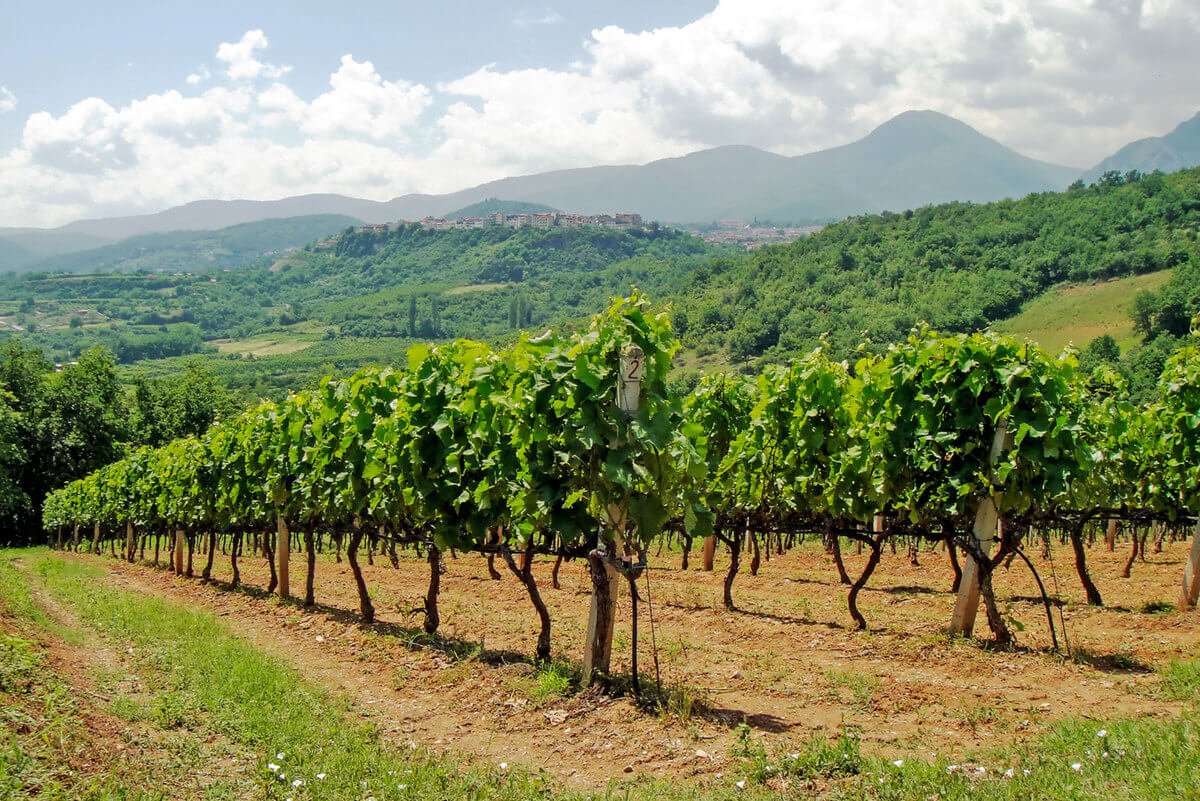
The road out of Naoussa toward Episkopi climbs steadily through orchards and scattered agricultural plots before the vineyards begin in earnest. On the slopes of Mount Vermio, where altitude moderates what would otherwise be a warm continental climate, the geometry of wine growing becomes visible: rows of Xinomavro trained low against the hillside, the Aliakmon valley opening to the south, the jagged ridgeline of Vermio marking the northern horizon. This is the physical setting in which Vaeni Naoussa operates, and it matters as much as anything inside the winery building itself.
The Naoussa PDO is one of the few appellations in Greece built on a single grape variety with a long and documented regional history. Xinomavro, whose name translates loosely as "sour black," produces wines of high acidity and firm tannin that age in ways few other Greek varieties can match. The leading Naoussa reds draw comparisons to Barolo and Nebbiolo not as flattery but as structural shorthand: both traditions prioritize grip and longevity over immediate fruit accessibility. Vaeni Naoussa, as the area's cooperative producer, works with vineyards spread across the appellation's recognised growing zones, giving it a broader base of raw material than most single-estate operations. For a fuller picture of what Naoussa's producers offer collectively, the complete Naoussa wineries guide maps the field.
The Cooperative Model in a Prestige Appellation
Cooperative wineries occupy an unusual position in premium wine geography. In regions where reputation is built around single estates and named winemakers, a cooperative aggregates both the strengths and the variations of its member growers. In Naoussa, that means Vaeni draws on vineyard plots at different elevations and soil compositions across the Vermio foothills, a resource that a small private domaine rarely has access to. The tradeoff is consistency: cooperative production at scale requires discipline in sorting and blending to maintain quality across a large volume of incoming fruit.
The 2025 Pearl 2 Star Prestige award signals that Vaeni Naoussa is performing at a level that places it in the upper tier of regional recognition. In a relatively small appellation where the named private estates, including Kir-Yianni Estate and Boutari Winery, have long carried the PDO's international profile, a cooperative achieving prestige-level recognition is a meaningful data point about the quality floor the appellation has reached. Diamantakos Winery represents another private-estate counterpoint within the same geography.
The cooperative model also has practical implications for visitors. Rather than the intimate tasting-room experience of a family domaine, a cooperative visit tends toward a more structured, educational format, often covering a wider range of expressions from the same appellation in a single sitting. For a traveller making one stop in Naoussa's wine country, that breadth can be an asset.
Xinomavro and the Logic of Place
Understanding Vaeni Naoussa requires understanding what Xinomavro does, and why this particular stretch of northern Macedonia produces it differently from anywhere else in Greece. The variety is grown in several other parts of the country, including Amyntaio to the northwest and Goumenissa to the east, where Aidarinis Winery works with a Xinomavro-based blend. But Naoussa's combination of altitude, volcanic soils, and the specific microclimate created by Vermio produces a version of the grape with particular intensity and structure.
At elevations ranging from roughly 150 to 350 metres above sea level across the appellation, the growing season is long enough to develop phenolic complexity without the heat accumulation that strips acidity. The result is a grape that arrives at harvest with the tension between ripeness and freshness that serious red wine geography requires. Age that wine in oak for the minimum periods required by PDO regulations, and the tannins begin to resolve in ways that reward patience from the buyer.
This is the tradition Vaeni Naoussa is working within, not as a small artisan reinterpreting it, but as a producer with the volume and institutional memory of a cooperative that has been central to the appellation's commercial history. For context on how the broader Greek wine scene compares to other European production regions, the cooperative's position is analogous to established houses in appellations like Nemea to the south, where Acra Winery operates with a different varietal focus around Agiorgitiko.
The Site at Episkopi
Vaeni Naoussa's address places it at Episkopi, a village on the southeastern edge of the Naoussa municipality where the vineyard land transitions into the broader agricultural zone of the Imathia plain. The setting is working countryside rather than curated wine tourism infrastructure: Mount Vermio rises behind the facility, and the plateau below opens toward Veria and the wider Macedonian lowlands. The view from the refined vineyard plots on a clear day takes in a considerable sweep of central Macedonia, the kind of panorama that puts the appellation's geography in immediate physical perspective.
Visitors reaching the winery from Naoussa town travel along the Veria-Skidras provincial road, a route that passes through some of the most densely planted vine country in the PDO. The drive itself is a useful orientation to what the appellation looks like at ground level, which maps and wine lists rarely convey adequately. For those building a broader Naoussa visit around wine, the Naoussa experiences guide and the Naoussa restaurants guide provide the remaining pieces of the itinerary, while the Naoussa hotels guide covers where to stay. The Naoussa bars guide is worth consulting for evening options in the town centre.
Naoussa in the Northern Greece Wine Picture
Northern Greece's wine geography is more concentrated and historically coherent than its low international profile sometimes suggests. The Macedonian appellations, of which Naoussa is the most structured for red wine, exist within a wider regional tradition that also includes the lighter reds of Amyntaio and the blended wines of Goumenissa. Compared to the larger commercial houses operating nationally, such as Achaia Clauss in Patras, Naoussa producers work within a tighter geographic and varietal brief that gives the appellation its definition.
The cooperative structure of Vaeni Naoussa means its production also functions as a measure of the appellation's aggregate quality in any given vintage. When member growers across the PDO have a difficult year, the cooperative's output reflects it. When conditions align, as the 2025 Pearl 2 Star Prestige recognition implies they have done recently, the wines offer a case for why Naoussa's Xinomavro deserves attention beyond Greece's domestic market. For comparison with cooperative and estate models operating in different European contexts, Abadía Retuerta in Sardón de Duero represents the estate-integrated approach in Ribera del Duero, while producers like Abraam's Vineyards in Komninades show how smaller-scale operations work closer to Naoussa in geographic terms. The single-malt parallel of institutional heritage versus artisan production finds an analogue in the Scotch world through producers like Aberlour, where cooperative processing and individual expression coexist. Aiolos Winery in Palaio Faliro offers yet another Greek production model for contrast.
Planning a Visit
Vaeni Naoussa is located at Episkopi Naoussa on the Epar.Od. Verias-Skidras road, within the Municipality of Naoussa. As a cooperative facility rather than a boutique domaine, it is advisable to confirm visit arrangements and tasting availability directly before arriving; cooperative wineries in Greek appellations typically receive visitors by appointment rather than on a drop-in basis, though protocols vary. The harvest period in Naoussa, generally mid-September through October depending on the vintage, is the most active time in the vineyards and the winery, and visiting during this window gives a more immediate sense of how the operation functions at scale. Spring and early summer, when the vines are in growth and the mountain backdrop retains snow at elevation, offers a different but equally instructive view of the site's geography.
Frequently Asked Questions
What is the wine to focus on at Vaeni Naoussa?
The appellation's entire production case rests on Xinomavro, and Vaeni Naoussa, as the PDO's cooperative, is the single producer with the widest spread of Xinomavro source vineyards across the Vermio foothills. Any tasting visit should prioritise the reserve or aged expressions if available, since Naoussa Xinomavro at its most structured requires time in bottle to show the balance between the variety's characteristic acidity, tannin, and fruit. The 2025 Pearl 2 Star Prestige award indicates the winery is currently producing at a level where those reserve tiers are worth seeking out.
What distinguishes Vaeni Naoussa from other producers in the appellation?
The cooperative model is the defining structural difference. While private estates like Kir-Yianni and Boutari have built their reputations around single-estate or blended expressions from defined parcels, Vaeni Naoussa aggregates fruit from member growers across the appellation, giving it both greater volume and a broader cross-section of Naoussa's vineyard geography. The 2025 Pearl 2 Star Prestige recognition places it in the quality tier alongside those named estate producers rather than below them.
Does Vaeni Naoussa take walk-ins?
Cooperative wineries in Greek PDO appellations typically operate on an appointment basis rather than walk-in access, and Vaeni Naoussa's institutional scale makes it more likely to follow that model. No phone number or website is currently listed in public directories for direct booking confirmation, so the practical approach is to contact the winery through the Municipality of Naoussa or via local tourism contacts before visiting. Arriving without prior arrangement at a facility of this type risks finding the production team occupied with operational work rather than hosting.
What kind of visit is Vaeni Naoussa well suited for?
It fits a wine-focused Naoussa itinerary aimed at understanding the PDO's full range rather than a single estate's interpretation. The cooperative's breadth of source vineyards makes it useful for appellation-level education: a tasting here covers Xinomavro from multiple growing zones in a single session. The 2025 Pearl 2 Star Prestige award gives confidence that the quality level merits the detour for any traveller already in northern Macedonia's wine country.
How does Vaeni Naoussa's cooperative status affect the quality of its wines?
Cooperative production in a PDO appellation is only as strong as the discipline applied to sourcing and sorting from member growers. Vaeni Naoussa's 2025 Pearl 2 Star Prestige recognition suggests that the cooperative has maintained sufficient quality controls to reach the upper tier of formal assessment, a result that in established European appellations typically reflects investment in cellar technology and tighter grower contracts rather than a single winemaker's intervention. For the variety's natural characteristics to read clearly in the finished wines, Xinomavro requires careful temperature management during fermentation and considered oak decisions, and a prestige-level award implies those fundamentals are in place.
Comparable Spots
A quick peer snapshot; use it as orientation, not a full ranking.
| Venue | Classification | Awards | First Vintage | Notes |
|---|---|---|---|---|
| Vaeni Naoussa | 1 awards | This venue | ||
| Kir-Yianni Estate | World's 50 Best | |||
| Boutari Winery | 1 awards | |||
| Diamantakos Winery | 1 awards |
Access the Cellar?
Our members enjoy exclusive access to private tastings and priority allocations from the world's most sought-after producers.
Access the Concierge