
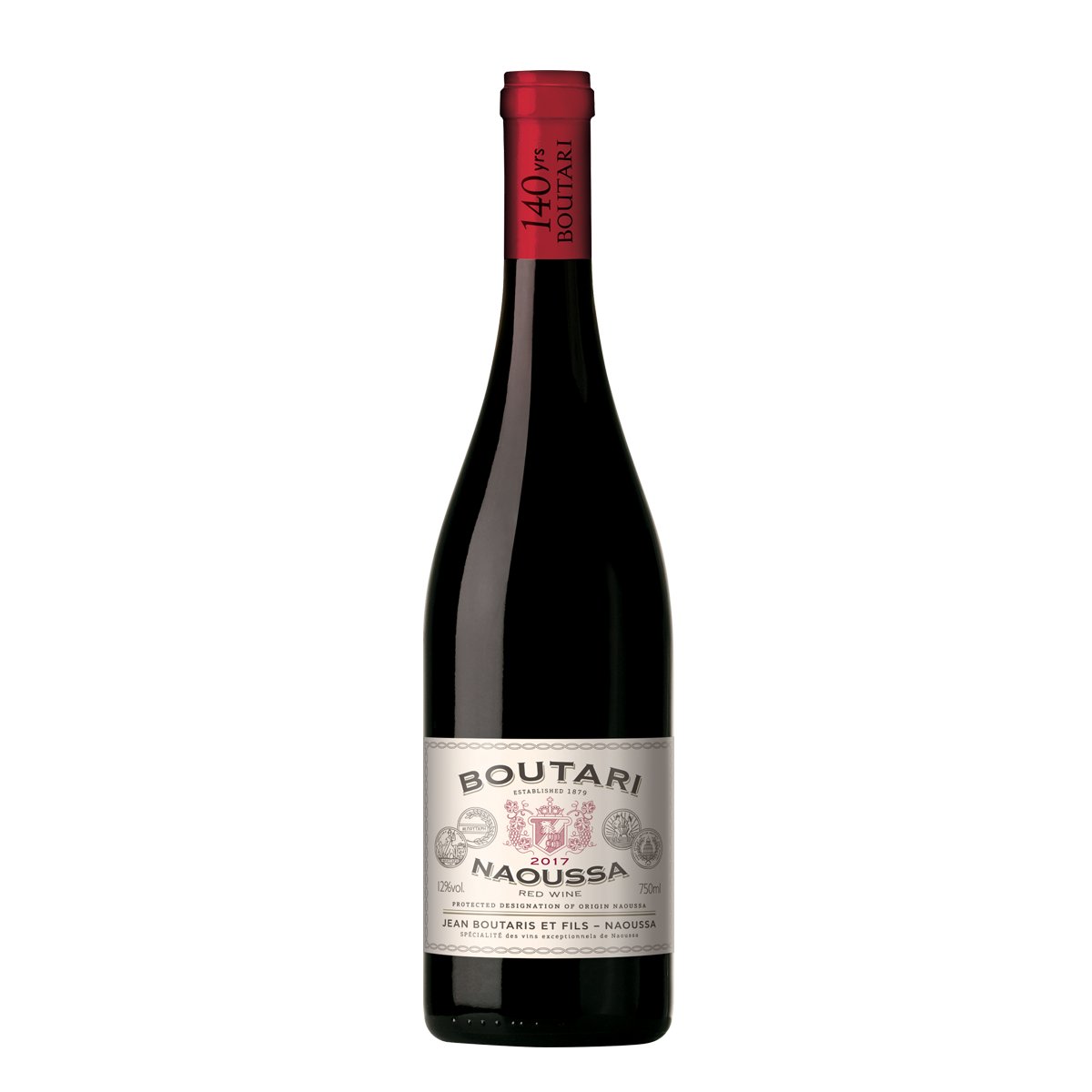
Boutari Winery sits in the Stenimachos village above Naoussa, at the heart of one of northern Greece's most consequential wine appellations. Awarded Pearl 2 Star Prestige recognition in 2025, it represents a serious point of entry into Xinomavro — the Naoussa PDO grape that has drawn international comparison to Nebbiolo for its tannin structure and acid-driven ageing potential.
Where the Mountain Meets the Vine: Naoussa's Terroir in Context
The road from Naoussa town into the foothills of Mount Vermio climbs through a progression of vine rows that have been producing structured red wine for centuries. This is the Naoussa PDO zone — one of Greece's oldest and most geographically defined appellations — and the landscape itself does much of the work in explaining why the wines taste the way they do. Elevations between 200 and 450 metres above sea level, sandy clay soils with good drainage, and a continental climate tempered by Aegean air currents from the south combine to produce growing conditions that stress the vine in productive ways. The result is Xinomavro with concentration, acidity, and a tannic spine that rewards patience in bottle.
Boutari Winery, addressed at Epar.Od. Naousas-Kato Vermiou in Stenimachos, occupies this terrain directly. The Stenimachos sub-zone sits toward the upper reaches of the appellation, where altitude amplifies the diurnal temperature swings that preserve aromatic complexity and keep acidity in check. For anyone visiting Naoussa with a serious interest in Greek wine, the winery's position alone tells you something about how it relates to the broader regional map.
Xinomavro and the Logic of Place
Understanding Boutari here requires understanding Xinomavro first. The grape is a study in contrasts: it produces wines with the aromatic profile of dried tomato, olive, and dried herbs, layered against high acidity and firm tannins that can make young examples genuinely austere. That austerity is not a flaw , it is the grape's argument for terroir expression over approachability. The leading Naoussa Xinomavros age into wines of considerable complexity, with tannins integrating over five to fifteen years and secondary characters emerging that few other Greek varieties can match.
The Naoussa PDO, established as one of Greece's first controlled appellation wines in 1971, requires 100 percent Xinomavro. That purity clause matters because it forces producers to find their points of distinction entirely within the grape's expression of their specific soils, altitude, and viticultural choices. There is nowhere to hide behind blending. Our full Naoussa wineries guide maps how different producers across the appellation interpret this constraint, from the more accessible, fruit-forward styles to the structured, age-worthy tier.
Boutari's Place in the Appellation Hierarchy
Boutari's 2025 Pearl 2 Star Prestige recognition positions it within the upper tier of EP Club-rated producers in the region. That rating places it in a peer set that includes other serious Naoussa houses: Kir-Yianni Estate, which has built a strong reputation for terroir-differentiated bottlings across multiple Xinomavro expressions, and Diamantakos Winery, a smaller producer working with older vine material. Vaeni Naoussa, the local cooperative, offers a contrasting model , higher volume, consistent quality, and a useful reference point for understanding the appellation's floor.
What separates the prestige tier from the broader appellation offer is typically a combination of site selection, yield management, and an approach to oak that does not overwhelm Xinomavro's inherently aromatic character. The grape's tannins are already substantial; producers who add heavy extraction and new oak on leading risk producing wines that take decades to open, if they open at all. The Pearl 2 Star Prestige rating implies a level of craft and restraint that places Boutari above the baseline but within a competitive and well-populated upper bracket.
Visiting the Stenimachos Address
The drive from Naoussa centre to Stenimachos takes roughly fifteen minutes through a landscape where vineyards alternate with old stone walls and the occasional walnut grove. The address , Epar.Od. Naousas-Kato Vermiou , follows the regional road toward the lower Vermio foothills, and the winery sits in a setting that speaks to the appellation's character more directly than a valley-floor location would. Visitors arriving in the growing season, roughly June through September, will find the vines at their most articulate; the September harvest window, when the air cools and the Xinomavro clusters approach maturity, is the most instructive time to understand why altitude here is an asset rather than a challenge.
Planning a visit to Boutari should be done with advance preparation. As with most estate wineries in northern Greece, contact in advance is advisable to confirm tasting availability and tour formats. For those building a wider itinerary around Naoussa, our full Naoussa experiences guide covers how to combine winery visits with the region's broader cultural and culinary offer, and our full Naoussa restaurants guide outlines where to eat well after a day in the vines. Accommodation options are covered in our full Naoussa hotels guide.
Northern Greece in the Wider Greek Wine Picture
Naoussa sits within a northern Greek wine corridor that extends from the PDO zone here eastward through Macedonia and into Thrace. The appellations are distinct in character, but they share a continental climate influence and an orientation toward indigenous varieties that sets them apart from the Aegean island wines that tend to dominate international export lists. Aidarinis Winery in Goumenissa, the nearby PDO appellation where Xinomavro is typically blended with Negoska, offers a useful point of comparison for understanding how the same grape behaves in a slightly warmer, lower-altitude microclimate. Abraam's Vineyards in Komninades represents another northern Greek producer working in a different register.
For context on how Greek wine regions relate to one another at the institutional level, Achaia Clauss in Patras provides a historical anchor , one of the country's oldest commercial wine operations, established in the Peloponnese. Acra Winery in Nemea illustrates how the south handles its own prestige red grape, Agiorgitiko, in an appellation that draws frequent comparison to Naoussa as the other pillar of serious Greek red wine. Across a wider geographic lens, Aiolos Winery in Palaio Faliro and Abadía Retuerta in Sardón de Duero represent contrasting European prestige winery models worth understanding when calibrating expectations for estate visits. Aberlour in Aberlour offers a reminder that prestige production built on a single regional identity is not limited to viticulture.
For those interested in how bars in the region serve Naoussa wines, our full Naoussa bars guide covers the local drinking scene.
Frequently Asked Questions
- What wines should I try at Boutari Winery?
- Boutari Winery is located within the Naoussa PDO, which mandates 100 percent Xinomavro , so any tasting here is, by definition, an encounter with that variety in its northern Greek mountain expression. The Stenimachos location at refined altitude within the appellation suggests wines with preserved acidity and structured tannins. For comparative reference within Naoussa's upper tier, Kir-Yianni Estate offers a useful peer point for understanding how terroir-driven Xinomavro varies across the appellation's sub-zones. Boutari's 2025 Pearl 2 Star Prestige recognition indicates a consistent quality level that places it among the appellation's more serious producers.
- What makes Boutari Winery worth visiting?
- The case for visiting is primarily geographic and appellational. Boutari sits in Stenimachos, a sub-zone of the Naoussa PDO where altitude and mountain proximity shape the wine's character in ways that are difficult to appreciate without seeing the vineyard context firsthand. The 2025 Pearl 2 Star Prestige award from EP Club confirms it operates above the baseline quality threshold for the region. Naoussa as a wine destination has not yet reached the tourism density of Santorini or Nemea, which means visits here remain substantive rather than performative.
- Do they take walk-ins at Boutari Winery?
- Walk-in availability is not confirmed in publicly available data for Boutari Winery. As a general rule for estate wineries in northern Greece, particularly those in sub-zones like Stenimachos that are not on primary tourist routes, advance contact is advisable. If direct contact details are not immediately available on arrival, the Naoussa town centre is a practical base for coordinating visits , our full Naoussa wineries guide covers the broader appellation planning context. The Pearl 2 Star Prestige rating suggests an operation serious enough to merit a planned visit rather than a speculative drive-by.
- What's the leading use case for Boutari Winery?
- Boutari works leading as a focused terroir visit within a structured Naoussa itinerary. The Stenimachos address places it within reach of other appellation producers, making it a logical anchor for a half-day circuit through the upper-altitude sub-zones. Visitors who have already tasted Xinomavro from the appellation's lower elevations , for instance at Vaeni Naoussa , will find the altitude comparison instructive. The 2025 Pearl 2 Star Prestige positioning makes it a credible choice for anyone building a serious northern Greek wine visit rather than a casual afternoon outing.
- How does Boutari's Naoussa location relate to the broader history of Greek PDO wine?
- The Naoussa PDO was among the first controlled appellations formally recognised in Greece, established in 1971, which makes the zone historically significant for understanding how the country's wine classification system developed. Boutari Winery's presence within this appellation, at the Stenimachos address, connects it directly to that founding appellational identity. For visitors interested in how northern Greek wine sits within the country's wider regional structure, Aidarinis Winery in Goumenissa offers a nearby appellation comparison, while the 2025 Pearl 2 Star Prestige recognition indicates Boutari continues to operate at a level consistent with the appellation's historical ambitions.
Quick Comparison
A compact peer snapshot based on similar venues we track.
| Venue | Classification | Awards | First Vintage | Notes |
|---|---|---|---|---|
| Boutari Winery | 1 awards | This venue | ||
| Kir-Yianni Estate | World's 50 Best | |||
| Diamantakos Winery | 1 awards | |||
| Vaeni Naoussa | 1 awards |
Access the Cellar?
Our members enjoy exclusive access to private tastings and priority allocations from the world's most sought-after producers.
Access the Concierge