
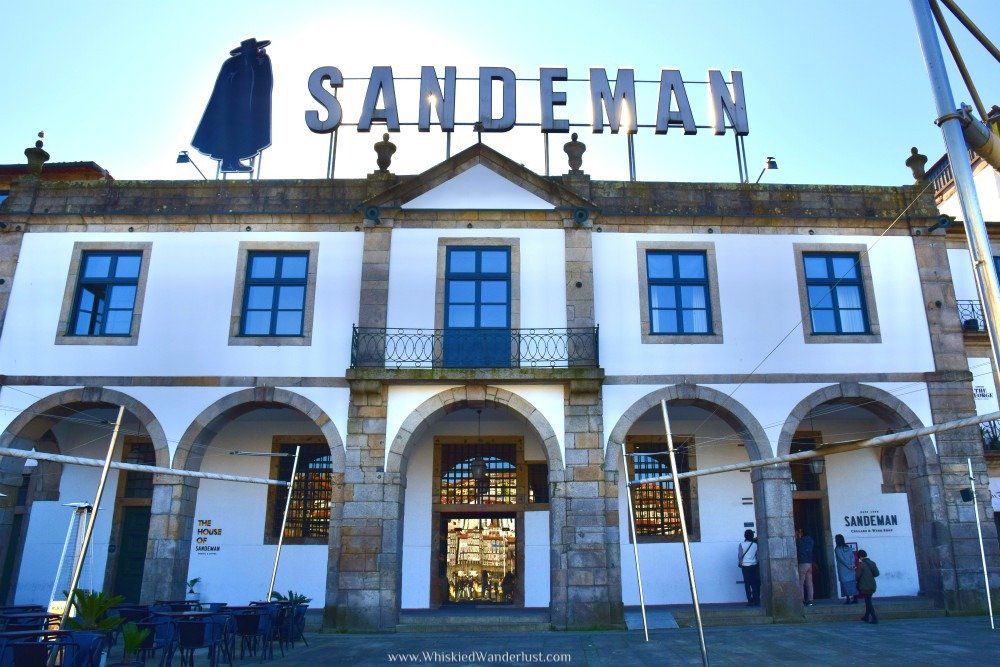
One of the Douro's oldest Port names, Sandeman operates from Largo Miguel Bombarda 47 in Vila Nova de Gaia, directly across the river from Porto's historic waterfront. The lodge holds a Pearl 3 Star Prestige rating for 2025, placing it among the upper tier of Gaia's lodges for visitor experience. It is a reference point for understanding Port as a living tradition rather than a museum artefact.
The Ritual Side of the River
Cross the Dom Luís I Bridge from Porto into Vila Nova de Gaia on a clear afternoon and the south bank resolves into a low skyline of whitewashed lodge walls, terracotta rooflines, and painted house names that have faced the Douro for well over a century. This is the institutional geography of Port wine: a strip of cellars that exist because the river made it practical to age wine close to the ships that once carried it north. Sandeman, at Largo Miguel Bombarda 47, sits within that tradition in a way that is structural rather than decorative. The address is a working lodge, not a heritage reconstruction, and the distinction matters when you are deciding how to spend an afternoon on this side of the river.
Gaia's lodge strip now operates across a spectrum that runs from quick tastings pitched at cruise-ship arrivals to serious cellar sessions with reserve-tier pours. Sandeman's Pearl 3 Star Prestige recognition for 2025, awarded by EP Club, places it inside the upper cohort of that spectrum, alongside neighbours such as Graham's Port and Cockburn's Port, all of which compete for visitors who want more than a logo on a bottle.
What a Lodge Visit Actually Involves
Port wine tourism along the Gaia quays has settled into a recognisable ritual structure. You arrive, you are shown through the barrel halls, and you sit down to taste. The sequence is almost universal, but the quality of each stage varies considerably between houses. At lodges operating at Sandeman's tier, the cellar portion of that ritual functions as genuine education: you move through spaces where the wine is actually resting, the humidity and cooler air of the storage areas register physically, and the progression from lodges of younger wine to older reserves creates a sensory logic before the tasting even begins.
That pacing matters. Port is a wine that rewards sequential tasting more than many categories, because the difference between a standard Ruby, a ten-year-old Tawny, and a Colheita from a specific harvest is not subtle. Lodges at this level tend to structure their tastings to make those differences legible, moving from fresher, fruit-forward styles toward oxidative, nutty complexity in a deliberate order. Understanding what you are drinking — why the colour shifts, why the nose changes — is the point of the visit, and it is what separates a lodge experience from simply buying a bottle at an airport.
Sandeman in the Competitive Set
The lodge addresses a visitor profile that is neither the casual tourist nor the specialist collector. It occupies a middle tier that is arguably the most contested in Gaia: knowledgeable enough to demand serious wine, but open enough to welcome visitors without prior Port expertise. That positioning is common among the larger historic houses. Churchill's, Niepoort, and Real Companhia Velha all occupy versions of this space, though each with a different emphasis: Niepoort leans toward natural wine thinking and table wine production alongside its Port; Real Companhia Velha carries a different historical weight as one of the Pombaline-era regulatory houses. Sandeman's own position in that peer group is shaped by its scale and its international reach, which gives it a recognisability that some of the smaller lodges cannot match.
For a broader survey of what the south bank offers, our full Vila Nova de Gaia wineries guide maps the lodges by format and price tier. The guide is useful for sequencing a multi-lodge afternoon, which remains the most efficient way to understand how different houses interpret the same raw material from the Douro Valley.
The Geography of Comparison
Port lodge visits exist in a wider context of Portuguese wine tourism that extends well beyond Gaia. Bacalhôa Vinhos in Azeitão offers a counterpoint in the Setúbal Peninsula, where fortified Moscatel production creates a different but related tasting experience. Further south, Herdade do Esporão in Reguengos de Monsaraz demonstrates how the Alentejo has developed its own wine estate tourism model, with accommodation and restaurant infrastructure that most Gaia lodges do not replicate. For visitors interested in how the fortified wine format translates to Atlantic island production, Blandy's Wine Lodge in Funchal provides a close structural parallel in Madeira. Even further afield, Abadía Retuerta in Sardón de Duero and Aberlour in Aberlour show how other producer-led hospitality formats handle the same challenge of turning production spaces into visitor experiences.
What those comparisons clarify is that Gaia's lodge model is unusually compact: you are within walking distance of a dozen significant producers, which creates a density of tasting opportunity that is rare in wine tourism globally. A single afternoon can move between three or four houses without requiring transport, which makes sequencing and comparison direct in a way that dispersed wine regions cannot replicate.
Planning the Visit
Sandeman's address at Largo Miguel Bombarda 47 places it on the main lodge strip, reachable on foot from the cable car station above the quay or directly from the Gaia riverside promenade. The Gaia waterfront is a ten-minute walk from the south end of the Dom Luís I Bridge, and most visitors cross on foot from the Ribeira quarter in Porto. The upper deck of the bridge deposits you closer to the ridge-level cable car; the lower deck connects directly to the riverside, which is the faster route to the lodge entrance.
Timing matters more than most visitors anticipate. Weekend mornings from late spring through September compress significant visitor numbers into the lodge strip, and the better tasting formats at prestige-tier lodges tend to book ahead rather than run on a drop-in basis. Arriving mid-week, or in the shoulder season of late September through November when the Douro harvest has just concluded and the lodges are active but quieter, changes the experience considerably. The cooler months also make the cellar passages more comfortable and the tasting notes easier to concentrate on.
For everything else the south bank and the wider city offer, our Vila Nova de Gaia restaurants guide, hotels guide, bars guide, and experiences guide cover the full range of options across price tiers and neighbourhood character.
Frequently Asked Questions
- What is the signature bottle at Sandeman?
- Sandeman's portfolio centres on Port and Sherry, and the house is particularly associated with its Tawny expressions and vintage declarations. The Douro Valley is the sourcing region for all Port production in Gaia, and Sandeman's range runs from entry-level Ruby and Tawny through to aged Tawny and vintage-dated Colheitas. The 2025 Pearl 3 Star Prestige rating from EP Club reflects the lodge's overall quality and visitor experience rather than a single product.
- Why do people go to Sandeman?
- The lodge sits on Vila Nova de Gaia's main cellar strip and carries one of the most recognisable names in Port wine internationally, which draws visitors who want a structured introduction to how Port is aged and blended. Its 2025 Pearl 3 Star Prestige rating from EP Club positions it in the upper tier of Gaia lodge experiences, making it a reference visit for those who want to understand the category seriously rather than simply collect a tasting stamp.
- Do they take walk-ins at Sandeman?
- Walk-in availability at Gaia's prestige-tier lodges depends heavily on season and day of week. During peak summer weekends, the better tasting formats typically require advance booking. Visiting mid-week or in the shoulder season (October through November) increases the likelihood of flexible entry. EP Club recommends checking directly for current availability, as the 2025 Pearl 3 Star Prestige format implies a structured experience that is more reliably secured in advance.
- Is Sandeman better for first-timers or repeat visitors to Port wine country?
- If you have never visited a Gaia lodge, Sandeman's scale and international profile make it a logical starting point: the cellar infrastructure is substantial, the range of styles on offer is broad, and the tasting progression from basic to premium is coherent enough to build foundational knowledge. Repeat visitors tend to use it as a comparative anchor against smaller, more specialist houses such as Niepoort, where the production philosophy diverges sharply from the large-house model.
- How does Sandeman's Pearl 3 Star Prestige rating affect what visitors can expect compared to lower-rated lodges in Gaia?
- EP Club's Pearl 3 Star Prestige designation for 2025 places Sandeman among the lodges where the visitor experience is considered structurally sound at a prestige level, meaning the cellar access, tasting format, and wine quality combine into a coherent whole rather than a marketing exercise. Lower-rated lodges on the Gaia strip often offer abbreviated formats or shallower wine ranges, which limits the educational value of the visit. At Sandeman's tier, the expectation is that the tasting will include aged and reserve expressions, not only entry-level pours.
City Peers
A quick peer check to anchor this venue’s price and recognition.
| Venue | Classification | Awards | First Vintage | Notes |
|---|---|---|---|---|
| Sandeman | 1 awards | This venue | ||
| Graham's Port | World's 50 Best | |||
| Churchill's | 1 awards | |||
| Cockburn's Port | 1 awards | |||
| Niepoort | 1 awards | |||
| Real Companhia Velha | 1 awards |
Access the Cellar?
Our members enjoy exclusive access to private tastings and priority allocations from the world's most sought-after producers.
Access the Concierge