
Quinta das Carvalhas sits on the steeply terraced slopes above Pinhão in the Douro Valley, earning a Pearl 2 Star Prestige rating in 2025. The estate produces Port and Douro DOC wines from some of the region's highest-altitude vineyard plots, placing it among the Douro's more serious production addresses. Visit for terraced vineyard panoramas, structured tasting formats, and wines drawn from a site with significant elevation range.
Above the Douro: What High-Altitude Terroir Means in Practice
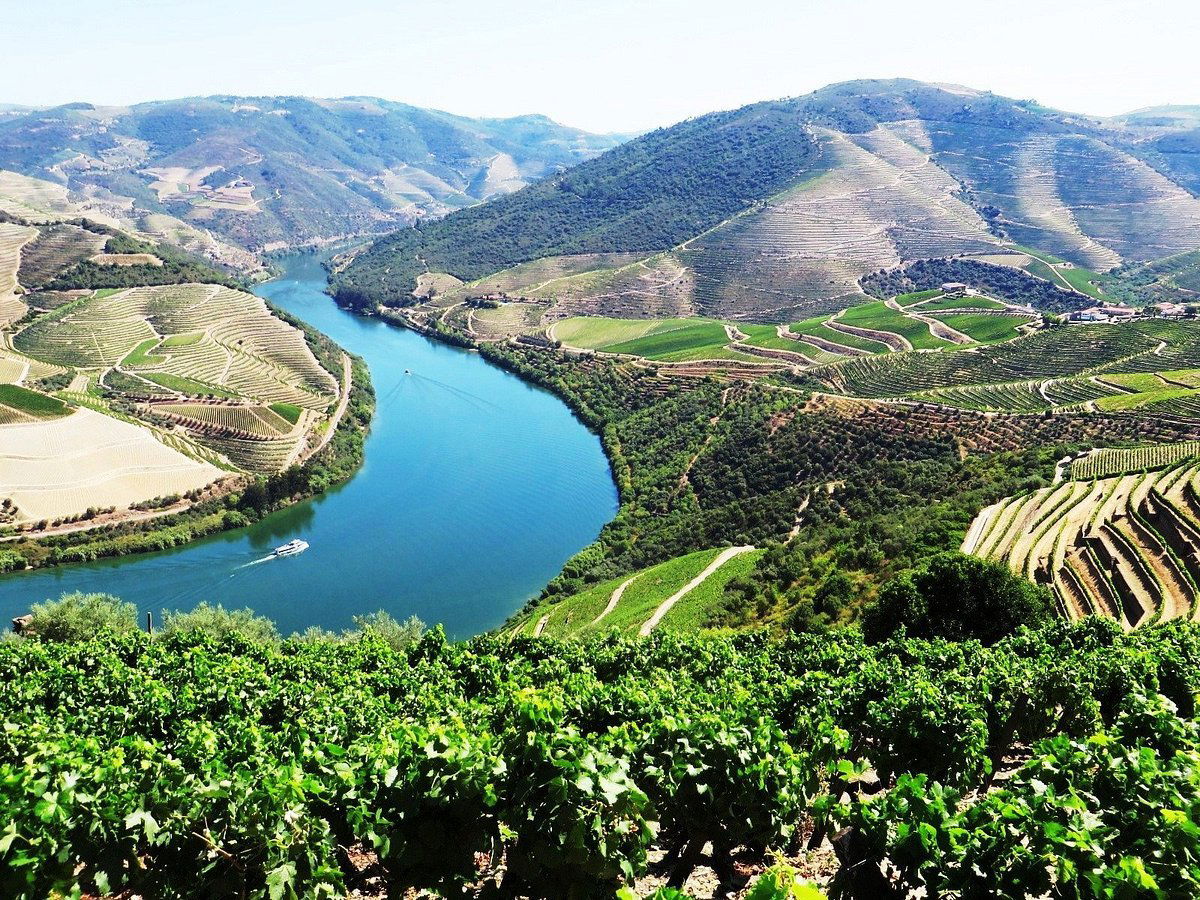
The Douro Valley's geography is not subtle. Schist ridges drop hundreds of metres to the river below, and the difference between a vineyard at river level and one climbing toward the upper plateau is measurable in temperature variation, rainfall, and grape phenology. Quinta das Carvalhas, positioned on the slopes above Pinhão along the N323, occupies one of the more dramatically situated estate sites in the Cima Corgo subregion. From the higher vineyard terraces, the river bends visible to the south and west represent the same corridor that shaped Port wine commerce for three centuries. That physical context matters because it is not decorative — altitude and aspect here directly influence wine character, producing fresher, more structured results than lower-elevation Douro fruit.
The Douro's terraced landscape is one of the oldest demarcated wine regions in the world, formally classified since 1756, and estates like Quinta das Carvalhas sit within a framework of vineyard categorisation that predates most of the world's current appellation systems. The Benefício system, which allocates Port production quotas based on soil, altitude, aspect, and vine age, means that a quinta's physical geography carries formal economic and qualitative weight. Understanding that context is the starting point for understanding what visiting a serious Douro estate actually involves.
The 2025 Pearl 2 Star Prestige Recognition
Quinta das Carvalhas received a Pearl 2 Star Prestige award in 2025, placing it within the tier of Douro estates that operate above baseline quality benchmarks and toward a defined prestige segment. In the Douro's current peer landscape, this matters as a comparative signal. The valley has seen increasing international attention over the past decade, with Douro DOC table wines attracting critical interest alongside the traditional Port category. Estates that hold formal recognition at this level sit in a different commercial and reputational bracket from generic Douro producers, and the 2025 timing reflects the ongoing critical reassessment of what the Douro can produce beyond fortified wine.
For comparison, neighbouring estates including Quinta do Bomfim, Quinta da Roêda (Croft), and Quinta do Noval represent the range of ownership structures and production philosophies operating within the same Pinhão corridor. Some are held by major Port shippers with deep historical roots; others have shifted toward independent quinta bottlings as the market for single-estate Douro wines has grown. Quinta das Carvalhas operates within this competitive set, where provenance, site quality, and production rigour are the primary differentiators.
Douro Winemaking Philosophy at Altitude
The editorial angle assigned to this estate is winemaking philosophy, and in the Douro that means engaging with a set of decisions that are both ancient and contested. Indigenous varieties — Touriga Nacional, Touriga Franca, Tinta Roriz, Tinta Barroca, and others , have been cultivated on these schist slopes for centuries, but the question of how to handle them in the winery has shifted considerably since the 1990s. Earlier Douro table wines were often over-extracted and heavy; the more sophisticated current approach favours restraint in extraction, longer maceration at lower temperatures, and a move away from excessive oak influence. The result is wines that carry the region's inherent structure and minerality without the excess weight that marked an earlier stylistic era.
At altitude specifically, the thermal variation between day and night during the growing season preserves natural acidity in the fruit , a quality that is increasingly valued in both Port and Douro DOC production as the market moves toward wines with more freshness and longevity. Quinta das Carvalhas's hillside position positions its production within this quality argument. The schist bedrock, which characterises the leading Douro vineyard soils, provides excellent drainage and forces vine root systems deep, producing lower yields with concentrated flavour profiles. These are the site-based factors that serious Douro producers point to when explaining why location within the valley is not interchangeable.
For a broader view of how winemaking philosophy varies across Portugal's wine regions, the approach at Herdade do Esporão in Reguengos de Monsaraz in the Alentejo offers a useful comparative reference, as does the Port production model at Quinta do Seixo (Sandeman) in nearby Tabuaço. Further afield, Bacalhôa Vinhos in Azeitão and Blandy's Wine Lodge in Funchal illustrate how Portugal's wine identity extends well beyond the Douro's schist terraces. Outside Portugal, Abadía Retuerta in Sardón de Duero provides a useful Spanish counterpoint for visitors interested in Iberian winemaking at estate scale, and Aberlour in Aberlour demonstrates how a different spirit tradition approaches site-driven production with similar rigour. For fortified wine comparisons within Portugal, Churchill's in Vila Nova de Gaia offers a shipper-side perspective on how Douro fruit is received and matured downstream.
The Pinhão Setting and What It Means for Visitors
Pinhão itself is a small town with a train station famous for its azulejo tile panels depicting Douro harvest scenes , a reminder that this valley's wine culture is embedded in visual and material culture, not just in the bottle. The town functions as the access point for a cluster of significant quintas in the Cima Corgo, and visits to Quinta das Carvalhas are part of a broader pattern of estate tourism that has developed significantly over the past fifteen years. The Douro Valley was designated a UNESCO World Heritage Site in 2001, which formalised its cultural status and accelerated international visitor interest.
Logistics for visiting the estate are managed via the N323 road, which runs through some of the valley's most photographed vineyard territory. The estate address on the N323 places it within the standard driving circuit that connects Pinhão's key quintas, and the road's switchbacks give approaching visitors a graduated view of the terracing that defines the landscape. Those planning a Douro itinerary around multiple quinta visits should note that the concentration of significant estates within a short driving radius of Pinhão is one of the valley's practical advantages. A single day can encompass two or three serious estate visits without logistical strain.
For accommodation and dining in the area, our full Pinhão hotels guide and our full Pinhão restaurants guide cover the current options across price tiers. The bar scene is smaller but worth noting; see our full Pinhão bars guide. For a complete view of which wineries merit dedicated visits in the area, our full Pinhão wineries guide maps the current landscape, and our full Pinhão experiences guide covers boat trips, vineyard walks, and the structured activities that have expanded the valley's visitor offer beyond tastings alone.
Planning Your Visit
The Douro Valley operates on a distinct seasonal rhythm. Harvest (vindima) runs through September and into October, when the quinta roads are busy with activity and the vines are at their most visually dramatic. Spring, when the almond blossom and vine growth begin, is a quieter alternative. Summer heat in the valley can be intense , the Douro is one of Portugal's hottest wine regions , which makes morning visits preferable from a comfort standpoint. The N323 address provides the routing reference for navigation; phone and booking details are not available in the current database, so visitors planning a structured tasting should confirm arrangements directly with the estate via whatever contact information appears on their official web presence before arrival.
Frequently Asked Questions
What do visitors recommend trying at Quinta das Carvalhas?
The estate's wines span both Port and Douro DOC table wines, and given its position in the Cima Corgo at altitude, the structured red wines made from indigenous varieties like Touriga Nacional and Touriga Franca are the primary draw for visitors with an interest in the region's table wine evolution. The 2025 Pearl 2 Star Prestige award signals that the production sits toward the upper end of the quality range among Pinhão-area estates.
What is Quinta das Carvalhas leading at?
Among the quintas operating in the Pinhão corridor, Quinta das Carvalhas is positioned for visitors who want the combination of dramatic hillside site, high-altitude vineyard character, and production at a recognised prestige level. The 2025 Pearl 2 Star Prestige designation places it in a peer group with the valley's more considered estate producers rather than with volume-oriented Port houses.
How hard is it to get in to Quinta das Carvalhas?
Phone and booking portal details are not available in the current EP Club database, which means the practical access picture requires direct confirmation with the estate. The Douro's quinta visit model generally operates on a reservation basis for structured tastings, particularly during the busy harvest period in September and October. Travellers arriving without a prior arrangement during peak season may find availability limited at the most sought-after visit slots.
What is the leading use case for Quinta das Carvalhas?
The estate is most suited to visitors who are approaching the Douro with a genuine interest in how altitude and schist terroir shape wine character, rather than those primarily seeking a scenic backdrop. The Pearl 2 Star Prestige recognition in 2025 makes it a credible anchor for a Pinhão itinerary built around comparative quinta visits, particularly alongside estates like Quinta do Bomfim, Quinta da Roêda, and Quinta do Noval that occupy the same geographic corridor.
Does Quinta das Carvalhas produce both Port and Douro DOC table wines?
Yes. Like most serious Cima Corgo quintas, the estate works across both categories , the traditional fortified Port production that the valley is historically known for, and the Douro DOC still wines that have attracted increasing critical attention since the early 2000s. The Pearl 2 Star Prestige award (2025) reflects quality across this production scope, and the high-altitude site is particularly relevant to table wine structure and freshness.
Same-City Peers
A quick peer snapshot; use it as orientation, not a full ranking.
| Venue | Classification | Awards | First Vintage | Notes |
|---|---|---|---|---|
| Quinta das Carvalhas | 1 awards | This venue | ||
| Quinta do Bomfim | World's 50 Best | |||
| Quinta da Roêda (Croft) | 1 awards | |||
| Quinta do Noval | World's 50 Best |
Access the Cellar?
Our members enjoy exclusive access to private tastings and priority allocations from the world's most sought-after producers.
Access the Concierge