
Papaioannou Vineyards sits in Ancient Nemea, one of the Peloponnese's most consequential appellations for Agiorgitiko. The estate holds a Pearl 2 Star Prestige award (2025), positioning it among the appellation's upper tier. For visitors tracing Nemea's evolution from bulk production toward precision viticulture, this address is a substantive stop.
Ancient Ground, Modern Ambition
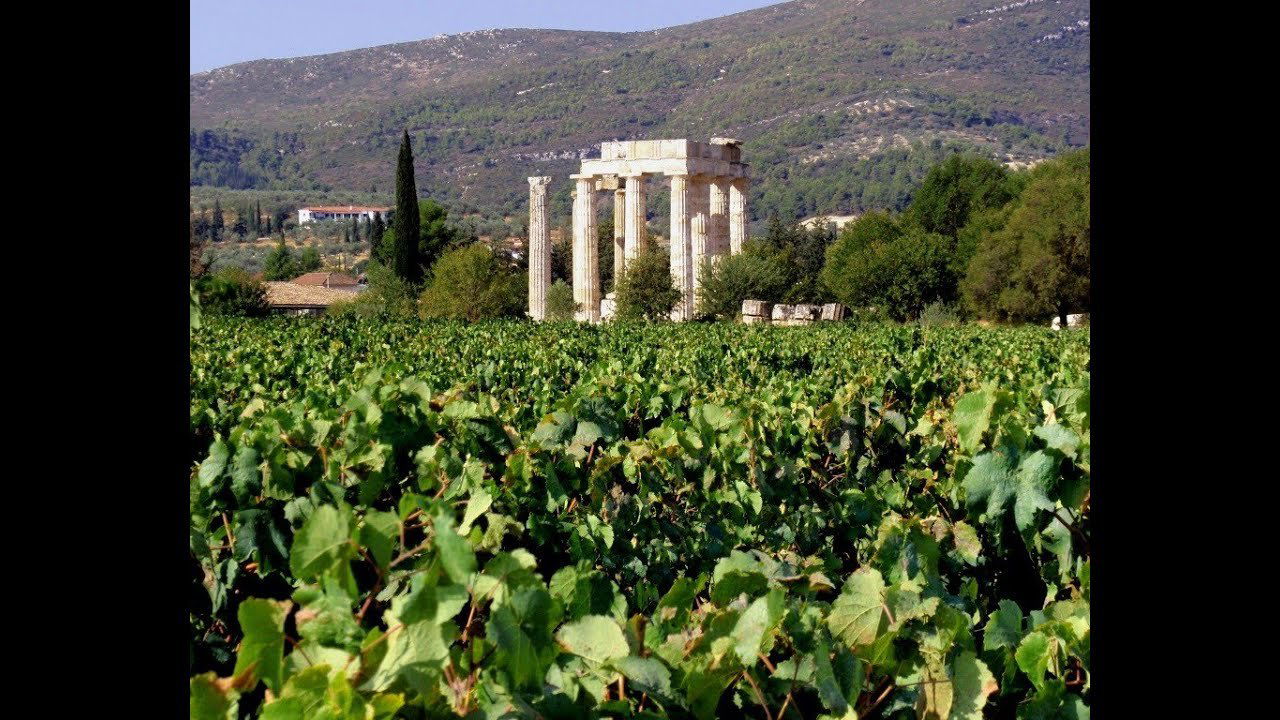
The drive into Ancient Nemea announces its intentions early. The road from Corinth climbs into a basin ringed by low mountains, and the vines — mostly Agiorgitiko, Nemea's indigenous red grape — begin appearing in dense rows well before any cellar door comes into view. This is one of the Peloponnese's most historically loaded wine corridors: the same valley where Heracles supposedly slew the Nemean lion is now home to a concentration of serious viticulture that has been drawing international attention since Greek wine began its quality reckoning in the 1990s.
Papaioannou Vineyards sits within this terrain at the appellation's core, address listed along the Corinth-Nemea road in Ancient Nemea, Corinthia. The surrounding landscape operates as both setting and argument: altitude variation across the Nemea zone (ranging from around 250 metres to over 900 metres in the higher Asprokambos sub-zone) shapes a wide stylistic spread, and estates positioned across different elevations can produce wines with markedly different profiles from the same grape. Understanding where a vineyard sits in that topographic range is one of the first interpretive tools a visitor needs.
Agiorgitiko and the Nemea Appellation
To visit Papaioannou is, in part, to encounter Agiorgitiko on its home territory. The variety , also written Ayiorgitiko, named for Saint George , produces reds that can range from soft and berry-driven at lower elevations to structured, age-worthy wines with considerable tannic depth when grown at altitude. It is Greece's most planted red variety, yet its character is intimately tied to this specific appellation in a way that doesn't replicate well elsewhere.
The Nemea PDO (Protected Designation of Origin) is one of Greece's most significant, and it has historically carried both its strengths and contradictions. For decades, much of the region's output was sold as bulk wine, the grape's accessibility making it easy to produce in volume at the expense of character. The shift toward estate bottling, lower yields, and site-specific expression began gaining traction in the early 2000s and has continued unevenly since. What that means for the visitor today is a zone of genuine contrast: some producers remain commercially oriented, while others operate with the kind of precision that would be recognizable to drinkers familiar with Burgundy or the Rhône.
Papaioannou Vineyards holds a Pearl 2 Star Prestige award (2025), a designation that places it within the appellation's upper performance tier. Among Nemea's growing roster of serious producers, that credential carries weight as a differentiator from the broader mid-market. Comparable estates worth considering in the same visit itinerary include Acra Winery, Barafakas Winery, and Palivou Estate, each representing a distinct approach to what the appellation can achieve.
The Physical Setting
Winery visits in this part of the Peloponnese trade on the landscape as much as the glass. The Nemea valley has a quality that is difficult to find in better-publicised wine regions: relative quietude. There are no large-scale tourism infrastructures, no well-worn coach routes, and the kind of interruption-free engagement with the vineyard environment that has largely disappeared from Tuscany or Bordeaux. The vines here grow in reddish-brown soil, often stony and well-drained, with a surrounding topography of scrub-covered hills and the occasional archaeological remnant , the Temple of Zeus at Ancient Nemea lies nearby and is worth pairing into any extended visit.
That combination of archaeological depth and active viticulture gives the area a layered character. Drinking a site-expressive Agiorgitiko while looking out over the same landscape that produced it, at altitude, in the quiet of a working estate, delivers a kind of grounding context that more touristically developed regions struggle to offer. It is the kind of visit where the setting does interpretive work that no tasting note can replicate.
Planning the Visit
Nemea sits roughly 120 kilometres southwest of Athens via the A8/E65 motorway, making it viable as a day trip from the capital, though an overnight stay in the Corinthia or Argolida region allows a more considered itinerary. The village of Ancient Nemea itself is small; the estate address along the Corinth-Nemea road is navigable by GPS. Visitors should contact the estate directly in advance of any visit, as winery tours in this region typically require prior arrangement rather than walk-in access. Phone and website details are not published in our current database record for Papaioannou Vineyards, so reaching out via general Nemea tourism channels or regional wine association contacts is the recommended first step.
Spring and autumn are the most productive times to visit the region. Harvest in Nemea typically runs through September and into early October depending on elevation, and timing a visit around that period offers the possibility of seeing the estate at work. Summer in the Peloponnese can be intense, and the higher sub-zones of Nemea offer some relief from coastal heat. For a fuller sense of the local scene, our full Nemea wineries guide maps the appellation's producers alongside editorial context. The region's wider hospitality picture is covered in our Nemea restaurants guide, hotels guide, bars guide, and experiences guide.
Nemea in a Broader Greek Wine Context
Visitors approaching Papaioannou with a wider interest in Greek wine geography will find useful comparisons across the country. Achaia Clauss in Patras represents a very different chapter of Greek wine history , a 19th-century operation with deeply different scale and heritage. Abraam's Vineyards in Komninades and Aidarinis Winery in Goumenissa offer northern Greek reference points, with Xinomavro rather than Agiorgitiko as the dominant red grape. For those tracking the broader arc of Mediterranean viticulture, Aiolos Winery in Palaio Faliro and Akrathos Newlands Winery in Panagia add further geographic spread. Further afield, Abadía Retuerta in Sardón de Duero and Aberlour in Aberlour represent the kind of prestige-tier European estate production against which Nemea's more ambitious producers are increasingly positioning themselves.
What Nemea offers, and what Papaioannou's 2025 Pearl 2 Star Prestige recognition signals, is a zone in active transition: moving from appellation-wide reputation to producer-level differentiation, and doing so on the back of a grape variety with genuine depth of character that remains underpriced relative to its quality ceiling.
Frequently Asked Questions
- What should I taste at Papaioannou Vineyards?
- Papaioannou holds a Pearl 2 Star Prestige award (2025), which positions it among the more serious producers working with Agiorgitiko in the Nemea appellation. Agiorgitiko is the grape to focus on here: it expresses the Nemea terroir with a range that runs from fresh, fruit-forward styles to structured, tannin-driven reds built for ageing. Ask specifically about any single-vineyard or altitude-designated wines, as elevation is the principal variable that separates Nemea's most complex expressions from its more accessible tiers. The appellation's winemaking tradition and the estate's award recognition together make a visit focused on Nemea's flagship variety the most productive approach.
- What makes Papaioannou Vineyards worth visiting?
- The estate sits in Ancient Nemea, one of the Peloponnese's most historically significant wine zones, approximately 120 kilometres from Athens. Its Pearl 2 Star Prestige (2025) award places it in the upper tier of Nemea producers at a point when the appellation is attracting growing critical attention. Compared to more commercially oriented estates in the same zone, the prestige-level recognition suggests a commitment to quality standards that goes beyond volume output. The surrounding landscape and nearby archaeological site at the Temple of Zeus add cultural weight to what is otherwise a direct wine-focused visit.
- What's the leading way to book Papaioannou Vineyards?
- Phone and website details are not currently listed in our database for Papaioannou Vineyards. The recommended approach is to contact local Nemea tourism or regional wine association resources for current booking details. As a general rule across Nemea's serious estates, visits require advance arrangement and are not walk-in affairs. Given the estate's Pearl 2 Star Prestige recognition (2025), demand for tastings may warrant booking several weeks ahead, particularly during harvest season in September and October.
- How does Papaioannou Vineyards fit into Nemea's wider appellation story?
- Nemea's wine identity has shifted considerably over the past two decades, moving from a region associated primarily with bulk Agiorgitiko production toward one with a credible premium tier. Papaioannou's Pearl 2 Star Prestige award (2025) places it within that premium cohort, alongside other estates in Ancient Nemea working to demonstrate the grape's capacity for site-specific expression and age-worthiness. For visitors building a multi-estate itinerary, pairing Papaioannou with producers like Acra Winery and Palivou Estate builds a useful comparative picture of where the appellation stands today.
A Pricing-First Comparison
A small comparison set for context, based on the venues we track.
| Venue | Classification | Awards | First Vintage | Notes |
|---|---|---|---|---|
| Papaioannou Vineyards | 1 awards | This venue | ||
| Acra Winery | 1 awards | |||
| Barafakas Winery | 1 awards | |||
| Palivou Estate | 1 awards |
Access the Cellar?
Our members enjoy exclusive access to private tastings and priority allocations from the world's most sought-after producers.
Access the Concierge