
Barafakas Winery operates in Nemea, one of Greece's most respected appellations for Agiorgitiko red wine. Two medals at the 2025 Decanter World Wine Awards, including a Silver, place it alongside producers punching above their profile in the region. A Pearl 2 Star Prestige rating in 2025 adds a second independent validation for a winery still building its international footprint.
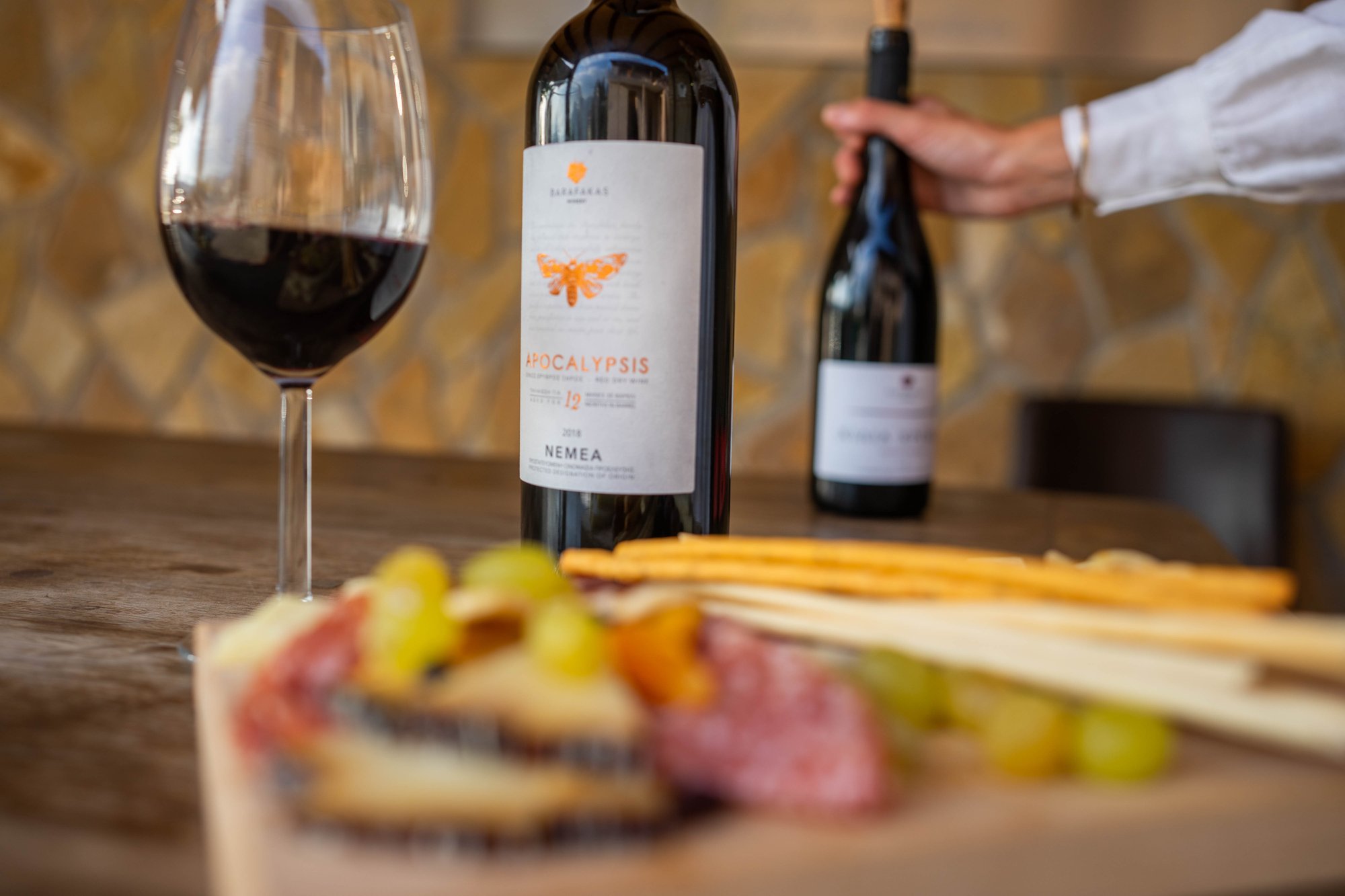
Nemea's Quiet End of the Spectrum
The Nemea appellation sits in the northeastern Peloponnese at elevations ranging from around 250 to over 800 metres, and the altitude gradient accounts for much of what separates one producer's wine from another's. The corridor around the ancient site of Nemea has attracted Greek wine tourism steadily since the late 1990s, when a cluster of family producers began entering international competitions and collecting the kind of credentials that redirected export interest toward Agiorgitiko — a grape so deeply tied to this zone that the PDO designation bears the town's name. Barafakas Winery, at Pindou 8 in Nemea, sits within that broader production community. It is not among the appellation's most visible exporters, but two Decanter medals in 2025, one Silver and one Bronze, indicate wine made with enough precision to register against a global reference field.
The 2025 Decanter Results in Context
Decanter World Wine Awards is the largest wine competition by entry volume, with judges applying structured blind tasting protocols across thousands of submissions. A Silver medal in the Decanter system requires a score at or above 90 points; a Bronze lands between 86 and 89. Both thresholds are competitive enough to serve as meaningful signals, particularly for a producer without the distribution scale of the Nemea appellation's better-known names. Barafakas earned both in the same competition cycle, suggesting two wines performing at a consistent level rather than a single standout bottle carrying the result. For context, Papaioannou Vineyards and Palivou Estate represent the more internationally recognised end of Nemea's producer list, and the Decanter pool includes entries from both well-funded estates and smaller family cellars. Barafakas competing in that field and returning two medals places it in the tier of producers worth tracking, even if the full output and pricing structure remain unpublished in widely accessible form.
The Pearl 2 Star Prestige rating in 2025 adds a separate data point from a different evaluation system. Pearl ratings operate on a prestige-tier model; a 2 Star Prestige designation suggests wines assessed at a level above the producer's general recognition — again, a signal that the juice is outperforming the profile. Two independent accreditation bodies arriving at positive conclusions in the same calendar year is the kind of alignment that justifies closer attention from anyone spending time in Nemea.
Agiorgitiko and What Nemea Demands of Its Producers
Agiorgitiko (also written Agiorgitico, and translated loosely as St. George's grape) is the variety that defines Nemea PDO red wine. It produces wines that range from soft, approachable fruitiness at lower elevations to more structured, tannic expressions from the higher-altitude zones, where cooler temperatures slow ripening and build complexity. The grape's natural tendency toward high sugar accumulation makes alcohol management a recurring technical challenge; producers who get the balance right often cite careful harvest timing and, in some cases, extended cold maceration as key tools. The variety also shows well against oak, though the most restrained expressions tend to use it as a background element rather than a dominant flavour signal.
Within this context, a Decanter Silver points toward a wine where the Agiorgitiko character is presented cleanly and the structural elements , acid, tannin, fruit concentration , sit in a coherent relationship. That framing matters because Nemea's producer base is uneven: the appellation includes operations of very different scales and ambitions, and a medal result cuts through that noise as a reference-independent benchmark. Barafakas's result tells you something real about what is in the bottle, even without access to full tasting notes or technical specifications.
For broader regional orientation, producers such as Acra Winery round out the local picture, and Achaia Clauss in Patras offers a point of historical reference for how Peloponnese wine production has shifted over the past century. Further afield, Aidarinis Winery in Goumenissa and Abraam's Vineyards in Komninades demonstrate how northern Greek wine regions are building their own international credibility, a trajectory Nemea's smaller producers are following on a parallel track. For a European contrast in a completely different register, Abadía Retuerta in Sardón de Duero shows how a different appellation can translate estate identity into sustained international recognition , the kind of longer-term visibility that ambitious Nemea producers are working toward.
Visiting Nemea: The Practical Frame
Nemea is roughly 120 kilometres southwest of Athens by road, accessible via the E65 motorway and typically reached in under two hours from the capital depending on traffic out of Corinth. The town itself is small; the winery address at Pindou 8 places Barafakas within the residential fabric of Nemea proper rather than in an isolated estate setting. As of the data available here, no phone number or website is listed for the winery, which means advance contact requires either direct local inquiry or booking assistance through a regional tour operator. This is not unusual for smaller Greek producers whose domestic reputation precedes their digital infrastructure; it does mean that visiting on a speculative drop-in basis carries real risk during shoulder and off-peak months. The Nemea harvest typically runs through September and into early October, and that window is when smaller producers are most actively receiving visitors, though confirming access in advance remains advisable.
The broader Nemea area rewards a half-day or full-day visit structured around the archaeological site of ancient Nemea , where the temple of Zeus and the stadium used for the Nemean Games are both accessible , combined with winery visits along the appellation's central corridor. Pairing a producer at the more established end of the spectrum with a visit to Barafakas gives a useful cross-section of how different scales of operation approach the same variety and terroir. For orientation on the full local picture, our full Nemea wineries guide maps the appellation's producer range, and our full Nemea restaurants guide covers where to eat well after tasting. Our full Nemea hotels guide handles accommodation, and our full Nemea bars guide and our full Nemea experiences guide round out the planning picture for anyone spending more than a day in the region.
Two further Greek producers worth knowing for context: Aiolos Winery in Palaio Faliro and Akrathos Newlands Winery in Panagia each represent how Greek producers outside the core appellation zones are asserting quality credentials. And for a reference point well outside the Greek orbit, Aberlour in Aberlour is a reminder of how production tradition and geographic identity combine to create internationally legible producer profiles , a model relevant to any regional wine story.
What the Awards Signal for Planning
A producer with two Decanter medals and a Pearl 2 Star Prestige in a single year, without a published website or widely distributed export presence, fits a particular profile in the European wine scene: a small operation producing at a quality level that has started to attract external validation before the commercial infrastructure catches up. This is neither rare nor a disadvantage , many of Greece's most interesting producers spent years accumulating competition credentials before distribution and tourism outreach followed. The question for a traveller is whether that gap between quality signal and accessibility is something to work around or a reason to deprioritise the visit. Given the awards data here, working around it seems the more defensible call.
Frequently Asked Questions
- What wine is Barafakas Winery famous for?
- Barafakas operates in the Nemea appellation, which is synonymous with Agiorgitiko, the indigenous red variety that defines Nemea PDO wines. The winery's two 2025 Decanter medals , one Silver and one Bronze , were awarded in that competition cycle, indicating that at least two wines performed at a high enough level to earn independent recognition. Nemea's winemaker community, including neighbours such as Papaioannou Vineyards, anchors regional identity firmly around Agiorgitiko in both its structured and more approachable expressions.
- What's the main draw of Barafakas Winery?
- The draw is a combination of geographic specificity and recent award validation. Nemea is one of Greece's most clearly defined wine appellations, and Barafakas's 2025 Decanter Silver and Pearl 2 Star Prestige ratings provide two independent quality signals in the same year. For a traveller already planning a Nemea itinerary, that combination makes it a producer worth including alongside more prominent names in the region.
- How far ahead should I plan for Barafakas Winery?
- No website or phone number is currently listed for Barafakas, which means securing a visit requires going through local contacts or regional operators rather than direct online booking. Given this, planning at least several weeks in advance is advisable, particularly if visiting during harvest season (September to early October) when producer schedules are full. Turning up without prior arrangement, especially outside peak tourist months, risks finding the winery unavailable for tastings.
- What kind of traveller is Barafakas Winery a good fit for?
- Barafakas suits a wine-focused traveller who is already building an itinerary around the Nemea appellation and wants to include a smaller producer alongside the region's better-known estates. The 2025 Decanter and Pearl credentials indicate genuine quality, but the limited digital footprint means this is not an experience that organises itself easily. It fits leading within a planned day of appellation exploration rather than as a standalone destination visit.
- How does Barafakas compare to other small Nemea producers entering international competition?
- Among Nemea producers without major export distribution, earning two medals at Decanter World Wine Awards , a Silver and a Bronze , in the same year is a credible quality signal rather than a one-off result. The additional Pearl 2 Star Prestige rating in 2025 from a separate evaluation system reinforces that the wines are performing at a consistent level across different judging frameworks. This dual-accreditation pattern is the kind of baseline that separates producers genuinely ready for international attention from those whose reputation remains purely local.
A Credentials Check
A compact peer set to orient you in the local landscape.
| Venue | Classification | Awards | First Vintage | Notes |
|---|---|---|---|---|
| Barafakas Winery | 1 awards | This venue | ||
| Acra Winery | 1 awards | |||
| Palivou Estate | 1 awards | |||
| Papaioannou Vineyards | 1 awards |
Access the Cellar?
Our members enjoy exclusive access to private tastings and priority allocations from the world's most sought-after producers.
Access the Concierge