Newton Johnson Vineyards

Newton Johnson Vineyards sits along the R320 in the Hemel-en-Aarde Valley, one of South Africa's cooler wine corridors, where maritime influence from Walker Bay shapes the growing season. A Pearl 2 Star Prestige award (2025) positions it among the valley's more recognised producers. The estate makes a considered case for terroir-driven viticulture in a region that has become a reference point for Pinot Noir and Chardonnay on the African continent.
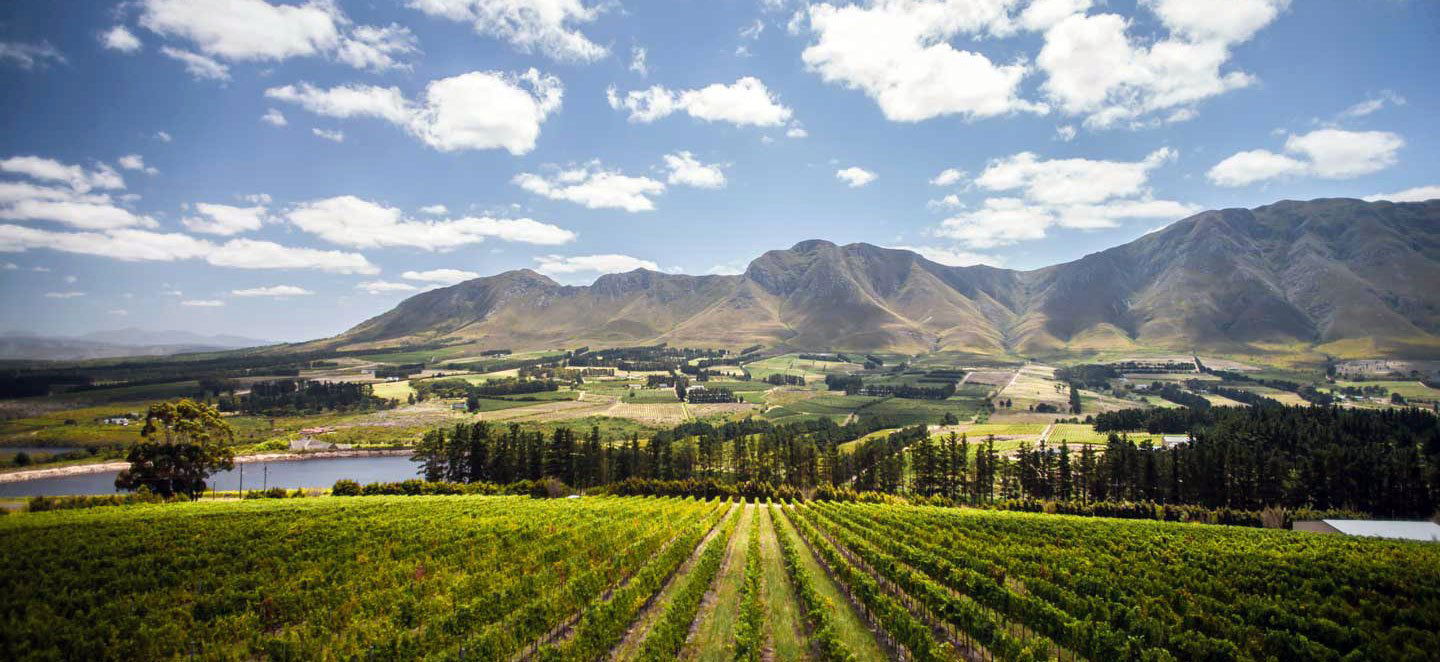
Where the Hemel-en-Aarde Valley Earns Its Reputation
The drive along the R320 out of Hermanus is a gradual transition from coastal town to serious wine country. The fynbos thins, the hills steepen, and the air carries a coolness that feels at odds with the latitude. This is Walker Bay's reach inland, and it is the governing force behind the Hemel-en-Aarde Valley's claim to producing some of South Africa's most compelling cool-climate wines. Newton Johnson Vineyards sits in that corridor, where the ocean's moderating influence keeps temperatures low enough to stretch the growing season and preserve the kind of natural acidity that winemakers in warmer regions work hard to engineer.
The valley has developed a competitive identity over the past two decades, with producers including Hamilton Russell Vineyards, Bouchard Finlayson, Creation Wines, and Ataraxia Wines collectively building a case for Hemel-en-Aarde as a legitimate Burgundian counterpart in the Southern Hemisphere. Newton Johnson belongs to this peer group, and its Pearl 2 Star Prestige recognition in 2025 confirms its position within the valley's upper tier of producers.
Viticulture as the Central Argument
What the Hemel-en-Aarde Valley has learned, through trial and accumulating vintages, is that the work determining wine quality happens in the vineyard before anything takes place in the cellar. This is not a philosophically neutral observation. It represents a material shift in how the region's serious producers allocate attention and resource. In valleys with richer, more forgiving soils and warmer growing seasons, winemakers can compensate for indifferent farming with technique. In a place this cool and this marginal, the vineyard is the intervention.
Newton Johnson operates on that understanding. The estate's approach to viticulture reflects the broader sustainability push that has reshaped South Africa's premium wine regions over the past decade. Across the Western Cape, producers in high-reputation zones have moved toward lower input farming, reducing synthetic chemistry in favour of methods that sustain soil biology and build long-term vine health. For varieties like Pinot Noir, which is temperamentally sensitive to site and soil condition, that relationship between farming practice and wine character is direct and traceable in the glass.
The Hemel-en-Aarde's soils, weathered shales and decomposed granite depending on where you stand in the valley, reward careful farming. They drain well, stress the vine at the right moments, and produce fruit with the kind of structure that ages rather than simply ripens. When that farming is done with minimal interference, the resulting wines tend toward precision over power, a register that places them in dialogue with fine Burgundy rather than with the fuller styles of warmer South African appellations.
A Valley Reading Against Itself
South Africa's premium wine identity has long been contested between two broad tendencies: the country's historical strength in fuller, sun-driven styles, and a younger generation of producers arguing for restraint, site specificity, and longevity. The Hemel-en-Aarde Valley, with its three distinct sub-appellations (Hemel-en-Aarde Valley, Upper Hemel-en-Aarde Valley, and Hemel-en-Aarde Ridge), has become the primary exhibit for the restraint argument. Each sub-appellation differs in elevation, temperature, and soil profile, and serious producers in the area treat those differences as material rather than administrative.
Newton Johnson's address on the R320 places it within the broader valley floor appellation, which tends toward a slightly softer expression than the higher-altitude Ridge, though the maritime proximity and the valley's characteristic coolness still define the growing conditions. For visitors who have tasted across the Cape Winelands, that context matters. This is not the ripe, sun-warmed Cabernet country of parts of Stellenbosch or Paarl. The contrast with producers like Fairview Wine & Cheese in Paarl or Constantia Glen in Cape Town is instructive: each represents a distinct South African climate register, and Hemel-en-Aarde sits at the cooler end of that spectrum.
For those who have visited Babylonstoren in Franschhoek or Delaire Graff Estate in Stellenbosch, arriving at Newton Johnson is an exercise in contrast rather than comparison. The Hemel-en-Aarde operates at a different pace and with a different visual register: less manicured estate drama, more working-farm directness. That is the point.
Planning a Visit
Newton Johnson Vineyards sits at the R320 Hemel-en-Aarde Valley address in Hermanus, accessible from the town centre along a road that passes several of the valley's other producers. For visitors building a day around the valley, the clustering of estates along this route makes it logical to pair visits. Given the valley's growing international profile, advance enquiry before arrival is advisable, particularly during peak summer months from November through February, when the Cape draws larger visitor numbers and tasting room capacity at smaller producers can be absorbed quickly.
Hermanus itself offers accommodation across a range of formats, from coastal guesthouses to larger hotels, and the town's restaurant scene has developed in step with the valley's wine reputation. Our full Hermanus hotels guide covers the current range, while our full Hermanus restaurants guide maps the dining options. For those planning a broader evening, the Hermanus bars guide is worth consulting.
The valley rewards visitors who plan half a day rather than a quick stop. The wines here are structured for conversation and consideration, not rapid tasting-flight turnover. Arriving with time and without a fixed schedule allows for the kind of unhurried engagement that the Hemel-en-Aarde, and specifically its cooler-climate Pinot and Chardonnay, is leading suited to.
Beyond the Hemel-en-Aarde, South Africa's wine country offers considerable range. Our full Hermanus wineries guide covers the region comprehensively. For those who find the cool-climate wine tradition compelling and wish to follow it across different countries and styles, the contrast with old-world producers like Abadía Retuerta in Sardón de Duero or the single-malt production methods of Aberlour in Aberlour illustrates how different traditions of terroir expression have developed across hemispheres and categories.
The Hermanus experiences guide covers wider activities in the region, including whale watching along the Walker Bay coastline, which peaks between June and November, and which draws significant visitor numbers to the town beyond wine-focused travel.
Frequently Asked Questions
Is Newton Johnson Vineyards more low-key or high-energy?
By the measures that define high-energy wine estates, Newton Johnson reads on the quieter side. It holds a Pearl 2 Star Prestige award (2025), which signals genuine quality recognition rather than volume-driven tourism positioning. The Hemel-en-Aarde Valley as a whole operates at a less produced register than some of the larger Stellenbosch or Franschhoek estates, and producers here tend to attract visitors who arrive with a purpose rather than as part of a broader sightseeing circuit. If you are looking for a large events venue or a high-footfall tasting experience, the valley is not that. If you are looking for a serious wine encounter in a cool-climate setting with a strong regional identity, that is what the address on the R320 offers.
What wines should I try at Newton Johnson Vineyards?
The Hemel-en-Aarde Valley has built its credibility on Pinot Noir and Chardonnay, the two varieties that the valley's cool-climate conditions favour most clearly. Newton Johnson's Pearl 2 Star Prestige standing (2025) suggests its range is taken seriously within the competitive context of the valley, where it sits alongside producers including Hamilton Russell, Bouchard Finlayson, Creation, and Ataraxia. Winemaker and vintage details are not publicly confirmed in available records, so specific tasting notes should be sought directly from the estate. What is consistent across the valley's better producers is a style that prioritises structure and acidity over immediate fruit weight, which means the wines often show better with an hour of air and alongside food rather than as standalone pours.
Accolades, Compared
These are the closest comparables we have in our database for quick context.
| Venue | Awards | Cuisine | Notes |
|---|---|---|---|
| Newton Johnson Vineyards | Pearl 2 Star Prestige (2025) | This venue | |
| Creation Wines | |||
| Ataraxia Wines | |||
| Bouchard Finlayson | |||
| Hamilton Russell Vineyards |
Access the Cellar?
Our members enjoy exclusive access to private tastings and priority allocations from the world's most sought-after producers.
Access the Concierge