Man o‘ War

Man o‘ War gives Waiheke wine tourism a coastal, estate-scale expression: beachfront tasting, hillside blocks, and a portfolio led by Bordeaux varieties, Syrah, Chardonnay and rosé. The draw is not formality but site: vines spread across a large farm at the eastern end of the island, with native bush, bay views and a cellar-door format built for lingering rather than rushing.
Pearl is the En Primeur Club membership app — saves, bookings, and concierge access live there. Same editors, same standards.
- Address
- Auckland City, Waiheke Island, Neuseeland
- Directions
- Get directions
 Saves & bookings on Pearl
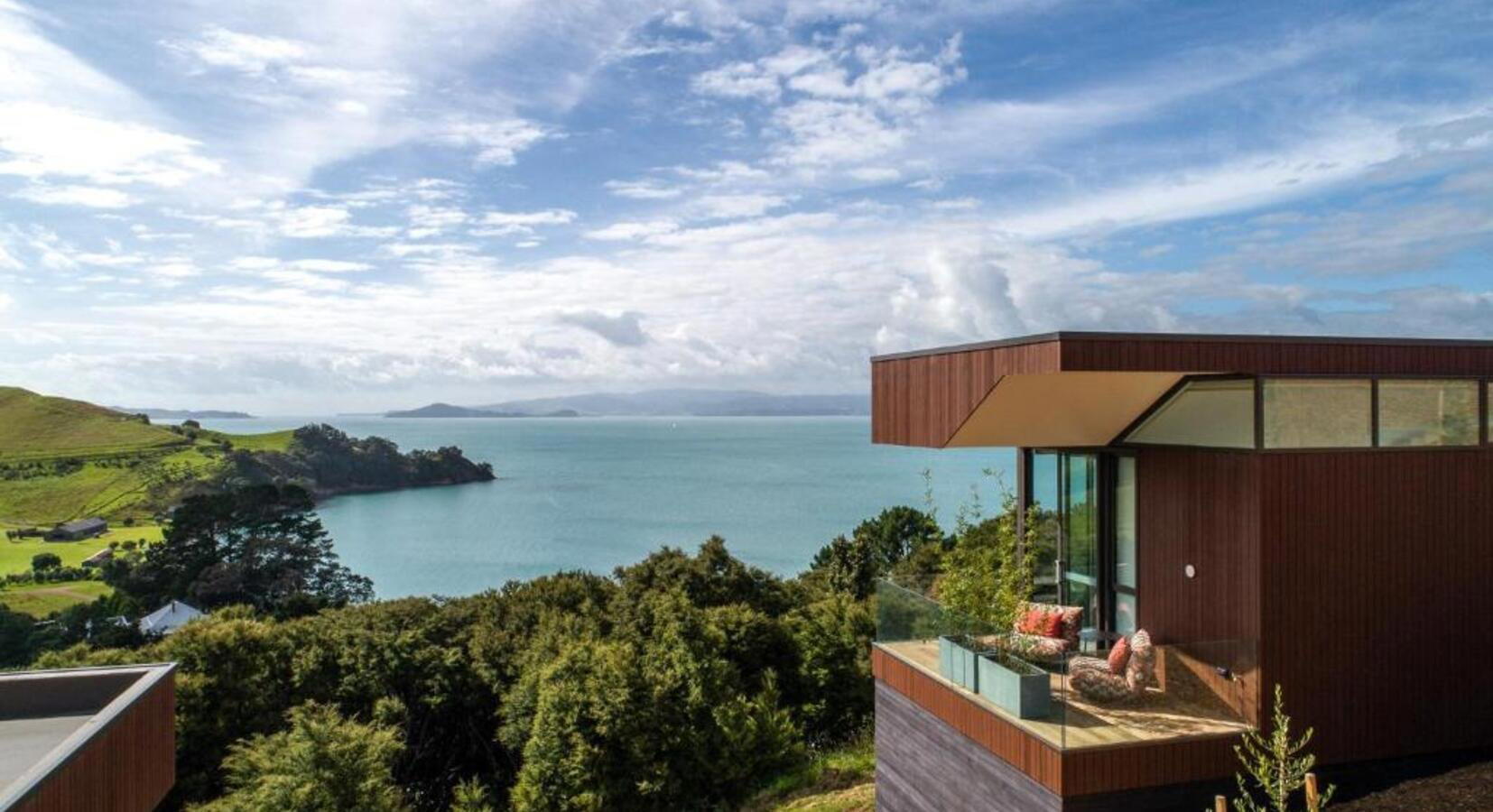
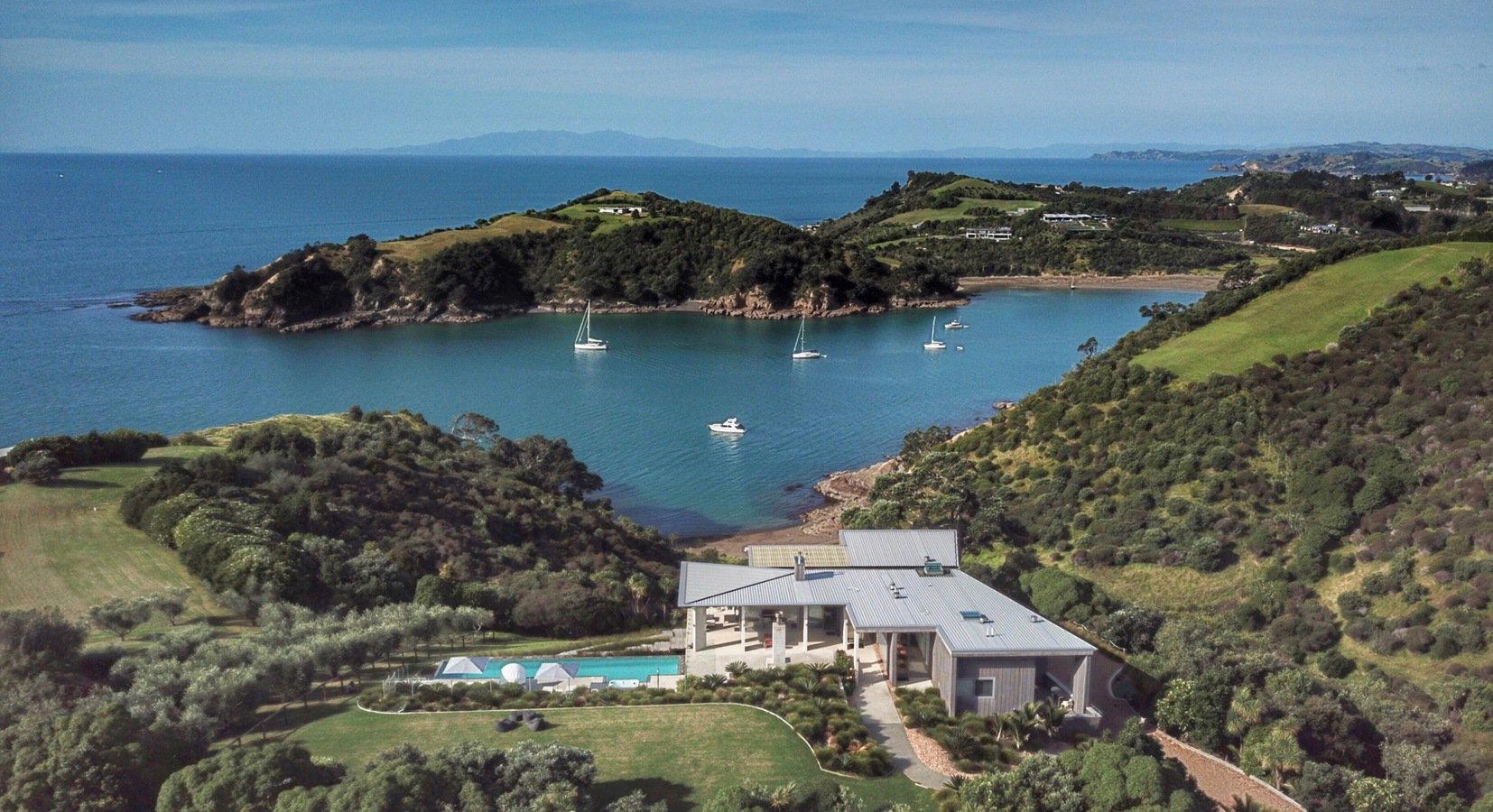
Approach matters on Waiheke. The island’s wine culture is tied to ferry timetables, salt air, steep slopes and the sense that Auckland City has loosened its grip without vanishing. At Man o‘ War, that shift is clear: the cellar door sits against bay, lawn, vineyard and farm, not a polished urban tasting room. The setting frames the wines before the first glass arrives.
Waiheke has long traded on proximity to Auckland and a climate suited to red Bordeaux varieties, but the island’s eastern end pushes that story deeper into coastal agriculture. Here, wine tourism is not just a sequence of pours. It is about land use, exposure and hospitality inside a working estate without turning the vineyard into scenery.
Coastal hillsides, block-by-block viticulture and a Waiheke red-wine argument
The vineyard story begins with scale and fragmentation. First vines were planted in 1993, and the estate now works roughly 150 acres of vines across about 75 to 76 hillside blocks within a much larger coastal farm. Another account describes around 90 vineyard pockets across eastern Waiheke, pointing to the same essential fact: this is not one tidy rectangle of vines, but a series of exposures, slopes and micro-sites.
That matters because Waiheke’s serious wine identity depends on ripening, wind, maritime influence and placing red varieties where sun exposure can work. Man o‘ War’s emphasis sits firmly in that context. Bordeaux varieties form the core, supported by Syrah, Chardonnay, Sauvignon Blanc, Semillon, Pinot Gris and Viognier. Cabernet Sauvignon, Merlot, Cabernet Franc, Malbec and Petit Verdot give the red programme classical architecture, while Syrah and Chardonnay add another register to the estate’s coastal expression.
The winemaking credentials add weight without requiring a personality-led myth. Duncan McTavish is named as winemaker, with formal viticulture and oenology training from Lincoln University and harvest experience across Burgundy, Germany and California. In a Waiheke context, that shows technical fluency rather than a romantic origin story. The more interesting point is the land’s interpretation: multiple hillside blocks, red vines placed for sun and a portfolio broad enough to show more than one face of the site.
Man o‘ War also has an unusual geographic wrinkle in its Pinot Gris, with some fruit sourced from Ponui Island and brought to Waiheke. That places the estate within a wider Hauraki Gulf wine geography rather than a sealed single-property narrative. For drinkers, the takeaway is simple: the cellar door is not built around a narrow varietal identity. It offers a broad reading of coastal New Zealand wine, with Bordeaux blends, Syrah, Chardonnay and rosé doing much of the interpretive work.
A beachfront cellar door built for dwell time, not tasting-room speed
Destination wineries often split into technical tasting rooms for focused drinkers and hospitality compounds where wine becomes one part of a longer day out. The winery belongs to the second category, but its credibility comes from the estate beneath the hospitality. The format includes a beachfront tasting room and restaurant, outdoor lawn seating, a deck over the bay, food-and-wine pairing options, by-the-glass service, wine flights and private tasting formats.
The lawn and beach access change the pace. This is a casual, conversational setting where families, groups and couples all fit. The restaurant and tasting room give structure; the open-air areas let the visit stretch. That explains why the estate works for wine education and a looser coastal afternoon. It is not for hushed ceremony. Its strength is letting serious vineyard scale coexist with a relaxed shoreline mood.
The hospitality offer also reflects seasonality. A lawn bar operates in high season, adding an informal layer to the core tasting-room and restaurant model. Forest Flight zipline and forest-walk programming nearby extend the visit beyond wine, increasingly common at premium destination estates competing for full-day attention rather than single-flight traffic. The better version keeps wine central. Here, vineyard scale, block structure and varietal range prevent the setting from swallowing the cellar-door purpose.
Pricing is listed at $50 per person, placing the experience in a planned-outing bracket rather than an incidental tasting stop. Reservations are recommended, especially for tastings and restaurant use, though the tone remains casual. Dress accordingly: this is coastal farm terrain with outdoor seating, not a formal dining room imitating the city.
Stewardship gives the scenery substance
Scenery can become lazy shorthand in island wine writing. The more useful question is what the estate does with the land it controls. The winery sits within a 4,500-acre family farm, while only a fraction is under vine. Significant portions have been returned to native bush, and native tree planting forms part of the broader land story. The visual appeal is therefore more than a backdrop; it links vineyard development to stewardship.
This does not turn the estate into a technical sustainability case study. Formal certifications, carbon metrics and farming protocols are not part of the public-facing essentials here. The credible claim is narrower and stronger: a large coastal holding has been planted selectively, vineyard blocks occupy a relatively small share of the land, and native bush regeneration forms part of the estate’s identity.
For Auckland City travellers, the winery argues for treating Waiheke as more than a quick tasting add-on. It shows how island wine culture can combine maritime climate, hillside viticulture and leisure infrastructure without losing the agricultural point. Readers building a wider itinerary can place it alongside our full Auckland City wineries guide, then round the city with our full Auckland City restaurants guide, our full Auckland City hotels guide, our full Auckland City bars guide and our full Auckland City experiences guide.
For a broader New Zealand and international wine map, continue through Akarua Winery in Nevis, Akitu in Wānaka, Alan McCorkindale Limited in Christchurch, Allan Scott Family Winemakers in Blenheim, Alpha Domus Winery in Hastings, Amisfield Wine in Queenstown, Ara Wines in Auckland, Aronui Wines in Nelson, »der Steiner« Hans Steiner in Podersdorf am See and & Handwein in Mannheim.
Recognition history
Dated appearances from independent guides and award organizations, with the underlying list record or original source where available.
Falstaff Winery - Listed
Falstaff
Continue exploring
More in Auckland City
Wineries in Auckland City
Browse all →
Bars in Auckland City
Browse all →
Restaurants in Auckland City
Browse all →
At a Glance
- Scenic
- Rustic
- Well Known
- Romantic
- Energetic
- Group Outing
- Family
- Romantic Getaway
- Special Occasion
- Wine Education
- Solo Exploration
- Estate Grounds
- Waterfront
- Picnic Area
- Panoramic View
- Vineyard Tour
- Private Tasting
- Sustainable
- Waterfront
- Vineyard
- Mountain
- Waiheke Island
- Syrah
- Chardonnay
- Cabernet Sauvignon
- Merlot
- Cabernet Franc
- Malbec
- Petit Verdot
- Sauvignon Blanc
- Semillon
- Pinot Gris
- Viognier
- Still Red
- Still White
- Still Rosé
- Sparkling
- Standard Tasting
- Wine Flights
- Private Tasting
- Food And Wine Pairing
- By The Glass
Relaxed beachfront atmosphere with outdoor lawn seating, deck overlooking the bay, and a family-friendly, scenic coastal farm setting that blends rugged hillsides, native forest and vineyards with warm hospitality.