
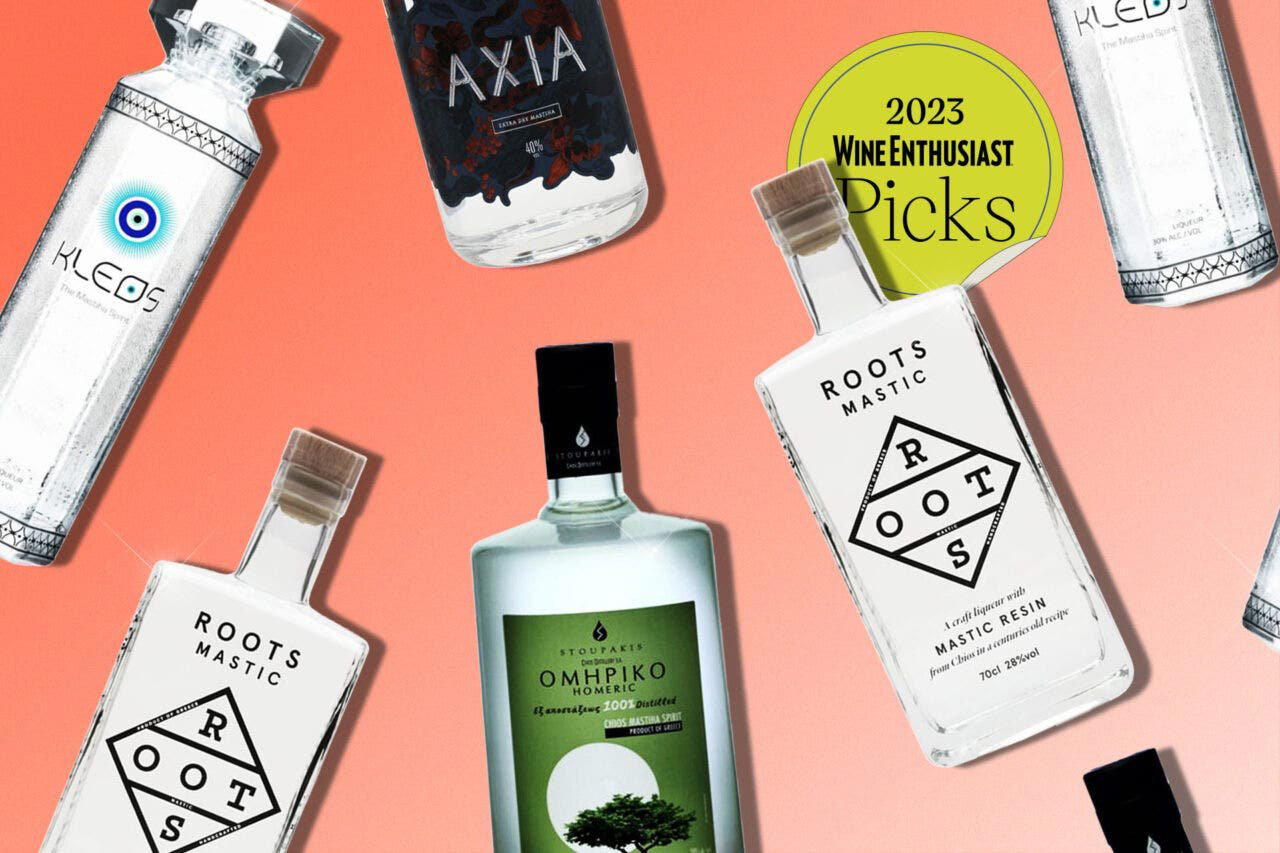
Hios Mastiha Distillery in Dafnonas, Chios, sits at the intersection of one of Greece's most geographically specific agricultural traditions and the emerging premium spirits culture built around it. Awarded Pearl 2 Star Prestige in 2025, the distillery works with mastiha, the resinous sap harvested exclusively in southern Chios, translating a centuries-old agricultural identity into distilled form.
 Discover on Pearl
Pearl is the En Primeur Club membership app — saves, bookings, and concierge access live there. Same editors, same standards.
- Address
- Dafnonas 821 00
- Phone
- +30 2271 077333
- Website
- stoupakis.gr
Where the Mastic Grove Meets the Still
Approach Dafnonas from the main road south and the landscape shifts before you arrive. The scrubby hillsides of the northern half of Chios give way to something more deliberate: low, gnarled Pistacia lentiscus trees planted in rows, their bark scored for the slow bleed of resin that dries into translucent tears on the ground beneath them. This is the mastic belt, a strip of southern Chios where the micro-climate and soil composition produce a resinous yield found nowhere else on earth. The Hios Mastiha Distillery, based at Dafnonas 821 00, draws its entire identity from this geography. What the still produces is inseparable from the grove that surrounds it.
Mastiha as a cultivated product has a documentation trail stretching back to antiquity, with the Genoese fortified villages of medieval Chios, the Mastichochoria, built partly to protect this trade. The resin was currency, medicine, and flavouring agent across the Mediterranean for centuries before modern spirits markets gave it a new commercial form. The distillery operates within that long continuum, and its 2025 Pearl 2 Star Prestige award from EP Club is the one award on record.
Terroir as the Central Argument
Few ingredients in European spirits carry a geographical designation as precise as Chios mastiha. The European Union recognised it as a Protected Designation of Origin in 1997, making the resin legally inseparable from its island source. What that means in practice is that any distillate built on mastiha carries a provenance claim that cannot be replicated by sourcing resin from elsewhere: the particular mineral composition of the southern Chios limestone, the combination of heat and sea wind, and the centuries of cultivated tree stock all contribute to the aromatic profile of the raw material before distillation begins.
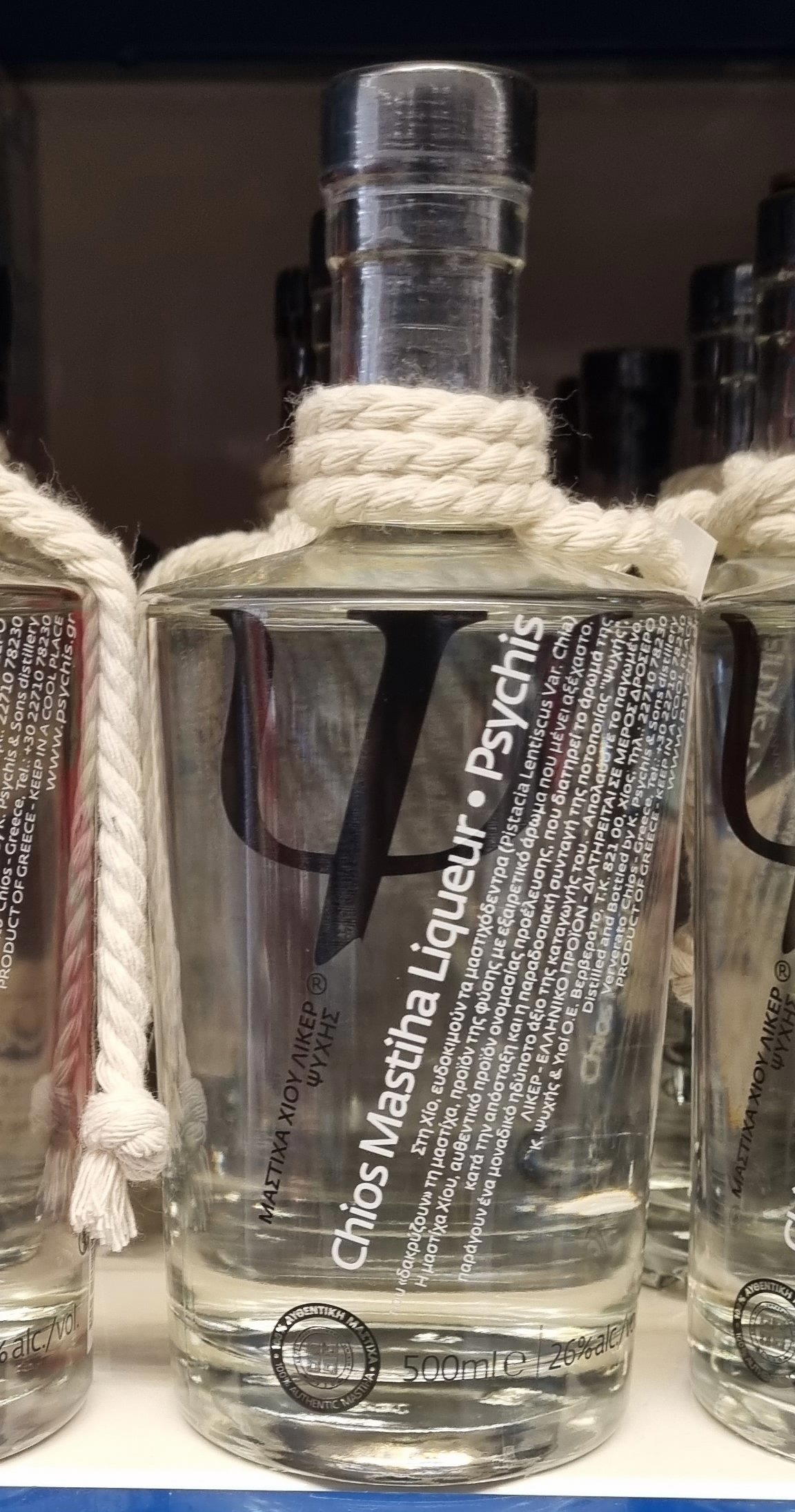
This places the Hios Mastiha Distillery in a different competitive category than most Greek producers. While operations like Psychis Distillery on the same island work within overlapping island traditions, and producers across the mainland Greek spirits sector, from the Volos-based Apostolakis Distillery outward, draw on regional botanical identities, none have access to an ingredient with this specific a PDO. The argument the distillery makes with each bottle is fundamentally geographic before it is anything else: the land produced this, and no other land could.
The broader Greek spirits market has matured considerably in recent years. Premium tsipouro producers have found international distribution. Greek gin labels with local botanical programs have entered the crowded craft-gin tier with some commercial traction. Within that shifting context, mastiha-based spirits represent a sub-category defined almost entirely by provenance, where the credential of origin carries more weight than recipe or technique in isolation. A 2 Star Prestige recognition from EP Club in 2025 signals that the Hios Mastiha Distillery is working at a level where technique and raw material quality are aligning.
The Southern Villages and What They Produce
The Mastichochoria, the mastic villages of southern Chios, number around twenty, each with a fortified medieval core and working groves that still produce commercially. Dafnonas sits within this cluster. The harvest season runs from late July through October, when cultivators score the bark, collect the crystallised tears, and sort them by grade. The premium grade, known as Large Tears or large natural, commands significantly higher prices and is typically reserved for higher-quality food and spirits applications.
For a distillery operating in this context, the supply chain is local by necessity and by designation. This proximity matters: mastiha resin is fragile and aromatic, and the time between harvest and processing affects the clarity and intensity of the resulting distillate. A producer based in the mastic belt, as the Hios Mastiha Distillery is, operates with a supply-chain advantage that a mainland producer sourcing processed resin cannot replicate. This is a structural terroir argument, not merely a marketing one.
Chios in the Greek Spirits and Wine Context
Chios occupies an unusual position in the Greek producer map. It is not a wine island in the way that Santorini, with its Assyrtiko identity and producers like Artemis Karamolegos Winery, has defined a grape-driven terroir narrative. Chios does not appear in the same conversation as northern Greek wine regions anchored by appellations, where estates like Alpha Estate in Amyntaio or the cooperative producers of Artisans Vignerons de Naoussa in Stenimachos compete on Xinomavro's varietal profile. Chios's contribution to the premium Greek producer landscape is specifically resinous and botanical, and the distillery, rather than the winery, is its natural form.
Across Greece more broadly, the premium spirits and distillery sector is smaller and less internationally mapped than the wine sector. Producers like Achaia Clauss in Patras represent the older, larger end of the Greek producer tradition, while newer artisan operations work at much smaller scale. The Hios Mastiha Distillery's 2 Star Prestige rating places it in the upper segment of that artisan tier, where provenance, designation, and production discipline are the defining factors. For readers mapping the Greek spirits landscape, this is a producer that belongs to a very specific geographic sub-category, not a general Greek craft spirits story. Our full Chios restaurants guide covers the broader island dining and drinking context for visitors planning time in the region.
Planning a Visit
The distillery is located at Dafnonas 821 00, within the mastic village zone in the southern part of Chios. Visitors travelling from Chios Town should expect a drive of roughly thirty to forty minutes depending on route. The EP Club Pearl 2 Star Prestige award (2025) positions this as a producer worth building an itinerary around rather than treating as an incidental stop. Visits are by appointment only. Chios is accessed by ferry from Piraeus or by direct flight from Athens, with the southern village circuit, including the mastic museum at Pyrgi and the fortified village of Mesta, providing context for the agricultural tradition the distillery represents.
Comparable Venues
Comparable venues nearby, for context on price, style, and recognition.
| Venue | Cuisine | Price | Awards | Notes |
|---|---|---|---|---|
| Hios Mastiha DistilleryThis venue — the venue you are viewing | Chios Mastiha PDO | , | 1 recognition | |
| Psychis Distillery | Chios PGI | , | 1 recognition | Ververato |
| Lesvos Distilling Company (EPOM) | Ouzo of Mytilene PGI | $$ | 1 recognition | Kara-Tepe |
| Agathangelou Distillery | Winery | , | 1 recognition | Mytilene |
| EVA Distillery | Winery | $$ | 1 recognition | Pagani |
| Lost Lake Distillery | Winery | , | 1 recognition | Egira |

At a Glance
- Wine Education
- Historic Building
- Sustainable
rustic and historic with an emphasis on traditional production processes.