Fancrest Estate

Falstaff Winery - Listed
Fancrest Estate is a small organic Pinot Noir producer in Waipara, shaped by limestone soils, regenerative farming and an intentionally narrow estate-only portfolio. The draw is not cellar-door theatre but the way a 5.6-hectare vineyard, indigenous-yeast fermentations and low yields frame North Canterbury Pinot Noir with unusual discipline.

Pearl is the En Primeur Club membership app — saves, bookings, and concierge access live there. Same editors, same standards.
- Address
- State Highway 1, S, Waipara 7483, New Zealand
- Phone
- +64 21 620 862
- Hours
- Mon–Fri 9 AM–5 PMSat–Sun Closed
- Website
- fancrest.com
- Directions
- Get directions
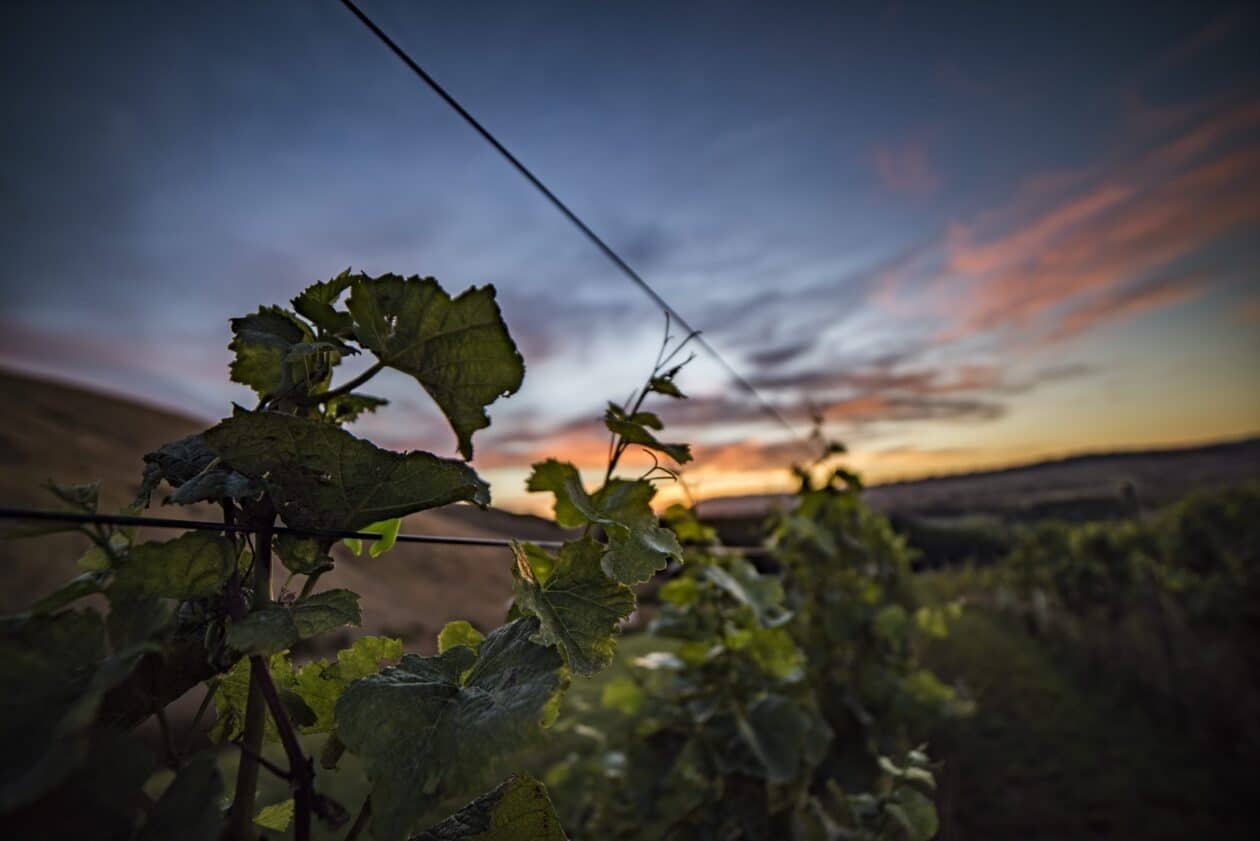
Waipara’s limestone country can feel more agricultural than manicured, and that distinction matters here. Fancrest Estate belongs to the working-farm end of wine: a tiny, hands-on organic Pinot Noir estate on Waipara’s limestone “Golden Mile,” with production happening in an open-air pop-up winery close to the vines rather than in a polished visitor facility. The setting is part of the point. This is not a venue best read through the language of grand arrivals, broad cellar-door programming or highly staged hospitality; it is better understood through proximity, scale and the visible connection between vineyard, farm and wine.
That makes the estate a useful lens on Waipara’s quieter wine identity. The appeal is not hospitality gloss or a broad visitor circuit. It is the focused character of a small Pinot Noir estate shaped by limestone country, close-to-the-vines production and a regenerative-farming feel. In that sense, Fancrest Estate is valuable less as an all-purpose stop and more as a concentrated example of what a modest, land-led Waipara producer can represent.
Limestone Pinot Noir without the cellar-door performance
Fancrest Estate is best understood as a compact, hands-on Pinot Noir property rather than a large, highly polished wine destination. The picture is narrow but clear: organic Pinot Noir, Waipara limestone, agricultural texture and production close to the vineyard. That narrowness should not be seen as a weakness. It gives the estate a clean editorial shape, where the important details are the grape, the ground and the way the place presents itself as a working environment.
The site’s place on Waipara’s limestone “Golden Mile” is central to how the estate presents itself. Rather than leaning on architectural spectacle or a conventional hospitality story, Fancrest Estate reads as a working estate where the vineyard and farm setting remain the main frame. The emphasis is on place rather than performance: limestone country, small-scale Pinot Noir and an atmosphere that feels closer to farm practice than to a curated wine-tour set piece.
The open-air pop-up winery close to the vines reinforces that impression. It suggests a producer whose identity is tied less to a formal visitor facility and more to the practical reality of making Pinot Noir in close contact with the land. For visitors, or for readers simply assessing whether the estate belongs on a Waipara list, that detail is useful because it sets expectations. The interest lies in immediacy and specificity, not in the breadth of a conventional tasting-room experience.
A portfolio built around one grape, not a tasting flight
Grounded fact to keep in view is the Pinot Noir focus. Fancrest Estate is described as an organic Pinot Noir estate, and that focus is the safest way to read the venue: not as a broad wine-tour stop with a wide range of offerings, but as a small Waipara producer centered on Pinot Noir. The estate’s identity is therefore compact by design, at least in the way it is presented here, and that compactness helps define who it will most appeal to.
Because the public record here is deliberately limited, it is better not to overstate specific wines, farming details, cellar techniques, visitor formats or ownership history. What can be said confidently is that the estate’s appeal sits in the combination of organic Pinot Noir, limestone setting and a regenerative-farming feel. Those are enough to establish a clear character without stretching beyond what is known. The useful reading is restrained: a small estate with a focused grape identity, a distinctive Waipara setting and a production context that appears close to the vines rather than removed from them.
For planning, treat Fancrest Estate as a specialist Waipara wine estate rather than a general hospitality venue. Details such as visit format, opening arrangements and any tasting setup should be confirmed directly before building a day around it. That is especially important because the estate’s appeal, as described, is not based on the promise of a broad, always-on visitor operation. It is based on a more particular proposition: a tiny, hands-on Pinot Noir estate whose character is inseparable from its limestone and farm setting.
Where it fits in a Waipara wine itinerary
For readers building a Waipara-focused wine day, the useful frame is contrast of format rather than direct ranking. Fancrest Estate offers the profile of a tiny, hands-on Pinot Noir estate in limestone country, while other Waipara wine and dining options can be considered more generally depending on the kind of visit you want. If the goal is a polished, predictable hospitality sequence, this may not be the obvious anchor. If the goal is to understand a quieter, more agricultural expression of Waipara wine, it becomes much more relevant.
The editorial case for Fancrest Estate is precise: an organic Pinot Noir estate in Waipara, set on the limestone “Golden Mile,” with an agricultural, regenerative-farming feel and production in an open-air pop-up winery close to the vines. Readers looking for a highly polished visitor facility should read that signal carefully. Readers interested in a small, land-focused Pinot Noir estate will understand the appeal quickly. Its strength is the clarity of that signal: small scale, Pinot Noir focus, limestone country and a working-farm sensibility, all pointing toward a Waipara experience that is more grounded than glossy.
Recognition history
Dated appearances from independent guides and award organizations, with the underlying list record or original source where available.
Falstaff Winery - Listed
Falstaff
Continue exploring
More in Waipara
Wineries in Waipara
Browse all →

Bars in Waipara
Browse all →



Restaurants in Waipara
Browse all →


Hotels in Waipara
Browse all →
Details
- Rustic
- Scenic
- Quiet
- Solo Exploration
- Wine Education
- Special Occasion
- Organic
- Sustainable
- Dry Farmed
- Vineyard
- Mountain
- Pinot Noir
- Still Red
- Still Rosé
Current opening hours
- Monday
- 9 AM–5 PM
- Tuesday
- 9 AM–5 PM
- Wednesday
- 9 AM–5 PM
- Thursday
- 9 AM–5 PM
- Friday
- 9 AM–5 PM
- Saturday
- Closed
- Sunday
- Closed
Hours can change for holidays and private events. Last verified .
A tiny, hands-on organic Pinot Noir estate on Waipara’s limestone “Golden Mile,” with an agricultural, regenerative-farming feel rather than a polished visitor facility; production happens in an open-air pop-up winery close to the vines, emphasizing natural, minimalist winemaking over hospitality infrastructure.