Black Estate


Cuisine Good Food Guide Selection · Falstaff Winery - 2 Stars
Black Estate gives Waipara Valley a clear, land-led argument: cool-climate Pinot Noir, Chardonnay and Riesling shaped by hillside vineyards, organic and biodynamic farming, and a cellar-door experience tied to seasonal dining. The long black barn and Southern Alps outlook matter, but the stronger reason to go is the estate-grown, native-yeast approach across three vineyard sites.

Pearl is the En Primeur Club membership app — saves, bookings, and concierge access live there. Same editors, same standards.
- Address
- Waipara Valley, Neuseeland
- Phone
- 03 314 6085
- Website
- blackestate.co.nz
- Directions
- Get directions
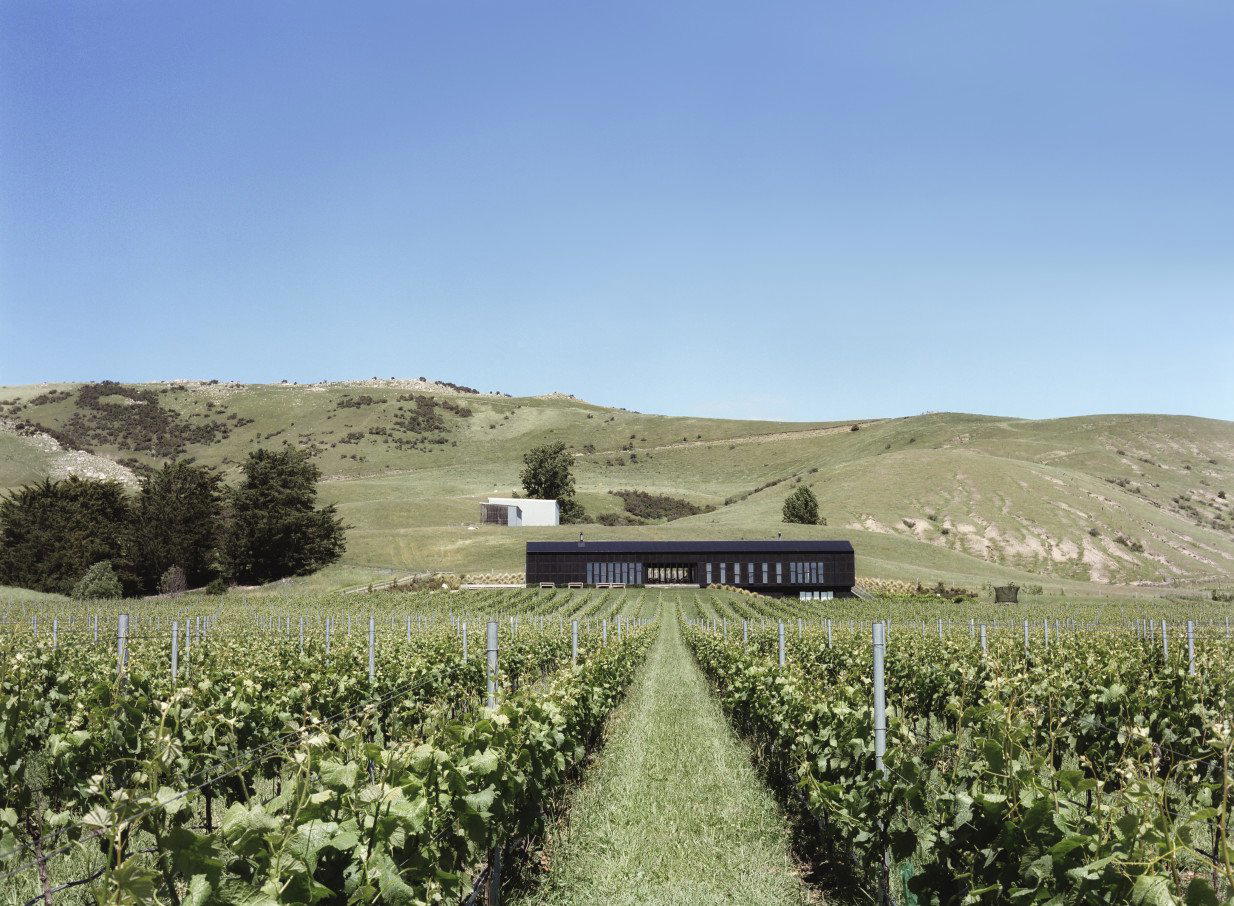
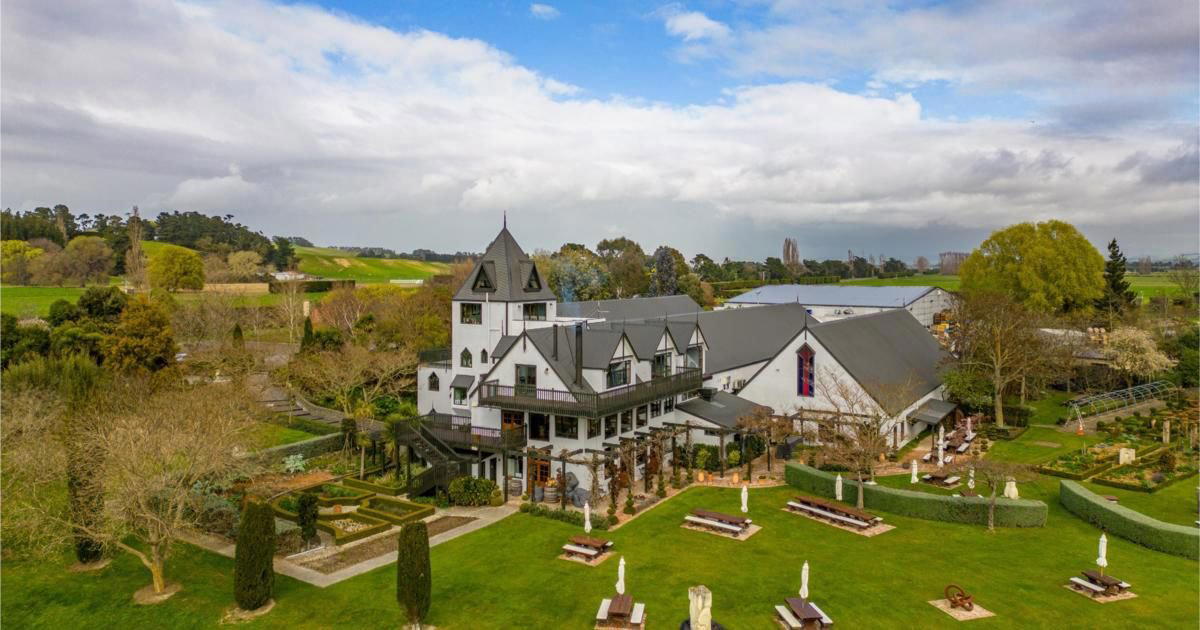
Approach in Waipara Valley and the first impression is architectural rather than theatrical: a long black barn set into vineyard country, modern in line but rural in mood, with the Southern Alps giving the room its horizon. The estate’s hospitality works because it does not separate the view, the cellar door and the table. Wine here is not presented as a label-first exercise; it is framed through slope, soil, farming and the cool North Canterbury climate.
That matters in a region often reduced from overseas to a footnote after Marlborough or Central Otago. Waipara Valley has a different register. Its cool climate and complex geology favour slow development and tension rather than sheer fruit weight, particularly in Pinot Noir, Chardonnay and Riesling. Black Estate sits inside that conversation with unusual clarity: estate-grown fruit, three vineyard sites and a production culture that links natural wine language to fine-wine discipline.
Waipara Valley expressed through three estate vineyards
The strongest way to read the wines is by site rather than by variety alone. The original estate vineyard began in 1993, when restaurateur Russell Black planted 8 hectares in Omihi with help from Danny Schuster, focusing on Pinot Noir and Chardonnay. Under the Naish family, who took over in 2007, the property expanded into a 24-hectare, three-site model: the original estate, Netherwood and Damsteep. Netherwood, planted in 1986, adds older-vine context; Damsteep broadens the range of exposure and slope inside the valley.
This multi-site structure gives the portfolio its editorial interest. In many New Zealand cellar doors, the tasting moves horizontally across varieties. Here, the more useful lens is vertical: how the same regional climate behaves across different blocks, vine ages and vineyard characters. Pinot Noir, Chardonnay and Riesling become the vocabulary, while the vineyards supply the grammar.
The farming credentials are not decorative. The vineyards are certified organic by BioGro and biodynamic by Demeter, placing the estate within a smaller New Zealand group where certification, not just language, supports the agricultural claim. Native-yeast fermentation and minimal cellar intervention extend that logic indoors. Nicholas Brown, the winemaker, has a background with Danny Schuster, but the more important point is how the winemaking serves the regional argument: estate fruit, site separation and restrained handling rather than recipe-driven consistency.
The critic record gives the wines an external frame without turning the estate into a trophy case. Scores cited for earlier releases include 93/100 for the 2012 Pinot Noir, 93/100 for the 2013 Riesling, 92/100 for the 2013 Chardonnay, and 94/100 for both the 2012 Damsteep Pinot Noir and 2011 Spy & Omihi Pinot Noir. Those numbers are useful because they show breadth across varieties and vineyard expressions, not just a single standout bottle.
A cellar door where the restaurant sharpens the tasting
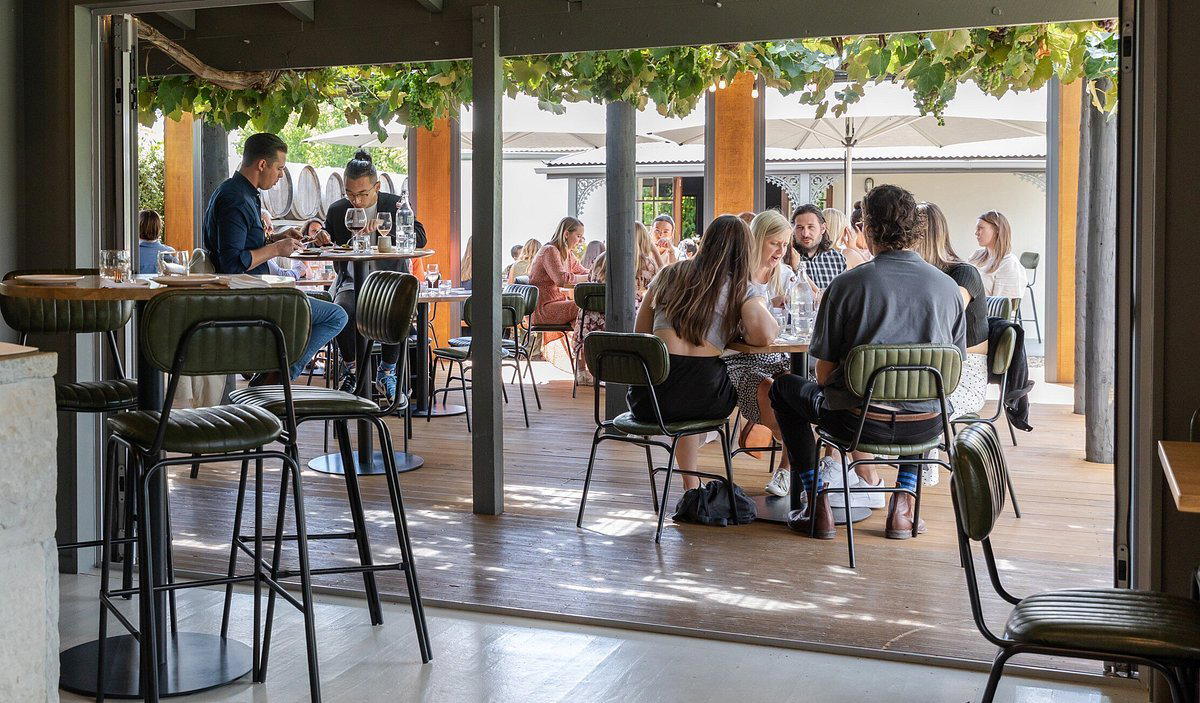
Room matters because winery hospitality in New Zealand can split into two weak forms: a counter that feels detached from place, or a restaurant where the wine becomes scenery. Black Estate avoids that split by keeping the tasting room, winery and restaurant within the same barn structure, so the estate reads as one working system. The setting is quiet, intimate and visually disciplined, but the essential point is functional: the visitor can connect vineyard, glass and plate without changing context.
Restaurant gives the estate a second trust signal. It holds Two Hats and has twice won the Cuisine Good Food Award best Winery restaurant, a significant marker in a country where winery dining ranges from casual platters to serious regional cooking. The food program is built around organic and spray-free local produce alongside the estate’s wines, which makes sense for a producer whose wine identity depends on farming claims. Seasonal dining is not an accessory here; it is the hospitality version of the vineyard philosophy.
For travellers planning a wider Waipara stay, the estate works well as an anchor around which to build the day rather than a quick tasting stop. Use Our full Waipara Valley wineries guide for the wine route, then cross-check meals through Our full Waipara Valley restaurants guide, stays through Our full Waipara Valley hotels guide, drinks through Our full Waipara Valley bars guide, and regional programming through Our full Waipara Valley experiences guide. Omni Hills is also part of the local winery map for readers building a Waipara-focused itinerary.
How it fits into New Zealand wine travel
Black Estate is useful for travellers who want New Zealand wine beyond the familiar shorthand. Marlborough often means Sauvignon Blanc in the global imagination; Central Otago is frequently framed through alpine Pinot Noir. Waipara Valley asks for a slower read, and this estate gives that read structure: certified farming, hillside vineyards, older-vine material, native ferments and a hospitality format with enough culinary weight to hold attention after the tasting flight ends.
The better visit is not the one that treats the cellar door as a scenic pause. It is the one that pays attention to the differences among the estate, Netherwood and Damsteep bottlings, then lets lunch put those differences into a regional food context. The estate’s price positioning sits in the premium casual-to-serious bracket rather than mass cellar-door territory, and the experience suits drinkers who care about farming decisions as much as polished service.
For broader context across New Zealand producers and wine-country travel, EP Club’s winery archive includes Akarua Winery in Nevis, Akitu in Wānaka, Alan McCorkindale Limited in Christchurch, Allan Scott Family Winemakers in Blenheim, Alpha Domus Winery in Hastings, Amisfield Wine in Queenstown and Ara Wines in Auckland. International readers comparing biodynamic and small-producer cultures can also file it beside »der Steiner« Hans Steiner in Podersdorf am See and & Handwein in Mannheim, not as direct peers, but as part of a broader travel interest in land-led wine estates.
Recognition history
Dated appearances from independent guides and award organizations, with the underlying list record or original source where available.
Cuisine Good Food Guide Selection
Cuisine Good Food Guide
Falstaff Winery - 2 Stars
Falstaff
Continue exploring
More in Waipara Valley
Wineries in Waipara Valley
Browse all →

Bars in Waipara Valley
Browse all →
Restaurants in Waipara Valley
Browse all →
Hotels in Waipara Valley
Browse all →
Details
- Scenic
- Modern
- Rustic
- Intimate
- Romantic
- Romantic Getaway
- Group Outing
- Special Occasion
- Wine Education
- Solo Exploration
- Estate Grounds
- Panoramic View
- Vineyard Tour
- Private Tasting
- Design Destination
- Organic
- Biodynamic
- Sustainable
- Vineyard
- Mountain
- Garden
- Pinot Noir
- Chardonnay
- Riesling
- Cabernet Franc
- Chenin Blanc
- Still Red
- Still White
- Still Rosé
- Bar Tasting
- Seated Tasting
- Restaurant Pairing
- Private Tour & Tasting
- English
A peaceful, intimate hillside estate centred around a stylish long black barn with modern, minimalist lines that blend into the vineyard landscape, offering relaxed, attentive tastings and seasonal dining with expansive views over Waipara Valley and the Southern Alps.