Familia Schroeder

Familia Schroeder is a Patagonian winery in San Patricio del Chañar, Neuquén, recognised with a Pearl 3 Star Prestige award in 2025. Positioned among Argentina's serious cool-climate producers, the estate draws visitors making the journey into Neuquén wine country for structured, terroir-driven wines from one of South America's most consequential emerging regions.
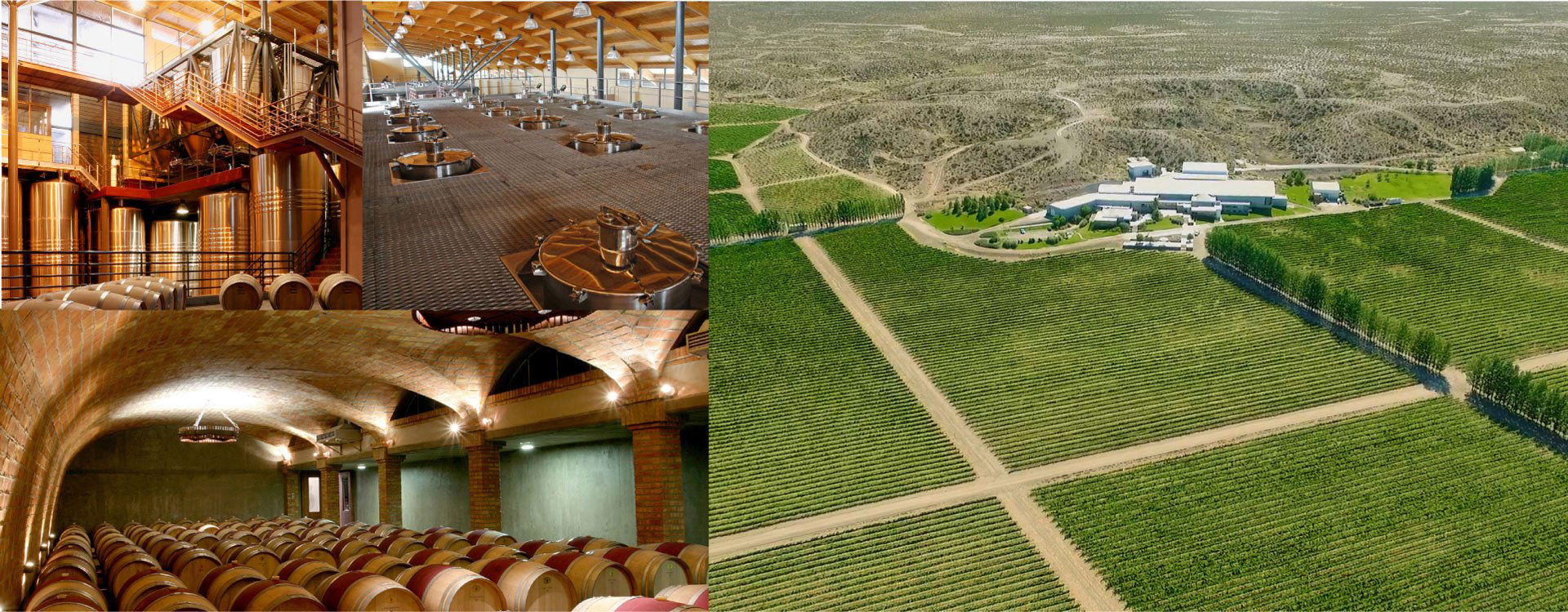
Patagonia's Wine Country and Where Familia Schroeder Fits
San Patricio del Chañar sits in the Neuquén province of Argentine Patagonia, roughly 1,200 kilometres south of Mendoza, and its wine scene operates on a different logic from the country's dominant producing regions. Here, the growing season is shorter, diurnal temperature swings are wider, and the desert winds off the Andes shape everything from canopy management to harvest timing. The region has built a quiet reputation among Argentine wine specialists as a place where cool-climate structure arrives without the intervention-heavy winemaking that often smooths out character elsewhere. For context on how the broader area is developing, see our full San Patricio del Chañar wineries guide.
Familia Schroeder, located on Calle 7 Norte in San Patricio del Chañar, holds a Pearl 3 Star Prestige rating from 2025, which places it among the more formally recognised producers operating out of this corner of Neuquén. That level of recognition, awarded in 2025, signals a programme with enough consistency and ambition to attract serious critical attention, even within a region that still flies well below the international radar compared to Luján de Cuyo or the Uco Valley.
The Neuquén Winemaking Tradition
Patagonian viticulture developed later and more deliberately than Mendoza's. Where Argentina's most celebrated wine province built its identity over more than a century of large-scale production, Neuquén's modern wine industry is effectively a 21st-century project, shaped by producers who chose the region precisely because its conditions forced a different approach. The combination of volcanic soils, extreme sunlight at altitude, and cold nights produces wines with natural acidity retention that warmer zones have to engineer chemically. This matters when evaluating any serious producer in the appellation, including Familia Schroeder. The terroir does work that technique alone cannot replicate.
Across Patagonia's producing valleys, the wines most associated with the region's premium identity tend to emphasise freshness over extraction. Malbec grown here reads differently from Mendoza expressions: leaner, more savoury, with less of the plush fruit weight that defines Luján de Cuyo's benchmark bottles. Pinot Noir, which struggles in warmer Argentine zones, finds a more natural home in Neuquén's cooler pockets. Producers at the serious end of the market, like those you'll find reviewed at Bodega Malma in the same appellation, have built programmes around that structural distinction.
What the Pearl 3 Star Prestige Rating Signals
EP Club's Pearl 3 Star Prestige designation, as awarded to Familia Schroeder in 2025, sits within a tiered recognition framework that identifies producers with demonstrated quality across their range, not just standout single bottles. For a winery operating in a region without the global name recognition of Mendoza or Salta's Cafayate, this kind of external validation carries particular weight. It provides potential visitors and buyers with a fixed reference point in a category where the gap between estate rhetoric and actual wine quality can be wide.
Comparable producers awarded at similar levels in other Argentine regions include houses like Bodega Colomé in Molinos, which built its reputation partly on altitude claims, and Bodega El Esteco in Cafayate, where terroir singularity anchors the brand identity. The common thread is that recognition in peripheral Argentine wine regions tends to come to producers whose wines speak clearly to place, rather than those chasing generic fruit-forward approachability.
The Winemaking Orientation in Neuquén's Cool-Climate Context
The editorial angle most relevant to Familia Schroeder's positioning is the broader Patagonian winemaking philosophy: restraint, site specificity, and a willingness to let difficult growing conditions define the wine rather than compensate for them. This is not the mainstream commercial logic of Argentine wine, where volume and international market accessibility have historically driven production decisions. Neuquén's serious producers work in opposition to that model, and the wines they produce are more variable year to year, more demanding as drinking propositions, and more interesting to follow over time.
That orientation places Familia Schroeder alongside a cohort of producers, in Argentina and internationally, who view winemaking as primarily an agricultural act rather than a manufacturing one. The tradition has strong parallels in Burgundy, where site selection and minimal cellar intervention are treated as the primary creative choices. In Argentine terms, it aligns with what Bodega DiamAndes in Tunuyán has pursued in the high-altitude reaches of the Uco Valley, and with the precision viticulture approach that defines Bodega Lagarde in Luján de Cuyo at the other end of Argentina's premium range.
Planning a Visit to San Patricio del Chañar
San Patricio del Chañar is not a casual stopover. Reaching it requires either flying into Neuquén city and driving north, or treating the region as the primary destination of a trip rather than an addition to an existing itinerary. Visitors who commit to the journey tend to spend multiple days in the valley, moving between estates and using the town as a base. For accommodation options in the area, our full San Patricio del Chañar hotels guide covers the available options by category. The dining scene, still developing relative to Mendoza's more established wine tourism infrastructure, is documented in our San Patricio del Chañar restaurants guide.
Familia Schroeder is located at Calle 7 Norte, Q8305 San Patricio del Chañar, Neuquén. Contact details and booking specifics are leading confirmed directly with the estate, as no website or phone number is currently listed in the EP Club database. Visitors planning around specific experiences or tastings should factor in that Patagonian wine estates, particularly those at the prestige end of the market, typically operate by appointment rather than open-door cellar door models. Arriving without prior arrangements risks a closed gate.
The leading time to visit the Neuquén wine valleys is from late February through April, when harvest activity brings the estates to life and the summer heat has begun to ease. Winter visits are possible but quiet, with some smaller operations reducing or suspending public access between June and August.
Familia Schroeder in the Broader Argentine Wine Picture
Argentina's wine geography is more varied than its international reputation suggests. The country that exports Malbec at scale is also producing serious Pinot Noir in Patagonia, textural whites in Salta, and structured Cabernet Franc in the Uco Valley's cooler pockets. Understanding where Familia Schroeder fits means situating it within that wider map: a Neuquén producer at the prestige end of the cool-climate category, recognised in 2025 by EP Club, and operating in a region that rewards patient exploration over quick conclusions.
Internationally, the cool-climate structuralism that defines Neuquén's leading producers connects to a global shift in fine wine preference, away from concentrated, extracted styles and toward wines that carry tension and age with interest. That shift has brought producers like Abadía Retuerta in Sardón de Duero to wider attention, and it is the same current that lifts serious Patagonian producers into conversations that Mendoza's mainstream volumes cannot easily enter.
For those building a broader picture of Argentina's premium wine geography, the contrast between Familia Schroeder's Patagonian context and producers like Bodega Trapiche or Escorihuela Gascón in Godoy Cruz illustrates how differently scale and ambition can express themselves within a single national wine identity. The complete range of San Patricio del Chañar's offerings, from bars to experiences, is indexed in our bars guide and our experiences guide for the region.
Frequently Asked Questions
What wines is Familia Schroeder known for?
Familia Schroeder operates in San Patricio del Chañar, Neuquén, a cool-climate Patagonian appellation where the signature wines tend toward structured Malbec and Pinot Noir with natural acidity and leaner fruit profiles than Mendoza equivalents. The estate holds a Pearl 3 Star Prestige rating from EP Club in 2025, indicating a range with recognised quality across multiple labels. For the region's winemaking identity, wide diurnal temperature swings and volcanic soils are the defining factors rather than any single grape variety.
What makes Familia Schroeder worth visiting?
The case for visiting rests on two factors: the estate's Pearl 3 Star Prestige recognition (2025) within a region that still receives relatively limited international attention, and the broader character of San Patricio del Chañar as a wine destination that rewards dedicated travel. Neuquén's cool-climate wines represent a genuinely different expression of Argentine viticulture, and visiting a prestige-rated estate in that context offers a reference point that no amount of retail access fully replicates. Price-range details are leading confirmed directly with the estate before travelling.
Do they take walk-ins at Familia Schroeder?
No booking policy is confirmed in the EP Club database for Familia Schroeder. However, Patagonian prestige estates in San Patricio del Chañar generally operate by prior arrangement, particularly for tastings and cellar tours. Given that no website or phone number is currently listed, prospective visitors should plan to make contact through the estate's address on Calle 7 Norte, Q8305, or seek current booking details through local wine tourism operators before arrival.
Who is Familia Schroeder leading for?
If you are travelling specifically to explore Argentina's cool-climate wine regions rather than the more established Mendoza circuit, Familia Schroeder is a logical inclusion at the prestige end of the Neuquén itinerary. The estate suits wine-focused visitors willing to commit to the journey to San Patricio del Chañar, who value formal recognition (Pearl 3 Star Prestige, 2025) as a quality signal in a region where reputations are still being established internationally. Casual visitors or those on short Argentine itineraries would find the logistics disproportionate to a brief stop.
How does Familia Schroeder compare to other Patagonian wineries in the same appellation?
Within San Patricio del Chañar specifically, Familia Schroeder's Pearl 3 Star Prestige award (2025) positions it at the formally recognised end of the local producer spectrum. Neighbouring estate Bodega Malma offers a useful peer reference for visitors mapping the appellation's quality tiers. Both operate within Neuquén's cool-climate viticulture tradition, but prestige-rated producers like Familia Schroeder are distinguished by the consistency and critical attention their ranges attract across multiple vintages rather than single-wine performance.
Booking and Cost Snapshot
A fast peer set for context, pulled from similar venues in our database.
| Venue | Price | Awards | Notes |
|---|---|---|---|
| Familia Schroeder | Pearl 3 Star Prestige (2025) | This venue | |
| Bodega Colomé | |||
| Bodega DiamAndes | |||
| Bodega El Esteco | |||
| Bodega Lagarde | |||
| Bodega Norton |
Access the Cellar?
Our members enjoy exclusive access to private tastings and priority allocations from the world's most sought-after producers.
Access the Concierge