Doubleback Winery

Doubleback Winery sits on Powerline Road in Walla Walla, earning a Pearl 2 Star Prestige rating from EP Club in 2025. The winery occupies a small but serious tier in Washington State wine, where Walla Walla's basalt-rich soils and continental climate produce some of the Pacific Northwest's most structured reds. A visit here places you inside that conversation directly.
Where Washington Cabernet Gets Serious
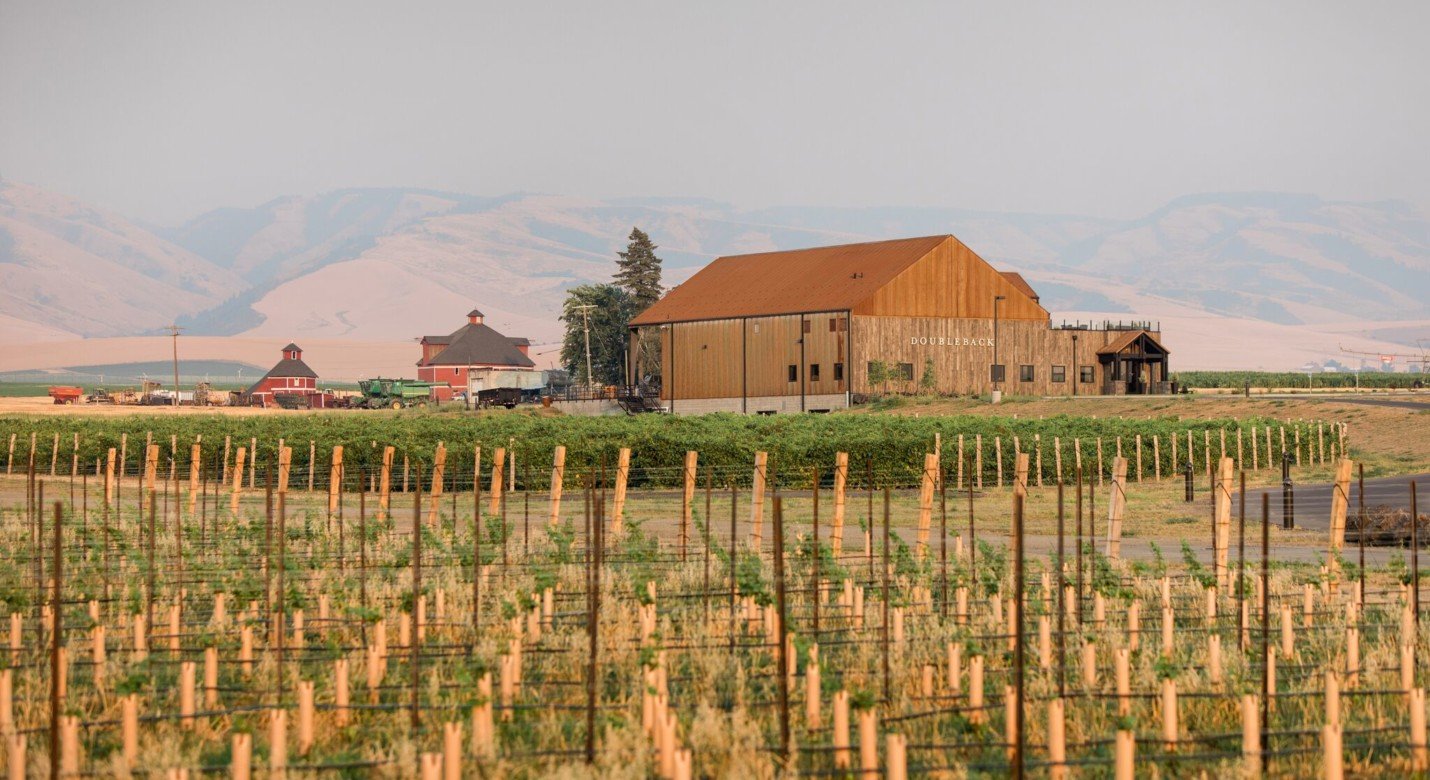
Walla Walla's wine country doesn't announce itself the way Napa does. The approach along Powerline Road is agricultural and unhurried, the landscape flat and wide, the horizon broken by the Blue Mountains to the east rather than any dramatic vineyard escarpment. What you find when you arrive at Doubleback Winery is consistent with that character: a property that operates with restraint and precision in a region that has learned, over the past three decades, that restraint is exactly what its leading terroir rewards.
Washington State's Cabernet-dominant premium tier has grown considerably since the early 2000s, when a small cluster of producers began demonstrating that the Columbia Valley and its sub-appellations could produce structured, age-worthy reds that competed with the West Coast's established names. Walla Walla, specifically, developed a reputation for Cabernet Sauvignon with firm tannin structure, dark fruit concentration, and enough acidity to support extended cellaring. Doubleback operates within that tradition and, as of 2025, carries a Pearl 2 Star Prestige rating from EP Club, placing it among the tier of Walla Walla producers whose work warrants serious attention from collectors and informed visitors alike.
The Tasting Room and How to Approach It
The tasting format at Walla Walla's serious producers has evolved over the past decade from walk-in drop-in accessibility toward reservation-first, small-group experiences where the conversation can go deeper than a poured flight and a price list. That shift reflects the maturity of the region's wine culture. Visitors who arrive expecting a casual drop-in tasting may find some of Walla Walla's prestige-tier wineries require advance contact. Planning ahead is the standard practice at this level.
For Doubleback specifically, reaching out before any visit is advisable. Phone and website details are leading confirmed through EP Club's current listings, as contact information for boutique Washington producers can change with seasonal staffing. Given the property's 2025 prestige recognition, demand for visits has likely increased, and the kind of focused, informed tasting experience the winery's tier suggests is not typically available on an impromptu basis. Booking through direct communication with the winery, ideally a few weeks in advance, is the approach that most reliably produces a substantive visit rather than a rushed one.
Walla Walla's Competitive Set and Where Doubleback Fits
Understanding Doubleback requires understanding the category it occupies. Walla Walla now has more than a hundred licensed producers, but the prestige tier is considerably smaller. At the leading end, you have allocation-model wineries where the waiting list is the primary access point, followed by a broader group of serious producers whose wines are available through the tasting room but whose reputation is built on consistent critical recognition over multiple vintages rather than on volume or visibility.
Doubleback sits in the latter group. Its EP Club Pearl 2 Star Prestige rating in 2025 positions it alongside a peer set that includes names like Gramercy Cellars and Dunham Cellars, producers whose identities are built around specific varietal commitments and whose tasting room experiences reflect that seriousness. K Vintners (Charles Smith) represents a different pole of the Walla Walla spectrum, one built on expressive, high-energy Syrah and a deliberately unconventional aesthetic. Sleight of Hand Cellars occupies a more approachable, consumer-facing position. Duckhorn's Canvasback label demonstrates how established California names have moved into the region as an endorsement of its Cabernet credentials.
Doubleback's profile is closer to the collector-focused end of that spectrum than the casual-visitor end. That positioning shapes what a visit feels like: measured, focused, and oriented toward the wines themselves rather than toward ancillary hospitality or entertainment programming.
Washington's Terroir and What It Means in the Glass
The broader context for any visit to Doubleback is what Walla Walla's physical geography actually does to wine. The region sits at roughly 1,000 feet elevation in the rain shadow of the Cascades, receiving just over 12 inches of precipitation annually. Vines here are dry-farmed in some cases and drip-irrigated in others, with the irrigation management becoming a critical winemaking variable given the arid conditions. The soils shift between loess-covered basalt and, in the winery's specific address along Powerline Road, a mix of alluvial and volcanic material that affects drainage and heat retention differently from the rocky benchlands closer to town.
Washington Cabernet grown in these conditions tends toward darker fruit profiles than its Willamette Valley Pinot neighbours to the northwest, with a tannin structure that often needs three to five years in bottle to fully integrate. The leading examples from this region, when given that time, show a distinctly Pacific Northwest personality: less opulent than Napa Cabernet, more structured and linear, with a mineral lift that the volcanic soil component appears to contribute. That character is what Doubleback's prestige positioning is built around.
For a comparative view of how Washington's premium winery tier sits globally, it's worth noting that similarly structured, terroir-focused estate producers elsewhere, from Accendo Cellars in St. Helena to Adelaida Vineyards in Paso Robles and Adelsheim Vineyard in Newberg, all share the same core proposition: a specific place, a limited output, and wines that require patience from the people who drink them. Even further afield, estate-driven properties like Abadía Retuerta in Sardón de Duero operate from an analogous philosophy, whatever the grape variety or continental context. The serious tasting room, in that sense, is a consistent format across wine cultures, and Aberlour in Aberlour offers a parallel in the Scottish whisky world, where the distillery visit is itself an exercise in terroir explanation.
Planning a Visit to Walla Walla Around Doubleback
Walla Walla rewards visitors who treat it as a two-to-three-day destination rather than a day trip. The town itself has the infrastructure for a focused wine-country weekend, with accommodation ranging from downtown boutique hotels to rural inn properties. EP Club's full Walla Walla hotels guide covers the current options across price points. For dining, the restaurant scene has developed in step with the wine culture, and the full Walla Walla restaurants guide maps the better options. The bars guide and experiences guide round out the picture for visitors building a broader itinerary.
Within the winery schedule, Doubleback sits on Powerline Road outside the main downtown tasting district, which means it fits naturally into a morning or afternoon loop that combines two or three estate visits rather than a downtown walkable itinerary. The full Walla Walla wineries guide provides the broader map for sequencing visits across the appellation's different zones, from the rocky benchlands above the city to the Horse Heaven Hills to the north.
Timing matters in Walla Walla. Harvest season, running roughly September through October, brings the region to peak activity but also compresses availability at tasting rooms and accommodation. Spring, from April through June, offers the combination of open access, cooler temperatures, and the start of the outdoor season that many wine-country regulars prefer. Winter visits are possible but require confirming that specific producers are operating, as some boutique wineries reduce hours or close for extended periods between December and February.
The Case for This Tier of Walla Walla Winery
Washington wine's premium tier remains less internationally recognised than its California counterparts, which has a practical consequence for visitors: access. The allocation lists are shorter, the tasting room experiences less crowded, and the conversation with staff more substantive, at least at the prestige-rated producers. Doubleback's 2025 EP Club recognition is a signal that the winery has reached the level of consistency and quality that warrants treating a visit as the primary purpose of a trip rather than an incidental stop on a broader tour.
That distinction matters. A producer at this tier is not an interchangeable stop on a winery crawl. It's the kind of visit that, when approached with appropriate planning and prior research, yields a genuine understanding of what Walla Walla Cabernet is capable of at its most serious. That understanding is harder to come by from a bottle alone.
Frequently Asked Questions
What's the leading wine to try at Doubleback Winery?
Doubleback's EP Club Pearl 2 Star Prestige rating in 2025 reflects its standing among Walla Walla's serious Cabernet-focused producers. Washington's Columbia Valley and Walla Walla AVA are primarily recognised for Cabernet Sauvignon grown in arid, high-elevation conditions that produce structured, age-worthy reds, and that varietal is the natural starting point for any visit. Specific current releases and any additional wines in the portfolio are leading confirmed directly with the winery before your visit.
Why do people go to Doubleback Winery?
Walla Walla has built one of the Pacific Northwest's most credible wine reputations over the past three decades, and Doubleback's 2025 prestige recognition places it inside the smaller, collector-grade tier of that scene. Visitors come specifically because the winery operates at a level where the tasting experience is focused on serious, terroir-driven wine rather than volume hospitality. For collectors and informed wine travellers, that combination of regional prestige and critical recognition is the draw. The property's address on Powerline Road, outside the main downtown tasting district, underscores its estate-winery character.
What's the leading way to book Doubleback Winery?
At the prestige tier of Walla Walla wine, advance booking is standard practice rather than optional. Contact details for Doubleback are leading confirmed through EP Club's current winery listings, as boutique Washington producers can update their booking channels seasonally. Reaching out several weeks before a planned visit gives the leading chance of securing a focused, unhurried tasting experience. Walk-in availability is not a format that most serious Walla Walla estate producers reliably offer, and Doubleback's 2025 EP Club recognition suggests demand for visits is not in short supply.
The Quick Read
A short peer table to compare basics side-by-side.
| Venue | Classification | Awards | First Vintage | Notes |
|---|---|---|---|---|
| Doubleback Winery | 1 awards | This venue | ||
| Gramercy Cellars | 1 awards | 2005 | ||
| Sleight of Hand Cellars | 1 awards | 2008 | ||
| Long Shadows Winery | 1 awards | 2004 | ||
| Cayuse Vineryards | 1 awards | 1998 | ||
| Devison Vitners | 1 awards | 2019 |
Access the Cellar?
Our members enjoy exclusive access to private tastings and priority allocations from the world's most sought-after producers.
Access the Concierge