Colline San Biagio

Colline San Biagio brings Carmignano’s older, quieter Tuscan wine identity into focus: Sangiovese-led territory shaped by Montalbano slopes, limestone, Galestro shale, and a DOCG history that predates the modern appellation system. The estate suits travelers who want a vineyard visit tied to place rather than spectacle, with small-scale production, countryside calm, and a working-farm character.

Pearl is the En Primeur Club membership app — saves, bookings, and concierge access live there. Same editors, same standards.

The approach to Bacchereto is the point: hills folding into vineyards, rural stonework, and the slower register of a Tuscan wine zone that has never needed the volume or theatrics of better-known neighbors. Carmignano rewards attention because its identity is unusually old and unusually specific. Grand Duke Cosimo III de’ Medici marked the area’s boundaries for quality wine in 1716, long before the language of DOC and DOCG became standard. Colline San Biagio belongs to that compact tradition, where the conversation begins with slope, soil, and blend rather than cellar-door performance.
Montalbano soils and the older logic of Carmignano
Carmignano’s distinction lies in how Sangiovese works with Cabernet Sauvignon, Cabernet Franc, Merlot, Trebbiano, and Malvasia in a zone whose vineyards sit on the Montalbano slopes. At Colline San Biagio, those vineyards run at roughly 200 to 280 meters, with Alberese marly limestone, Galestro shale, and sandstone shaping structure and freshness. The result is a useful corrective to any simplified idea of Tuscan wine as a single Sangiovese story. Carmignano has long made room for darker-fruited Bordeaux varieties inside a Tuscan frame, and that historical blending habit is part of the appellation’s character rather than a modern costume.
The estate’s founding in 2000 gives it a modern timeline, but the land around it carries older cultural weight. Bacchereto is associated with Leonardo da Vinci’s family history, and that proximity matters less as trivia than as a reminder of how dense this corner of Tuscany is: farming, Renaissance memory, and appellation law overlap within a small radius. For travelers building a wine itinerary, the appeal is not scale. It is concentration.
Production follows the logic of a small family-run estate rather than an industrial winery. The vineyard work uses organic fertilization with marc and green manure, with green pruning, defoliation, and thinning used to focus fruit quality. Harvesting is manual, and separate pickings are vinified individually in stainless steel, with spontaneous fermentation lasting around fifteen to twenty days before wood aging and malolactic fermentation. Those details matter because they point to a wine culture based on incremental decisions in the vineyard, not late-stage polish in the cellar.
A visit for terroir readers, not label collectors
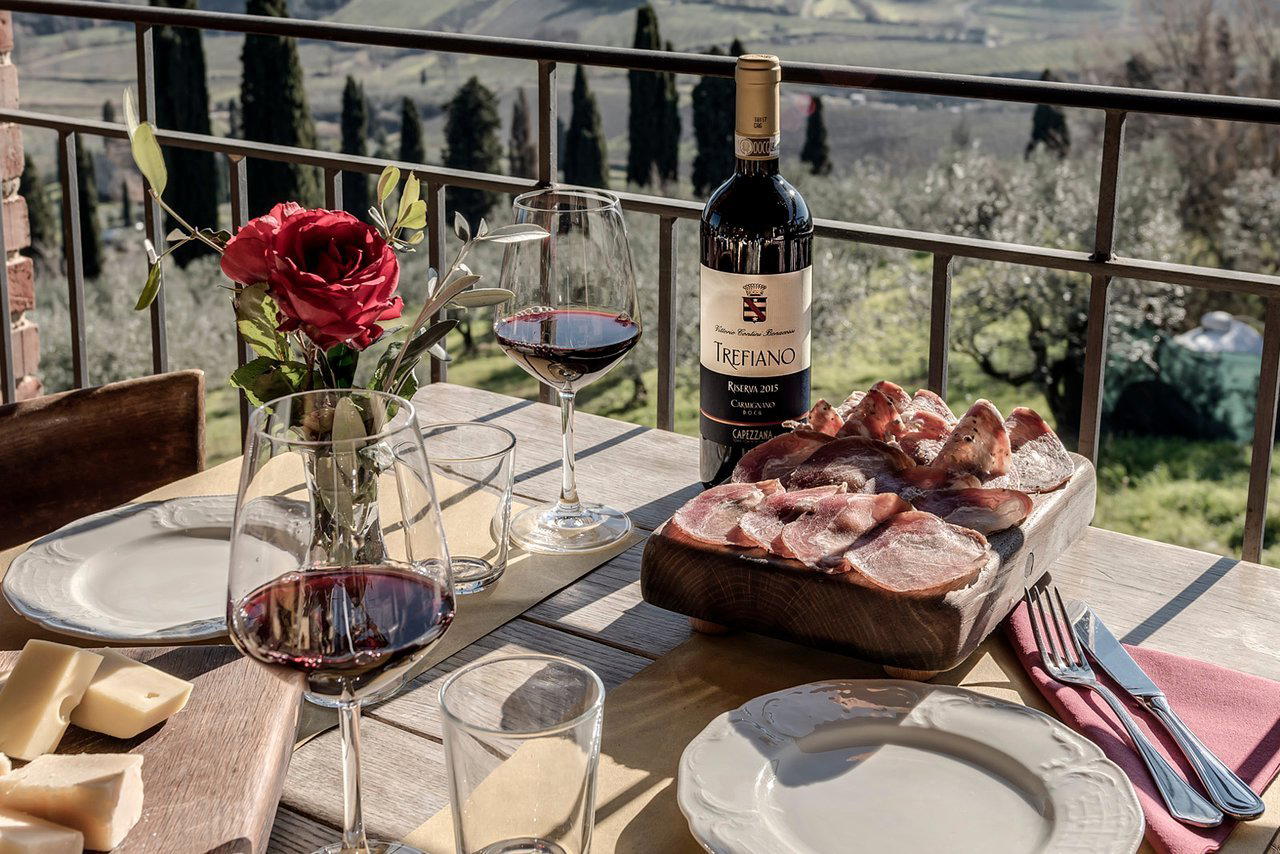
The experience here is quiet, vineyard-facing, and better suited to people who like to read a place through its agricultural choices. Tastings are by reservation, with Italian and English available, and the format leans toward estate and vineyard-focused appointments rather than high-volume hospitality. Outdoor seating, estate grounds, historic buildings, and panoramic views are part of the setting, while food pairing is not part of the listed format. That makes the visit more about wine education and landscape than a long lunch disguised as a tasting.
The portfolio’s center of gravity is Carmignano DOCG, supported by still red, white, and rosé production. The useful lens is not rarity for its own sake, but how a small appellation expresses itself across varieties that have shared this territory for generations. A bottle here asks the right question: how does a Tuscan red zone change when Sangiovese is not left alone, and when altitude, limestone, shale, and daily temperature shifts do some of the quiet work?
For a broader Carmignano itinerary, it helps to see Colline San Biagio within the area’s small but layered wine map. Nearby planning can include Azienda Agricola Podere Il Sassolo, Fattoria Ambra, Tenuta di Artimino, and Tenuta di Capezzana, with broader city planning through our full Carmignano wineries guide, our full Carmignano restaurants guide, our full Carmignano hotels guide, our full Carmignano bars guide, and our full Carmignano experiences guide. Travelers comparing Italian and European winery styles beyond Tuscany can also browse 3GP SRL in Treviso, 47 Anno Domini in Trebaseleghe, A Mano Wine in Noci, a6mani in Fragagnano, »der Steiner« Hans Steiner in Podersdorf am See, and & Handwein in Mannheim.
The editorial case for the winery is strongest for travelers who value context: a small Carmignano estate, a family-run production scale, sustainable vineyard practice, and an appointment-led format in a countryside setting. It is not built around awards theatre or urban luxury cues. Its strength is more grounded: a clear view of how one of Tuscany’s historically bounded wine zones turns hillside, soil, and inherited blending culture into a tasting experience.
Recognition history
Dated appearances from independent guides and award organizations, with the underlying list record or original source where available.
Falstaff Winery - Listed
Falstaff
Continue exploring
More in Carmignano
Wineries in Carmignano
Browse all →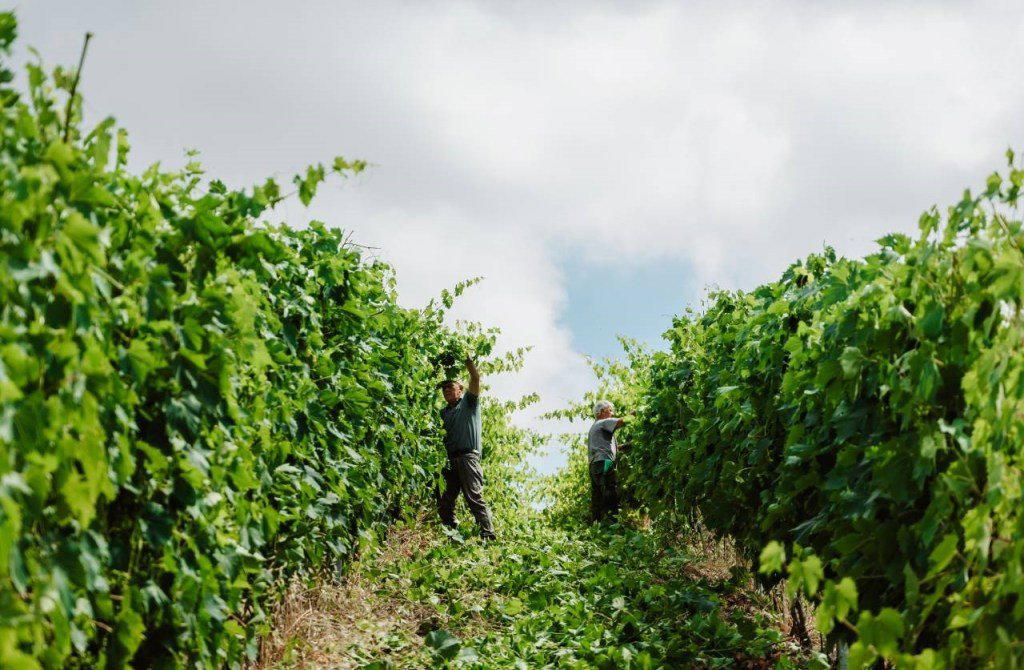
Restaurants in Carmignano
Browse all →At a Glance
- Scenic
- Rustic
- Romantic
- Elegant
- Intimate
- Romantic Getaway
- Group Outing
- Special Occasion
- Solo Exploration
- Wine Education
- Vineyard Tour
- Estate Grounds
- Historic Building
- Panoramic View
- Private Tasting
- Sustainable
- Vineyard
- Mountain
- Garden
- Carmignano DOCG
- Sangiovese
- Cabernet Sauvignon
- Cabernet Franc
- Merlot
- Trebbiano
- Malvasia
- Still Red
- Still White
- Still Rosé
- Estate Tasting
- Vineyard Focused Tasting
- Private Appointment
Historic Tuscan farmhouse setting amid rolling hills and vineyards, with quiet, intimate countryside atmosphere and views over the surrounding estate, often described as peaceful, authentic, and elegant in a rustic way.