
Château Lamothe-Despujols is a Sauternes château for drinkers who care about the mechanics of sweetness: mist, clay-gravel hillsides, Sémillon weight, and patient botrytis rather than cellar-door theatre. Its 1855 Deuxième Cru Classé status gives the estate historical weight, while the small-scale, guided tasting format keeps the focus on terroir and the region’s vin liquoreux tradition.
Pearl is the En Primeur Club membership app — saves, bookings, and concierge access live there. Same editors, same standards.
- Address
- Sauternes, Nouvelle-Aquitaine, Frankreich
 Saves & bookings on Pearl
Approaching a historic château in Sauternes is never just a matter of architecture. The region’s great subject is weather: morning damp from the Ciron, afternoon warmth, and the slow, risky work of noble rot. Château Lamothe-Despujols belongs to that tradition, with a quiet, cellar-led atmosphere that suits wines built less on immediacy than on concentration, acidity, and time.
Sauternes can look deceptively calm from the outside. Its wines depend on volatility in the vineyard, not spectacle in the tasting room. Botrytis cinerea has to arrive in the right form, at the right pace, with enough humidity to develop and enough sun to dry the berries without collapse. That is why the region’s serious estates are judged by site as much as by cellar technique. In this context, Lamothe-Despujols is most interesting as a study in hillside Sauternes: a small 7.48-hectare vineyard on clay-gravel soils, planted to the classic local triad of 85% Sémillon, 10% Sauvignon Blanc, and 5% Muscadelle.
Clay-gravel, noble rot, and the Sauternes grammar of sweetness
The estate’s position on one of the higher points of the commune matters because Sauternes is an appellation of microclimates. Clay retains enough moisture to help vines through dry spells; gravel drains excess water and helps prevent dilution. In a sweet-wine region, that balance is not a technical footnote. It is the difference between simple sugar and layered concentration.
The core wine follows a regional logic that has endured because it works. Sémillon supplies breadth and ageability, Sauvignon Blanc brings lift, and Muscadelle adds aromatic shading. The wine is aged in a combination of tank and 25% new French oak, a measured approach in a category where oak can either frame the fruit or obscure the botrytis signature. Alcohol is listed at 14%, above the Sauternes AOC minimum of 13%, which signals the level of ripeness required for the style.
Lamothe-Despujols also carries one of Bordeaux’s formal historical markers: Deuxième Cru Classé status in the 1855 Classification of Sauternes. That classification remains a useful shorthand, not because it freezes quality forever, but because it identifies estates embedded in the region’s long hierarchy of sweet-wine production. For readers mapping Sauternes through classified growths and regional reference points, it belongs in the same broader appellation conversation as Château d'Yquem, Château d’Arche, Château Filhot, and Château Guiraud, though each occupies a different place in the region’s hierarchy and visitor circuit.
A château tasting format suited to wine education, not crowd service
The hospitality format here is small, guided, and appointment-led, which is the right structure for Sauternes. These are not wines that explain themselves through a quick pour. The appeal lies in how harvest passes, grape selection, botrytis, acidity, and residual sugar interlock. A guided tasting in a historic château setting gives the category the time it needs, especially for travellers more familiar with dry Bordeaux reds than with vin liquoreux.
The estate’s atmosphere is described as quiet, classic, elegant, and cellar-like, and that restraint is an advantage. Sauternes does not benefit from overproduced hospitality. It benefits from context: why the same autumn that can ruin a dry-wine harvest can produce concentration here, why Sémillon dominates, why some bottles are approachable young while others gain complexity over 9 to 20 years. Lamothe-Despujols is therefore better read as a wine-education stop than as a general leisure tasting.
Property’s history also reinforces the point. Its oldest buildings date to the 16th century, and the modern family stewardship began in 1961. The estate was once part of a larger Lamothe holding that later divided into several properties, a reminder that Bordeaux’s vineyard map is often the product of inheritance, fragmentation, and classification as much as geology. That history is useful not as romance, but as context for why Sauternes contains so many closely related names and small parcels with distinct identities.
How to place it within a Sauternes itinerary
For a Sauternes itinerary, Lamothe-Despujols makes sense when the aim is to understand terroir and classification rather than chase scale. The production profile is small, the tasting style is guided, and the wine focus is narrow: botrytized sweet wine from estate fruit. That focus gives the visit clarity. It is not trying to cover the full range of Bordeaux; it is concerned with one demanding expression of place.
Travellers building a broader wine route should treat Sauternes as a different discipline from the Médoc. A Pauillac visit such as Château Duhart-Milon explains Cabernet-led structure, classification, and left-bank architecture; Sauternes explains humidity, selection, and the economics of low-yield sweet wine. The comparison is useful because it shows how Bordeaux contains multiple definitions of prestige, not one template repeated across communes.
Within EP Club’s city planning, pair the estate with the wider Sauternes ecosystem rather than treating it as an isolated stop. The regional winery circuit is covered in Our full Sauternes wineries guide, while dining and overnight planning sit separately in Our full Sauternes restaurants guide and Our full Sauternes hotels guide. For travellers extending the day beyond cellars, Our full Sauternes bars guide and Our full Sauternes experiences guide help separate wine-focused time from general travel logistics.
The editorial reason to include Château Lamothe-Despujols is direct: it gives Sauternes its proper frame. The château setting, the 1855 Second Growth classification, the clay-gravel hillside, and the Sémillon-led blend all point toward a region where sweetness is not an add-on but the result of site, weather, and risk. For drinkers who want to understand why Sauternes remains one of Bordeaux’s great technical traditions, that is the draw.
For wider French and European wine context, EP Club also covers producers and wine destinations beyond Bordeaux, including A. Margaine in Villers-Marmery, Abbaye de Fontfroide in Narbonne, Abbotts & Delaunay in Marseillette, »der Steiner« Hans Steiner in Podersdorf am See, and & Handwein in Mannheim. Those references matter for travellers using wine regions as a way to read place: Sauternes belongs to a smaller, more climate-dependent grammar than many dry-wine regions, and Lamothe-Despujols expresses that grammar with unusual directness.
Recognition history
Dated appearances from independent guides and award organizations, with the underlying list record or original source where available.
Falstaff Winery - Listed
Falstaff
Continue exploring
More in Sauternes
Wineries in Sauternes
Browse all →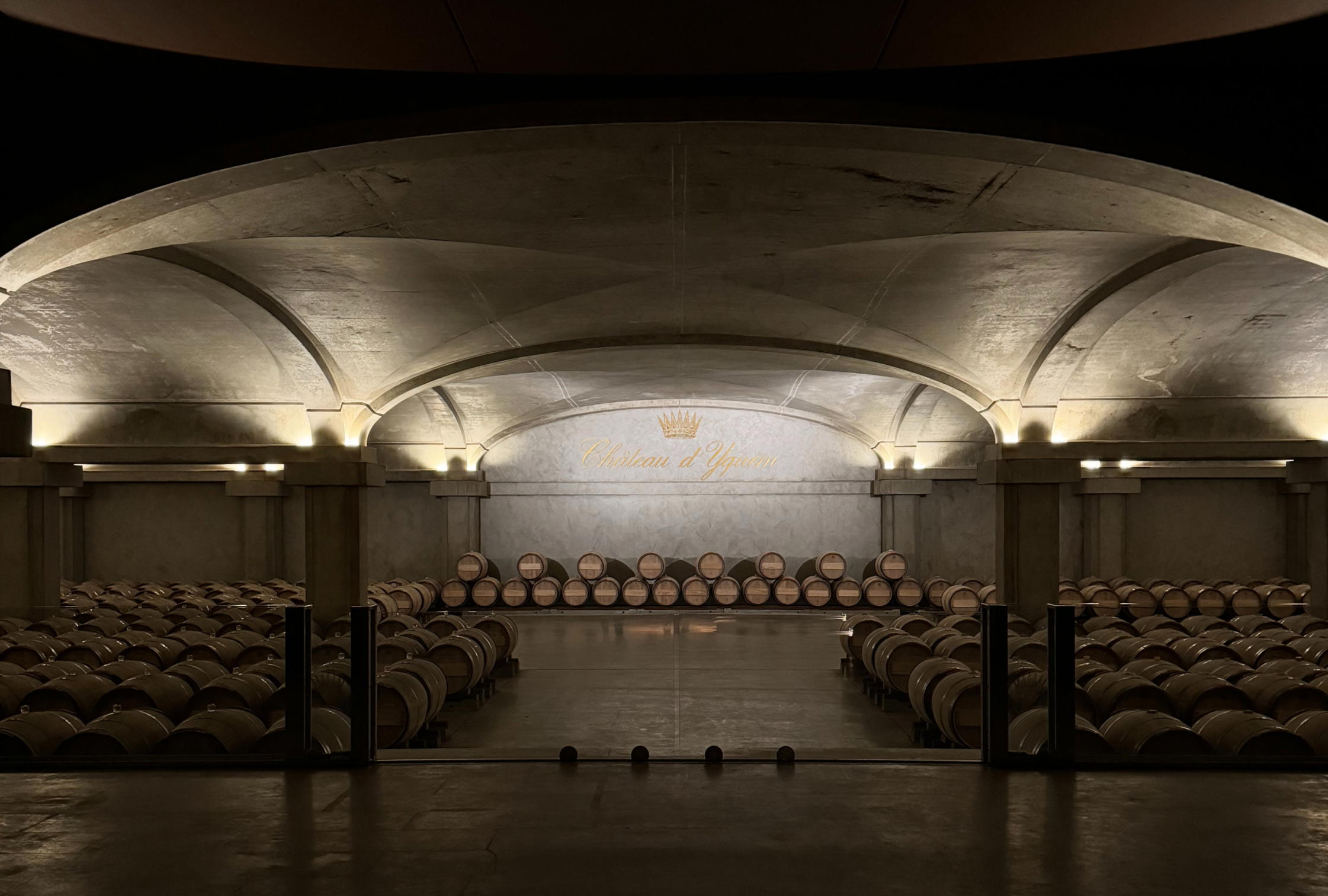
Restaurants in Sauternes
Browse all →
At a Glance
- Quiet
- Classic
- Elegant
- Sophisticated
- Solo Exploration
- Special Occasion
- Wine Education
- Cave Tasting
- Historic Building
- Private Tasting
- Vineyard
- Sauternes AOC
- Sémillon
- Sauvignon Blanc
- Muscadelle
- Dessert
- Fortified
- Guided Tasting
Historic château setting with an elegant, cellar-like wine atmosphere.