Cave de Beblenheim

Cave de Beblenheim is a historic Alsatian cooperative cellar in Beblenheim, founded in 1952 and built around the region’s familiar tension between village-scale tradition and serious production. Expect a broad Alsace portfolio covering still whites, Crémant, dessert styles and Grand Cru bottlings, with the experience framed by old oak barrels, a traditional press and a working modern facility.
Pearl is the En Primeur Club membership app — saves, bookings, and concierge access live there. Same editors, same standards.
- Address
- Beblenheim, Alsace, Frankreich
 Saves & bookings on Pearl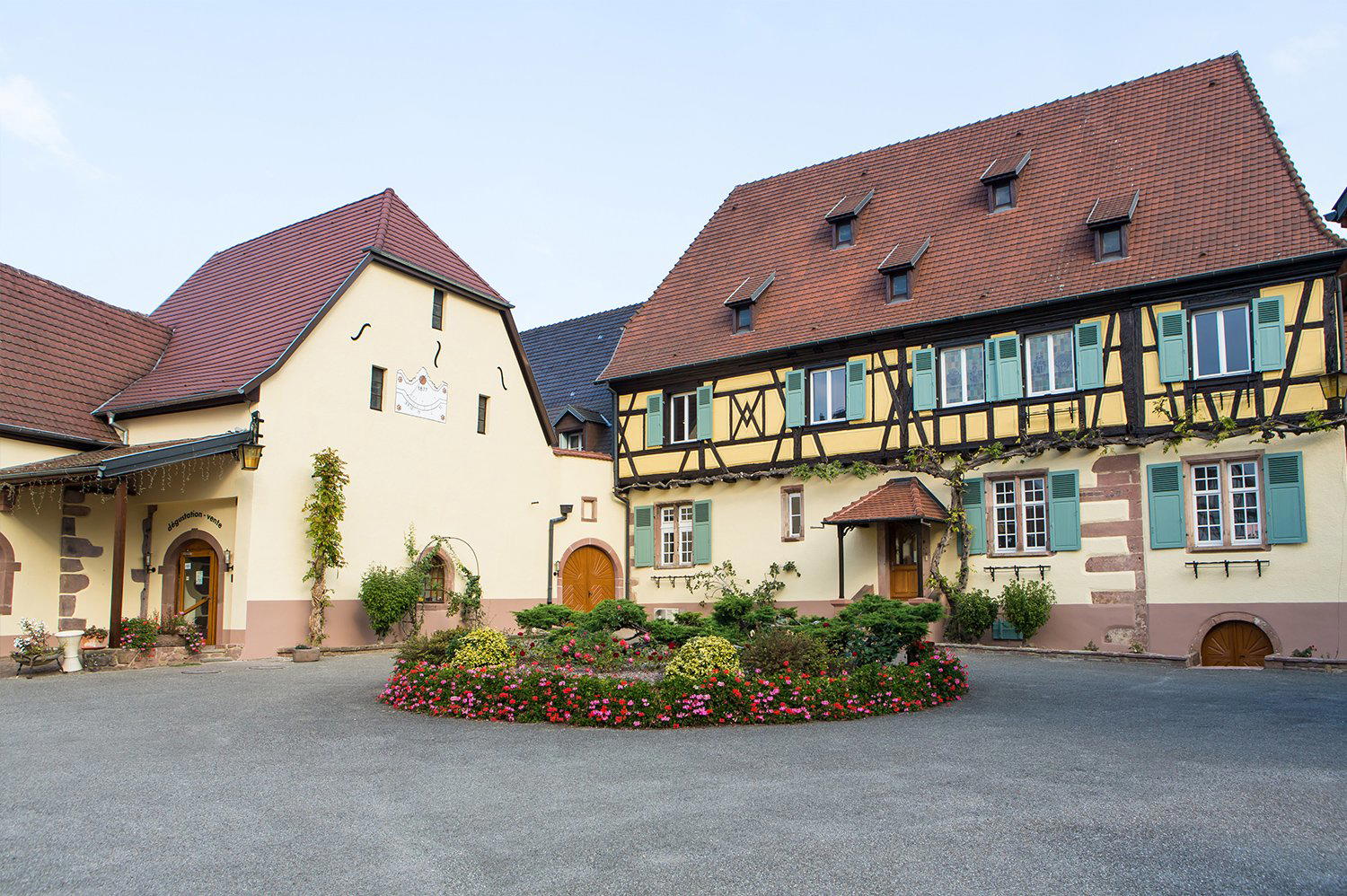
The first cue at Cave de Beblenheim in Beblenheim is architectural rather than ornate: a historic Alsatian cooperative cellar set in a half-timbered village house. The picture is specific enough to give the place its character without overstating the visit. Hundred-year-old oak barrels and a traditional press sit alongside a modern production and bottling facility, so the atmosphere is both heritage-minded and practical.
That combination is the main reason to place Cave de Beblenheim on a Beblenheim itinerary. It is not best described through an invented menu, a precise tasting format, or a list of services. The dependable facts point instead to a classic, convivial cellar environment oriented to tasting, with the working side of production visible in the way the venue is presented.
Alsace terroir told through cooperative scale
Cave de Beblenheim is best understood as a cooperative cellar rather than as a single small dining room or a restaurant-style destination. In a wine village such as Beblenheim, that distinction matters. A cooperative setting shifts the focus from one individual table or one chef-led experience to a broader cellar identity, shared production context, and a sense of local wine culture expressed through collective infrastructure.
The venue description emphasizes the building and the cellar equipment: a half-timbered village house, hundred-year-old oak barrels, a traditional press, and a modern production and bottling facility. Those details are enough to establish the tone. They suggest a place where visitors can read the relationship between Alsatian heritage and contemporary cellar work without needing claims about vineyard holdings, grape varieties, awards, founding dates, or exact visitor formats.
For an EP Club reader, the value is in that grounded contrast. The winery has the atmosphere of a classic Alsatian cellar, but it is not presented only as a preserved historic room. The modern production and bottling facility makes clear that this is still a functional wine operation, not merely a decorative stop. That is a useful distinction when planning a visit around Beblenheim rather than around a restaurant meal.
The safer reading is simpler: this is a $$ cellar visit in Beblenheim with a convivial, tasting-oriented atmosphere and a strong visual link between traditional Alsatian wine culture and present-day production.
What the tasting format reveals about Beblenheim wine
A reliable way to frame the experience is as a tasting-oriented cellar stop. The venue’s character points toward classic hospitality rather than a formal restaurant service or a luxury showroom. Historic barrels and the traditional press provide context, while the production and bottling facility keep the experience tied to the practical work of a cellar.
That setting can be especially helpful for travelers who want a first impression of Beblenheim’s wine culture. Instead of promising guided tours, walk-in access, language options, or a set tasting menu, the confirmed facts support a broader expectation: a convivial cellar environment where tasting is central and the architecture helps explain the venue’s identity.
The half-timbered village-house setting is also important. In Alsace, the built environment often carries as much atmosphere as the glass itself, and the winery’s features make that link visible. The hundred-year-old oak barrels and traditional press offer a tangible sense of continuity, while the modern facility prevents the experience from feeling purely nostalgic.
Visitors should avoid assuming details that are not confirmed here, such as specific grapes, food service, delivery, shipping, seating capacity, named staff, awards, or allergy accommodations. Those may matter for planning, but they are not part of the record supplied. What can be said with confidence is that winery presents a classic, convivial Alsatian cooperative-cellar atmosphere in Beblenheim.
How to place it within a Beblenheim itinerary
The winery works well as the cooperative-cellar anchor of a Beblenheim wine stop. It offers a historically textured setting rather than a restaurant premise: oak barrels, a traditional press, half-timbered architecture, and modern production infrastructure. That makes it a useful visit for readers who care about place, atmosphere, and cellar context.
Expect a $$ venue in Beblenheim with a classic, convivial, tasting-oriented feel. Do not rely on assumptions about lunch, dinner, walk-ins, exact tasting formats, guided tours, named bottles, or shipping services unless confirmed directly before visiting.
The clearest role for the venue is as a grounded introduction to the cooperative side of Alsatian cellar culture in Beblenheim.
Recognition history
Dated appearances from independent guides and award organizations, with the underlying list record or original source where available.
Falstaff Winery - Listed
Falstaff
Continue exploring
More in Beblenheim
Wineries in Beblenheim
Browse all →
Restaurants in Beblenheim
Browse all →
At a Glance
- Classic
- Scenic
- Well Known
- Rustic
- Lively
- Group Outing
- Wine Education
- Family
- Celebration
- Solo Exploration
- Cave Tasting
- Barrel Room
- Estate Grounds
- Historic Building
- Private Tasting
- Sustainable
- Vineyard
- Street Scene
- Alsace Aoc, Alsace Grands Crus Aoc, Crémant D'alsace AOC
- Pinot Gris
- Riesling
- Gewurztraminer
- Muscat
- Sylvaner
- Still White
- Still Rosé
- Sparkling
- Dessert
- Bar Tasting
- Guided Tasting
- Group Tasting
- Free Tasting
Current opening hours
- Monday
- 9 AM–12 PM, 2–7 PM
- Tuesday
- 9 AM–12 PM, 2–7 PM
- Wednesday
- 9 AM–12 PM, 2–7 PM
- Thursday
- 9 AM–12 PM, 2–7 PM
- Friday
- 9 AM–12 PM, 2–7 PM
- Saturday
- 9 AM–12 PM, 2–7 PM
- Sunday
- 10 AM–12 PM, 3–7 PM
Hours can change for holidays and private events. Last verified .
Historic Alsatian cooperative cellar in a half-timbered village house with hundred‑year‑old oak barrels and traditional press, combined with a modern production and bottling facility; atmosphere is classic, convivial, and oriented to tasting a wide range of local wines.