Bodegas Vina Magana

Falstaff Winery - 1 Stars
Bodegas Vina Magana is a family-run Navarra estate in Barillas, working in the warm Ribera Baja sub-zone with Bordeaux varieties, Tempranillo, Syrah, Garnacha and Graciano. Its interest lies in terroir and history: limestone soils, a 100-hectare estate, around 1,000 oak barrels, and a red-wine style shaped by Merlot and Cabernet Sauvignon cuttings brought from Bordeaux in the early 1970s.

Pearl is the En Primeur Club membership app — saves, bookings, and concierge access live there. Same editors, same standards.
- Address
- Barillas (Navarra), Navarra, Comunidad Foral de, Spanien
- Directions
- Get directions
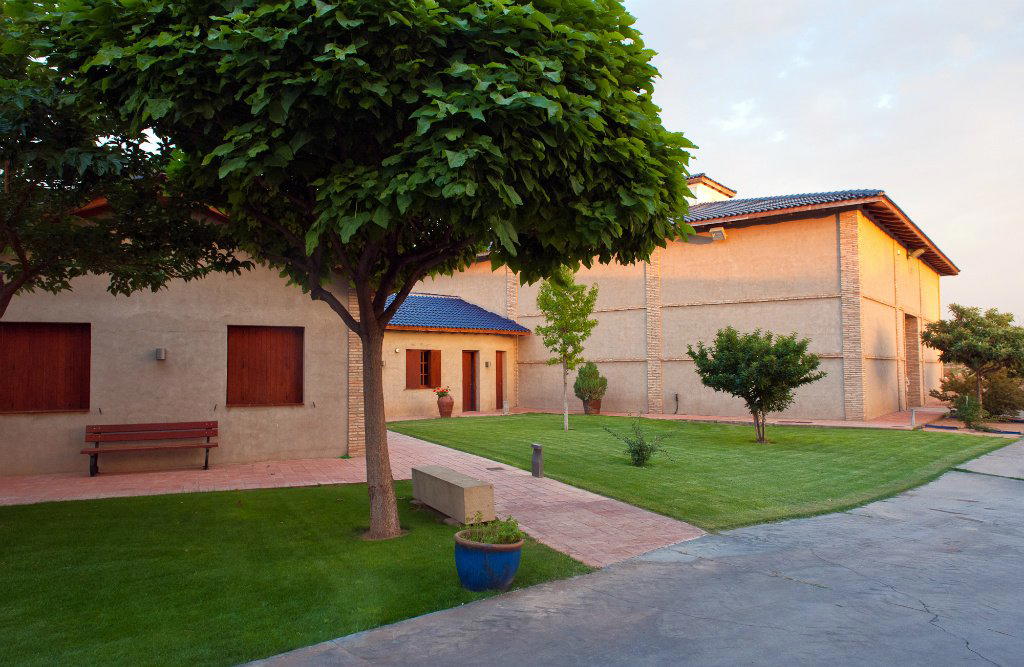
Approaching wine country in Barillas means leaving behind the polished tasting-room circuit and entering a more agricultural register: estate vineyards, working cellars, and the dry, practical rhythm of southern Navarra. This is not the theatrical face of Spanish wine tourism. It is a cellar-first experience, anchored in Ribera Baja, where warmth, limestone and Bordeaux grapes have shaped one of Navarra’s more instructive modern red-wine stories.
Navarra often gets flattened into a transition zone between Rioja gravity and broader northern-Spanish drinking culture. That misses the point. The region’s identity has long been more elastic: Garnacha and rosado on one side, international varieties and structured reds on another. Bodegas Vina Magana belongs to the second camp, and its relevance comes from how early it moved. Founded in 1970, the estate pushed Merlot and Cabernet Sauvignon into Navarra at a time when that was not the regional default, giving Barillas a role in Spain’s wider late-20th-century turn toward French-influenced blends.
Limestone, heat and Bordeaux grapes in southern Navarra
The estate works from a 100-hectare family property in the Navarra D.O. with vineyards in the warm Ribera Baja sub-zone. The technical details matter because the wines are not just “Bordeaux-style” by aspiration. The site’s limestone soils and the area’s southern exposure give structure and ripeness, while the estate’s red-wine focus uses Merlot, Cabernet Sauvignon, Tempranillo, Syrah, Garnacha and Graciano as its working palette. That combination explains why the wines sit apart from lighter, fruit-first Navarra bottles.
The cellar scale is substantial without feeling industrial: around 1,000 oak barrels and modern fermentation installations support a production model built around estate fruit. The house style is traditional in feel, but not backward-looking. Parcel-by-parcel vinification, indigenous yeasts and oak aging put the emphasis on controlled structure rather than simple volume. The result is a useful lens on Navarra’s evolution: a region once read through rusticity and rosado now capable of reds built for density, oak integration and bottle age.
Founding narrative has become part of Navarra wine lore. Juan Magaña, influenced by Bordeaux, brought Merlot and Cabernet Sauvignon cuttings across the Pyrenees in the early 1970s, a detail that explains both the estate’s reputation and its difference from many local producers. Today the family line includes Diego Magaña Tejero, but the more important editorial point is regional: Vina Magana helped normalize French varieties in a place where they once read as an intervention.
What the portfolio says about Navarra now
Baron de Magaña is the clearest expression of the estate’s thesis. The wine brings together Merlot, Cabernet Sauvignon, Tempranillo and Syrah, with the varieties fermented separately in 228-liter Burgundy barrels before aging in French oak. Its blend, 35% Merlot, 35% Cabernet Sauvignon, 20% Tempranillo and 10% Syrah, reads like a map of the estate’s priorities: Bordeaux frame, Spanish core, Mediterranean warmth. Robert Parker has scored Baron de Magaña at 93 points, a trust signal that places the wine beyond local curiosity and into a broader critical conversation.
Calchetas adds another useful marker. Built from Merlot, Cabernet Sauvignon and Tempranillo, it has received a 92-point score and is made with indigenous yeasts before aging in second-use French oak for 12 months. The estate also produces Reserva bottlings, including older examples that underline the age-worthy ambition of the house. The through-line is not novelty; it is the steady argument that Navarra can produce structured reds without pretending to be Rioja or Bordeaux.
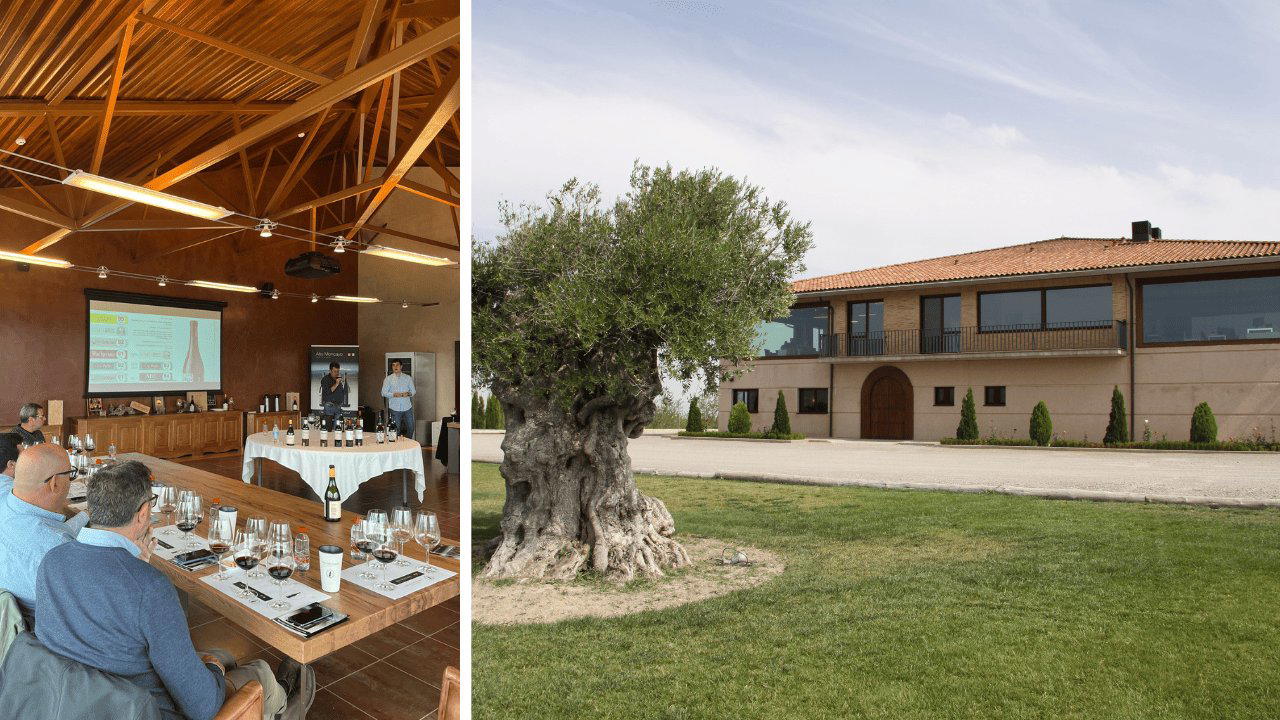
For visitors, the appeal is educational rather than performative. The setting is an estate winery with vineyard and barrel-room context, standard tasting format, and a working-cellar atmosphere. Visits are by reservation, and the experience is better suited to travelers who want to understand how a region changes through grape material, soil and cellar decisions than to those looking for a highly staged hospitality program. Food pairing and outdoor seating are not the headline here; the point is the wine and the place behind it.
How to place it in a wider Spanish wine itinerary
Vina Magana makes the most sense as part of a Navarra-focused route, especially for travelers tracking Spain’s regional differences rather than collecting famous labels. Barillas gives the visit a rural, specific setting, and the estate’s conventional production philosophy keeps attention on vineyard scale, varietal choice and oak regime. Shipping availability adds practical value for those tasting with a cellar in mind, though the reason to pay attention is the combination of Bordeaux influence and Navarra terroir.
For broader planning around the city and region, EP Club’s local guides are useful starting points: Our full Barillas Navarra wineries guide, Our full Barillas Navarra restaurants guide, Our full Barillas Navarra hotels guide, Our full Barillas Navarra bars guide, and Our full Barillas Navarra experiences guide. For readers building a wider European wine map, nearby research can extend through 3 Ases Bodegas y Viñedos in Quintanilla De Arriba, 4Kilos Vinícola in Felanitx, Aalto Bodegas y Vinedos in Quintanilla De Onesimo Valladolid, Abadia de Aribayos in Moraleja Del Vino, Abadía Retuerta in Sardón de Duero, Abel Mendoza Monge in San Vicente de la Sonsierra, Acústic Celler in Els Guiamets, Adega Algueira in Sober, »der Steiner« Hans Steiner in Podersdorf am See, and & Handwein in Mannheim.
The critical case for this estate is not that it offers a glossy visitor format. It is that Navarra’s modern red-wine identity is easier to understand here than in many more polished rooms. A 1970 founding date, a 100-hectare estate, Ribera Baja limestone, Bordeaux varieties, and recognized scores for key bottlings make the argument concrete. For travelers who care about how regions are remade over decades, Barillas is the lesson.
Recognition history
Dated appearances from independent guides and award organizations, with the underlying list record or original source where available.
Falstaff Winery - 1 Stars
Falstaff
Continue exploring
More in Barillas Navarra
Wineries in Barillas Navarra
Browse all →

Restaurants in Barillas Navarra
Browse all →
Hotels in Barillas Navarra
Browse all →
Details
- Classic
- Rustic
- Wine Education
- Solo Exploration
- Group Outing
- Estate Grounds
- Vineyard Tour
- Barrel Room
- Vineyard
- Merlot
- Cabernet Sauvignon
- Tempranillo
- Syrah
- Garnacha
- Graciano
- Still Red
- Still Rosé
- Still White
- Standard Tasting
Family-run Navarra estate winery focused on elegant, Bordeaux-influenced reds from carefully tended vineyards, with a traditional, working-cellar feel rather than a polished tourist destination.