
Aoton Winery operates from Peania, on the eastern Attica plain at the foot of Mount Hymettus, where the region's limestone soils and dry Mediterranean climate shape its wines into something distinctly Attic in character. The winery earned a Pearl 2 Star Prestige rating in 2025, placing it among a small cohort of Greek producers gaining formal recognition outside the country's better-known appellation zones. For visitors combining Athens with regional wine exploration, Peania offers a compelling and often-overlooked detour.
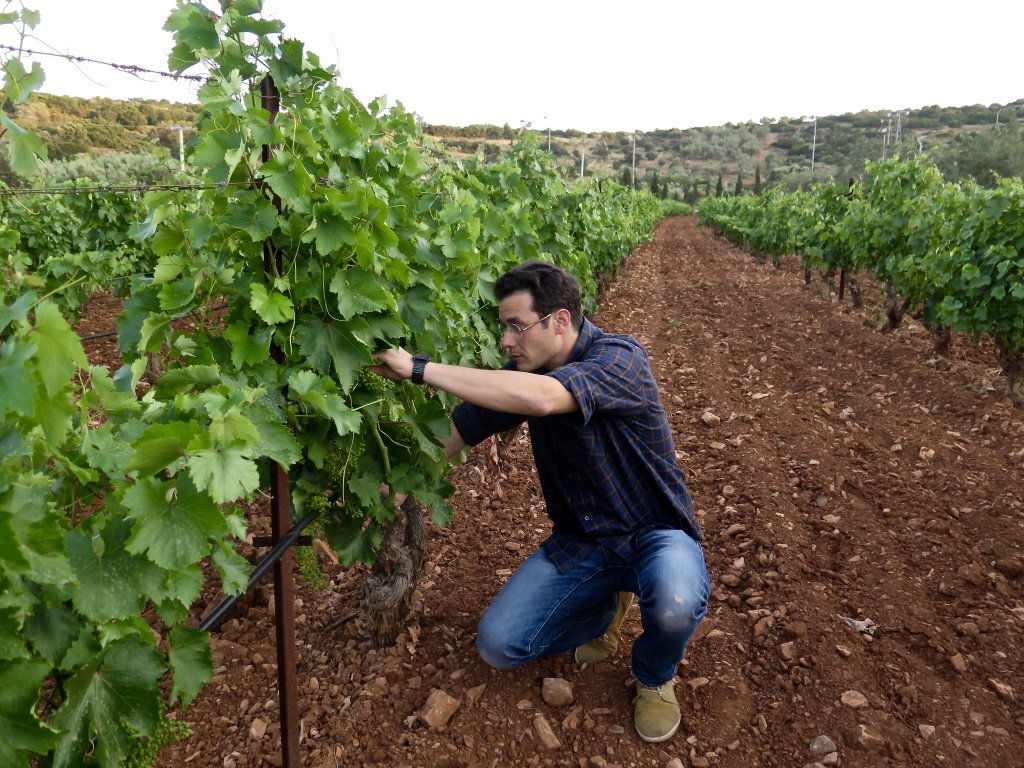
Attica's Eastern Corridor: Peania and the Hymettus Foothills
Most wine itineraries built around Athens pivot south toward the Saronikos Gulf or west into the Megara basin. The eastern Attica plain, stretching from the city's outskirts toward the foot of Mount Hymettus, receives considerably less attention, which makes it a productive direction for anyone willing to stray from the more obvious circuits. Peania sits along this corridor, a town better known historically for being the birthplace of the orator Demosthenes than for its viticulture, and yet the area's terroir conditions are genuinely suited to the production of wines with a distinct regional identity. Limestone-influenced soils, a dry continental variant of the Mediterranean climate, and strong diurnal temperature shifts during the growing season create the kind of stress and aromatic concentration that producers across Greece have been learning, over the past two decades, to translate more precisely into the bottle. Aoton Winery works within this context, at Ioannou Chatzikiriakou 13 in Peania, carrying a 2025 Pearl 2 Star Prestige rating that positions it formally within the tier of Greek producers now attracting structured critical assessment.
The Case for Attic Terroir
Greece's wine conversation has long been dominated by the Aegean islands, Nemea, Naoussa, and the volcanic soils of Santorini. Attica's role in that conversation has historically been secondary, associated more with retsina's industrial past than with fine wine production. That framing has shifted, slowly but measurably, as producers across the region began applying more rigorous vineyard and cellar discipline to the indigenous varieties that the Attic climate suits particularly well. The elevation gradient running from the coastal plain up toward the Hymettus massif produces meaningfully different growing conditions across short distances, and winemakers who have learned to exploit those gradients are producing wines with better-defined character than the region's reputation would suggest. Aoton's Pearl 2 Star Prestige recognition in 2025 is one data point in a broader pattern of Attic producers gaining formal acknowledgment from critical bodies that were, until recently, largely focused on the country's more established zones. For comparative context across the Greek winemaking scene, Achaia Clauss in Patras represents the deep historical end of Greek production, while Aidarinis Winery in Goumenissa and Acra Winery in Nemea occupy more established appellation territory. Alpha Estate in Amyntaio and Aiolos Winery in Palaio Faliro sit in the northern and coastal Athens peer sets respectively.
Reading the Landscape Through the Wine
Attica's terroir signature, where it is expressed honestly, tends toward wines with firm structural backbone, moderate aromatic weight, and an acidity profile shaped by warm days and cooler nights. The limestone subsoil that runs beneath much of the Hymettus foothills adds a mineral tension that distinguishes Attic whites and lighter reds from the heavier, more extracted styles produced in warmer flatland zones. Producers working with Savatiano, the dominant indigenous white variety of Attica, have demonstrated repeatedly that the grape responds well to careful canopy management and restrained intervention in the cellar, producing wines with genuine complexity when the viticulture is disciplined. Red varieties planted in the region, including both native Greek cultivars and selected international plantings, benefit from the same temperature differential that preserves aromatics in the whites. The result, when the winemaking avoids over-extraction, is a red profile that reads more Aegean in its freshness than Nemean in its density. Aoton's Pearl 2 Star Prestige award suggests its approach to these raw materials has reached a level of consistency and expression that warrants attention from collectors and visitors looking beyond the country's headline appellations.
Peania as a Wine Destination
The practical case for visiting Peania sits partly in proximity. The town is reachable from central Athens in under 30 minutes by car, making it a realistic half-day addition to any Athens itinerary rather than a dedicated regional expedition. The eastern Attica route also passes through agricultural land that gives a clearer sense of the region's character than the motorway approach to Piraeus or the coast road to Glyfada. Arriving at a smaller winery in this corridor feels less like a tourism exercise and more like accessing a working agricultural operation that happens to have earned formal recognition. For visitors building a broader Peania visit, the local restaurant scene, the available accommodation options, and the bar options provide enough infrastructure for a comfortable overnight, though most visitors treat the area as a day trip from the capital. The winery's address on Ioannou Chatzikiriakou places it within the town's accessible grid rather than in a remote rural setting, which simplifies logistics considerably. As with most smaller Greek producers at this recognition tier, contacting the winery directly in advance is the appropriate approach, since visiting hours and tasting formats at this scale are rarely walk-in.
The Broader Greek Wine Context
Understanding where Aoton sits requires some familiarity with how Greek wine's critical infrastructure has developed. The Pearl rating system and similar structured assessments have given producers in overlooked zones a formal mechanism for demonstrating quality parity with the country's established names. That dynamic is not unique to Greece: comparable movements have occurred in regions like the Jura in France, Txakoli country in Spain, and the Finger Lakes in New York, where critical recognition followed producer investment in quality by roughly a decade. In the Greek context, the 2025 Pearl 2 Star Prestige awarded to Aoton places the winery within a cohort of producers that have crossed the threshold from regionally known to formally credentialed. For collectors tracking the Greek market, Attica-based producers at this level represent earlier-stage discovery relative to Naoussa or Nemea, where international buyer attention has already moved prices and availability. Producers in adjacent regions show similar trajectories: Abraam's Vineyards in Komninades, Akrathos Newlands Winery in Panagia, and Anatolikos Vineyards in Xanthi each represent different facets of Greece's widening fine wine geography. For reference points further afield, the estate-based model seen at Abadía Retuerta in Sardón de Duero illustrates how regional producers outside the headline appellations have built international credibility over time.
Planning a Visit
Visitors to Aoton should treat the experience as a producer-level engagement rather than a polished wine tourism format. At this recognition tier, the winery operates primarily as a production facility, and visits are leading arranged through direct contact rather than assumed from open-door policies. The address in Peania is specific and navigable; the town itself has basic services and sits close enough to Athens-Eleftherios Venizelos Airport that visitors arriving or departing by air can work a winery stop into the same day's logistics without difficulty. The wider Peania experiences scene includes the Cave of Pan at Nympholeptos and the archaeological significance of the area, which can anchor a fuller half-day itinerary alongside the winery. For those building a multi-stop Greek wine route, pairing Aoton with a visit to other award-recognized producers and referencing the full Peania wineries guide will help frame the regional picture more completely.
Frequently Asked Questions
What kind of setting is Aoton Winery?
Aoton Winery operates from a specific address in Peania, a town in the eastern Attica plain approximately 25 to 30 kilometres east of central Athens, within reach of the international airport. The winery holds a Pearl 2 Star Prestige rating awarded in 2025, which places it in a recognized quality tier among Greek producers. Given the limited public data on tasting room format and pricing, visitors should contact the winery directly before arrival. The setting is characteristically Attic, with the Hymettus foothills providing the topographic and climatic context that defines the region's wine character.
What do visitors recommend trying at Aoton Winery?
Specific tasting notes and menu details for Aoton are not publicly documented in a form that allows reliable recommendations. What is clear from the 2025 Pearl 2 Star Prestige recognition is that the winery's output has reached a level of formal quality acknowledgment, suggesting that whatever the current release lineup includes, it reflects a consistent production standard. Visitors with a focus on indigenous Greek varieties are likely to find the Attica regional expression worth investigating, as Savatiano-based whites and native red cultivars suited to the Hymettus foothills form the backbone of serious production in this corridor. Confirming specific available wines and any tasting formats with the winery directly remains the most reliable approach.
Budget Reality Check
Comparable options at a glance, pulled from our tracked venues.
| Venue | Classification | Awards | First Vintage | Notes |
|---|---|---|---|---|
| Aoton Winery | 1 awards | This venue | ||
| Estate Argyros | World's 50 Best | |||
| Kir-Yianni Estate | World's 50 Best | |||
| Achaia Clauss | 1 awards | |||
| Abraam's Vineyards | 1 awards | |||
| Acra Winery | 1 awards |
Access the Cellar?
Our members enjoy exclusive access to private tastings and priority allocations from the world's most sought-after producers.
Access the Concierge