

One of Piedmont's most established wine estates, the Ceretto family has shaped Langhe viticulture since the 1930s. Holding a Pearl 3 Star Prestige rating in 2025, the estate at Località San Cassiano in Alba offers visitors direct access to wines grown across some of the region's most carefully mapped vineyard sites. The combination of multi-generational continuity and documented terroir work puts Ceretto in a distinct tier among Alba's winery visits.
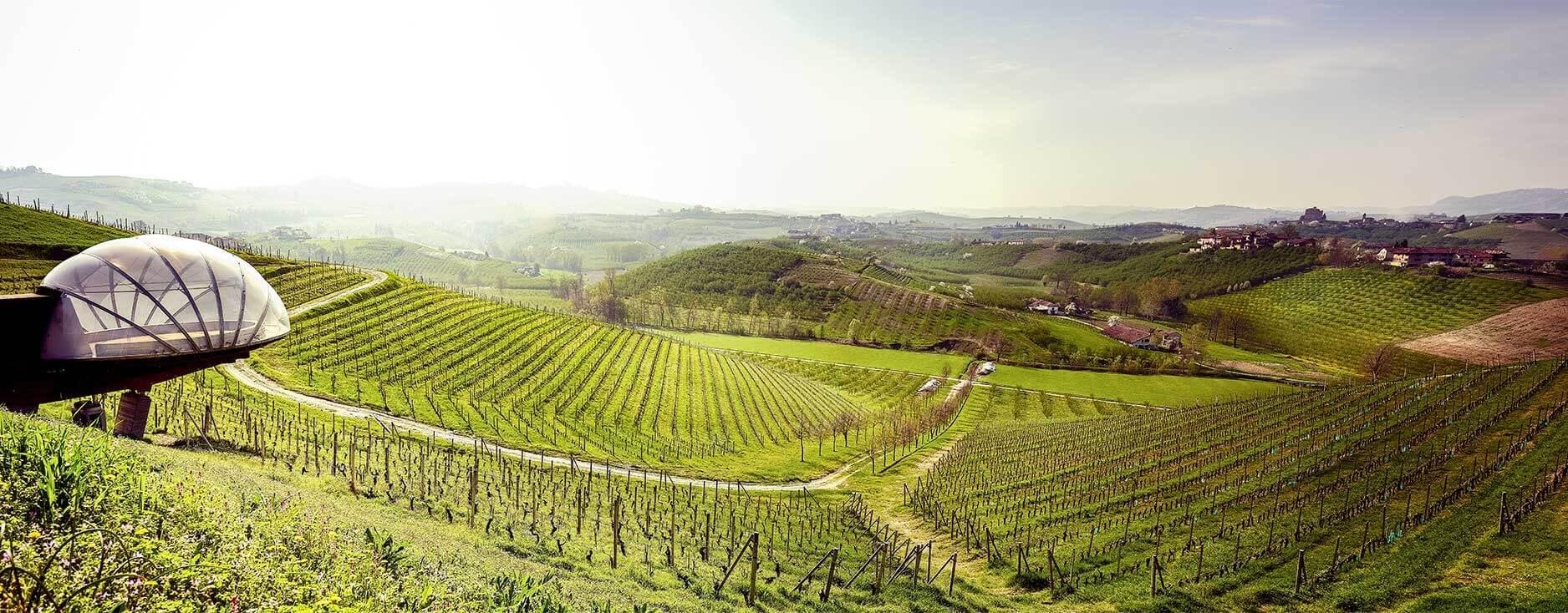
Where Langhe Geology Becomes Legible
The Langhe hills around Alba have been producing serious wine for centuries, but the modern era of single-vineyard identification and terroir documentation is largely a post-war project. A handful of estates drove that project forward, mapping individual crus with precision, insisting that the Tortonian and Helvetian marine sediments beneath Barolo and Barbaresco were not interchangeable, and that wine made from Serralunga's compact Helvetian limestone would always differ structurally from wine grown in Castiglione Falletto's softer Tortonian soils. Ceretto, with roots in Piedmont going back to the 1930s, belongs to that mapping tradition. The estate at Località San Cassiano, 34, sits within reach of the key Barolo communes and operates as a working demonstration of what vineyard-specific thinking looks like when sustained across generations.
Visiting the estate involves more than a standard cellar tour. The current generation of the Ceretto family is known for receiving guests with directness and warmth, using the visit as an opportunity to explain what distinguishes their specific sites from neighbouring parcels rather than presenting a catalogue of bottle labels. That approach places the experience closer to a geography lesson anchored in glass than a conventional tasting room format. For the serious Nebbiolo drinker, this kind of site-level specificity is the point.
The Geology Behind the Wines
Piedmont's wine identity is inseparable from its geology. The Langhe's two dominant soil formations produce a dividing line that serious producers reference constantly. Helvetian soils, compact and calcium-rich, tend toward wines with harder tannins, longer ageing arcs, and a minerality that takes years to integrate. Tortonian soils, with higher clay content and more accessible structure, yield Barolo that often shows earlier in the bottle. Neither is superior in an absolute sense; they are different, and the difference is measurable in the wine over time.
Ceretto's portfolio spans multiple Barolo crus, which means visitors can, in principle, trace those geological differences in a single sitting. This is the argument for visiting a producer with diverse vineyard holdings rather than a single-site specialist: the contrasts become the curriculum. Compare this model to an estate like Aldo Conterno in Monforte d'Alba, where the focus is concentrated around Bussia, and the educational register shifts toward depth within a single commune rather than breadth across the appellation. Both are legitimate; they teach different things.
For context within Italian wine more broadly, the terroir-mapping project in Piedmont echoes what producers in Burgundy codified over centuries, and what estates elsewhere in Italy are now formalising. Biondi-Santi Tenuta Greppo in Montalcino represents a parallel tradition in Tuscany, where a single estate's commitment to a specific site and grape variety defined an entire appellation's modern identity. In Piedmont, no single estate owns that narrative alone, but the producers who invested in vineyard documentation earliest hold the most credible claim to explaining what the Langhe actually tastes like from the ground up.
The Estate Visit in Context
Alba functions as the commercial and cultural centre of the Langhe wine zone, and Ceretto's location at San Cassiano puts it within the natural circuit of serious wine tourism in the area. The town itself, known equally for its white truffle market each autumn and its dense concentration of Michelin-recognised restaurants, draws visitors whose interest in wine is typically matched by an interest in regional food. That overlap is not coincidental: Nebbiolo, particularly aged Barolo, is one of the few wines with the structural authority to sit alongside the region's richest preparations, from tajarin with truffle butter to braised beef with Barolo cooking wine.
Within Alba's winery visit circuit, the options range from small family producers working a few hectares to larger estates with developed visitor infrastructure. Ceretto occupies the latter category, with the multi-generational scale and portfolio breadth that make it a reference point for understanding the appellation rather than a single idiosyncratic interpretation of it. Neighbours in the serious Piedmont tier include Pio Cesare, another Alba-based house with a long production history, and producers in adjacent communes like Bruno Giacosa in Neive, whose work across Barbaresco and Barolo represents a different approach to multi-appellation quality.
For visitors planning a broader Piedmont itinerary, the region also offers complementary experiences at Distilleria Montanaro in Alba, where the focus shifts to grappa and the distillation of Nebbiolo pomace, closing a useful loop on how the grape is used from harvest to its final expression. The Langhe rewards methodical planning: the geographic concentration of high-quality producers means that a focused three-day circuit can cover more ground, literally and technically, than almost any other wine region in Italy.
Prestige Recognition and Peer Set
Ceretto holds a Pearl 3 Star Prestige rating for 2025, which places it within the upper tier of EP Club's evaluated wine estates. Peer comparisons within this tier are useful for calibrating expectations. Antinori nel Chianti Classico in Tuscany operates at a similar scale of multi-generational ambition, with a comparable ability to serve as an interpretive entry point into its appellation. Ca' del Bosco in Erbusco represents a different Italian estate model, where investment in winery architecture and visitor experience has become as deliberate as the viticulture itself. What these producers share is the ability to contextualise their wines within a regional argument, rather than presenting them in isolation.
At the international level, the closest structural analogue might be something like Abadía Retuerta in Sardón de Duero, where estate scale and multi-varietal holdings create a similarly broad terroir demonstration. The comparison is imperfect — the grapes, soils, and traditions are entirely distinct — but the educational model of using diverse vineyard holdings to teach place is consistent.
Planning Your Visit
The estate is located at Località San Cassiano, 34, in the Alba zone, accessible by car from the town centre. Alba itself is reached from Turin in roughly an hour by road, or via the Asti-Cuneo rail line with a connection at Bra; driving is the more practical option for anyone planning to visit multiple estates in a single day, which most serious Langhe itineraries require. The Ceretto family is documented as receiving guests directly, and given the estate's scale and profile, advance contact to arrange a visit is advisable rather than arriving speculatively. Specific booking channels are leading confirmed through the estate directly, as details change seasonally. For the widest view of what Alba offers beyond the winery, consult our full Alba wineries guide, alongside coverage of the area's restaurants, hotels, bars, and experiences.
Autumn remains the most rewarding season for a Langhe visit: harvest activity, the truffle market in October and November, and a concentration of serious wine travellers who treat the region with the same deliberate attention it deserves. Arriving outside the peak season trades atmosphere for access, with shorter booking lead times and a more unhurried pace at even the most prominent estates.
Frequently Asked Questions
- What wines is Ceretto known for?
- Ceretto is associated with Piedmont's two flagship red appellations: Barolo and Barbaresco, both made from Nebbiolo grown across multiple named vineyard sites in the Langhe. The estate's multi-cru approach means its portfolio functions as a cross-section of the region's major terroir types rather than a study of a single commune. Ceretto holds a Pearl 3 Star Prestige rating for 2025, placing it among the evaluated upper tier of Italian wine estates.
- What is the main draw of Ceretto for visitors to Alba?
- The primary reason to visit Ceretto rather than a smaller single-estate producer is access to a range of vineyard sites within a single tasting context. Alba sits at the centre of the Langhe wine zone, making the estate a logical anchor point for a broader regional itinerary. The 2025 Pearl 3 Star Prestige recognition confirms the estate's standing in the premium segment of Piedmont wine tourism.
- What is the leading way to book a visit to Ceretto?
- Ceretto does not have a publicly listed phone or website in the current EP Club database, so the most reliable approach is to research current contact information directly through Italian wine trade channels or tourism boards covering the Alba area before travelling. Given the estate's scale and the volume of visitors the Langhe attracts, particularly during autumn harvest season, advance planning is advisable. Checking our full Alba wineries guide for updated booking guidance is a practical starting point.
- How does Ceretto's multi-generational history affect the wines it produces today?
- Estates with decades of production records in a single appellation accumulate something that cannot be replicated quickly: observed data on how specific vineyards perform across different vintages, climate variations, and winemaking approaches. The Ceretto family's presence in Piedmont since the 1930s means the current generation works from a baseline of accumulated site knowledge that shapes decisions about harvest timing, blending, and cru selection. That depth of reference, combined with a Pearl 3 Star Prestige rating in 2025, positions Ceretto as a producer whose wines carry institutional as well as viticultural authority within the Alba context.
Access the Cellar?
Our members enjoy exclusive access to private tastings and priority allocations from the world's most sought-after producers.
Access the Concierge