AdamsWein

AdamsWein is a small Ingelheim am Rhein estate shaped around limestone, biodynamic farming and Burgundian varieties, with Spätburgunder at the centre of the cellar. Founded in 1882 and now led by Dr. Simone Adams, the estate is a serious stop for drinkers who read Rheinhessen through soil, slope and cellar restraint rather than visitor theatre.
Pearl is the En Primeur Club membership app — saves, bookings, and concierge access live there. Same editors, same standards.
- Address
- Ingelheim am Rhein, Rhine Hesse, Rhineland-Palatinate, Deutschland
 Saves & bookings on Pearl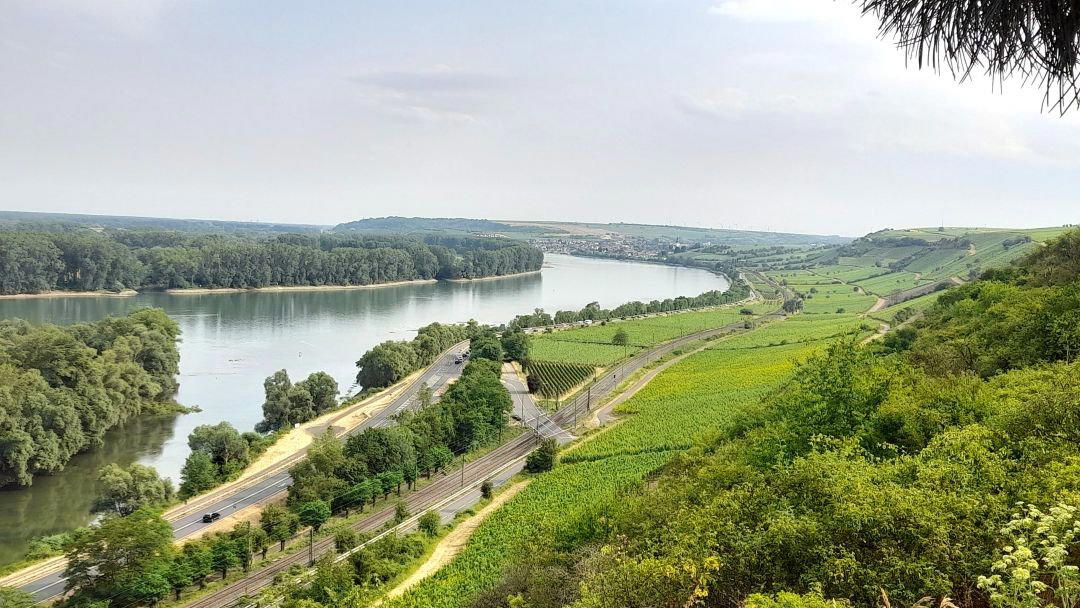
Ingelheim am Rhein’s wine country does not announce itself with grand spectacle. The signal is quieter: clay and limestone slopes, the Rhine close enough to temper the growing season, and a red-wine tradition that gives Spätburgunder more cultural weight here than in much of Rheinhessen. AdamsWein belongs to that quieter register. Its appeal is not hospitality infrastructure or cellar-door performance, but the way a small estate can make place legible through Pinot varieties, whole-cluster work and biodynamic farming.
Limestone, river air and the Ingelheim argument for Pinot
Rheinhessen is often discussed through breadth, scale and variety, but Ingelheim narrows the conversation. The town has long carried a red-wine identity, and its calcareous soils give Pinot Noir a different frame from the riper, broader styles associated with warmer German pockets. Here, the useful question is not whether Spätburgunder can imitate Burgundy. It is whether limestone, slope exposure and slow ripening can produce wines with enough tension to justify a Burgundian vocabulary without becoming derivative.
AdamsWein makes that argument through a compact estate of roughly 10 to 11.5 hectares, with Spätburgunder accounting for about half of production. Chardonnay, Weissburgunder and Grauburgunder complete the Burgundian set. The estate’s key sites include Horn and Pares, both classified as VDP Grosse Lage, along with Heerweg, Lohpfad and Auf dem Haun. Pares is described as a nine-hectare west-facing vineyard at 250 metres, while Auf dem Haun carries a vineyard history dating to 1593. Those details matter because this is not a winery built around a generic regional blend. Site separation is the grammar.
The local geology gives the wines their editorial hook. Ingelheim’s limestone weathering rock is described as dating back 50 million years, and the vineyards sit on east-west facing clay and limestone slopes, with variations of silt and sand across parcels. That mix allows a producer to match variety to soil structure rather than treat Pinot as a single house style. In a German context where Riesling often dominates the export imagination, this is a more specialised reading of Rheinhessen: red-fruited, calcareous, cool-climate and precise.
A cellar style built to keep site differences audible
The production choices are disciplined rather than decorative. Farming is biodynamic and regenerative, with manual shoot tipping used instead of mechanical leaf trimming. In the cellar, fermentations are spontaneous, red wines may see partial or full whole-cluster inclusion, and ageing takes place in wood, with larger barrels for village wines and barriques for single-site bottlings. The wines are not fined or filtered, with modest sulphur added at bottling. Those choices can sound fashionable in isolation; here they are coherent because the estate’s central claim is site expression, not natural-wine theatre.
Dr. Simone Adams gives the project its current shape. A doctor of oenology, she took over the family estate in 2010 after a history stretching back to 1882. The credential is relevant because the wines sit at the intersection of scientific farming, low-intervention cellar work and a Burgundian reading of Pinot. The story is not a personality cult; it is a case study in how modern German estates are moving beyond simple regional typicity into parcel-level identity.
The portfolio’s centre of gravity is Spätburgunder, especially the Pares, Horn and Heerweg bottlings. White wines extend the same logic rather than acting as side projects: Chardonnay from Lohpfad and Auf dem Haun, Weissburgunder from Ingelheim, and Grauburgunder handled with enough skin contact and barrel or steel work to place texture alongside acidity. For travellers building an Ingelheim wine day, this is the kind of producer that rewards prior context. Pair it mentally with other local stops such as Lena & Sebastian by Weingut Baum, Lena macht Sekt, Saalwächter Weingut, Sekthaus Tryo and Weingut Arndt F. Werner to see how compact Rheinhessen producers can diverge sharply in method and emphasis.
How to frame a visit within Ingelheim
AdamsWein suits drinkers who want a low-volume, education-led estate experience rather than a casual drop-in tasting. The tone is quiet, minimalist and vineyard-focused, with German and English available for tours. It is also a useful corrective for travellers who still file Rheinhessen under easygoing volume production. The serious lesson here is that small German estates can use Pinot, Chardonnay and Pinot Gris to speak with as much site specificity as more established prestige regions, provided the farming and parcel selection are exacting enough.
For a broader itinerary, keep the categories separate. Use Our full Ingelheim Am Rhein wineries guide for cellar planning, then layer in meals from Our full Ingelheim Am Rhein restaurants guide, stays from Our full Ingelheim Am Rhein hotels guide, drinks from Our full Ingelheim Am Rhein bars guide and cultural pacing from Our full Ingelheim Am Rhein experiences guide. Travellers extending the wine map beyond Ingelheim can also compare Germany and Austria’s smaller natural-leaning or terroir-driven estates through & Handwein in Mannheim, 2 Naturkinder in Kitzingen, 3 Winner in Bechtheim, »der Steiner« Hans Steiner in Podersdorf am See and ®walzer in Gneixendorf Bei Krems.
Recognition history
Dated appearances from independent guides and award organizations, with the underlying list record or original source where available.
Falstaff Winery - 4 Stars
Falstaff
Continue exploring
More in Ingelheim Am Rhein
Wineries in Ingelheim Am Rhein
Browse all →
Restaurants in Ingelheim Am Rhein
Browse all →
At a Glance
- Elegant
- Quiet
- Sophisticated
- Romantic
- Minimalist
- Romantic Getaway
- Wine Education
- Solo Exploration
- Special Occasion
- Group Outing
- Estate Grounds
- Private Tasting
- Vineyard Tour
- Biodynamic
- Vineyard
- Bingen (rheinhessen)
- Pinot Noir (spätburgunder)
- Chardonnay
- Pinot Blanc (weissburgunder)
- Pinot Gris (grauburgunder)
- Still Red
- Still White
- Orange
- Appointment Tasting
- Private Tasting
- Trade/collector Tasting
Small, detail-obsessed boutique estate focused on expressing Ingelheim’s limestone terroir through elegant, Burgundian-style Pinots; the feel is quiet, precise and nature-driven rather than touristic or commercial.