Yum Thai Bistro
Our verdict
Yum Thai Bistro on Pacific Coast Highway brings Thai cooking to the Redondo Beach dining strip, where the emphasis falls on approachable neighborhood service rather than destination-level ceremony. Positioned along a stretch of California coastline better known for seafood grills and beach bars, it occupies a distinct lane in the local dining mix. Readers exploring the South Bay's broader restaurant scene will find it sits within a corridor of genuinely varied cuisines.

Pearl is the En Primeur Club membership app — saves, bookings, and concierge access live there. Same editors, same standards.
- Address
- 1888 CA-1, Redondo Beach, CA 90277
- Phone
- (310) 316-1188
- Hours
- Daily 11 AM–9 PM
- Website
- yumthaibistro.com
- Directions
- Get directions
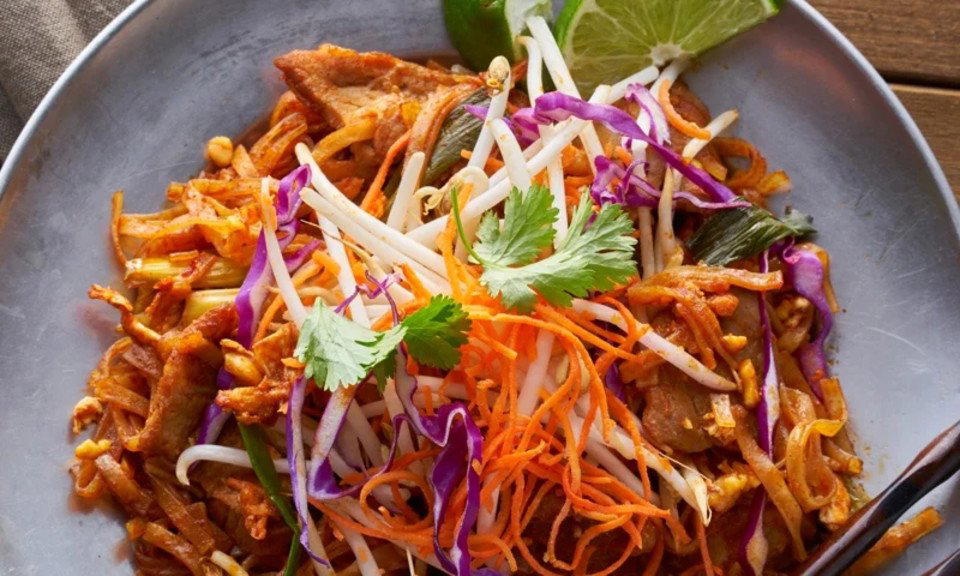
Thai on the Coast Highway: Where Yum Thai Bistro Fits in the Redondo Beach Dining Picture
Pacific Coast Highway through Redondo Beach is not primarily a destination for Thai food. The corridor is better known for seafood-forward spots, California-casual grills, and a handful of kitchens that lean into the proximity to the water. Into that context, Yum Thai Bistro at 1888 CA-1 occupies a specific and arguably underserved niche: a Thai kitchen on a stretch where the competition is drawing from entirely different culinary traditions. That positioning matters more than it might initially seem. For a diner working through the South Bay's options, the presence of a Thai bistro format alongside waterfront seafood rooms like BALEENkitchen and Bluewater Grill means genuine choice rather than the minor variations of a single theme.
The broader Redondo Beach dining scene has diversified considerably. Neighborhood options now run from the subcontinental depth of Addi's Tandoor to the Italian-leaning kitchen at Bettolino Kitchen, and that range is a recent development rather than a longstanding tradition. Thai cooking, with its balance of aromatics, acid, and heat, occupies a different register from either of those and from the coastal American formats at BeachLife Grotto. A bistro-format Thai kitchen fits the neighborhood's move toward variety without requiring the refined pricing or booking infrastructure of destination dining.
The Wine Question at a Thai Bistro
Pairing wine with Thai food is one of the more genuinely interesting problems in American casual dining, and it is a conversation that the restaurant industry has been having with increasing seriousness over the past decade. The conventional answer used to be Riesling — off-dry German or Alsatian versions that could meet spice with residual sugar — and that answer is not wrong, but it is incomplete. The wider case now includes low-tannin reds like Gamay from Beaujolais, skin-contact whites that can hold their own against fish sauce and galangal, and sparkling wines that use acidity and effervescence rather than sweetness as a counterweight.
What this means practically for a neighborhood Thai bistro on the California coast is that the list, if assembled with any care, need not be long to be useful. A short, focused selection of aromatic whites, a Crémant or Cava option, and one or two light reds will serve Thai food better than a cellar organized around the Napa Cabernet logic that dominates much of the South Bay's mid-market dining. The comparison set here is instructive: at destination-level American restaurants like Providence in Los Angeles or, further afield, Le Bernardin in New York City, the wine program is built explicitly around the food's flavor architecture. A bistro format does not require that level of investment, but the principle, that the list should answer the menu, not ignore it, applies at every price point.
California's own wine production adds a layer of local relevance. The Central Coast and certain Sonoma producers have been working with aromatic varieties, including Gewürztraminer and Grüner Veltliner, that pair cleanly with Southeast Asian cooking. A Thai kitchen on the Pacific Coast Highway is in a reasonable position to draw on that regional supply, even if the final selection depends entirely on what the house has chosen to stock.
Thai Bistro as a Format
The bistro designation carries specific expectations. In the Thai context as it has developed across American coastal cities, it typically signals a middle register: more composed than a strip-mall takeout kitchen, less ceremonial than the white-tablecloth Thai fine dining that a small number of American chefs have pursued. The format's advantage is accessibility, it can serve a table that wants to order a few dishes and share without the choreography of a tasting menu, while still producing food that has been thought about rather than simply assembled.
That positioning puts Yum Thai Bistro in a different competitive frame from the high-investment destination kitchens that define American fine dining conversations. Restaurants like Alinea in Chicago, The French Laundry in Napa, or Atomix in New York City operate in an entirely different register of ambition, investment, and expectation. The bistro tier serves a genuine need that those kitchens do not: repeatable neighborhood dining with a recognizable cuisine, accessible to a table that has not planned weeks in advance. For South Bay residents building a rotation of local options, that is a more functional proposition than occasional pilgrimages to Single Thread Farm in Healdsburg or Addison in San Diego.
Internationally, Thai fine dining has developed its own distinct ambitions, separate from the bistro format entirely, at kitchens in Bangkok and London that have attracted serious critical attention. Within the United States, the conversation about what Thai cooking can be at its most serious has been ongoing, with a handful of chefs drawing comparisons to the Korean fine dining moment represented by places like Atomix. The bistro tier is not where that conversation happens, but it is where the majority of diners encounter Thai food regularly, and quality at that level matters for the cuisine's broader American reputation.
Planning a Visit
Yum Thai Bistro is located at 1888 CA-1 in Redondo Beach, directly on Pacific Coast Highway. The PCH corridor is accessible by car with street-level and surface parking typical of the area, and the location places it within easy reach of both the Redondo Beach pier district and the residential neighborhoods immediately inland. Readers building a fuller picture of South Bay dining options will find additional context in our full Redondo Beach restaurants guide, which maps the area's options across cuisine type and price tier.
Frequently asked questions
Do I need a reservation for Yum Thai Bistro?
Thai bistros in the California coastal format generally operate on a walk-in basis for most services, though weekend evenings on a high-traffic corridor like CA-1 can generate waits. Calling ahead or checking the venue directly before visiting is the practical approach.
Fast Comparison
Comparable venues nearby, for context on price, style, and recognition.
| Venue | Cuisine | Price | Notes |
|---|---|---|---|
| Yum Thai BistroThis venue — the venue you are viewing | Traditional Thai Bistro | $20–30 | Not listed |
| Kalaveras | Modern Mexican Cantina | $20–30 | Redondo Beach |
| The Bull Pen | Classic American Steakhouse | $30–50 | Redondo Beach |
| Japonica | Japanese Izakaya & Sushi | $30–50 | South Redondo |
| Pacific Standard Prime | Modern California Steakhouse | $50–100 | Redondo Beach |
| Fun Fish Market & Restaurant | Pier Seafood Market | $20–30 | Redondo Beach Pier |
Continue exploring
More in Redondo Beach
Restaurants in Redondo Beach
Browse all →
Bars in Redondo Beach
Browse all →
Hotels in Redondo Beach
Browse all →

Wineries in Redondo Beach
Browse all →
Details
- Cozy
- Casual Hangout
- Family
- A La Carte
- Vegetarian Friendly
Current opening hours
- Monday
- 11 AM–9 PM
- Tuesday
- 11 AM–9 PM
- Wednesday
- 11 AM–9 PM
- Thursday
- 11 AM–9 PM
- Friday
- 11 AM–9 PM
- Saturday
- 11 AM–9 PM
- Sunday
- 11 AM–9 PM
Hours can change for holidays and private events. Last verified .
warm, family-friendly bistro atmosphere