Our verdict
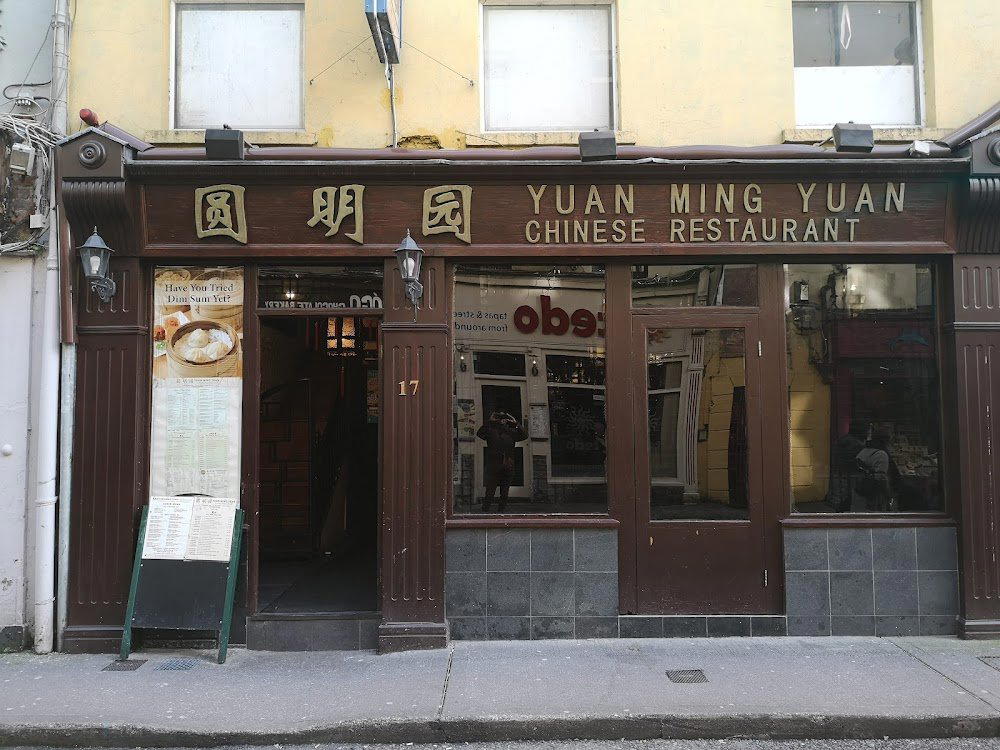
Yuan Ming Yuan sits on Princes Street in central Cork, bringing Chinese cuisine to a city whose restaurant scene has expanded considerably beyond its traditional Irish and European anchors. Cork's appetite for Asian cooking has grown alongside its broader dining ambition, and this address on Princes Street places it within easy reach of the city centre's main dining corridor.

Pearl is the En Primeur Club membership app — saves, bookings, and concierge access live there. Same editors, same standards.
- Address
- 17 Princes St, Centre, Cork, T12 F853, Ireland
- Phone
- +353 21 425 4968
- Hours
- Mon 12–10 PMTue ClosedWed–Sat 12–10 PMSun 1–10 PM
- Directions
- Get directions
The menu
What to order
- Siew Mai
- Dim Sum
Chinese Dining in Cork: Where the City Meets a Culinary Tradition That Predates Most Western Fine Dining
Princes Street cuts through the commercial heart of Cork city, a narrow corridor flanked by independent businesses that have, over the past decade, become increasingly varied in their culinary orientation. The city's dining scene has moved steadily away from its historic reliance on Irish pub food and European bistros, absorbing influences from further afield as its population has diversified and its restaurant-going culture has matured. Yuan Ming Yuan sits within that shift, at 17 Princes Street, in a neighbourhood that sees a steady flow of workers, students, and visitors throughout the day and into the evening.
Chinese cuisine occupies a particular position in Ireland's dining culture. It arrived in Irish cities decades before the broader wave of Asian restaurant openings that followed the Celtic Tiger era, which means Chinese cooking here carries a dual identity: it is simultaneously one of the most established non-Irish cuisines in the country and one of the most frequently misread. The earliest Chinese restaurants in Irish cities served adapted menus calibrated to local palates, much as their counterparts did in the United Kingdom during the same period. The question worth asking of any Chinese restaurant operating today is where it sits in relation to that history — whether it is working within the adapted tradition or attempting something closer to regional Chinese cooking as it is practised in Guangdong, Sichuan, Hunan, or elsewhere.
That question matters more now than it did ten years ago, because the reference points available to Irish diners have shifted. Exposure to regional Chinese cooking through travel, through the growth of more specialist restaurants in Dublin, and through food media has raised the baseline of what Cork diners know to expect and compare against. In cities like New York, the conversation around Chinese cuisine at the leading end — exemplified by restaurants such as Atomix in New York City, which addresses Korean cooking with similar seriousness, has helped establish that Asian culinary traditions merit the same critical attention as French or Italian ones. Ireland is several years behind that curve, but Cork's more adventurous diners are increasingly aware of the gap.
Cork's Broader Dining Context
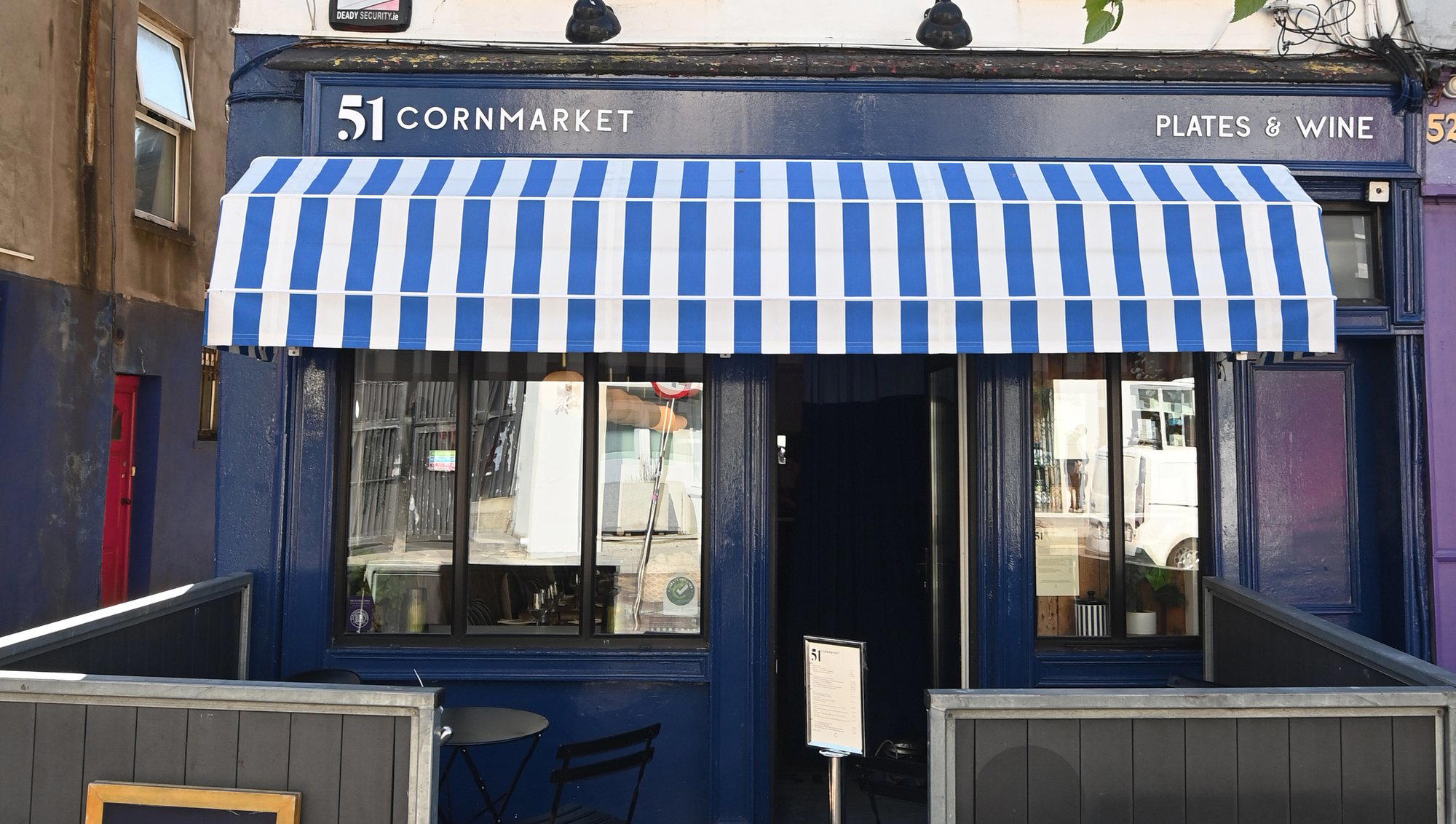
Understanding Yuan Ming Yuan requires understanding the competitive set it sits within. Cork's restaurant scene is more concentrated than Dublin's but increasingly sophisticated. The city's seafood cooking has long been its strongest suit, Goldie (Seafood) has built a following around whole-animal fish cookery that connects Cork's harbour geography to its plate, while Italian and European bistro formats remain well-represented, with da Mirco (Italian) occupying the mid-range Italian tier. The more ambitious end of the Cork dining scene tends to express itself through modern European formats: Gallaghers and 51 Cornmarket both operate in the upper registers of casual-to-formal dining. For lighter daytime options, Good Day Deli represents the city's growing appetite for quality-focused café culture.
Within that landscape, Chinese restaurants occupy a specific and underexamined role. They serve a broader cross-section of the dining public than most restaurants at any given price point, which means they absorb diners who might not otherwise venture outside familiar categories. A well-executed Chinese kitchen in a city like Cork functions as both a neighbourhood anchor and a gateway, it is often where diners first encounter the logic of shared-table eating, the interplay of contrasting textures and temperatures within a single meal, or the structural difference between a broth-led and a sauce-led cuisine.
The Cultural Architecture of Chinese Cooking
Chinese cooking is not a single cuisine. It is a federation of regional traditions with distinct ingredient vocabularies, cooking techniques, and philosophical orientations toward heat, seasoning, and texture. Cantonese cooking prizes freshness and restraint; Sichuanese cooking is built around the numbing-heat compound of peppercorn and chilli; Shanghainese cooking tends toward sweetness and braised richness; Hunanese cooking is sharper and more direct in its heat. When a Chinese restaurant operates outside China, these regional distinctions often compress, with menus drawing from multiple traditions to serve a broader customer base. That compression is not inherently a problem, it is a practical response to operating in a diaspora context, but it does mean the informed diner arrives with different questions than they would at a regionally specific kitchen.
The broader sweep of Irish dining at its serious end is now well-documented through Michelin recognition, with restaurants like Chapter One by Mickael Viljanen in Dublin, Aniar in Galway, Liath in Blackrock, and Campagne in Kilkenny holding stars in the current guide. Further afield in Munster, dede in Baltimore, Terre in Castlemartyr, Bastion in Kinsale, Chestnut in Ballydehob, and Homestead Cottage in Doolin have collectively raised the profile of the province's dining scene. House in Ardmore extends that reach to the Waterford coastline. Chinese cooking, by contrast, operates largely outside the Michelin conversation in Ireland, which says more about the guide's historical biases than about the quality ceiling of the cuisine itself. At the global level, Michelin's expansion into Hong Kong and mainland China has produced some of its most contested and celebrated results, a reminder that the technical demands of serious Chinese cookery are no less rigorous than those of French haute cuisine, a point underlined by the benchmark set at places like Le Bernardin in New York City for what sustained culinary seriousness looks like over decades.
Planning a Visit
Yuan Ming Yuan is located at 17 Princes Street in central Cork, within walking distance of Patrick Street and the city's main transport links, which makes it accessible without a car. Princes Street is navigable on foot from most of Cork's central hotel stock. For current hours, pricing, and booking availability, direct contact with the venue is the appropriate route; no third-party booking data has been verified for this listing. The Princes Street address is in a part of the city that tends to be busier on weekend evenings, so arriving with a reservation in hand is the more reliable approach than hoping for a walk-in table during peak service.
For a broader view of Cork's dining scene across all cuisines and price points, the our full Cork restaurants guide covers the city's current options with the same editorial rigour applied here.
Frequently asked questions
What part of town is Yuan Ming Yuan in?
Yuan Ming Yuan is located at 17 Princes St, Centre, Cork, T12 F853, Ireland, Cork.
Is Yuan Ming Yuan suitable for a group dinner in Cork city centre?
Located at 17 Princes Street in the commercial core of Cork, Yuan Ming Yuan sits within easy reach of the city's main hubs, making it a practical option for groups meeting from different parts of the city. Chinese dining formats traditionally accommodate shared plates across multiple dishes, which suits group dining better than fixed individual courses. check the venue's official channels to discuss availability and any group arrangements.
What's the best thing to order at Yuan Ming Yuan?
Without a published menu available, the safest approach is to ask staff what is freshest that day. Chinese cooking spans dozens of regional traditions, and the kitchen's strengths will likely show in dishes tied to a specific regional style. Ask directly rather than defaulting to familiar Cantonese staples.
Can I walk in to Yuan Ming Yuan?
Yuan Ming Yuan is at 17 Princes Street in central Cork, accessible on foot from Patrick Street and the city's main transport links. Walk-in availability will depend on the day and time.
What's the signature at Yuan Ming Yuan?
Chinese regional cooking, however, often anchors a menu around a core technique or ingredient tradition, whether Sichuan heat, Cantonese dim sum, or Shanghainese braising. Asking staff which preparation the kitchen is most confident in will give a clearer answer than any list.
Pricing, Compared
Comparable venues nearby, for context on price, style, and recognition.
| Venue | Cuisine | Price | Awards | Notes |
|---|---|---|---|---|
| Yuan Ming YuanThis venue — the venue you are viewing | Traditional Chinese with Dim Sum | $20–30 | Not listed | Not listed |
| Nash 19 | Hong Kong-style Chinese | Not listed | The Sunday Times Ireland’s 100 Best Restaurants | Centre A, Hong Kong-style Chinese |
| Quinlan's Seafood | Fresh Irish Seafood | $50–100 | Not listed | Centre A, Fresh Irish Seafood |
| 51 Cornmarket | Seasonal Local Irish | $30–50 | The Sunday Times Ireland’s 100 Best Restaurants | Centre B, Seasonal Local Irish |
| Rocket Man | Healthy Salads & Juices | Not listed | Not listed | Centre A, Healthy Salads & Juices |
| Gallaghers | Irish Gastropub | $30–50 | Not listed | St. PATRICK'S A, Irish Gastropub |

Details
- Classic
- Elegant
- Late Night
- Casual Hangout
- Historic Building
- A La Carte
- Vegetarian Friendly
- Vegan Options
- Gluten Free Options
Current opening hours
- Monday
- 12–10 PM
- Tuesday
- Closed
- Wednesday
- 12–10 PM
- Thursday
- 12–10 PM
- Friday
- 12–10 PM
- Saturday
- 12–10 PM
- Sunday
- 1–10 PM
Hours can change for holidays and private events. Last verified .
Traditional space featuring ornate gold decor and lattice screens creating an elegant Asian atmosphere.