
Michelin Plate
Our verdict
Among Kaohsiung's Michelin-recognised vegetarian addresses, Xiantaosu on Chongqing Street occupies a distinct position: plant-based cooking at a mid-range price point ($$). Compared to the city's higher-spend Cantonese and modern cuisine tables, it demonstrates that rigorous vegetarian cooking in Taiwan has outgrown the temple-food niche and entered serious critical territory.

Pearl is the En Primeur Club membership app, where members save venues, book tables and use the concierge.

Where Kaohsiung's Plant-Based Cooking Gets Serious
Taiwan's vegetarian tradition runs deeper than most visitors expect. Buddhist influence, a large practicing vegetarian population, and decades of temple-affiliated cooking have produced a culinary infrastructure that most countries simply lack. What has changed in the past decade is the migration of that tradition from functional and ceremonial contexts into restaurants that think about progression, texture contrast, and course sequencing with the same attention you'd find at a multi-course Western table. In Kaohsiung's Sanmin District, Xiantaosu sits precisely at that intersection, a Michelin Plate recipient in 2024 with a price point ($$) that makes it accessible without making it casual.
The address on Chongqing Street places it away from the tourist-heavy riverside precincts. Sanmin is a working district: hardware shops, local morning markets, family-run noodle places. Arriving at Xiantaosu, the surrounding neighbourhood anchors the experience in something genuinely local rather than curated for visitors. That context matters. Some of the most precise vegetarian cooking in East Asia, think Fu He Hui in Shanghai or Lamdre in Beijing, occupies high-design spaces with prices to match. Xiantaosu operates differently, drawing a local crowd and achieving Michelin recognition without the apparatus of fine-dining theatre.
The Plant-Based Progression at This Price Point
Across Asia, the vegetarian tasting format has developed its own grammar. At the upper end, places like Mi Xun Teahouse in Chengdu use the multi-course structure to move through temperature, texture, and botanical register in deliberate sequence. The challenge at a mid-range price is maintaining that sense of narrative without the ingredient budgets that luxury vegetarian kitchens rely on. What the Michelin Plate signals at Xiantaosu is cooking quality that the guide considers worthy of attention, a benchmark distinct from starred recognition but not trivial, particularly in a city where the Plate tier is competitive.
Taiwan's plant-based kitchen has specific strengths that distinguish it from, say, its Japanese counterpart. Fermentation, preserved vegetables, tofu in its many regional forms, and the influence of Hokkien cooking give Taiwanese vegetarian food a savouriness and depth that can surprise diners conditioned to expect lighter, more delicate Buddhist cuisine. A well-constructed progression here might move from clean, lightly seasoned preparations through to more intensely flavoured, ferment-forward dishes before cycling back through something lighter, a structure that rewards patience and attention.
Ratings at that volume tend to regress toward the mean. A 4.9 across nearly 1,800 responses implies not just satisfaction but repeated positive reinforcement from a local audience that returns and recommends. By comparison, well-regarded Kaohsiung tables like Haili and GEN operate at the $$$ and $$$$ tiers respectively, Xiantaosu's review standing at $$ suggests the value-to-quality ratio is doing significant work.
Kaohsiung's Dining Spread and Where Xiantaosu Sits
Kaohsiung's restaurant scene has grown more stratified over the past several years. At the top tier, Japanese-influenced counters and contemporary Cantonese tables like Sho and GEN anchor the city's fine-dining identity. European contemporary formats, represented by Anchovy, have found their footing. Traditional Taiwanese cooking maintains its presence through places like A Fung's Harmony Cuisine. What the scene has been slower to develop is a serious mid-range vegetarian address with critical recognition. Xiantaosu occupies that gap, and the 2024 Michelin Plate formalises a reputation that local diners had already established through word of mouth.
Placed in the broader Taiwan context, Kaohsiung's fine-dining tier has fewer starred properties than Taipei or Taichung. Logy in Taipei and JL Studio in Taichung represent the higher bracket of Taiwan's recognised restaurant scene. Within Kaohsiung, Michelin Plate recognition carries particular weight because the pool is smaller. For vegetarian cooking specifically, the Plate at Xiantaosu signals something beyond a local favourite: it positions the kitchen within a national conversation about what plant-based cooking can do at accessible price points.
Taiwan's wider culinary geography also offers useful comparison. Regional specialisms like the beef-focused cooking of Tainan, represented by A Cun Beef Soup, or the indigenous-ingredient focus at Akame in Wutai Township, illustrate how Taiwan's culinary identity extends well beyond any single tradition. Xiantaosu contributes to that pluralism from a different angle: demonstrating that a Buddhist-rooted vegetarian kitchen can earn the attention of the same guide that recognises mountain-herb tasting menus and contemporary European formats.
Planning Your Visit
Xiantaosu is located at No. 1-3, Chongqing Street, Sanmin District, in central-north Kaohsiung. The $$ price designation places it firmly in the mid-range tier, substantively cheaper than the city's Cantonese and Japanese fine-dining options, and roughly comparable to the better casual-to-mid local addresses. For context on what else the city offers across categories, see our full Kaohsiung restaurants guide, our Kaohsiung hotels guide, our Kaohsiung bars guide, our Kaohsiung wineries guide, and our Kaohsiung experiences guide. Visitors staying in the resort context of Volando Urai in Wulai will find Xiantaosu a useful reference point for understanding how seriously Taiwan takes its vegetarian cooking across very different price tiers and formats.
Frequently asked questions
Is Xiantaosu suitable for children?
Is Xiantaosu better for a quiet night or a lively one?
at Xiantaosu?
A Minimal comparable set
Comparable venues nearby, for context on price, style, and recognition.
| Venue | Cuisine | Price | Awards | Notes |
|---|---|---|---|---|
| XiantaosuThis venue (the venue you are viewing) | Modern Taiwanese Vegetarian | $30–50 | Michelin Plate | Not listed |
| Kuca Seafood | Modern Taiwanese Seafood | $30–50 | Michelin Plate | Zuoying, Modern Taiwanese Seafood |
| A Fung's Harmony Cuisine | Taiwanese Farm-to-Table Tasting | Not listed | Michelin Plate | Lingya District, Taiwanese Farm-to-Table Tasting |
| Cho | Modern Cuisine | Not listed | Michelin Plate | Sanmin District, Modern Cuisine |
| Temperature Studio | Modern Fusion Omakase | $150–200 | Michelin Plate | Gangshan District, Modern Fusion Omakase |
| Ça marche | Modern French-Italian Fusion | Not listed | Michelin Plate | Sanmin District, Modern French-Italian Fusion |
Recognition history
Dated appearances from independent guides and award organizations, with the underlying list record or original source where available.
Michelin Plate
Michelin
Continue exploring
More in Kaohsiung
Restaurants in Kaohsiung
All restaurants in Kaohsiung →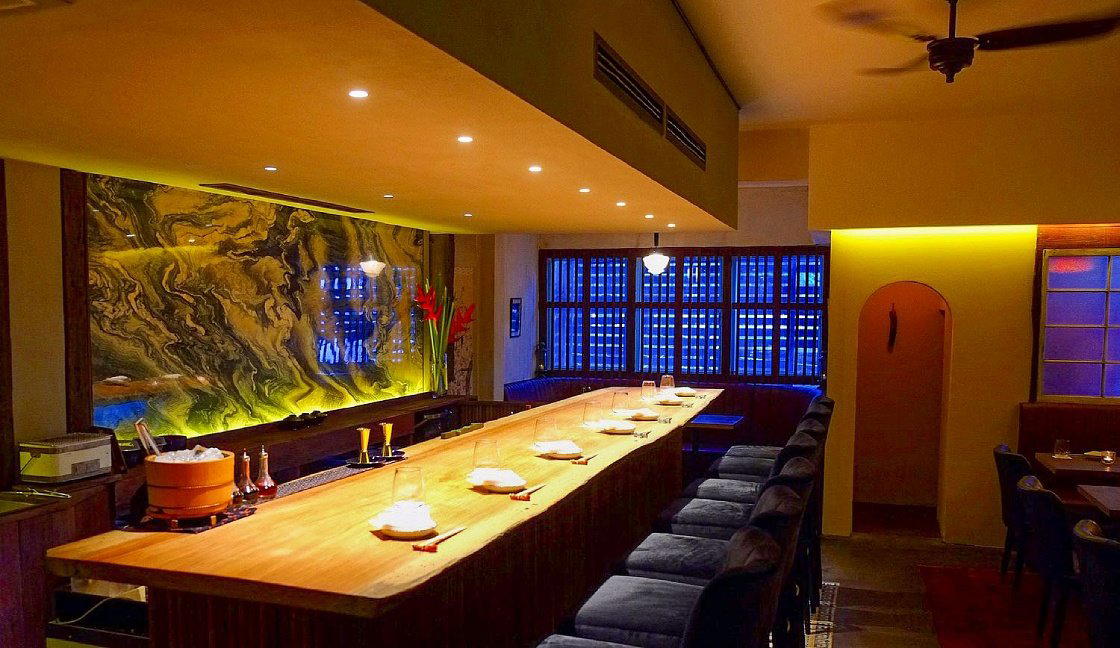
Bars in Kaohsiung
All bars in Kaohsiung →
Details
- Serene
- Elegant
- Intimate
- Sophisticated
- Date Night
- Special Occasion
- Open Kitchen
- Sake Program
- Local Sourcing
- Set Menu
- Sake
- Vegan Options
- Vegetarian Friendly
Serene dining room with natural materials, softened edges, and precise lighting that frames each artfully plated course.