Our verdict
Tu Kab Khao sits on Phangnga Road in Phuket's old town, a neighbourhood that anchors the island's most concentrated stretch of pre-tourist heritage architecture and local food culture. Against a Phuket dining scene pulled increasingly toward resort corridors and beach-facing international menus, this address grounds itself in the older part of the city where southern Thai cooking has been practised across generations.

Pearl is the En Primeur Club membership app — saves, bookings, and concierge access live there. Same editors, same standards.
The menu
What to order
- Sen mee gaeng poo
- Moo hong phuket
- Gaeng som pla
Old Town Address, Southern Logic
Phuket's old town has a different tempo to the rest of the island. Phangnga Road, where Tu Kab Khao is addressed, runs through the core of the Sino-Portuguese district, a stretch of shophouse facades and covered five-foot ways that predate the resort era by a century. The neighbourhood draws a mixed crowd: locals who have always eaten here, architecture tourists working the heritage trail, and a smaller contingent of food-focused visitors who find the old town's restaurant density more interesting than anything available beside a hotel pool. Arriving on Phangnga Road for dinner puts you inside that ecosystem rather than looking at it from a taxi window.
That locational choice matters when you map Phuket's restaurant scene. The island's premium dining has largely migrated toward the west coast, where properties like Amanpuri and resort-affiliated kitchens operate inside controlled environments that prioritise setting over neighbourhood character. The old town operates on a different logic: the physical context is already given, and restaurants either use it or ignore it. Tu Kab Khao, positioned on one of the district's primary heritage streets, is drawing on a location that carries its own cultural weight before a single dish arrives.
Where Tu Kab Khao Sits in Phuket's Thai Dining Tier
Southern Thai cooking is not a monolith. The cuisine spans everything from intensely spiced curries and fermented shrimp pastes to the Chinese-inflected dishes that entered the Phuket kitchen through the Hokkien and Teochew communities that shaped this town's food culture. That layering is precisely what makes old town Phuket a more instructive place to eat Thai food than most of the island's resort corridors, where the menu tends toward a nationalised, tourist-adjusted version of Thai cuisine stripped of regional specificity.
The Thai dining tiers in Phuket now run from hawker-level street food, represented by spots like A Pong Mae Sunee at the low end of formality and price, up through mid-range sit-down restaurants, and then into the fine-dining tier occupied by PRU, which holds Michelin recognition and operates a farm-to-table format at the upper price bracket. Tu Kab Khao occupies a position in the mid-to-upper middle of that range, the tier that combines a proper dining room and composed cooking with prices that remain accessible relative to the resort properties. It is the kind of address where southern Thai food is taken seriously without the ceremony or cost structure of a Michelin-tracked operation.
For comparison, Age Restaurant and Acqua operate at the upper price tier with European frameworks. Tu Kab Khao's Thai register and old town address put it in an entirely different competitive set, one where the relevant peer comparisons are other Thai-focused rooms rather than the island's international fine dining.
Southern Thai Cooking in National Context
Southern Thailand produces some of the country's most technically demanding regional food. The curries run hotter and use a wider range of fresh aromatics than central Thai equivalents; the seafood preparations reflect the peninsula's two-coast geography; and the Chinese-Malay influences on the Phuket kitchen add a layer of culinary cross-referencing that distinguishes the town's food from that of the deeper south. This is the tradition that an old town Phuket restaurant like Tu Kab Khao is positioned within, whether the menu leans toward pure southern Thai, Phuket-specific dishes, or the local Chinese-Thai hybrids that characterise the island's food history.
Nationally, the most formally recognised southern Thai cooking is being documented and refined in Bangkok, where Sorn has become the reference point for southern Thai fine dining with its Michelin two-star recognition. The gap between what Sorn represents and what a mid-tier old town Phuket restaurant offers is large, but the relevant point is that interest in southern Thai food as a distinct culinary category has grown substantially, and that attention benefits restaurants working within the tradition at any price level. Eating that cooking in Phuket, where the geography and the community that produced it are present rather than recreated, carries a different kind of authority than eating it in Bangkok.
Elsewhere in Thailand, regional specificity is increasingly what separates notable restaurants from generic ones. Cherng Doi Roast Chicken in Chiang Mai and Loet Rot in the same city represent northern Thai cooking in its natural context, with the same locational logic that applies to an old town Phuket address. AKKEE in Pak Kret demonstrates how regional Thai food can hold significant local reputation without operating inside the formal recognition systems. The pattern across Thailand is consistent: place and culinary tradition, when aligned, produce a dining experience that generic resort menus cannot replicate.
Planning a Visit
Phangnga Road is central to Phuket's old town and accessible from most parts of the city without significant travel time; visitors staying in the Patong or Kata beach areas should factor in roughly 20 to 30 minutes by taxi or ride-share app. The old town rewards visiting in the early evening before the heritage street lighting dims the shophouse facades into silhouette. Weekends in Phuket's old town attract a larger local crowd, particularly around the Sunday Walking Street market, which operates along Thalang Road and draws visitors who may also be heading to dinner. Booking ahead is advisable for groups, as old town restaurants in heritage shophouse buildings typically operate limited covers. Phuket's high season runs from November through April when dry weather makes the old town more comfortable to explore on foot; the shoulder months from May through October see quieter streets and shorter waits.
Visitors building a broader itinerary around Phuket's dining scene should cross-reference the full Phuket restaurants guide for context across price tiers and cuisines. Those extending a southern Thailand trip toward Surat Thani or Takua Pa will find relevant options at Little Edo Suratthani and DEVASOM BEACH GRILL respectively.
Frequently asked questions
Is Tu Kab Khao suitable for children?
Southern Thai cooking is among the spiciest regional styles in the country, relying heavily on fresh aromatics, fermented shrimp pastes, and curries with considerable heat. Parents should factor that in when ordering for younger diners. The Phangnga Road address is in Phuket's old town, a walkable neighbourhood rather than a resort strip, which suits families exploring the area.
What's the vibe at Tu Kab Khao?
Tu Kab Khao sits on Phangnga Road in the Sino-Portuguese core of Phuket old town, a district where the architecture and pace run quieter than the island's beach-facing zones. The setting frames the food as a regional argument rather than a tourist convenience — this is a place oriented around Southern Thai cooking on its own terms, not adapted for the resort crowd.
How does Tu Kab Khao compare to other Thai restaurants in Phuket old town?
Phuket's old town dining scene divides roughly between venues adapting Thai food for tourist footfall and those working within a specific regional or cultural tradition. Tu Kab Khao's Phangnga Road address places it inside the Sino-Portuguese district, and its focus on Southern Thai cooking — a cuisine distinct in its use of fermented ingredients and fresh-aromatics-heavy curries — positions it closer to the latter category. That distinction matters for anyone trying to understand what separates Phuket's Chinese-inflected southern food from the nationalised Thai menu found elsewhere on the island.
What's Tu Kab Khao's location?
Tu Kab Khao is located at 8 Phangnga Rd, Tambon Talat Yai, Mueang Phuket District, Phuket 83000, Thailand.
How Tu Kab Khao Phuket compares with similar nearby venues.
| Venue | Cuisine | Price | Awards |
|---|---|---|---|
| Tu Kab KhaoThis venue — the venue you are viewing | Authentic Southern Thai | $20–30 | Not listed |
| Pizzeria Da Moreno | Authentic Neapolitan Pizza | $10–20 | Not listed |
| O Cha Rot | Thai Beef Noodle Soup | $1–10 | Michelin Plate |
| Cafe Delight Phuket Old Town | American Comfort Cafe | $10–20 | Not listed |
| A Pong Mae Sunee | Phuket Street Food - Khanom A Pong | $1–10 | Michelin Bib Gourmand |
| The Charm Dining Gallery | Thai-Peranakan | $10–20 | Michelin Bib Gourmand |
Continue exploring
More in Phuket
Restaurants in Phuket
All restaurants in Phuket →
Bars in Phuket
All bars in Phuket →


Details
- Elegant
- Classic
- Cozy
- Casual Hangout
- Family
- Group Dining
- Live Music
- Historic Building
- Street Scene
- A La Carte
- Vegetarian Friendly
- Vegan Options
- Gluten Free Options
Current opening hours
- Monday
- 11 AM–9 PM
- Tuesday
- 11 AM–9 PM
- Wednesday
- 11 AM–9 PM
- Thursday
- 11 AM–9 PM
- Friday
- 11 AM–9 PM
- Saturday
- 11 AM–9 PM
- Sunday
- 11 AM–9 PM
Hours can change for holidays and private events. Last verified .
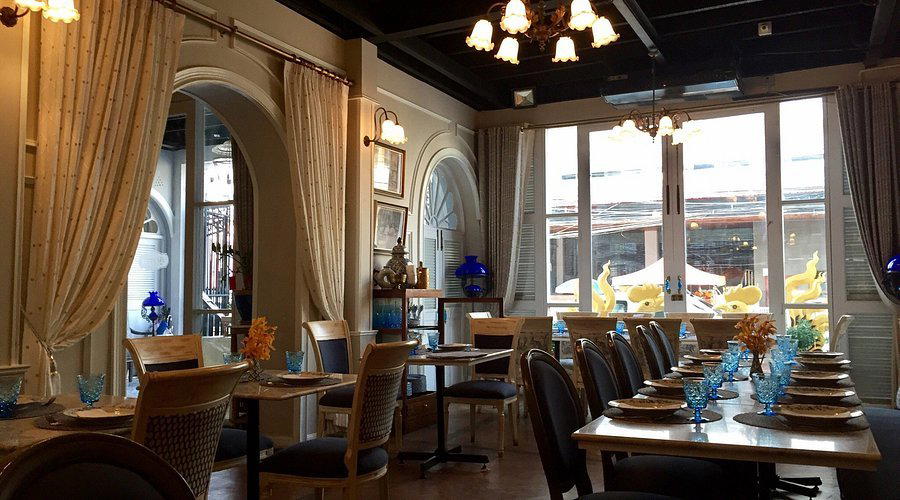
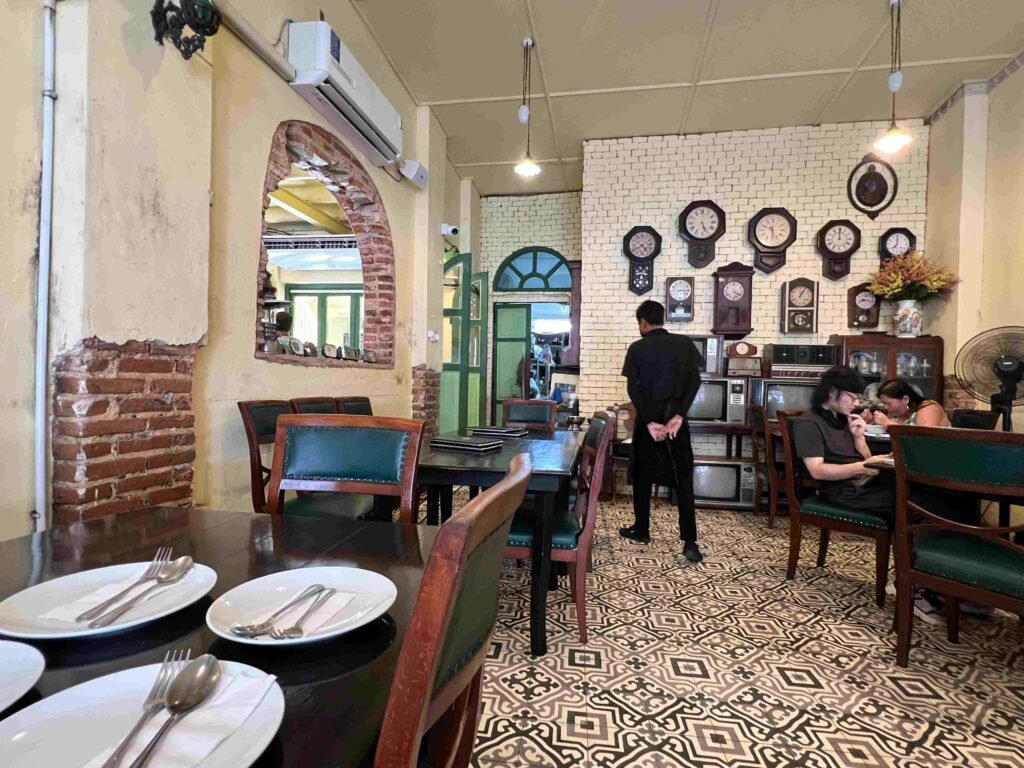
Elegant blend of traditional Thai decor with modern touches in a charming century-old building, offering a captivating old town atmosphere.