
Tabelog 100 #18
Our verdict
Tsukasa brings serious tempura into Fujioka’s small-city dining frame, with Tabelog Tempura 100 selections in 2022, 2023, and 2025 giving it a credential that travels beyond Gunma. The interest is ingredient-led rather than theatrical: tempura and ten-don, counter seats and tatami seating, and a drinks list that gives sake, shochu, and wine equal relevance.

Pearl is the En Primeur Club membership app, where members save venues, book tables and use the concierge.
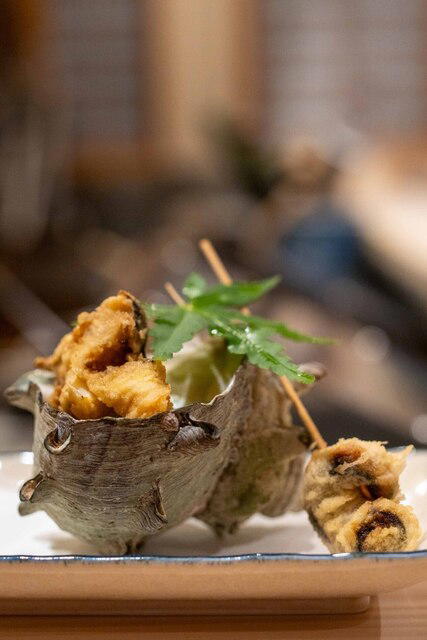
The menu
What to order
- Tempura
- Chef Special
- Salad
- Soup
- Dessert
Fujioka does not announce its restaurants with the metropolitan drama of big-city counters or townhouse dining. The approach here is quieter: residential rhythms, low-rise streetscapes, and a kind of local confidence that suits a focused meal better than spectacle. In that setting, Tsukasa reads as a small-format specialist restaurant built around heat, timing, and category focus rather than a grand dining-room performance.
That matters because tempura is often misunderstood outside Japan as a frying technique first and an ingredient discipline second. At serious counters, batter and oil are only part of the grammar. The more telling questions are how ingredients are handled, when they enter the oil, and whether the kitchen keeps the meal precise rather than heavy. Tsukasa sits in that specialist lane, with tempura and ten-don listed as its categories rather than treated as side notes.
Gunma tempura with specialist focus at the centre
Regional tempura outside Japan’s major dining capitals has a different appeal. Tokyo’s luxury counters often trade on lineage, scarcity, and a narrow reservation economy. In Gunma, the case is more grounded: the cooking has to justify itself to local regulars as much as travelling diners. Selection for Tabelog’s Tempura Hyakumeiten in 2025 places Tsukasa in a national category conversation, but the more useful reading is comparative. This is not a broad dining room with tempura on the side; it is a specialist address where the category defines the meal.
The emphasis is structural rather than cosmetic. Japan’s tempura tradition has long relied on seasonality, timing, and texture contrast, and the best versions ask diners to pay attention to more than simple crunch. Without naming dishes that are not publicly specified, the important point is the format: a kitchen identified with tempura is asking diners to judge the meal through batter restraint, oil control, and how quickly food moves from fryer to guest without losing its edge.
Ten-don gives the format a second register. A tempura bowl is less austere than counter-by-counter pacing, but it can be just as revealing: rice absorbs oil, sauce changes perception of sweetness and salt, and the balance fails quickly if the frying is heavy. For travellers building a food day around Fujioka rather than passing through, that dual identity is useful. It allows the restaurant to sit between destination tempura and a more familiar rice-bowl tradition, a bridge that makes sense in a smaller city where dining occasions range from everyday meals to specialist visits.
A focused room, not a luxury theatre
The room format is best understood through scale and purpose rather than spectacle. Tempura rewards immediacy, and a focused setting suits a meal where heat, timing, and service rhythm carry much of the pleasure. The diner does not need a lecture to understand that pace, temperature, and restraint matter; the format itself makes those details visible.
This focus also affects how to read the recognition. Tabelog’s Tempura Hyakumeiten is not a Michelin-starred hierarchy, and the displayed order should not be treated as an official rank. Its value here is category confirmation. In a prefecture better known to many travellers for hot springs, mountains, wheat noodles, and agricultural breadth than for luxury restaurant circuits, a 2025 tempura selection gives Fujioka a sharper dining point on the map.
The practical read is more important than any luxury shorthand. Tsukasa’s publicly listed categories point to tempura and ten-don, with a Tabelog score of 3.74 and listed budgets of Dinner: JPY 10,000 - JPY 14,999; Lunch: JPY 1,000 - JPY 1,999. Those signals place it as a category-led Fujioka restaurant rather than a generic stop, useful for diners who want a meal organized around frying technique and rice-bowl familiarity.
How to place it in a Fujioka food itinerary
Fujioka rewards travellers who think beyond a single meal. For restaurant planning, start with Our full Fujioka restaurants guide, then widen the trip through Our full Fujioka hotels guide, Our full Fujioka bars guide, Our full Fujioka wineries guide, and Our full Fujioka experiences guide. The city is not a dense restaurant crawl in the Tokyo sense; it works better as a planned stop where transport, meal timing, and the surrounding Gunma itinerary are aligned.
Within a wider Japan dining file, Tsukasa belongs to the specialist-tradition side rather than the fashion-driven side. Travellers comparing formats can look across other Fujioka dining rooms and nearby category-specific addresses without forcing a cuisine match. The comparison is not about similarity on the plate; it is about how tightly a restaurant commits to a category and how clearly that commitment shapes the meal.
For a broader reading of Fujioka dining breadth, the contrast can continue through allowed local peers such as Mokkosu, Sumibi Yakiniku Ichiba Jejuya Honten, Tomiko, Yakiniku Sumikou, and ファン・ダルクオーレ, as well as other unnamed dining in the city. The Fujioka case for Tsukasa is more specific: a tempura and ten-don restaurant with 2025 national category recognition and a format built around immediacy.
The critical read is clear. Tsukasa is most compelling for diners who care about ingredient handling and the discipline of frying, not for those seeking a choreographed luxury ritual. Its strongest signal is the combination of specialist category, Fujioka setting, listed Tabelog score, budget range, and 2025 Tabelog Tempura Hyakumeiten selection. In Fujioka, that gives tempura the weight of a reason to plan, rather than a dish to order in passing.
Frequently asked questions
Is Tsukasa child-friendly?
Check the venue's official channels for the latest details before visiting, especially if dining with children or planning around a specific seating preference.
What's the vibe at Tsukasa?
It reads as a focused Fujioka restaurant rather than a theatrical luxury room. The Tabelog Tempura Hyakumeiten 2025 selection gives it added category credibility.
What price level is Tsukasa?
Pricing at Tsukasa is listed as Dinner: JPY 10,000 - JPY 14,999; Lunch: JPY 1,000 - JPY 1,999.
When is Tsukasa open?
Opening hours can change, so check the venue's official channels or current listing before making the trip.
Where do I go for Tsukasa?
Fujioka.
Comparison Snapshot
Comparable venues by cuisine and price in the same metro.
| Venue | Cuisine | Price | Awards | Notes |
|---|---|---|---|---|
| TsukasaThis venue (the venue you are viewing) | Japanese tempura restaurant | Not listed | Tabelog 100 #18 | Not listed |
| Koja Sobaya (古謝そば屋) | Authentic Miyako Soba | $1–10 | Not listed | Hirara, Miyakojima City |
| Tonjinchi Ramen | Himi niboshi ramen & casual dining bar | $1–10 | Tabelog 100 #52 | Himi |
| Chuka Soba Hayami | Traditional Wakayama Ramen | Not listed | Not listed | Shingu |
| Chuka Soba Narugami Shokudo | Japanese Ramen | Not listed | Tabelog 100 #92 | Nakaizumimachi |
| Ramen Ogane | Traditional Sano-style ramen | $1–10 | Tabelog 100 #56 | Ohashicho |
Recognition history
Dated appearances from independent guides and award organizations, with the underlying list record or original source where available.
Tabelog 100 #18 · No. 18
Tabelog · Tabelog 100 - Tempura - 2025
Continue exploring
More in Fujioka
Restaurants in Fujioka
All restaurants in Fujioka →
Hotels in Fujioka
Browse all →
Wineries in Fujioka
Browse all →
Details
- Casual Hangout
- Solo
- Family
- Standalone
- A La Carte
Current opening hours
- Monday
- Closed
- Tuesday
- 11:30 AM–1:30 PM, 5:30–9 PM
- Wednesday
- 11:30 AM–1:30 PM, 5:30–9 PM
- Thursday
- 11:30 AM–1:30 PM, 5:30–9 PM
- Friday
- 11:30 AM–1:30 PM, 5:30–9 PM
- Saturday
- 11:30 AM–1:30 PM, 5:30–9 PM
- Sunday
- 11:30 AM–1:30 PM, 5:30–8:30 PM
Hours can change for holidays and private events. Last verified .