
Guía Repsol 1 Sol
Our verdict
Troqué sits in La Caleta, where Adeje’s dining culture is shaped by Atlantic produce, resort demand, and a growing appetite for sharper Canarian cooking. Its 1 Sol in the Guía Repsol Soles 2026 places it among Tenerife restaurants being read beyond beachfront convenience, with local identity carrying more weight than decorative luxury.

Pearl is the En Primeur Club membership app — saves, bookings, and concierge access live there. Same editors, same standards.
- Address
- Av. de Las Gaviotas, 38670 La Caleta, Santa Cruz de Tenerife, Spain
- Hours
- Daily 1:30–3 PM, 6–10 PM
- Directions
- Get directions
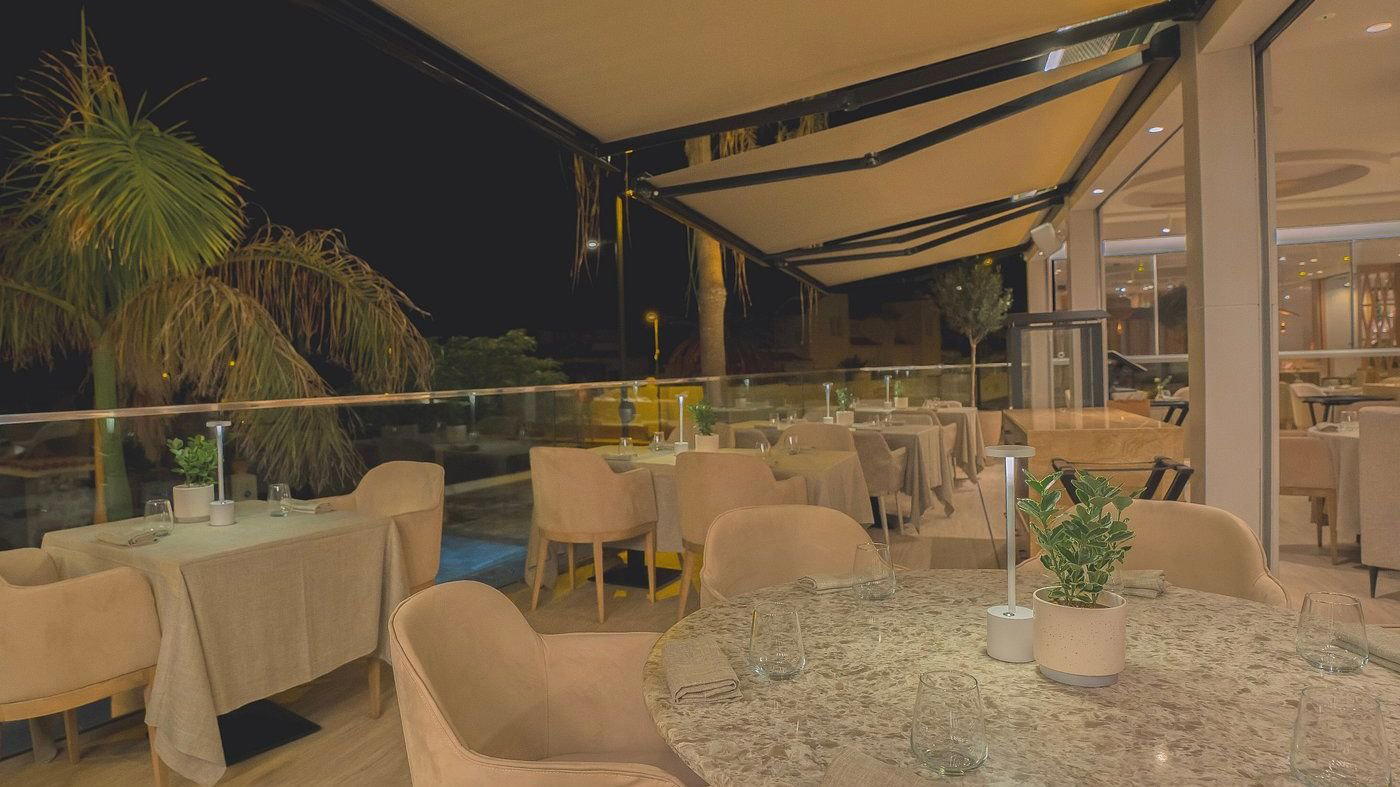
Adeje changes the tempo of local dining before a menu appears. The island setting, visitor traffic, and resort energy leave restaurants either coasting on location or answering a harder question: what should contemporary cooking in Tenerife feel like when it refuses generic holiday food? Troqué belongs to the second conversation, and its 1 Sol in the Guía Repsol Soles 2026 places it in a more serious restaurant tier.
Adeje’s stronger tables now split clearly: polished resort rooms, coastal dining addresses, and restaurants trying to give the city more than a standard visitor-facing meal. Tenerife has dining expectations and local context that need not imitate mainland Spain. The issue is not whether a restaurant announces that context loudly, but whether it handles place with discipline.
Adeje dining is moving from sea-view comfort to a stronger sense of place
In Adeje, the setting has long been both asset and trap. A well-positioned restaurant can fill tables without saying much about place. The more interesting shift comes when dining rooms use the island as context, not décor. Troqué’s Guía Repsol recognition puts it in the same broader local conversation as other Adeje dining rooms that engage seriously with where they are.
That context matters because Adeje attracts diners with mixed expectations. Some want a familiar international room; others seek a meal that feels less interchangeable with another resort coast. Nearby comparison points show the range, from comfort-led rooms to more polished versions of modern dining. Troqué’s stronger editorial case is that it sits where Adeje becomes more considered, less generic.
The 1 Sol also gives the address a useful signal where setting can blur judgment. Guía Repsol’s Soles are not decorative; in Spain they act as a national restaurant language for consistency, regional character, and craft. For a Tenerife restaurant, unlike a large-city accolade, that suggests the kitchen is being read within a Spanish framework, not only as a pleasant stop for nearby visitors.
The island reference is the point, not a garnish
Dining in Tenerife is more complex than its shorthand. The island sits within a wider Atlantic and Spanish context, with restaurant culture shaped by movement, tourism, local habit, and changing expectations. In a contemporary Adeje room, a kitchen can speak to place through produce, pacing, service, or a broader Spanish frame. The stronger versions avoid folklore and treat local context as working material, not a theme pasted onto a menu.
Troqué’s reputation is best read through that lens. It is not competing only with tourist-facing counters or hotel fine dining; it belongs to a newer local self-definition in which Tenerife restaurants ask to be judged by the same criteria as mainland dining rooms while remaining alert to the island around them. That balance is hard. Too much signalling becomes costume; too little, and the room becomes another anonymous resort address.
For readers mapping Adeje, the useful comparison is not only within one pocket of the city. The local high-end spectrum also includes San-Hô, Il Bocconcino by Royal Hideaway, and El Rincón de Juan Carlos. Those names show how compressed the area has become: different registers of ambitious dining sit within the same resort geography. Troqué’s position is quieter but meaningful, especially for diners more interested in a grounded sense of place than imported luxury codes.
The same distinction explains why Adeje should not be treated as one dining category. A resort municipality can contain serious restaurants, high-volume comfort rooms, and specialist kitchens without those formats answering the same need. The broader city guides help separate decisions: Our full Adeje restaurants guide is the starting point for tables, while Our full Adeje hotels guide, Our full Adeje bars guide, Our full Adeje wineries guide, and Our full Adeje experiences guide frame where visitors sleep, drink, taste, and spend time outside the dining room.
Where Troqué fits in Spain's regional restaurant map
Spain’s regional restaurant culture is not a single ladder from tapas bar to tasting menu. It is a set of local arguments: what tradition is worth preserving, what technique clarifies it, and how much formality the room needs. Troqué’s 2026 Repsol recognition places it inside that national argument, but its setting keeps the stakes local. In Tenerife, a restaurant need not mimic Madrid or Barcelona to be serious; it needs to make its setting legible without flattening it for visitors.
Comparisons beyond the Canaries can be useful without pretending the experiences are interchangeable. Madrid, Andalusia, the Basque Country, Ibiza, Rioja, and Barcelona each handle regional identity differently, from compact urban rooms to destination dining and seafood-facing formats. Readers building a wider Spain itinerary may place Troqué alongside other place-specific restaurants across Spanish regions as examples of how local identity can operate in different formats.
The decision point is simple. Troqué suits diners who want Adeje to read as Tenerife rather than an international resort strip. It is not the address for a chef biography, trophy-room narrative, or long list of public technical claims. Its value is the cultural signal: Adeje now has enough serious dining that a restaurant can build credibility through national Spanish recognition and a clear sense of place. For a Tenerife trip, that is the difference between eating near the island and eating with it in view.
For a different culinary register outside Spain, other international dining contexts underline the same editorial principle: the serious question is how a place translates culture through format, not how loudly it announces itself.
Frequently asked questions
What are the operating hours at Troqué?
Check directly with Troqué for current operating hours before you go.
Where do I go for Troqué?
Adeje.
What has Troqué built its reputation on?
Troqué’s clearest credential is its Guía Repsol 1 Sol for 2026, which places it in the recognised Spanish regional dining tier. In practical terms, that points to a serious restaurant in Adeje.
Do they accommodate allergies at Troqué?
Contact Troqué directly about allergies before booking or ordering, so the restaurant can advise on what is possible for your needs.
Is Troqué okay with children?
Troqué’s Guía Repsol 1 Sol 2026 marker suggests a proper seated meal, so it suits children best when they are comfortable with that setting.
Budget and Context
Nearby venues at a similar price tier for orientation.
| Venue | Cuisine | Price | Awards | Notes |
|---|---|---|---|---|
| TroquéThis venue — the venue you are viewing | Contemporary Spanish Fine Dining | $30–50 | Guía Repsol 1 Sol | Not listed |
| Starfish, La Caleta | Atlantic Seafood Grill | $50–100 | We're Smart World 3 Radishes | Not listed |
| La Trattoria by Il Bocconcino | Traditional Italian Trattoria and Neapolitan Pizza | Not listed | Not listed | Not listed |
| Il Bocconcino by Royal Hideaway | Modern Italian Fine Dining | $50–100 | 1 Michelin Star · Guía Repsol 1 Sol | Italian Contemporary |
| San-Hô | Modern Fusion: Japanese-Peruvian-Canarian | $150–200 | 1 Michelin Star · Guía Repsol 2 Soles | Fusion |
| El Rincón de Juan Carlos | Modern Canarian Fine Dining | $200–300 | 2 Michelin Stars · La Liste Top Restaurants | Creative |
Recognition history
Dated appearances from independent guides and award organizations, with the underlying list record or original source where available.
Guía Repsol 1 Sol
Guía Repsol
Continue exploring
More in Adeje
Restaurants in Adeje
Browse all →
Bars in Adeje
Browse all →
Hotels in Adeje
Browse all →
Troqué
The wine
- Wine program
- Curated wine list
- Extensive wine list
- Sommelier-led
Details
- Elegant
- Sophisticated
- Modern
- Intimate
- Quiet
- Date Night
- Business Dinner
- Group Dining
- Celebration
- Special Occasion
- Wine Cellar
- Design Destination
- Standalone
- Extensive Wine List
- Sommelier Led
- Local Sourcing
- A La Carte
- Set Menu
- Prix Fixe
- Spanish Wine
- Vermouth
- Spritzes
Current opening hours
- Monday
- 1:30–3 PM, 6–10 PM
- Tuesday
- 1:30–3 PM, 6–10 PM
- Wednesday
- 1:30–3 PM, 6–10 PM
- Thursday
- 1:30–3 PM, 6–10 PM
- Friday
- 1:30–3 PM, 6–10 PM
- Saturday
- 1:30–3 PM, 6–10 PM
- Sunday
- 1:30–3 PM, 6–10 PM
Hours can change for holidays and private events. Last verified .
Minimalist and elegant, with a relaxed yet sophisticated atmosphere shaped by lighting, music, and understated design.