Our verdict
The format sits squarely in the producer-led food hall tradition, where provenance and craft matter more than white-tablecloth formality. It draws a neighbourhood crowd as readily as visitors making the short trip from the inner city.

Pearl is the En Primeur Club membership app, where members save venues, book tables and use the concierge.
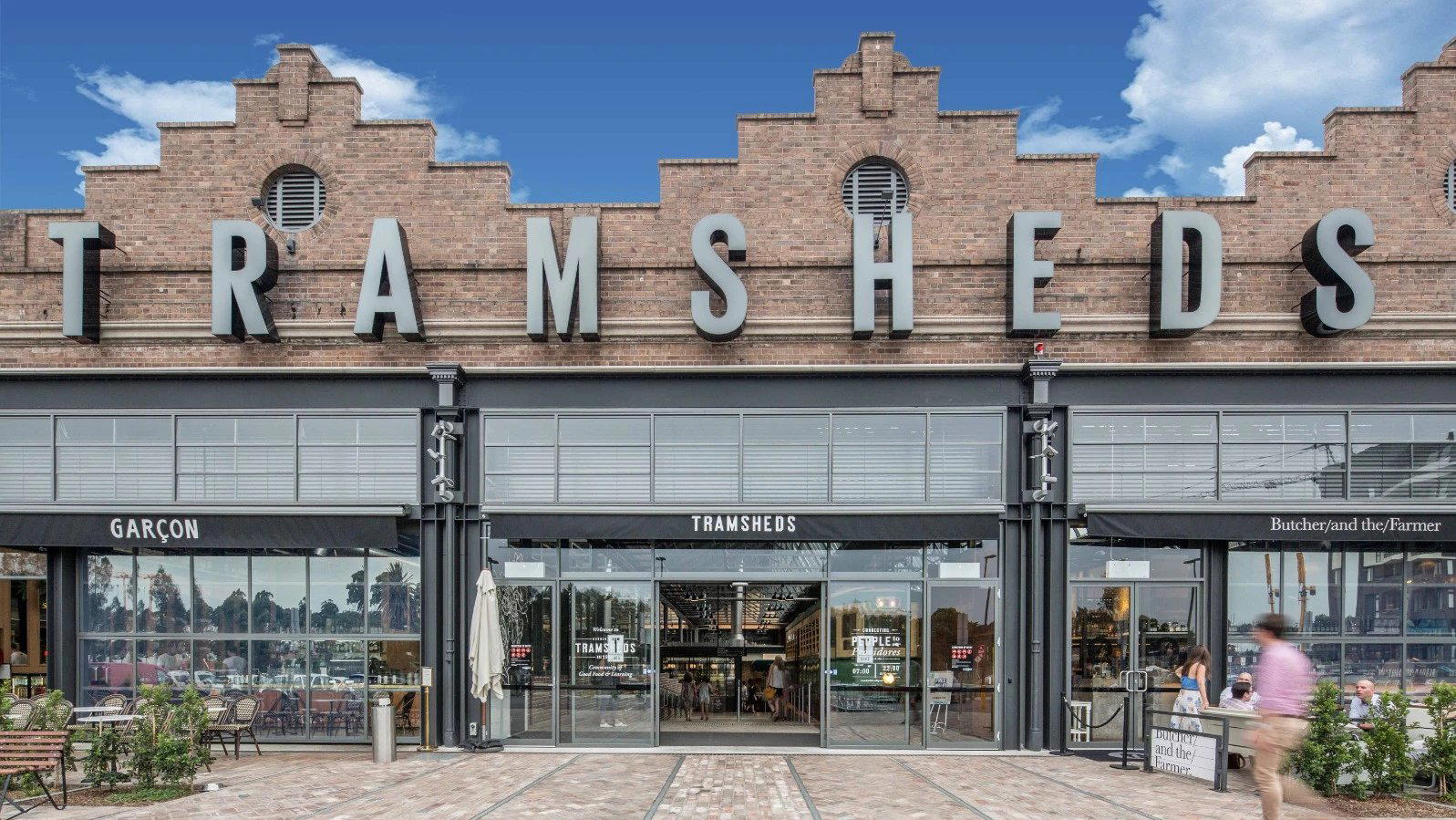
The Food Hall as a Sydney Dining Format
Sydney has produced several serious food hall and market-style venues over the past decade, and the format has diverged into two camps. One leans toward high-traffic tourist positioning, with branded operators and a homogenised offer. The other, which Tramsheds more closely represents, draws independent vendors with distinct specialisations and genuine neighbourhood loyalty. The difference is legible in the floor: at Tramsheds, the ratio of residents to visitors skews local, which tends to keep quality accountable in ways that tourist-facing formats do not require. A butcher whose regulars return weekly has different incentives than one servicing weekend foot traffic from the harbour.
This positions Tramsheds alongside a broader Australian trend toward the specialist food precinct, a format that also surfaces in venues like Blackwood Pantry in Cronulla and, in a more regional key, places like Pipit in Pottsville, where the sourcing story is local by necessity rather than by marketing choice. At the formal end of the Sydney dining spectrum, Rockpool in Sydney and Ormeggio at The Spit in Mosman operate with tasting-menu ambition and price points to match. Tramsheds sits well below that register, offering a version of ingredient-aware eating that does not require a reservation or a budget allocation three months in advance.
Beyond Sydney: How Tramsheds Fits the National Picture
Australia's food-led travel circuit has, over the past decade, developed a clear hierarchy. At one end sit destination restaurants that anchor entire trips: Hentley Farm in Seppeltsfield, Laura at Pt Leo Estate in Merricks, Botanic in Adelaide, or Wills Domain in Yallingup. At the other end, neighbourhood venues like Tramsheds serve as the daily infrastructure of a city's food culture, the places where the provenance conversation happens without ceremony. Both tiers are necessary. A dining culture that only operates at the formal end produces places that are admired but rarely inhabited. Tramsheds represents the inhabited end: a building people use, not just visit.
Further afield, the sourcing-first food hall model appears in different shapes: fermentAsian in Barossa Valley works the fermentation angle hard, connecting its menu directly to regional produce. Provenance in Beechworth draws on the King Valley and High Country supply network. Even coastal venues like Salt Water Restaurant in Cairns and Lizard Island Resort in Lizard Island make proximity to ingredient source a central part of their offer. Internationally, the model has analogues: Le Bernardin in New York City makes seafood sourcing a structuring principle at the fine dining end, while Lazy Bear in San Francisco treats communal format as the vehicle for producer-led cooking. Aloft in Hobart does something adjacent in Tasmania's producer-rich south. The venue operates as a food hall, which means individual vendor hours may vary and the overall precinct has a rhythm that peaks on weekend mornings and Saturday afternoons when the market character is most pronounced. Given that most vendors operate on a walk-in, counter-service or casual table basis, advance booking is generally not required for the food hall floor itself, though any sit-down restaurant tenants within the precinct may operate their own reservation systems. The format suits a range of visit lengths: a quick coffee-and-pastry stop is as coherent as a longer browsing and grazing session across multiple vendors.
Frequently asked questions
Is Tramsheds suitable for children?
The food hall format at 1 Dalgal Way suits families well. Individual vendor stalls mean different members of a group can eat different things at the same time, which removes the usual pressure of a single shared menu. The open industrial space of the former tram depot is spacious enough to accommodate prams and moving children without disrupting other diners.
Is Tramsheds formal or casual?
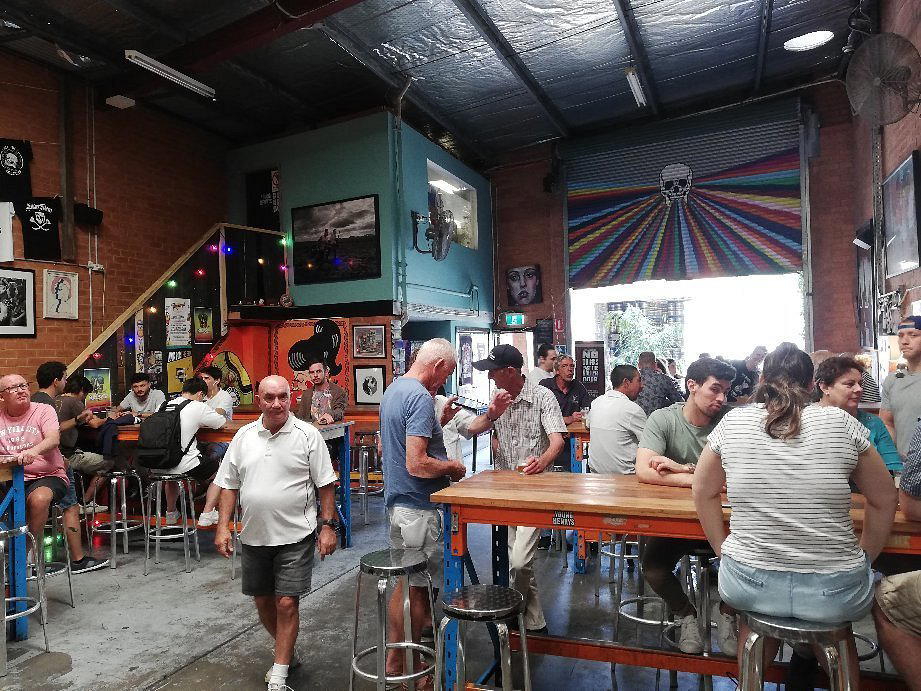
Tramsheds runs entirely casual. The venue operates as a food hall inside a repurposed heritage tram depot in Forest Lodge, and the architecture, exposed ironwork, high ceilings, working vendor stalls, sets the register. There is no dress code, no set seating formality, and no single service team governing the floor.
Is Tramsheds worth visiting if you're staying near Glebe or Newtown?
Tramsheds at 1 Dalgal Way sits a short distance west of Glebe, reachable on foot in roughly fifteen minutes from Broadway. For visitors already in the inner-west, it functions as a neighbourhood food destination rather than a cross-city trip, and the heritage tram depot setting gives it a physical character that distinguishes it from strip-mall food courts elsewhere in Sydney. The vendor-led sourcing model means the quality ceiling depends on who is currently in residence.
What's the best thing to order at Tramsheds?
Because individual vendors control their own sourcing and menus, the answer shifts depending on which stalls are operating on a given day. The food hall model here is built around producer relationships, so items tied to direct supply lines, whole-animal butchery, specialty bread, single-origin coffee, tend to reflect the format's strengths most clearly. Arriving without a fixed plan and moving between vendors is the more useful approach than targeting a single dish.
Where do I go for Tramsheds?
Tramsheds is located at 1 Dalgal Wy, Forest Lodge NSW 2037, Australia, Forest Lodge.
Do they take walk-ins at Tramsheds?
As a food hall at 1 Dalgal Way, Forest Lodge, Tramsheds operates on a walk-in basis across its vendors rather than a centralised reservation system. Individual tenants within the hall may have their own booking arrangements for specific sittings or events, so it is worth checking directly with whichever vendor you are prioritising.
What's Tramsheds best at?
Tramsheds is most coherent as a place to eat across multiple vendors in a single visit rather than as a destination built around one kitchen. The food hall structure at the Forest Lodge depot rewards grazing: coffee from one counter, produce from another, a cooked meal from a third. That distributed model, when the vendor mix is strong, makes it one of the more practical versions of the format Sydney has produced.
| Venue | Cuisine | Price | Awards |
|---|---|---|---|
| TramshedsThis venue (the venue you are viewing) | Diverse Food Precinct | Not listed | Not listed |
| Brae | Modern Australian Seasonal Tasting Menu | $200–300 | World's 50 Best #44 · La Liste Top Restaurants |
| Attica | Modern Australian Indigenous Fine Dining | $300–500 | World's 50 Best #20 · La Liste Top Restaurants |
| Flower Drum | Fine Dining Cantonese | $50–100 | World's 50 Best #33 · Star Wine List |
| Rockpool | Modern Australian Steakhouse | $150–200 | World's 50 Best #49 · La Liste Top Restaurants |
| Saint Peter | Modern Australian Seafood | $150–200 | World's 50 Best #50 · La Liste Top Restaurants |
Continue exploring
More in Sydney
Restaurants in Sydney
All restaurants in Sydney →
Bars in Sydney
All bars in Sydney →

Details
- Lively
- Trendy
- Industrial
- Modern
- Casual Hangout
- Group Dining
- Brunch
- Historic Building
- Open Kitchen
- Craft Cocktails
- Sustainable Seafood
- A La Carte
Current opening hours
- Monday
- 7 AM–10 PM
- Tuesday
- 7 AM–10 PM
- Wednesday
- 7 AM–10 PM
- Thursday
- 7 AM–10 PM
- Friday
- 7 AM–10 PM
- Saturday
- 7 AM–10 PM
- Sunday
- 7 AM–10 PM
Hours can change for holidays and private events. Hours as of .
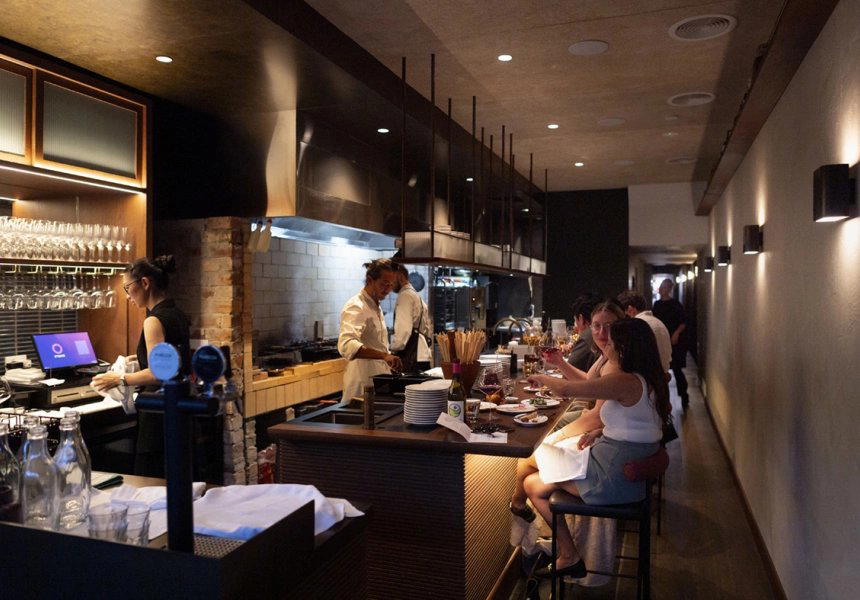
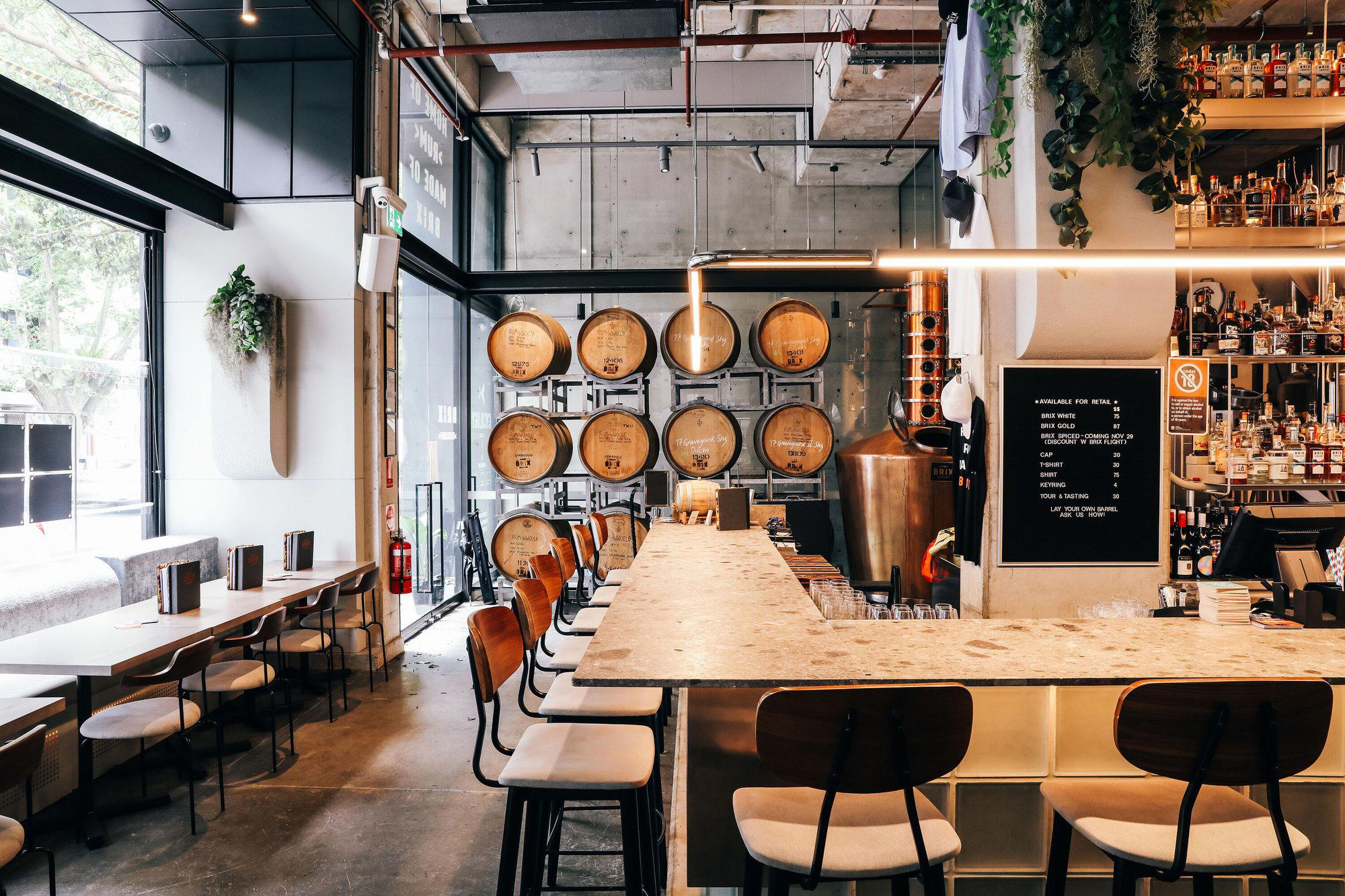
Lively foodie hub blending rich heritage industrial charm with modern, lively community atmosphere and busy energy.