Tramonti
Our verdict
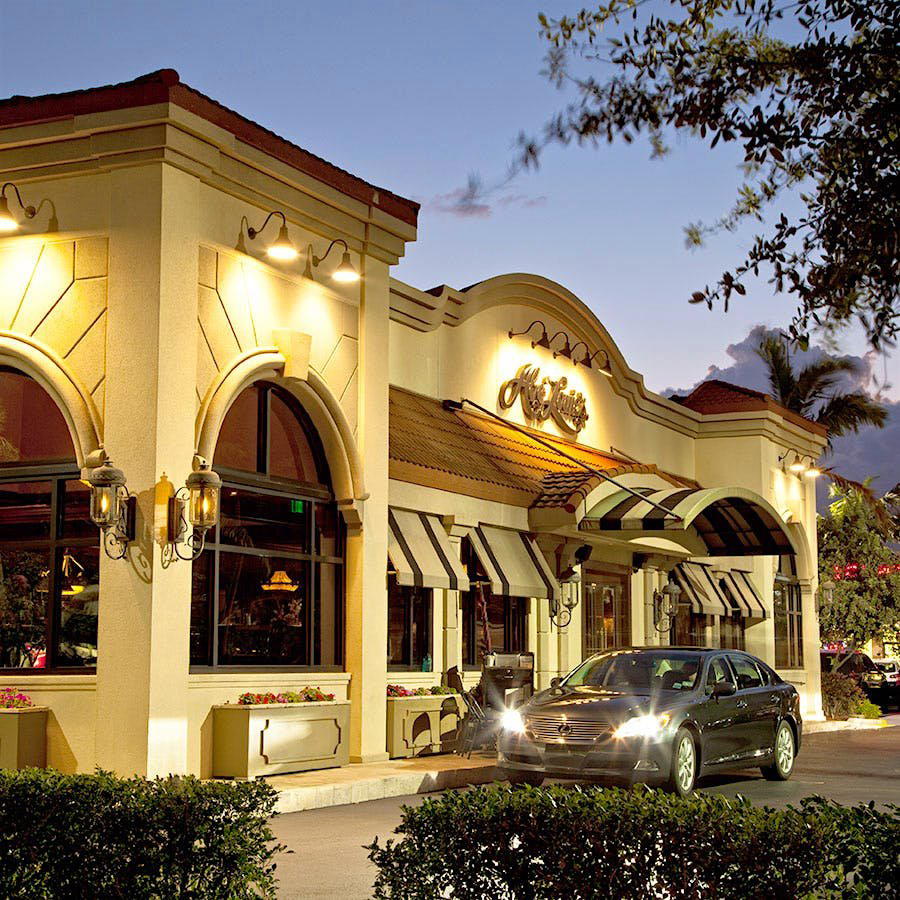
On East Atlantic Avenue, Tramonti brings Italian cooking to Delray Beach's most traffic-heavy dining corridor, where the competition spans everything from Korean-American fusion to Eastern European comfort food. The address alone places it in conversation with some of South Florida's more ambitious restaurant openings, making it a reference point for anyone tracing the evolution of Italian dining along the Gold Coast.

Pearl is the En Primeur Club membership app, where members save venues, book tables and use the concierge.
The menu
What to order
- Spaghetti al Cartuccio
- Osso Buco
- Gnocchi Sorrentina
East Atlantic Avenue and the Italian Table
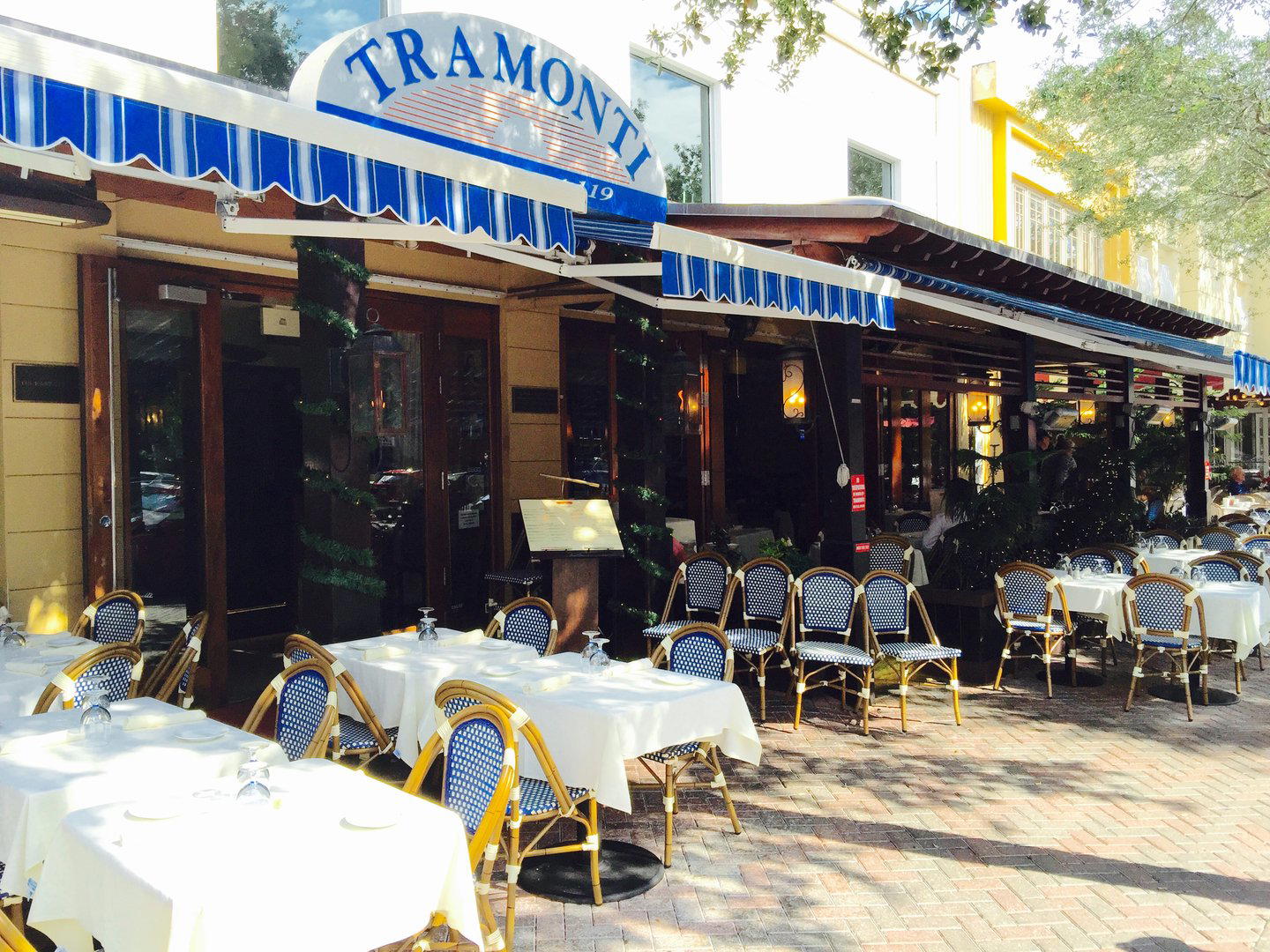
East Atlantic Avenue in Delray Beach operates as one of South Florida's most competitive dining corridors. Within a few blocks, you encounter Korean-American concepts like Akira Back, Eastern European comfort cooking at Baba Pierogies Delray Beach, and Southern-influenced kitchen programs at Batch New Southern Kitchen & Tap. Into this mix, Tramonti, at 119 E Atlantic Ave, presents Italian cooking, a cuisine with deep roots across South Florida, where successive waves of migration from southern Italy built a hospitality culture that predates the current dining boom by decades.
Italian restaurants on the Gold Coast exist across an enormous range. At one end sit red-sauce houses that have barely changed since the 1970s, drawing on Neapolitan and Sicilian immigrant traditions; at the other, newer Italian-inflected concepts that borrow technique from contemporary European kitchens while maintaining pasta and wood-fired cooking as anchor categories. Understanding where Tramonti sits within that range, and what the address signals about its ambitions, tells you more about the Delray Beach dining scene than any individual dish description could.
The Cultural Weight of Italian Cooking in Florida
Italian immigration to Florida, particularly to the southeast corridor from Miami through Palm Beach County, produced a dining culture with unusual depth. By the mid-twentieth century, communities from Campania, Calabria, and Sicily had established trattorias and family restaurants that became neighbourhood institutions. That culinary inheritance is still visible across South Florida, in the prevalence of hand-rolled pasta programs, wood-burning ovens, and wine lists weighted toward the Italian peninsula's southern appellations.
What has shifted in the last decade is the appetite for a different register of Italian cooking: one that draws on northern Italian technique, lighter broths, cured preparations, and a more restrained approach to sauce. Restaurants across the region have begun reflecting this shift, positioning themselves away from the red-sauce shorthand and toward something closer to the osteria model, fewer dishes, higher ingredient standards, and a wine program that treats the list as an editorial statement rather than an afterthought. Tramonti's position on East Atlantic Avenue places it within this broader recalibration, on a street where diners are already accustomed to making choices between clearly differentiated concepts.
For broader context on how Delray Beach's dining scene has developed across multiple cuisines and price points, the full Delray Beach restaurants guide maps the current field more completely.
Neighbourhood Dynamics and the Atlantic Avenue Effect
East Atlantic Avenue functions differently from the quieter residential dining pockets in Delray Beach's surrounding streets. The avenue draws significant foot traffic on weekends, particularly after 7pm, which means restaurants here compete for walk-in attention alongside their reservation base. Concepts like Boheme Bistro and Bourbon Steak Delray Beach operate on this same strip and have developed distinct identities partly in response to the avenue's particular hospitality logic: high visibility, a mixed clientele that spans local regulars and seasonal visitors, and an expectation of reliability over experimentation.
Italian restaurants on this kind of thoroughfare face a specific challenge. The cuisine carries strong familiarity expectations, diners arrive with a mental model of what pasta should taste like, what a wood-fired preparation should smell like, what a correct tiramisu should feel like. Meeting those expectations is the baseline. Distinguishing a program within them requires either ingredient provenance, technique transparency, or a wine list that signals seriousness. The leading Italian rooms in comparable American dining corridors have learned to use the menu's apparent simplicity as a vehicle for precision rather than as an invitation to cut corners.
Italian Cooking at This Tier: What the Category Demands
To understand what separates a strong Italian program from a generic one at this price point and address, it helps to look at what American Italian dining has become at its upper registers. Restaurants like Le Bernardin in New York City have demonstrated that European-rooted cooking can achieve technical authority without abandoning accessibility; operations like Emeril's in New Orleans show how regional American identity can coexist with classical European influence. Further afield, the precision-led kitchens at Lazy Bear in San Francisco, Alinea in Chicago, or Single Thread Farm in Healdsburg have raised the baseline expectation for ingredient sourcing and kitchen discipline across American fine dining more broadly.
That context matters for Italian cooking in a place like Delray Beach because the diners who frequent East Atlantic Avenue's better restaurants often travel. They have eaten at The French Laundry in Napa, at Providence in Los Angeles, at Blue Hill at Stone Barns in Tarrytown, at Addison in San Diego, at The Inn at Little Washington, at Atomix in New York City, or at internationally recognised Italian programs like 8 1/2 Otto e Mezzo Bombana in Hong Kong. Their reference points are broad, and that shapes what counts as a signal of quality at the local level.
For Tramonti, operating at 119 E Atlantic Ave, the question is whether the program can hold its own in that kind of informed, well-travelled room. The address makes the promise; the kitchen has to keep it.
Planning a Visit
Tramonti is located at 119 E Atlantic Ave, Delray Beach, FL 33444, on a stretch of the avenue that sees consistent evening foot traffic, particularly from Thursday through Sunday. East Atlantic Avenue is walkable from several of Delray Beach's central accommodation options, and street and garage parking are available within a short walk of the address. Given the avenue's popularity as a dining destination across multiple concepts, booking ahead for weekend evenings is advisable; the walk-in window tends to be more accessible earlier in the week.
Frequently asked questions
What's Tramonti's location?
Tramonti is located at î119 E Atlantic Ave, Delray Beach, FL 33444, Delray Beach.
How does Tramonti compare to other Italian restaurants in Delray Beach?
Tramonti's position at 119 E Atlantic Ave places it at the center of Delray Beach's primary dining corridor, where it competes within a densely packed block radius rather than operating in isolation. What the address does establish is that the venue operates in a market where Italian cooking is measured against a well-traveled local diner base with access to strong regional competition across Palm Beach County.
What dish is Tramonti famous for?
What the 119 E Atlantic Ave address does demand is a coherent Italian program capable of holding its own on one of South Florida's most competitive dining stretches, where the category bar is set by serious regional competition within a few blocks.
Do I need a reservation for Tramonti?
East Atlantic Avenue in Delray Beach draws consistent evening foot traffic, particularly on weekends, which tends to compress walk-in availability across the corridor. Booking ahead is the practical approach for this address.
What's the signature at Tramonti?
Tramonti sits at 119 E Atlantic Ave in Delray Beach, a corridor where Italian cooking has roots in the broader southeast Florida immigration wave that shaped dining culture from Miami through Palm Beach County.
Is Tramonti allergy-friendly?
Italian kitchens at this tier on East Atlantic Avenue typically handle common requests, but for specific allergen requirements, contacting the restaurant directly before visiting is the only reliable approach.
Quick Comparison
Comparable venues nearby, for context on price, style, and recognition.
| Venue | Cuisine | Price | Notes |
|---|---|---|---|
| TramontiThis venue (the venue you are viewing) | Classic Italian Trattoria | $50–100 | Not listed |
| Segreto Italia | Authentic Italian Trattoria | $50–100 | Delray Beach |
| Sal's Italian Ristorante | Classic Italian Pizza and Pasta | $20–30 | Delray Beach |
| CASA L'ACQUA Ristorante Italiano | Fine Dining Italian | $50–100 | Downtown Delray |
| Park Tavern | American Farm-to-Table Gastropub | $30–50 | Downtown Delray Beach |
| Novecento | Argentinian Steakhouse with Italian Influences | $30–50 | downtown |