
Tabelog 100 #91
Our verdict
Toraya belongs to Kagawa’s serious udon circuit: low-priced, counter-led, and selected for Tabelog 100 - Udon - KAGAWA - 2024. In Sakaide, where wheat noodles are less a specialty than a daily grammar, its draw is the disciplined format: udon and curry udon, a compact room, no reservations, and a service rhythm built for people who know lunch can sell out.

Pearl is the En Primeur Club membership app, where members save venues, book tables and use the concierge.
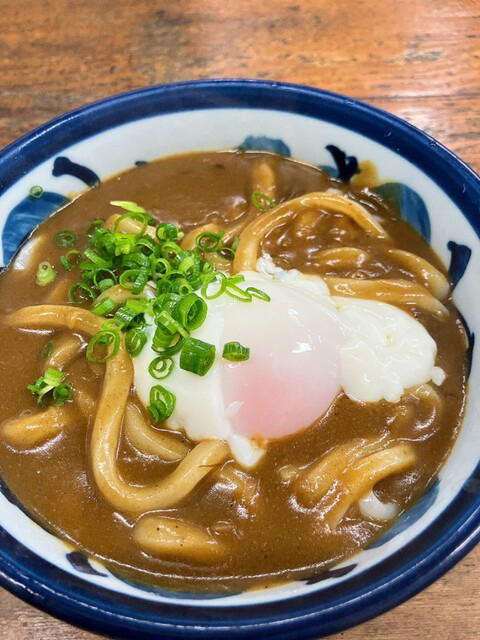
The approach to a Kagawa udon shop is rarely theatrical. The clues are practical: a short lunch rhythm, steady local traffic, and the quiet compression of a place where the meal is built around speed, texture, and broth rather than ceremony. Toraya sits in that Sakaide register, closer to working-day noodle culture than destination dining, and that is precisely the point. In Sanuki udon country, value and seriousness are not opposites; they often share the same bowl.
Kagawa’s udon reputation rests on a specific agricultural and culinary logic. Wheat noodles became the prefecture’s everyday food because the region had wheat, soy sauce, dried sardine broth traditions, and a climate that made quick, sustaining meals part of local life. The better shops do not need long menus to announce ambition. They live or die by noodle handling, broth balance, topping restraint, and turnover. Toraya’s selection for Tabelog 100 - Udon - KAGAWA - 2024 places it inside that competitive local field, where recognition comes against a dense population of specialists rather than a thin category.
Sanuki udon judged by structure, not decoration
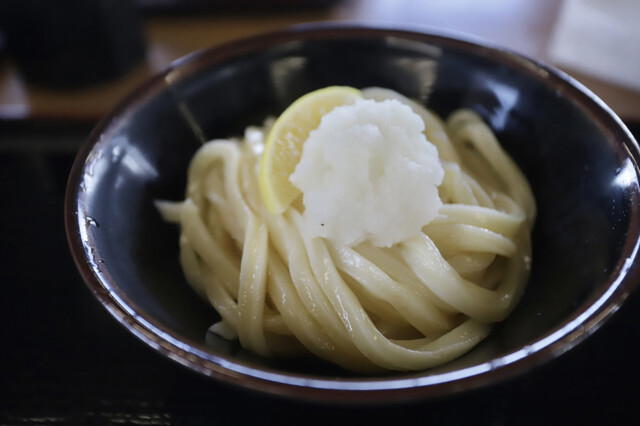
The menu frame is narrow: udon and curry udon. That matters because Kagawa’s noodle culture rewards control. A shop with a compact remit has fewer places to hide, and the scrutiny falls on the fundamentals: chew, surface, temperature, broth, and the way curry changes the equation from clean dashi clarity to spice-weighted comfort. The format also keeps the meal in the local price language, where a serious lunch can remain inexpensive without feeling casual in execution.
Ingredient sourcing is the quiet spine of this tradition. Sanuki udon depends on wheat flour performance, water absorption, salt, and time; the result is not merely a noodle but a calibrated texture. Broth, meanwhile, tends to express the Setouchi pantry through dried seafood and soy sauce culture rather than heavy richness. Curry udon adds another layer, absorbing the same noodle discipline into a thicker, warmer register. Toraya’s appeal sits in that intersection: a local craft food that can carry both everyday economy and award-list scrutiny.
The useful comparison in Sakaide is not between luxury and simplicity, but between different expressions of udon specialization. Hinode Seimenjo is part of the same city conversation, while other Sakaide dining rooms help show why the city rewards repeat comparison rather than single-stop collecting. Each shop asks the same basic question in a different accent: how much character can be carried by wheat, water, salt, dashi, and timing?
A counter room built for lunch, not lingering
The experience is framed for a direct udon meal rather than a drawn-out restaurant occasion. That scale changes the meal. It removes the soft edges of a long restaurant sitting and puts attention on the bowl, the pace, and the immediate choreography of customers moving through lunch. Those details are not inconveniences around the experience; they are part of the form. Kagawa udon often functions as precision fast food, but the precision belongs to craft rather than franchised uniformity.
For travellers, Sakaide is a useful udon base because the city compresses several serious noodle addresses into a manageable area without turning the meal into a museum exercise. Local transport planning remains part of a practical udon itinerary, especially when comparing multiple shops in one day. The sharper move is to treat lunch as the fixed point of the day and build sightseeing around it, not the reverse.
The Tabelog score of 3.71 and 2024 Tabelog 100 selection give Toraya a measurable signal in a category where local reputation can be hard for visitors to read. Tabelog’s Kagawa udon list is valuable because it compares specialists within the prefecture, rather than folding udon into a broad national restaurant hierarchy. In that frame, a small udon shop with low spend expectations can carry more editorial weight than a larger restaurant with a longer menu.
How to place it in a Sakaide eating day
Toraya makes the strongest sense as a focused lunch rather than a flexible fallback. Its compact udon-and-curry-udon identity rewards early planning and a clear appetite for noodles. It also fits the direct format: the meal is short, focused, and easy to fold into a broader Kagawa itinerary. The emphasis stays on the bowl rather than the social sprawl of a longer sit-down meal.
Readers mapping the city beyond one bowl should use Our full Sakaide restaurants guide for the wider dining picture, with Our full Sakaide hotels guide, Our full Sakaide bars guide, Our full Sakaide wineries guide, and Our full Sakaide experiences guide for the rest of the trip structure. For contrast elsewhere in Japan and beyond, EP Club also files dining notes on other restaurants, cafes, bars, and casual dining rooms across its wider coverage.
The editorial case for Toraya is not that it turns udon into luxury. It does the opposite more persuasively: it keeps the form compact, low-priced, and ingredient-led, then lets recognition arrive through repetition and local comparison. In Sakaide, that is a stronger signal than ornament.
Frequently asked questions
Would Toraya be comfortable with kids?
Toraya is best understood as a simple Sakaide udon stop rather than a long, formal meal. Families should judge comfort by the direct, noodle-focused format.
What is the atmosphere like at Toraya?
Toraya has a brisk, focused udon-shop feel in Sakaide, with the emphasis on noodles, broth, and a direct lunch rhythm rather than ceremony.
What's the pricing like at Toraya?
Pricing at Toraya is listed as - JPY 999.
What are the operating hours at Toraya?
Specific operating hours are not provided here; check current details before visiting Toraya.
What's Toraya's location?
Sakaide.
Fast Comparison
Comparable venues by cuisine and price in the same metro.
| Venue | Cuisine | Price | Awards | Notes |
|---|---|---|---|---|
| TorayaThis venue (the venue you are viewing) | Kagawa udon and curry udon shop | $1–10 | Tabelog 100 #91 | Not listed |
| Hinode Seimenjo | Traditional Sanuki udon noodle factory | $1–10 | Tabelog 100 #34 | Fujimicho |
| Yamashita Udon | Traditional Sanuki udon | $1–10 | Tabelog 100 #7 | Not listed |
| Maido Maido | Self-service Sanuki udon | $1–10 | Tabelog 100 #35 | Sakaide |
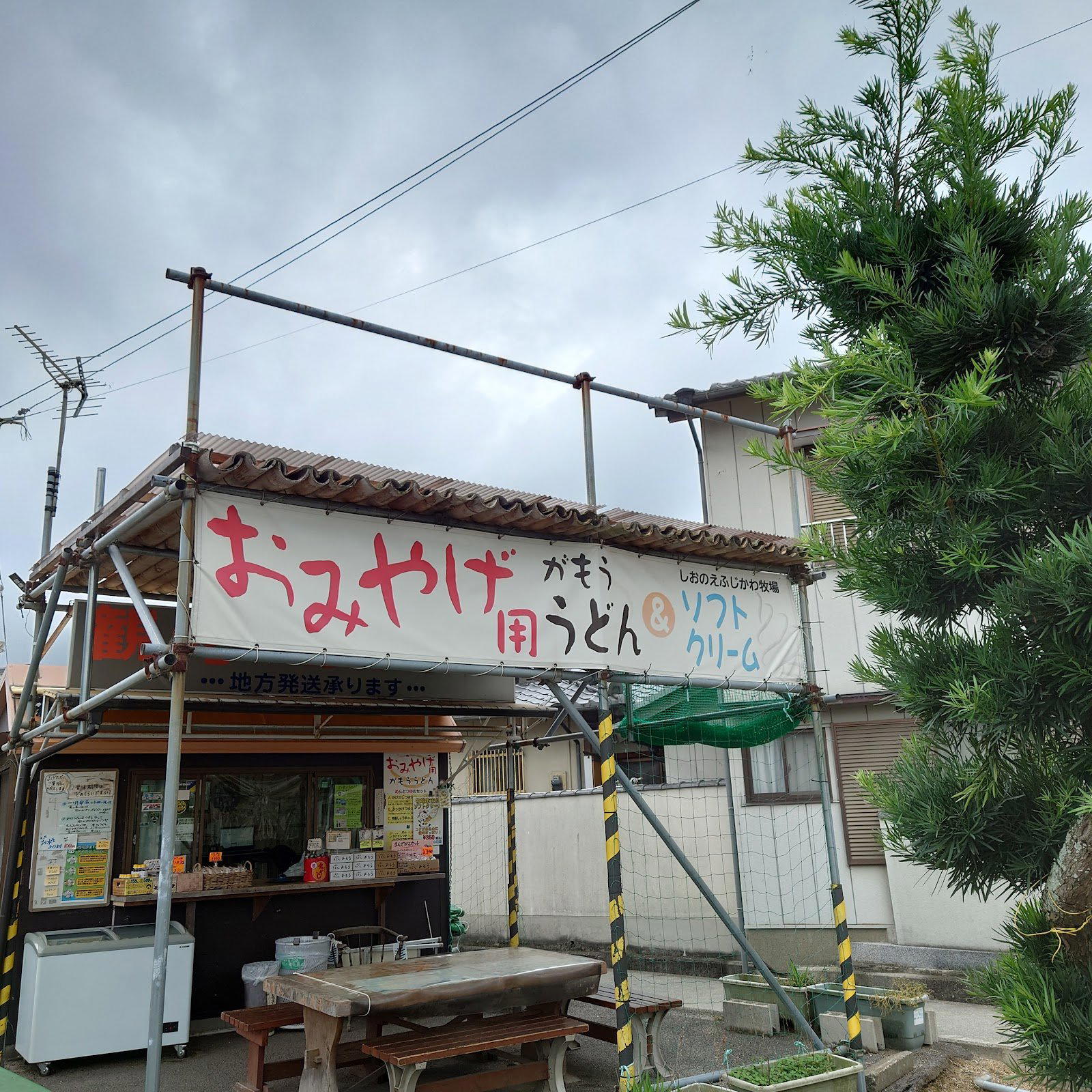
| Gamō Udon | Traditional Sanuki Udon | $1–10 | Tabelog Bronze | Kamocho |
| Nagata in Kanoka (長田 in 香の香) | Sanuki Kamaage Udon | Not listed | Not listed | 金蔵寺町 |
Recognition history
Dated appearances from independent guides and award organizations, with the underlying list record or original source where available.
Tabelog 100 #91 · No. 91
Tabelog · Tabelog 100 - Udon - KAGAWA - 2024
Continue exploring
More in Sakaide
Restaurants in Sakaide
All restaurants in Sakaide →
Bars in Sakaide
Browse all →

Details
- Cozy
- Classic
- Solo
- Family
- Casual Hangout
- Group Dining
- Standalone
- A La Carte
- Counter Dining
Current opening hours
- Monday
- 10:30 AM–2 PM
- Tuesday
- 10:30 AM–2 PM
- Wednesday
- Closed
- Thursday
- Closed
- Friday
- 10:30 AM–2 PM
- Saturday
- 10:30 AM–2 PM
- Sunday
- Closed
Hours can change for holidays and private events. Hours as of .
Simple, no-frills counter udon-ya with a cozy, bustling daytime atmosphere, focused on quick bowls of noodles rather than decor or lingering.