
Tabelog 100 #7
Our verdict
Yamashita Udon belongs to Kagawa’s working udon culture rather than the polished restaurant circuit: early hours, low prices, counter-and-table seating, and noodles treated as daily craft. Its Tabelog 100 Udon Kagawa 2024 selection gives it a clear quality signal in a prefecture where Sanuki udon is judged with unusual seriousness.

Pearl is the En Primeur Club membership app, where members save venues, book tables and use the concierge.
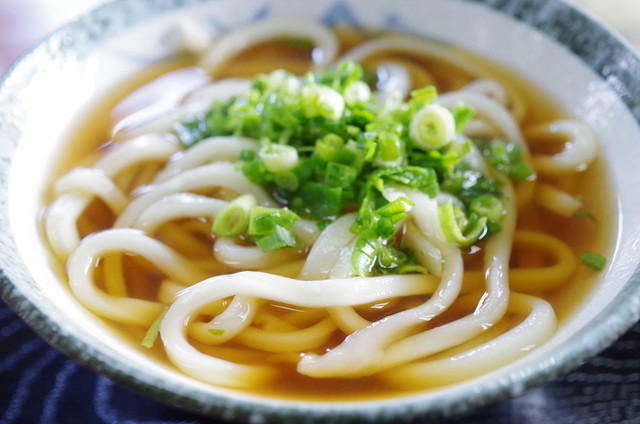
The menu
What to order
- Kake Udon
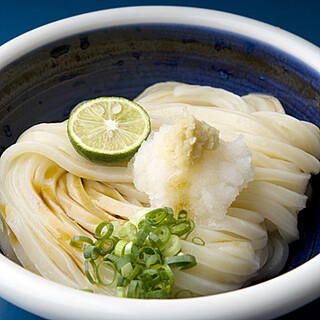
- Shoyu Udon
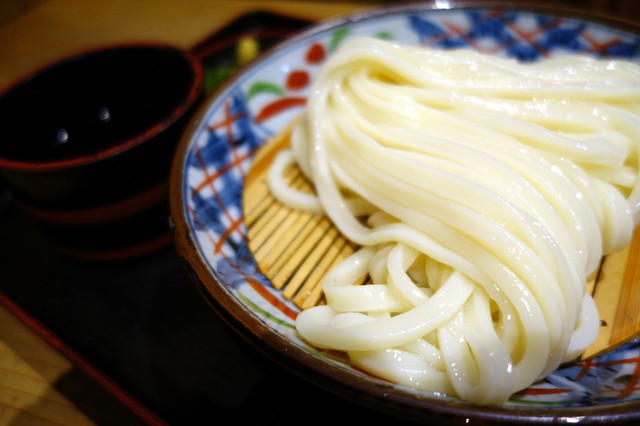
- Bukkake Udon
- Local shrimp kakiage tempura
A serious udon shop in Kagawa rarely feels ceremonial. The setting is practical, the rhythm direct, and the meal rests on wheat, water, boiling time, broth, and speed rather than theatre. In Sakaide, udon country has its own grammar of firmness, elasticity, broth clarity, restrained toppings, and usefulness to residents rather than staging for visitors.
Yamashita Udon fits that grammar. Its Sakaide setting places it inside a local udon circuit rather than a fine-dining map. Recognition is serious: it was selected for Tabelog 100 - Udon - KAGAWA - 2024. In a prefecture crowded with noodle specialists, that places it in the vetted udon tier without making it fine dining. The point is a low-cost format that withstands scrutiny because the fundamentals are exposed.
Udon judged by water, wheat, and boiling discipline
Kagawa’s udon culture is ingredient-led in a way that can seem austere to diners from tasting-menu cities. The noodle is the event: flour quality, hydration, kneading, resting, and the cooking vessel register in texture before garnish can distract. Yamashita Udon belongs to that plain-spoken Sakaide tradition, where udon is judged first by bite: resistance, spring, and surface character to carry broth.
Price is a poor proxy for ambition in Kagawa. A budget under JPY 999 does not mean minor cooking; it reflects a regional system where direct service and focused ordering keep the format democratic. The same price band appears across serious udon counters in the comparison set, including Teuchi Udon Tamura and Udon Ippuku. The distinction is consistency under pressure, when repeat local traffic matters as much as awards.
The sourcing angle is place rather than luxury provenance. Udon depends more on water and wheat technique than expensive toppings, making the category unusually transparent. If the noodle lacks structure, the meal has nowhere to hide; if the broth is clumsy, the bowl feels heavy. Yamashita Udon’s 2024 Kagawa udon selection recognizes execution within a narrow, tradition-bound field rather than novelty.
Sakaide sharpens that frame. It is not a city that needs to be read only through long, multi-course restaurant nights; it is a practical Kagawa base with udon addresses that reward planning. For a wider local read, Our full Sakaide restaurants guide gives context, while travelers building a stopover can pair it with Our full Sakaide hotels guide, Our full Sakaide bars guide, Our full Sakaide wineries guide, and Our full Sakaide experiences guide.
The Sakaide udon circuit rewards comparison, not ceremony
Udon here is better read as a circuit than a single destination meal. The useful comparison is not with luxury Japanese dining, but between shops with different textures, speeds, and rusticity. Gamō Udon is an obvious Sakaide reference for visitors mapping the noodle route, while other unnamed Sakaide dining rooms show how varied the city’s udon culture can be without leaving the same vocabulary.
Yamashita Udon’s format defines its audience. This is a practical udon address, better suited to a focused bowl than to a long, quiet evening. The atmosphere belongs to everyday eating rather than luxury ceremony, and the appeal is strongest for diners who want to understand Sakaide through a regional staple. In this category, repetition and directness matter more than polish.
The award context needs care. Tabelog 100 recognition is not a Michelin star; here it is more useful because it is category-specific. Kagawa udon is a dense field of low-priced specialists, so an udon-focused selection gives sharper guidance than a general accolade. The 3.76 score reinforces this as a vetted local address, not a glossy destination for international tasting menus.
For travelers using Sakaide within a wider Japan dining itinerary, the contrast is instructive. A low-priced udon stop has little in common with more elaborate or differently paced dining elsewhere in Japan. That is the lesson: Japan’s dining hierarchy is not always price-led. A bowl under JPY 999 can be as regionally expressive as a far more expensive reservation elsewhere.
How to read the room before ordering
Approach this shop through tempo. The room is best understood as a working udon setting, not a place built for lingering. Its value lies in speed, clarity, and the direct relationship between noodle, broth, and garnish. That is not a drawback; it shows Kagawa udon remains a local daily format before a travel checklist item.
The cooking identity is plain-spoken: udon and soba categories are listed, and udon technique is the draw. The bowl belongs in the classic register rather than a maximalist one. Judge balance: broth should support the noodle, garnishes sharpen rather than cover, and texture should be the reason to remember the meal.
Yamashita Udon is not for luxury signals. Its value is compressing Kagawa’s udon logic into a working format: practiced noodle handling, low pricing, and recognition inside a specialist award category. For diners moving across Japan, that can reveal more than another elaborate dinner. Comparisons can stretch from regional casual food to many other Japanese formats, but the Sakaide lesson is specific: in udon, the noodle is the argument.
That argument also travels as a way to think about Japanese food outside Japan. Focused formats can carry cultural meaning far beyond their original setting. In Sakaide, the original context is leaner and less performative. The reward is not spectacle; it is seeing how a regional staple earns precision through repetition.
Frequently asked questions
Is Yamashita Udon child-friendly?
Yamashita Udon is a practical Sakaide udon shop, so families should expect a straightforward local setting rather than a formal dining room.
Is Yamashita Udon better for a quiet night or a lively one?
Yamashita Udon is better understood as a focused udon stop than as a quiet evening restaurant. The setting suits a direct, everyday meal rather than lingering nightlife.
What's the pricing like at Yamashita Udon?
Pricing at Yamashita Udon is listed as - JPY 999.
What are the opening hours for Yamashita Udon?
Check current opening hours directly before visiting Yamashita Udon, as the provided venue facts do not specify a weekly schedule.
How do I find Yamashita Udon?
Yamashita Udon is located in Sakaide.
What is Yamashita Udon known for?
It is known for udon and soba, and for being selected for Tabelog 100 Udon Kagawa 2024 with a listed score of 3.76.
At-a-Glance Comparison
Comparable venues by cuisine and price in the same metro.
| Venue | Cuisine | Price | Awards | Notes |
|---|---|---|---|---|
| Yamashita UdonThis venue (the venue you are viewing) | Traditional Sanuki udon | $1–10 | Tabelog 100 #7 | Not listed |
| Gamō Udon | Traditional Sanuki Udon | $1–10 | Tabelog Bronze | Kamocho |
| Maido Maido | Self-service Sanuki udon | $1–10 | Tabelog 100 #35 | Sakaide |
| Hinode Seimenjo | Traditional Sanuki udon noodle factory | $1–10 | Tabelog 100 #34 | Fujimicho |
| Toraya | Kagawa udon and curry udon shop | $1–10 | Tabelog 100 #91 | Okinohama |
| 須崎食料品店 | Sanuki Udon | $1–10 | Tabelog Bronze #437 | 高瀬町上麻 |
Recognition history
Dated appearances from independent guides and award organizations, with the underlying list record or original source where available.
Tabelog 100 #7 · No. 7
Tabelog · Tabelog 100 - Udon - KAGAWA - 2024
Continue exploring
More in Sakaide
Restaurants in Sakaide
All restaurants in Sakaide →
Bars in Sakaide
Browse all →

Details
- Classic
- Cozy
- Rustic
- Solo
- Family
- Casual Hangout
- Group Dining
- After Work
- Standalone
- Historic Building
- A La Carte
- Pescatarian Friendly
Current opening hours
- Monday
- Closed
- Tuesday
- 8:30 AM–3 PM
- Wednesday
- 8:30 AM–3 PM
- Thursday
- 8:30 AM–3 PM
- Friday
- 8:30 AM–3 PM
- Saturday
- 8:30 AM–3 PM
- Sunday
- Closed
Hours can change for holidays and private events. Hours as of .
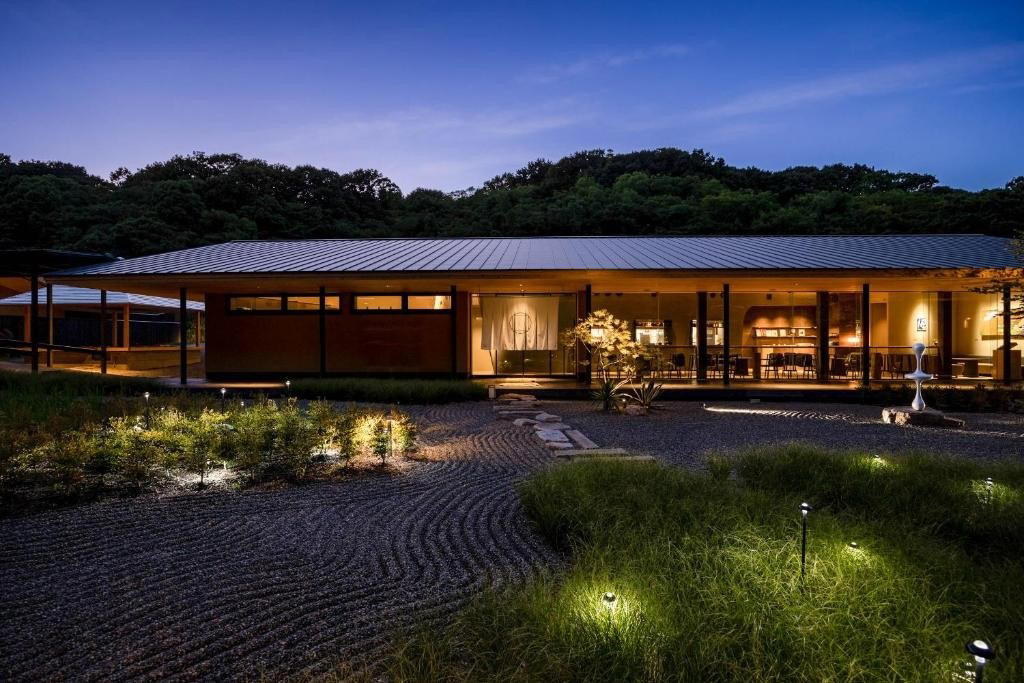
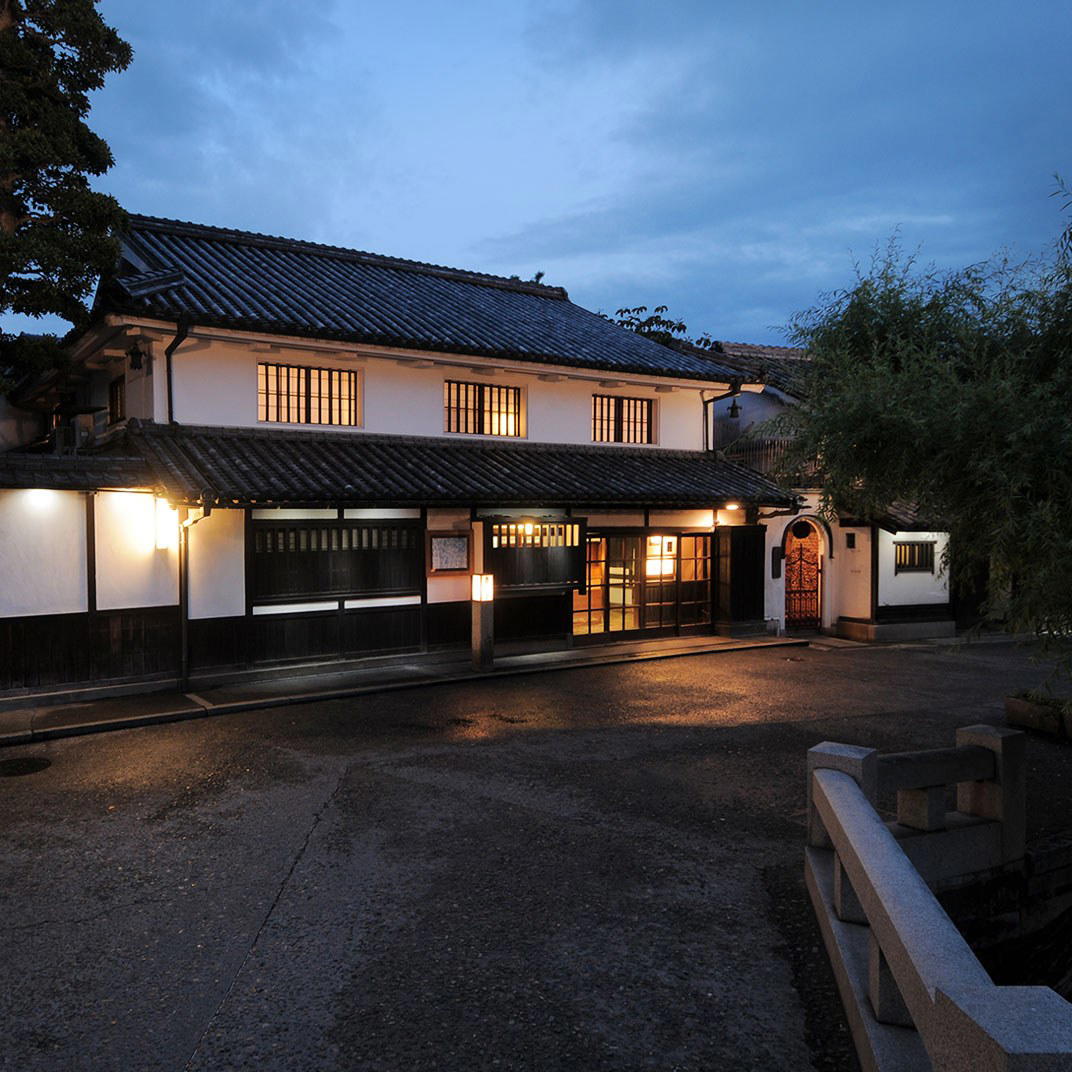
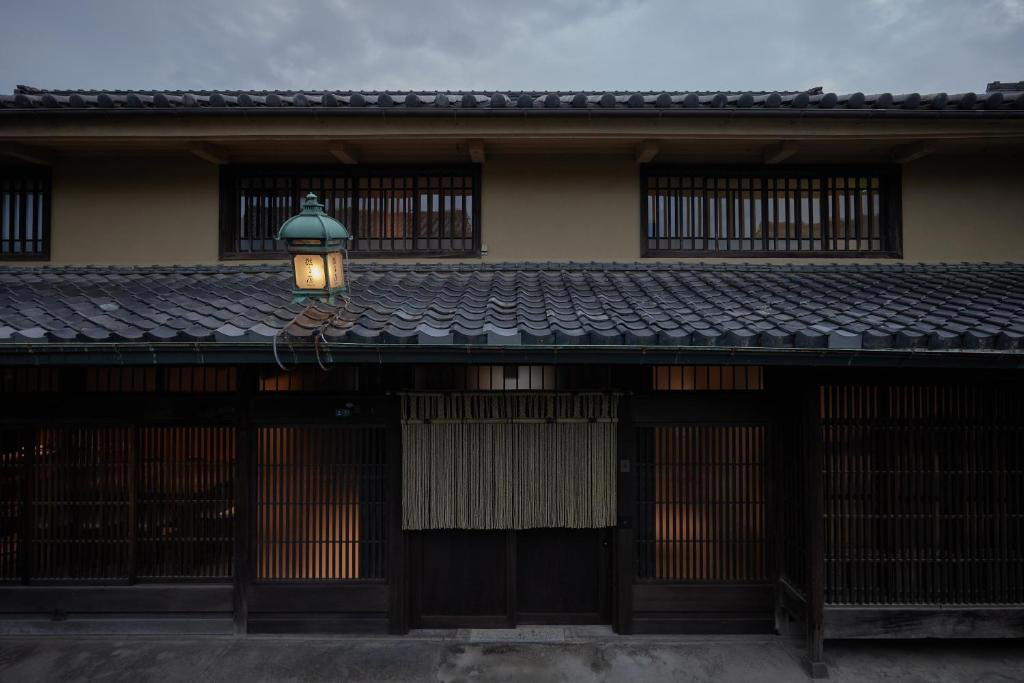
A humble, homey udon-ya in a converted house with a nostalgic, old-style atmosphere; guests line up, grab trays, and eat at simple tables inside or at picnic-style outdoor seating while watching steam rise from the wood-fired pots.