.png)
The Pig's Ear in Dublin City serves Modern Irish cuisine with a reverence for heritage and seasonality. Must-try dishes include the Boxty Pancake, Dublin Lawyer Lobster Omelette and Tongue 'n' Cheek Suet Pudding. Chef-owner Stephen McAllister reworks family recipes into carefully prepared plates that highlight Irish produce, while reviewers praise the restaurant for delivering "a traditional taste of Ireland" with contemporary technique. Set in a tall Georgian townhouse overlooking Trinity College Park, the dining experience blends warm service, thoughtful wine pairings and full-flavoured comfort food elevated for discerning palates.
 Discover on Pearl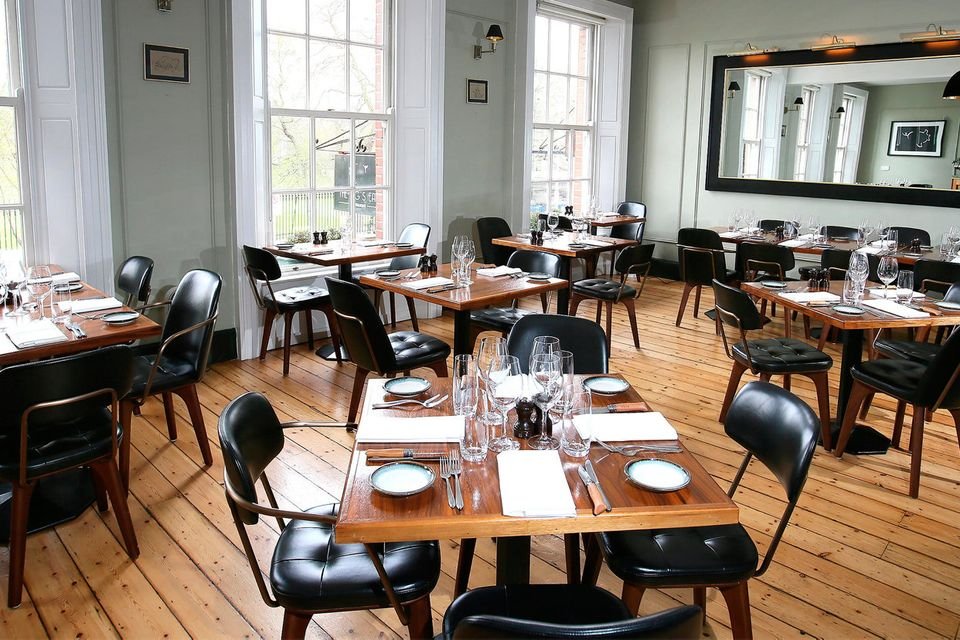
Nassau Street, Trinity College, and the Argument for Irish Cooking on Its Own Terms
The corner of Nassau Street where it meets the railings of Trinity College Park is one of Dublin's more quietly loaded addresses. Tourists trace the perimeter of the college grounds; office workers cut through from Grafton Street; the National Museum sits a short walk east. Occupying a tall, narrow Georgian townhouse in this corridor, The Pig's Ear positions itself at a junction that is as much conceptual as geographic: between the city's international-facing restaurant scene and a tradition of Irish cookery that spent decades being undervalued at home.
That tension is worth dwelling on. Dublin's dining conversation over the past fifteen years has largely been about chefs trained in Europe, menus citing Japanese technique, and a general anxiety about whether Irish food could hold its own as a category. A smaller counter-current has pushed the other way, with kitchens drawing on native produce, older recipes, and the argument that Irish culinary tradition is a thing worth taking seriously rather than apologising for. The Pig's Ear sits in that second current, and its address in the cultural heart of the city is not incidental to that positioning.
The shortlist, unlocked.
Hard-to-book tables, cellar releases, and concierge-planned trips.
Get Exclusive Access →The Menu as a Reading of Irish Food History
Chef-owner Stephen McAllister has built the menu around a framework that takes Irish cooking as its primary source material, drawing on historical recipes and domestic tradition rather than treating them as a nostalgic footnote to a more technically ambitious programme. The Boxty Pancake on the menu is a reference to a potato-based tradition with roots in the north midlands and Ulster, where boxty was a staple of modest rural kitchens. Putting it on a restaurant menu in this part of Dublin is a statement, not an accident.
The Dublin Lawyer, a lobster preparation traditionally made with whiskey and cream, appears here as an omelette, which represents a form of creative recalibration rather than straight reproduction. This is the operating logic across the menu: the historical reference is intact, but the execution has been reworked with enough technical engagement to hold up in a contemporary dining room. The Tongue 'n' Cheek Suet Pudding signals similar intent, using secondary cuts and a preparation method with deep roots in British Isles cooking to deliver something that reads as substantive rather than merely rustic.
The phrase that surfaces repeatedly in critical assessments of this kitchen is soul-warming, which is not the same as simple. The cooking here is attentive to flavour depth and to the quality of the produce underneath it, and that combination is what separates ambitious comfort food from ordinary pub cooking. For context on how this compares with other Irish kitchens working in this register, Aniar in Galway occupies the fermentation-and-forage end of Irish ingredient-led cooking, while Liath in Blackrock and Terre in Castlemartyr move the conversation toward fine dining structure. The Pig's Ear sits closer to the heartland of the tradition, and that is a deliberate choice.
The Building and the Room
Townhouse format shapes the experience in ways that a purpose-built restaurant would not. The building is tall and narrow, meaning the dining room is intimate by default rather than by design decision. Tables at the windows have a direct sightline across Nassau Street to the park beyond the Trinity railings, which gives the room a spatial connection to the neighbourhood that restaurants deeper in the city centre rarely achieve. This is a place where the physical setting reinforces the editorial argument the kitchen is making: rooted, specific, Dublin.
For visitors who have been circling the Trinity campus or coming from the National Museum, the location makes practical sense as a lunch or early dinner destination. The area draws a mix of academics, museum visitors, and office workers from the surrounding Georgian blocks, which means the room functions differently at midday than it does at dinner, and the menu's register suits both.
Where It Sits in the Dublin Dining Picture
Dublin's restaurant scene has become genuinely plural over the past decade. At the formal end, Chapter One by Mickael Viljanen operates at a different price and ambition tier. Amai by Viktor, BORGO, Comet, and Vada each work through different cuisines and formats within the city. Further afield, Bastion in Kinsale, Campagne in Kilkenny, and dede in Baltimore show how Irish regional cooking is being treated across the country. The Pig's Ear occupies a middle tier in Dublin where the food is serious enough to reward attention but the register remains accessible rather than ceremonial.
That accessibility is partly about format and partly about the kind of cooking on offer. A menu built around suet puddings, boxty, and lobster omelette is making a different social argument than a twelve-course tasting menu, and it is drawing a different crowd as a result. This is a room where you are likely to encounter someone celebrating a birthday alongside someone on a working lunch, and the kitchen has calibrated the menu to hold across both occasions.
For a broader view of what the city offers across categories, see our full Dublin City restaurants guide, our full Dublin City bars guide, our full Dublin City hotels guide, our full Dublin City wineries guide, and our full Dublin City experiences guide.
Planning a Visit
The Pig's Ear is at 4 Nassau Street, Dublin 2, directly across from the Trinity College Park railings and within walking distance of the National Museum of Ireland on Kildare Street. The Nassau Street address puts it roughly equidistant between Grafton Street and Merrion Square, which makes it a natural anchor for a longer half-day in this part of the city. Given the room size and the restaurant's established reputation in this neighbourhood, booking ahead is advisable, particularly for weekend evenings and the lunch service that draws the Trinity-adjacent crowd. Contact details and current booking arrangements are leading confirmed through the restaurant directly.
Frequently Asked Questions
- What should I eat at The Pig's Ear?
- The menu draws on Irish culinary history, and the dishes that leading represent that approach include the Boxty Pancake, the Dublin Lawyer Lobster Omelette, and the Tongue 'n' Cheek Suet Pudding. These are the dishes that critical assessments consistently reference as evidence of McAllister's commitment to cooking from Irish tradition with technical care, using quality produce as the foundation. They are also the clearest demonstration of the menu's operating logic: historical reference reframed through attentive modern execution.
- Is The Pig's Ear reservation-only?
- Given the townhouse format and the intimate room size, the restaurant is likely to require or strongly benefit from advance reservations, particularly at peak times. Dublin's mid-range dining scene has seen consistent demand at credible neighbourhood restaurants, and a venue at this address with this level of critical recognition will fill. Contact the restaurant directly for current booking policy, as specific reservation arrangements are leading confirmed at source.
- What do critics highlight about The Pig's Ear?
- Critical commentary consistently points to McAllister's engagement with Irish culinary history as the defining quality of the kitchen, specifically the way the menu moves between traditional dishes and careful modern execution without losing the soul of the original references. The combination of full-flavoured cooking, quality Irish produce, and a playful touch across dishes like the Dublin Lawyer Lobster Omelette is cited as the restaurant's distinguishing characteristic within Dublin's dining scene. The townhouse setting overlooking Trinity College Park adds a spatial dimension that reinforces the kitchen's sense of place.
- Can The Pig's Ear accommodate dietary restrictions?
- The menu's orientation toward meat-based dishes, secondary cuts, and traditional Irish preparations means that guests with specific dietary restrictions should contact the restaurant directly before visiting. For the most current information on what the kitchen can accommodate, reaching out in advance is the most reliable approach. Dublin's restaurant community has generally become more responsive to dietary needs over the past decade, but the specifics here are leading confirmed with the venue directly.
- How does The Pig's Ear differ from other Irish-focused restaurants working with traditional recipes?
- Where some Irish kitchens use tradition as a loose inspiration for contemporary tasting menus, The Pig's Ear stays closer to the source material, treating dishes like Boxty Pancake and Tongue 'n' Cheek Suet Pudding as centrepieces rather than references. McAllister's approach, drawing on his grandmother's recipe book alongside centuries of Irish food history, produces a menu that reads as genuinely rooted rather than nostalgic. This places The Pig's Ear in a distinct tier within Dublin's Irish-focused dining, closer in spirit to a serious bistro working a defined culinary tradition than to the tasting-menu format that dominates award conversation at restaurants like Aniar in Galway or, at the fine dining end internationally, kitchens such as Le Bernardin in New York City or Atomix in New York City.
The Short List
A short peer set to help you calibrate price, style, and recognition.
| Venue | Notes | Price |
|---|---|---|
| The Pig's Ear | This venue | |
| Amai by Viktor | ||
| BORGO | ||
| Comet | ||
| Vada |
Need a table?
Our members enjoy priority alerts and concierge-led booking support for the world's most difficult tables.
Get Exclusive AccessThe shortlist, unlocked.
Hard-to-book tables, cellar releases, and concierge-planned trips.
Get Exclusive Access →