The Ambrette
Our verdict
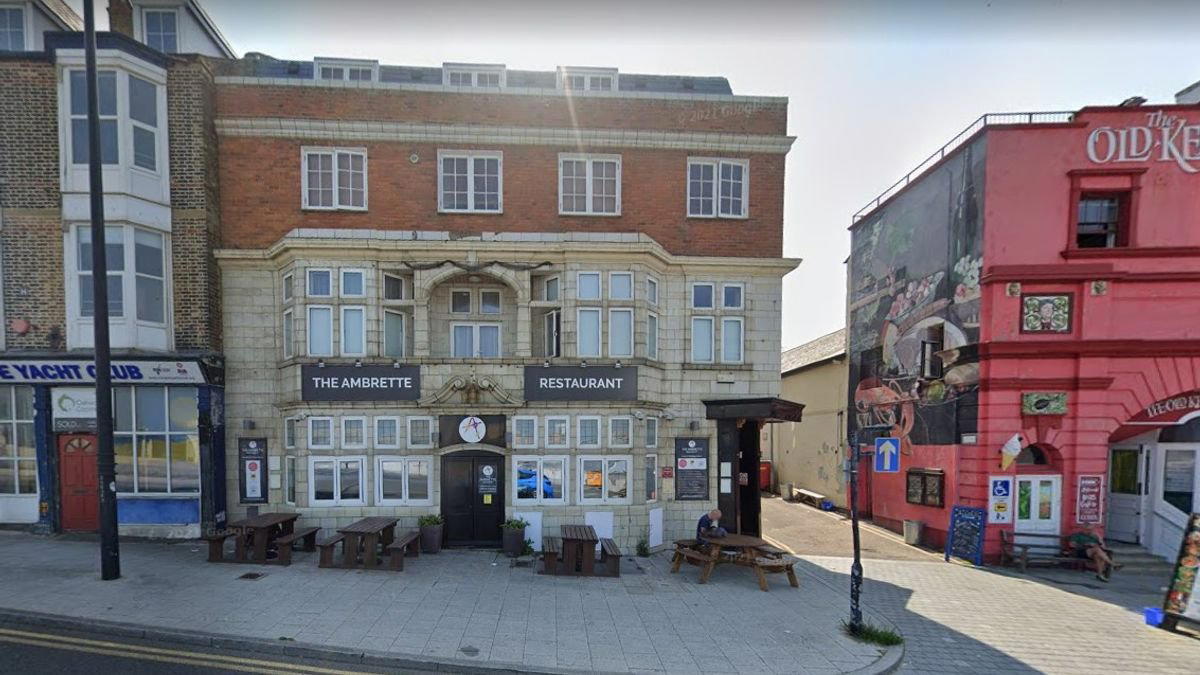
The Ambrette sits opposite the Turner Contemporary on Margate's seafront, bringing South Asian cuisine to one of England's most talked-about coastal dining scenes. Its Fort Hill address places it at the intersection of Margate's art-world revival and a restaurant culture that has quietly outgrown its seaside-town reputation. For visitors building a serious eating itinerary along the Kent coast, it belongs on the shortlist.
- Address
- 10 Fort Hill Opposite The Turner Art Gallery Margate Sea Front, 10 Fort Hill, Margate CT9 1HD, United Kingdom
- Phone
- +44 1843 231504
- Website
- linebuys.pw
- Directions
- Get directions
The menu
What to order
- Fillet of Nile Perch with Peppers
- Venison with Chilli-Pickled Pears
- Kentish Mutton Pearl Barley Biryani
Fort Hill, Sea Light, and the Smell of Spice
Approach The Ambrette from the seafront and the context arrives before the food does. The Turner Contemporary sits directly opposite, its angular white facade catching the particular grey-silver light that Turner himself documented in the skies above this stretch of Kent coastline. Fort Hill is a short climb from the beach, and on the right morning the salt air and the faint warmth from a kitchen vent create an arrival that is, by any measure, more layered than your average high street restaurant approach. This is a deliberate address: Margate's art-world resurgence and its dining revival have overlapped at this postcode for good reason.
South Asian cooking in a British seaside town carries a set of expectations that The Ambrette has spent its tenure actively renegotiating. The broader context matters here: across England, a generation of Indian-heritage chefs and restaurateurs have moved the category away from the high-street curry house model and toward the kind of ingredient-led, regionally specific cooking that commands the same critical attention as European fine dining. London examples are well-documented. Outside the capital, the conversation is shorter, and Margate's contribution to it is worth examining seriously.
A Dining Scene That Earned Its Reputation
Margate's restaurant scene has undergone one of the more credible provincial revivals in England over the past decade. The arrival of the Turner Contemporary in 2011 accelerated what was already a slow-burn regeneration: studios, galleries, and eventually kitchens followed the cultural infrastructure. By the early 2020s, the town had assembled a dining circuit that could anchor a full weekend without repetition. Angela's built a reputation for seafood sourcing that references the Kent coast directly; Bottega Caruso brought serious Italian cooking to the old town; Buoy and Oyster carved out a position for shellfish and natural wine; Dory's of Margate and Forts Café filled out the more casual register. The Ambrette sits within this ecosystem as its South Asian anchor, occupying a category that no other venue in the town replicates.
That positioning matters beyond local geography. The UK's secondary cities and coastal towns have historically struggled to sustain ambitious South Asian cooking outside of community-dense areas where the demand base was already established. Margate, with a population that has diversified significantly alongside its cultural revival, has provided a different kind of audience: one that travels specifically to eat, that holds the town to the same standards it applies to London or Manchester, and that responds to ambition rather than safety. The Ambrette's longevity in this environment is itself a signal worth reading.
The Sensory Register
The physical experience of eating South Asian food in a room with a Turner-adjacent sea view is harder to replicate than it sounds. The aromatics of a serious spice-led kitchen, whole cardamom and toasted cumin and the char of a properly hot pan, land differently when the room faces salt air rather than a city street. There is a synesthetic quality to the combination that visitors tend to remark on: the warmth of the interior against whatever the Channel is doing outside creates a contrast that sharpens attention in the way good dining rooms are supposed to.
British coastal fine dining has generally leaned into its geography through the plate, sourcing shellfish and fish from local waters and building menus around the tidal calendar. The more interesting proposition at venues like The Ambrette is what happens when a different culinary tradition occupies the same coastal setting: the geography informs the atmosphere and the sourcing context, but the flavour architecture belongs to an entirely different region of the world. This cross-referencing is one of the more genuinely interesting structural features of England's current provincial dining scene, and it shows up most clearly in towns like Margate where culinary diversity arrived alongside demographic change rather than as a planned tourism intervention.
Where The Ambrette Sits in the Wider British Picture
To place The Ambrette accurately, it helps to look at where South Asian fine dining currently operates in Britain and what the critical infrastructure around it looks like. At the apex, venues like Opheem in Birmingham hold Michelin recognition and compete in the same conversation as European fine dining rooms. London's tier is dense enough to constitute its own category. Below those points, the map thins quickly: credible South Asian cooking outside the capital and Birmingham tends to cluster in university cities or areas with established South Asian communities.
Margate does not fit that template, which is precisely what makes The Ambrette's position unusual. It is not sustained by community demand in the traditional sense; it is sustained by the town's broader appeal as a destination, the same gravitational pull that fills Angela's on a Tuesday in November. For diners who use venues like Waterside Inn in Bray, L'Enclume in Cartmel, or Moor Hall in Aughton as reference points for regional British ambition, The Ambrette represents Margate's entry into a different but parallel conversation about what serious cooking looks like outside London. See also: hide and fox in Saltwood, which anchors the Kent fine-dining circuit from the other end of the county.
Planning Your Visit
The Ambrette's Fort Hill address is a ten-minute walk from Margate railway station, which connects to St Pancras in under ninety minutes on the high-speed Southeastern service. That journey time has been central to Margate's dining scene development: day trips from London are logistically direct, which means the town's better restaurants compete for attention with London venues rather than against each other. Weekends between April and October see the highest visitor volumes; arriving midweek in the shoulder season, particularly in late autumn when the light over the Turner is at its most dramatic, gives a quieter room and a more considered service pace. Booking ahead is advisable; the combination of limited seating in most Margate restaurants and the town's ongoing profile growth means walk-in availability is increasingly unreliable, particularly on Saturdays. See our full Margate restaurants guide for a broader itinerary that pairs The Ambrette with the rest of the town's dining circuit.
Frequently asked questions
What's The Ambrette's location?
The Ambrette is located at 10 Fort Hill Opposite The Turner Art Gallery Margate Sea Front, 10 Fort Hill, Margate CT9 1HD, United Kingdom, Margate.
How does The Ambrette fit into Margate's wider food scene, and is it worth travelling from London for?
The Ambrette on Fort Hill has been a reference point in Margate's restaurant revival, a scene that gained serious attention as the town drew artists, gallerists, and second-home buyers through the 2010s. Margate is under ninety minutes from St Pancras on the high-speed service, which puts The Ambrette in the same practical bracket as a London destination restaurant for anyone already tracking South Asian fine dining in Britain. For visitors combining it with the Turner Contemporary, the geography alone makes the trip coherent.
What's the must-try dish at The Ambrette?
What the Fort Hill location is consistently associated with is South Asian cooking applied at a fine-dining register, so the tasting or chef's menu format is the clearest way to take the full measure of the kitchen. Checking directly with the restaurant before your visit will give you the most accurate current picture.
Should I book The Ambrette in advance?
The Ambrette sits on Fort Hill opposite the Turner Contemporary, which means it draws both Margate locals and visitors arriving on the high-speed rail link from St Pancras. That combination of a strong local reputation and increasing out-of-town interest makes advance booking the sensible approach, particularly on weekends or around Turner Contemporary exhibition openings. check the venue's official channels to confirm current availability.
What's the standout thing about The Ambrette?
The clearest point of difference is the setting: South Asian fine dining served in a room opposite one of England's most discussed contemporary art galleries, on the Margate seafront. That pairing of serious regional cuisine with a genuinely distinctive coastal context is not something replicated elsewhere in Kent. It places The Ambrette at the centre of Margate's credible provincial dining revival rather than at its edges.
Peers in This Market
| Venue | Cuisine | Price | Awards | Notes |
|---|---|---|---|---|
| The AmbretteThis venue — the venue you are viewing | Modern South Indian Fusion | Not listed | Not listed | Not listed |
| Sargasso | Modern Coastal Small Plates | $30–50 | Michelin Bib Gourmand · The Good Food Guide GFG Good | Modern Cuisine |
| Angela's | Fresh Local Seafood Bistro | $50–100 | Michelin Plate · The Good Food Guide GFG Very Good | Seafood |
| Bottega Caruso | Southern Italian Osteria | $50–100 | Michelin Plate · The Good Food Guide GFG Very Good | Italian |
| Sète | French-accented British Bistro | $30–50 | Michelin Plate · The Good Food Guide GFG Good | Modern British |
| Dory’s of Margate | Seasonal Seafood Small Plates | Not listed | The Good Food Guide GFG Very Good | Not listed |
Continue exploring
More in Margate
Restaurants in Margate
Browse all →
Bars in Margate
Browse all →
Hotels in Margate
Browse all →
Wineries in Margate
Browse all →
Details
- Elegant
- Modern
- Intimate
- Date Night
- Special Occasion
- Standalone
- Local Sourcing
- Farm To Table
- Tasting Menu
- A La Carte
- Vegetarian Friendly
- Pescatarian Friendly
Understated elegance with nouvelle cuisine presentation; calm, refined atmosphere away from the seafront bustle.