Štipec

A local favourite on Riegrova in central Pilsen, Štipec brings a contemporary edge to Czech cooking without losing the grounded, hearty character that defines the cuisine. Charred cabbage and short ribs anchor the menu, and the covered terrace draws a steady crowd in summer. The atmosphere is rustic and the service consistently warm, an honest read on where Pilsen's dining scene is heading.
Pearl is the En Primeur Club membership app — saves, bookings, and concierge access live there. Same editors, same standards.
- Address
- Riegrova 208/5, Pilsen, 30100, Czechia
- Directions
- Get directions
 Saves & bookings on Pearl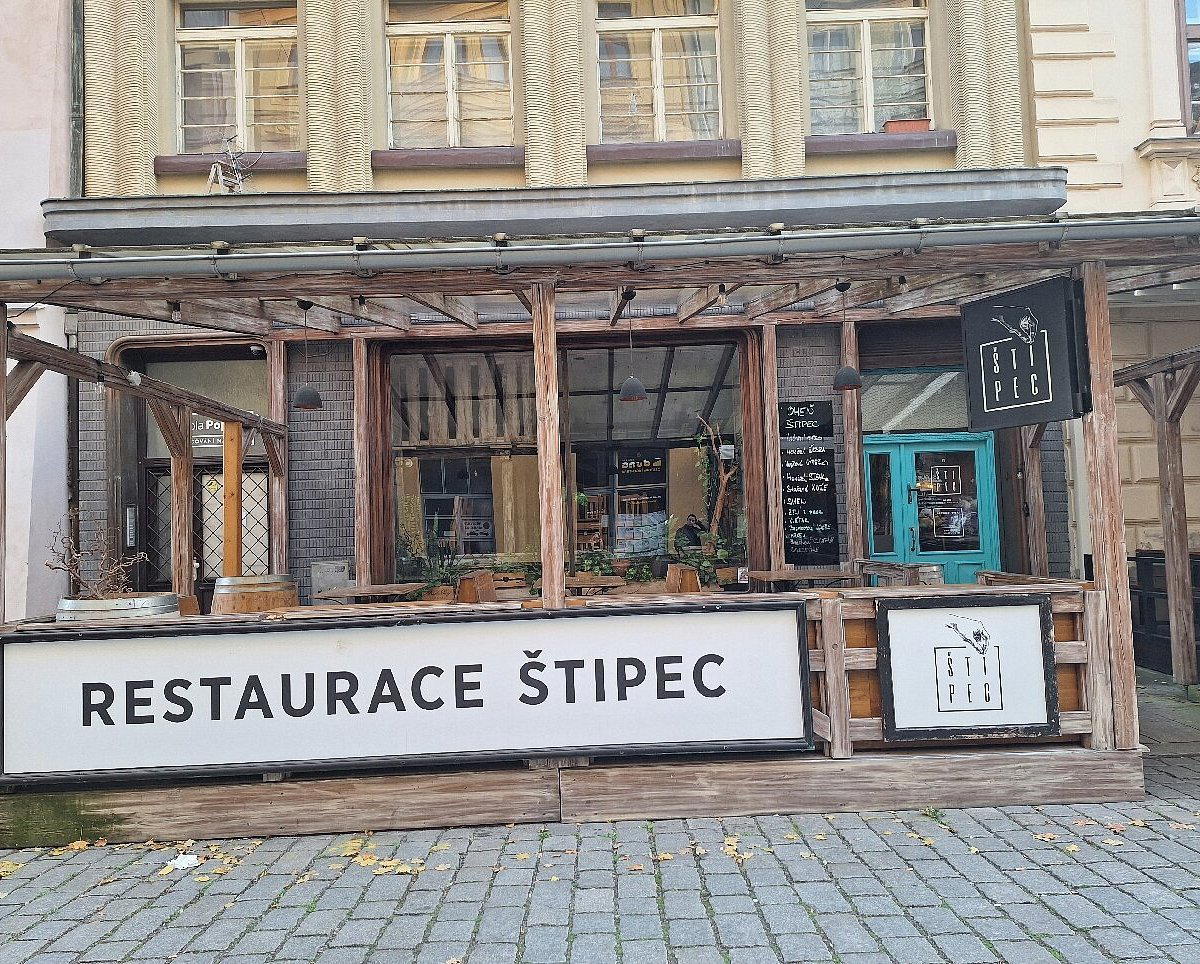
Czech Cuisine, Reframed for the City Centre
Štipec is a restaurant in Pilsen serving contemporary Czech cooking with French influences, at a midrange price point of about $35 per person. Pilsen has long sat in the shadow of Prague's dining reputation, but the city's own food culture, shaped by its industrial history, its brewing identity, and its proximity to Bavarian and Austro-Hungarian cooking traditions, is something worth examining on its own terms. Štipec, on Riegrova in the heart of the city, represents a specific moment in that evolution: Czech cuisine reworked with contemporary technique while remaining recognisably, confidently Czech.
The cooking here belongs to a broader wave of Czech restaurants that have moved away from the postcard version of the cuisine (heavy svíčková, deep-fried cheese, bread-padded sauces) and toward something leaner, more considered, but still rooted. Charred cabbage is a useful signal. It is not a glamorous ingredient, but handled with care it reveals something about the kitchen's priorities, the willingness to treat a modest, inexpensive vegetable as worthy of serious attention. Short ribs, the other frequently cited signature, occupy the opposite end of the ingredient prestige spectrum but land in the same territory: restraint and precision applied to workhorse material.
For context on where this approach sits nationally, the standard-bearer for Czech-rooted fine dining remains La Degustation Bohême Bourgeoise in Prague, which works Bohemian culinary history through a tasting-menu format. Štipec is not in that tier, it is a neighbourhood-facing operation, not a destination tasting counter, but the underlying instinct is related. Czech cooking has enough depth and regional variation to carry a contemporary restaurant without reaching for Italian or French frameworks, and the better operators across the country are proving that point. You can see the same dynamic at work in restaurants like Entrée in Olomouc and Bohém in Litomyšl, each making a case for regional Czech cooking done with rigour.
The Setting: Rustic Without Affectation
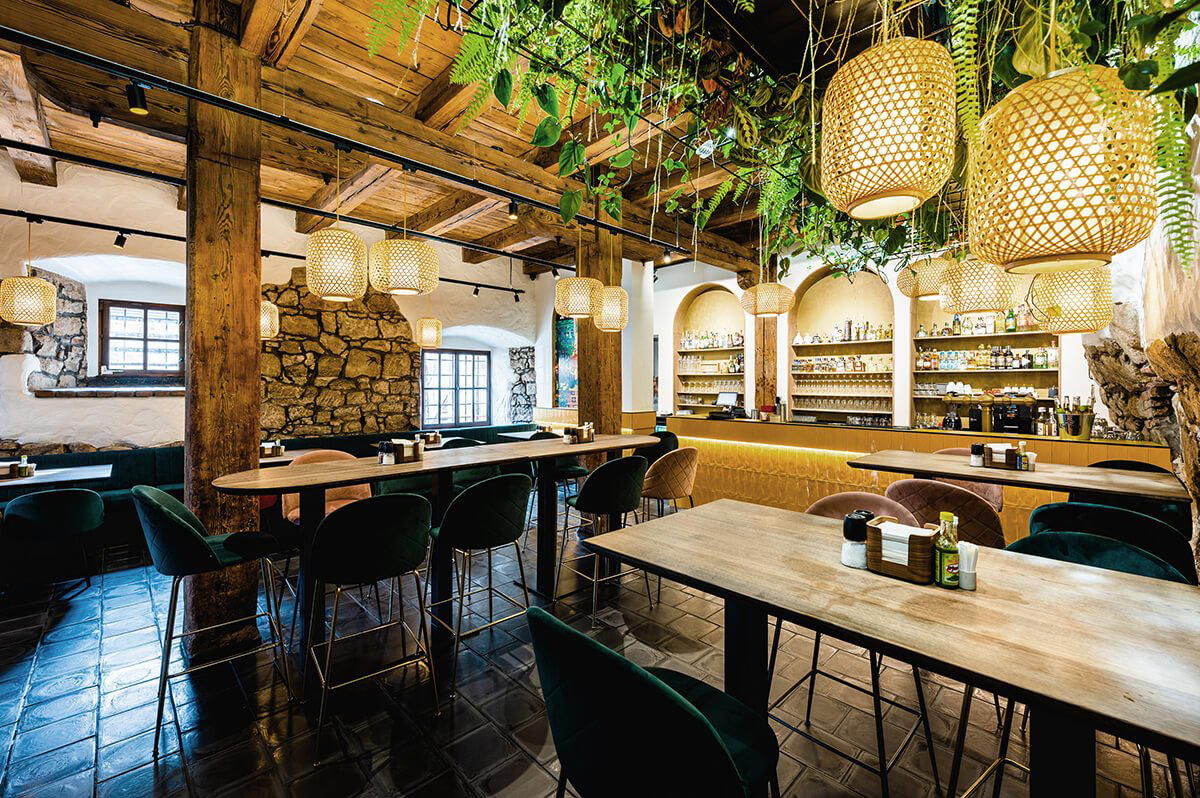
The physical environment at Štipec reads as genuinely rustic rather than designed-rustic, which matters more than it might seem. Czech restaurant interiors have historically oscillated between the barn-timber folk aesthetic and the generic mid-century Central European hotel dining room. A space that lands in neither camp, that has accumulated character rather than commissioned it, tends to shape the dining experience in ways that are harder to engineer. The atmosphere here is cited consistently by regulars as part of the draw, not just the food.
In summer, the covered terrace on Riegrova is a notable draw. Central Pilsen is a walkable city with a strong outdoor-dining culture during the warmer months, and a well-positioned covered terrace offers the combination of outdoor light and weather protection that makes evening eating comfortable from late May through September. Tables outside in this kind of setting tend to reward earlier bookings, they fill first.
Wine and Drink
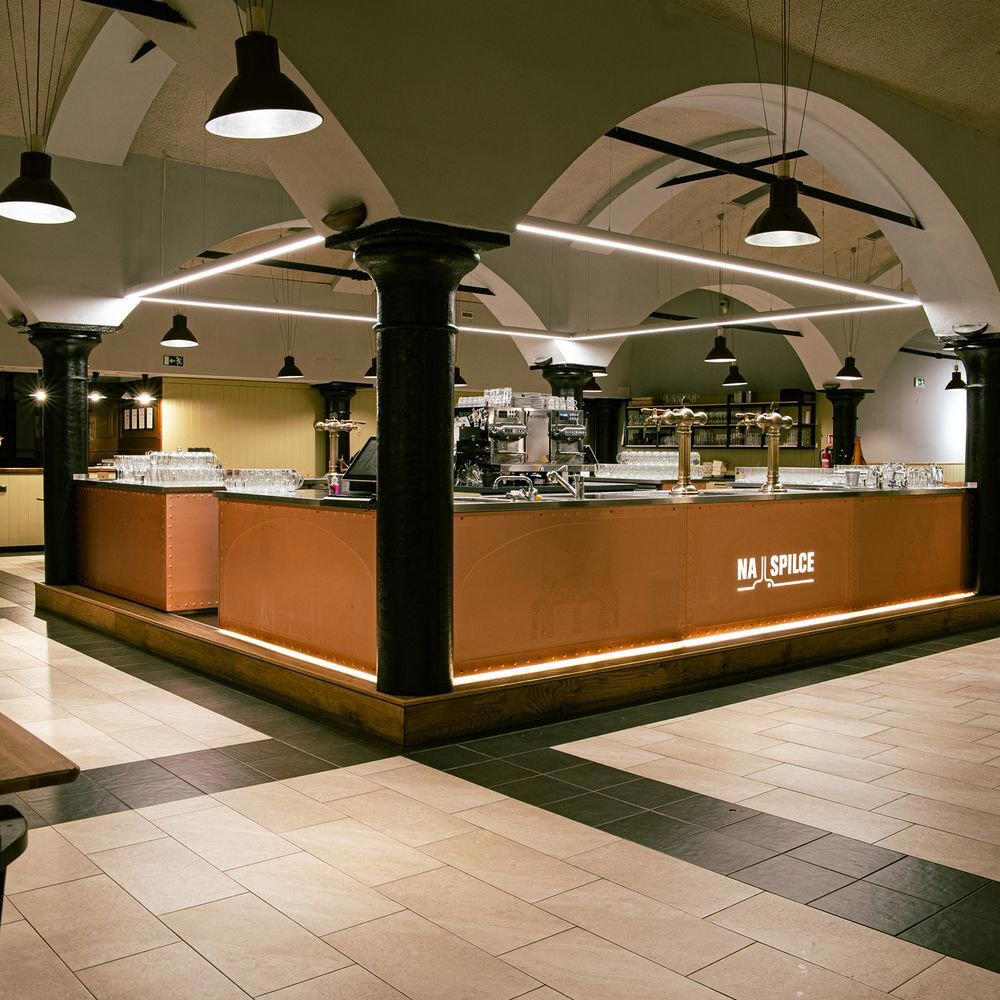
Czech wine remains underexplored by international visitors, who tend to arrive with Moravian Welschriesling and Müller-Thurgau somewhere in their peripheral awareness but without much depth on producers or regions. The wine offering at Štipec is described as solid without being positioned as a destination list. For a city-centre restaurant at this price point, a focused, well-chosen selection that matches the food's character is more useful than an ambitious cellar that increases price-per-head without improving the meal. Pilsen's drinking identity is, of course, shaped primarily by its brewing history, Na Spilce, the historic restaurant inside the Pilsner Urquell brewery, sits a short distance away and represents the city's other major food-and-drink reference point. Štipec positions itself as a different kind of proposition: the urban restaurant rather than the brewery institution.
Where Štipec Sits in Pilsen's Dining Picture
Pilsen is not a large restaurant city, and the centre's dining options are concentrated enough that a well-regarded local address carries more weight than it might in Prague or Brno. The city draws visitors for its brewing heritage and its architectural centre, UNESCO-listed since 2015, but its food culture has developed more quietly. A restaurant that earns local loyalty in this context is doing something specific: it is making a case for itself in a market where repeat customers matter and word-of-mouth moves quickly.
The broader Czech restaurant scene is worth understanding as a frame of reference. Outside Prague, the strongest operations tend to be smaller, locally embedded, and less reliant on international visitor traffic. Places like Chapelle in Písek, ATELIER bar & bistro in Brno, and Cattaleya in Čeladná each operate in regional cities with a similar dynamic: local authority first, wider recognition second. Štipec appears to be working the same model. For those who want to understand the full Czech dining picture beyond the capital, regional stops like these carry more information than another trip through Prague's well-covered restaurant circuit. You can find further examples in our coverage of ARRIGŌ in Děčín, Babiččina zahrada in Průhonice, Dvůr Perlová voda in Budyně nad Ohří, and ESSENS in Hlohovec.
For visitors accustomed to the precision tasting-menu format, the kind of experience you find at Atomix in New York City or Le Bernardin in New York City, Štipec is a different register entirely. It is a lunch or dinner restaurant in the central European civic tradition: a place where the cooking is taken seriously and the atmosphere is easy, where the interaction between food, drink, and company is the point rather than the performance of technique.
Planning Your Visit
Štipec is located at Riegrova 208/5 in central Pilsen, easily reachable on foot from the main square and the historic city core. The restaurant is busy through the week, particularly in the evenings, so arriving without a reservation on a weekend evening carries meaningful risk, especially if you are hoping for terrace seating in summer. The covered terrace should be treated as a seasonal asset with limited capacity. Pilsen is roughly 90 minutes from Prague by direct train from Hlavní nádraží, making it a viable day-trip or short-stay destination for visitors based in the capital.
Budget and Context
Comparable venues nearby, for context on price, style, and recognition.
| Venue | Cuisine | Price | Awards | Notes |
|---|---|---|---|---|
| ŠtipecThis venue — the venue you are viewing | Not listed | $$ | Bib Gourmand | Not listed |
| Na Spilce | Not listed | $ | Michelin Plate | Pilsner Urquell Brewery, Modern Czech Brewery Pub |
| Dergi Praha | Pelc Tyrolka, Authentic Georgian | $$ | Michelin Plate | Not listed |
| Babiččina zahrada | Not listed | $$ | Michelin Plate | Průhonice, Traditional Czech Country Cooking |
| Sůl a Řepa | Strakonice, Modern Regional Czech | $$ | Michelin Plate | Not listed |
| Café Imperial | Pelc Tyrolka, Classic Czech Brasserie | $$$ | Michelin Plate | Not listed |
Recognition history
Dated appearances from independent guides and award organizations, with the underlying list record or original source where available.
Michelin Bib Gourmand
Michelin
Continue exploring
More in Pilsen
Restaurants in Pilsen
Browse all →

At a Glance
- Rustic
- Lively
- Cozy
- Modern
- Intimate
- Date Night
- Family
- Casual Hangout
- Celebration
- Special Occasion
- Open Kitchen
- Terrace
- Historic Building
- Beer Program
- Farm To Table
- Local Sourcing
Warm and inviting with natural materials, featuring an open kitchen concept and a prominent wood-fired stone oven; described as a calm oasis in the city centre with both intimate interior and lovely covered terrace seating.