

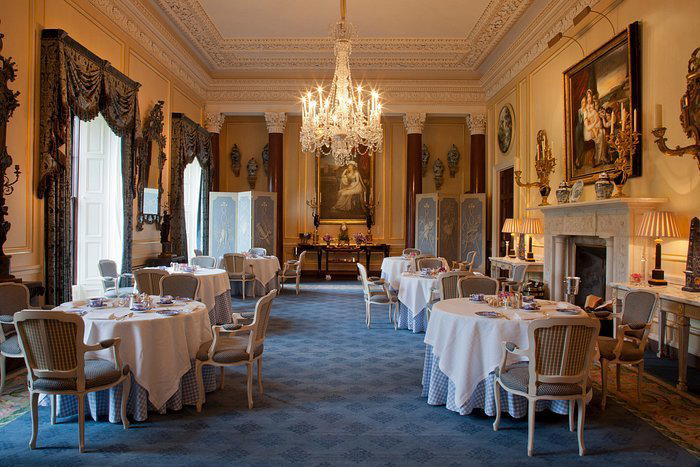
State Dining Room Restaurant makes sense as part of Ballyfin’s estate-dining tradition rather than as a standalone destination restaurant. The draw is the relationship between Richard Picard-Edwards’s classical cooking and the gardens of Ballyfin Demesne, where produce moves from the grounds into a formal dining room with a notably social, guest-facing rhythm.
Pearl is the En Primeur Club membership app — saves, bookings, and concierge access live there. Same editors, same standards.
- Address
- Ballyfin Demesne
- Phone
- +353 (0)57 8755866
- Website
- menumodo.com
- Directions
- Get directions
 Saves & bookings on Pearl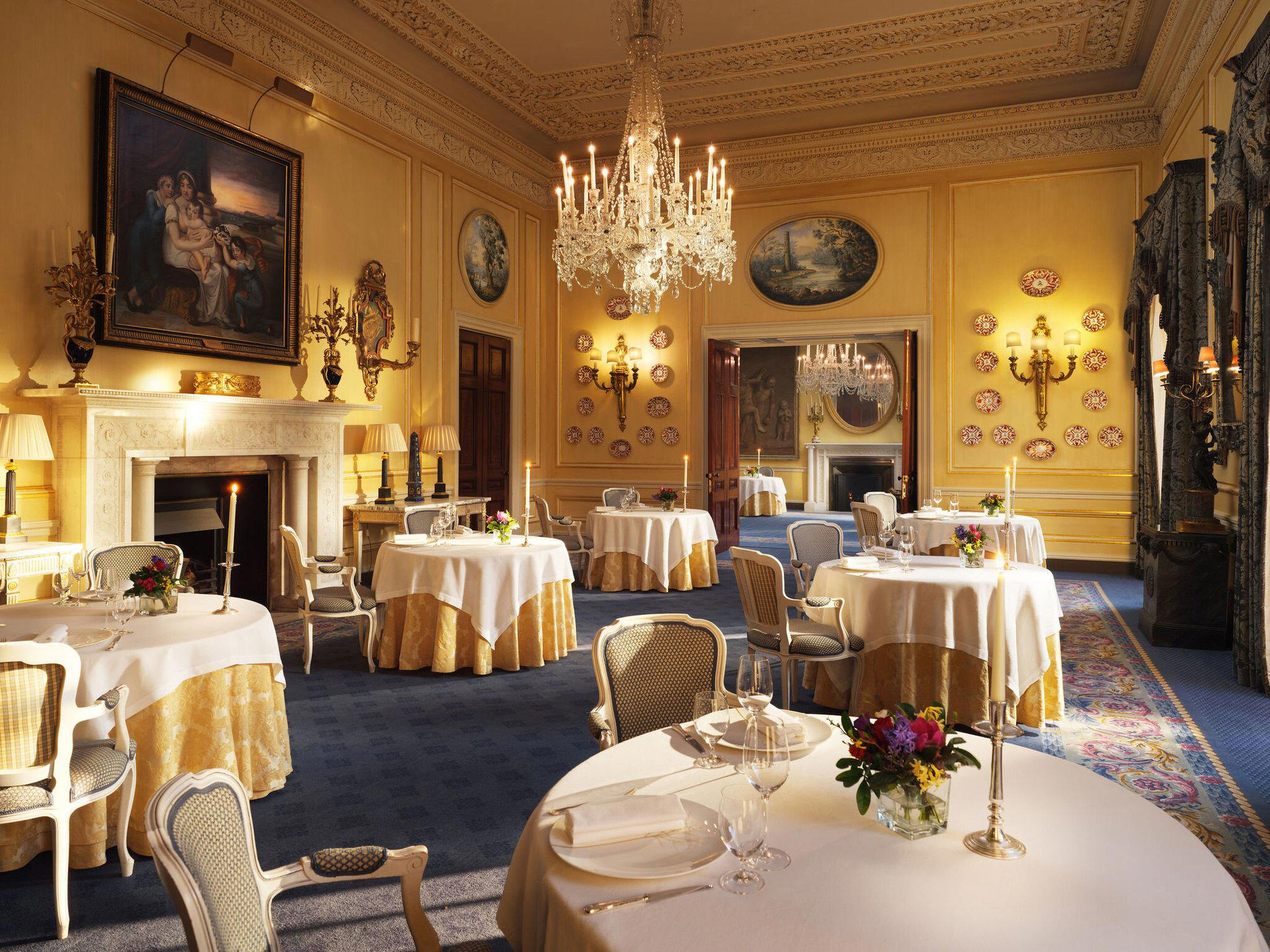
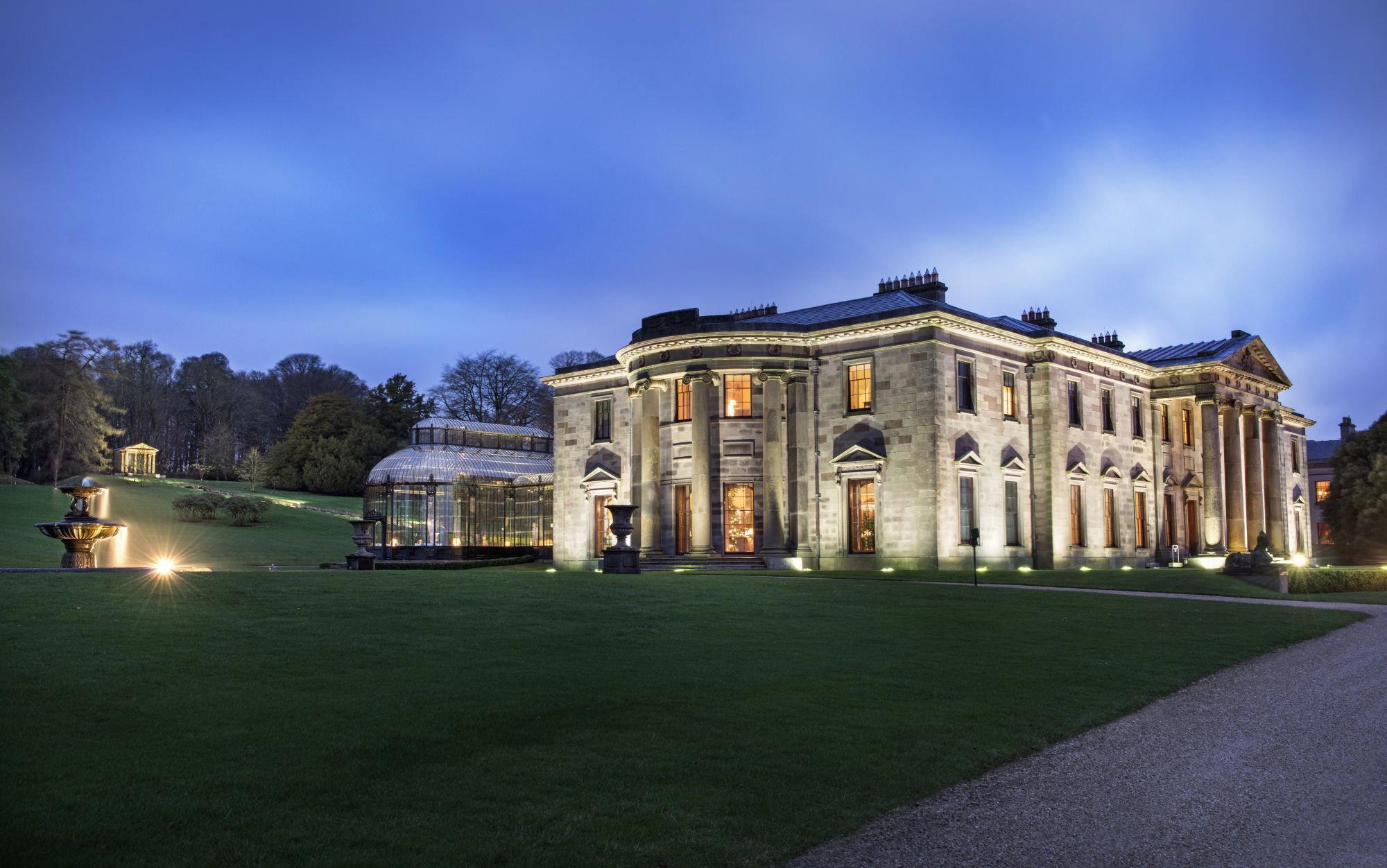
Approaching the dining room at Ballyfin Demesne, the first signal is not theatrical cooking or urban restaurant energy, but estate order: garden, house, room, table. This is a rural Irish dining format where the setting does part of the work, and where the kitchen’s credibility depends less on imported luxury markers than on what the grounds can supply. State Dining Room Restaurant belongs to that tradition, with produce and ingredients directly harvested from the gardens of Ballyfin Demesne and translated through Richard Picard-Edwards’s cooking of classics.
That matters because country-house dining can drift into ceremony for its own sake. The stronger version, and the more demanding one, makes the estate feel operational rather than decorative. Ballyfin’s kitchen has a clear advantage there: the gardens are not background scenery but part of the supply chain. In Irish hotel dining, where provenance is often promised in broad language, this is a concrete point of difference. The room’s friendly atmosphere also changes the register. Formal surroundings do not automatically mean a stiff meal; here, the chef’s habit of speaking with guests makes the experience less sealed-off than many grand-house dining rooms.
Garden-led classicism, not tasting-menu theatre
The phrase “cooking classics” can sound modest, but in a setting like this it carries a specific discipline. Classic cooking in an estate dining room is about control, timing and proportion rather than novelty. The kitchen has to make vegetables, herbs and estate-grown ingredients feel deliberate without turning the meal into a garden inventory. Picard-Edwards’s role is strongest when understood through that lens: not as a chef biography leading the story, but as a working bridge between classical structure and a garden that changes the conversation around it.
His guest-facing style is also relevant. In many formal dining rooms, the chef remains an invisible authority; at Ballyfin, the stated exchange with diners suggests a looser feedback loop. That does not make the restaurant casual, but it does soften the old country-house hierarchy. The cooking can remain classical while the room behaves with more warmth than ceremony. For travellers comparing rural Irish dining rooms, that distinction is useful. A conservatory restaurant such as Marlfield House Conservatory Restaurant sits in the same broad country-house conversation, but Ballyfin’s estate-garden dependency gives this room a more closed circuit between place and plate.
The absence of a public price range or listed service format also shifts how the restaurant should be judged. This is not a city counter where value can be measured against seat count, courses and booking friction. The meaningful comparison is with other destination-house meals where accommodation, grounds and dining are part of the same decision. Readers mapping a wider Irish route can use Our full Ballyfin restaurants guide for the local dining frame, then compare broader classic formats through addresses such as 1826 Adare in Adare, 1900 Restaurant in Dublin and 51 Cornmarket in Cork.
What Ballyfin adds to the Irish country-house meal
Ballyfin is not a metropolitan dining scene compressed into a heritage room. Its value lies in slowness, scale and continuity: the demesne supplies ingredients, the dining room supplies formality, and the chef’s conversations with guests supply a human register that prevents the meal from feeling purely institutional. That combination suits travellers who want an estate meal with a sense of place rather than a restaurant chasing the language of capital-city tasting rooms.
The broader Irish context is useful. Coastal rooms such as 30 Church Street Howth in Howth, 5Rock in Skerries, Adrift in Dunmore, Aherne's in Youghal and Aldridge Lodge in Duncannon tend to draw authority from seafood geography. Inland and small-town dining can lean instead on craft, locality and hospitality rhythm, visible in places such as Alumni Kitchen Table in Rathangan and An Nead (Little Nest) Café in Kenmare. Ballyfin’s version is more estate-bound: the garden is not just a supplier but the organising idea.
That also explains why the restaurant reads differently from international classic-cooking venues in remote luxury settings. Awasi Mendoza Restaurant, Cooking classics in Luján de Cuyo and Bistro Enkel, Cooking classics in Brampton may share a broad culinary category, but Ballyfin’s identity is tied to Irish demesne culture: house, garden and table arranged as one experience. For visitors planning around the estate rather than a single meal, Our full Ballyfin hotels guide, Our full Ballyfin bars guide, Our full Ballyfin wineries guide and Our full Ballyfin experiences guide give the surrounding hospitality context.
Who this room is for
This is the right fit for diners who read a meal through setting and restraint. The draw is not a named signature dish or a trophy-led awards narrative; it is the way Ballyfin’s gardens, formal room and chef interaction create a country-house meal with a specific local anchor. Travellers wanting a sharper comparison inside Ballyfin can also look at Ballyfin (Modern Cuisine), which sits nearby in the same destination frame but signals a different culinary register.
The editorial case is strongest for guests already choosing Ballyfin as a place to stay, pause and let the estate shape the day. As a standalone detour, the appeal depends on appetite for heritage-house dining and garden-led classicism. As part of a Ballyfin stay, State Dining Room Restaurant has a clearer purpose: it turns the demesne from scenery into dinner.
Side-by-Side Snapshot
Comparable venues by cuisine and price in the same metro.
| Venue | Cuisine | Price | Awards | Notes |
|---|---|---|---|---|
| State Dining Room RestaurantThis venue — the venue you are viewing | Michelin‑starred modern Irish & French fine dining | $$$$ | Not listed | Not listed |
| Ballyfin | Modern French Fine Dining | $$$$ | Michelin 1 Star | Ballyfin, County Laois |
| l'Gueuleton | Modern French Bistro | $$$ | Not listed | Royal Exchange A |
| The Ribs Gaucho BBQ / Brazilian Steakhouse | Brazilian Gaucho BBQ Steakhouse | $$$$ | Not listed | North City |
| The Terrace at The Shelbourne | Contemporary Irish | $$$$ | Not listed | Mansion House B |
| Cliff Townhouse Restaurant | Modern Seafood Fine Dining | $$$$ | Not listed | Mansion House B |
Recognition history
Dated appearances from independent guides and award organizations, with the underlying list record or original source where available.
Relais Chateaux Award
Relais Chateaux
Wine Spectator Best of Award of Excellence
Wine Spectator
At a Glance
- Romantic
- Elegant
- Classic
- Scenic
- Intimate
- Sophisticated
- Date Night
- Business Dinner
- Special Occasion
- Celebration
- Private Event
- Historic Building
- Design Destination
- Hotel Restaurant
- Wine Cellar
- Garden
- Private Dining
- Extensive Wine List
- Farm To Table
- Local Sourcing
- Sustainable Seafood
- Organic
- Garden
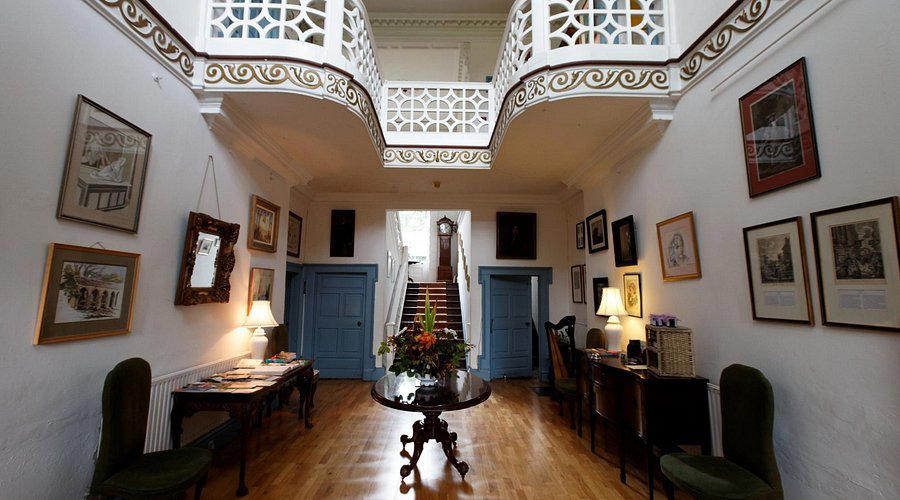
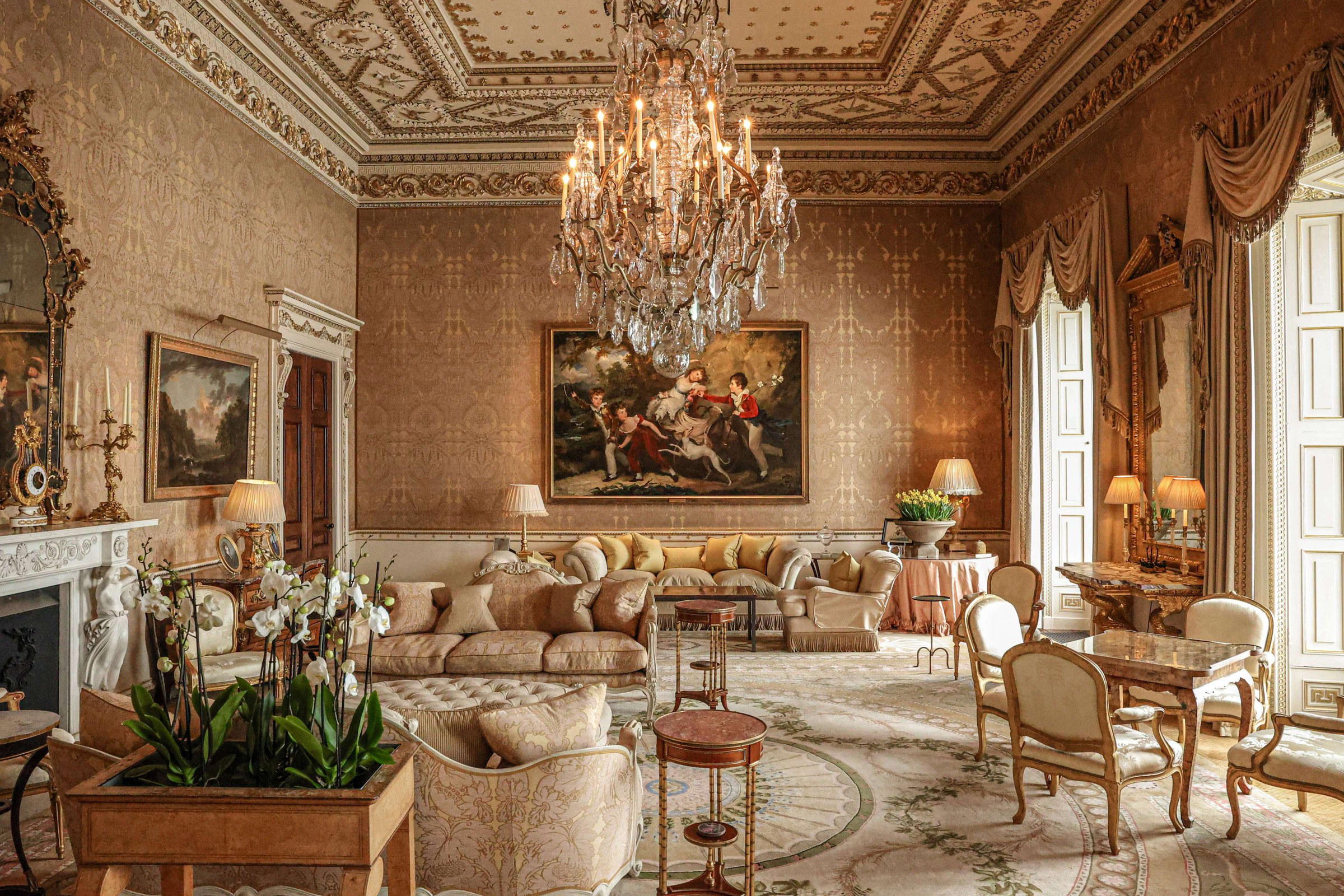
An ornate, candlelit and classically elegant dining room set in a restored historic house, with a quiet, intimate atmosphere that feels formal yet warmly welcoming, overlooking the estate’s gardens and parkland.