Shin-Sen-Gumi Robata & Yakitori - Fountain Valley
Our verdict
Shin-Sen-Gumi Robata & Yakitori brings the focused discipline of Japanese charcoal cookery to Fountain Valley's Brookhurst Street corridor, where the robata grill sets the pace and the yakitori skewers anchor a menu built around fire and precision. Part of a Southern California group with deep roots in Japanese grill culture, it occupies a distinct tier in the area's Japanese dining scene, more specialized than a standard izakaya, more casual than a kaiseki counter.

Pearl is the En Primeur Club membership app, where members save venues, book tables and use the concierge.
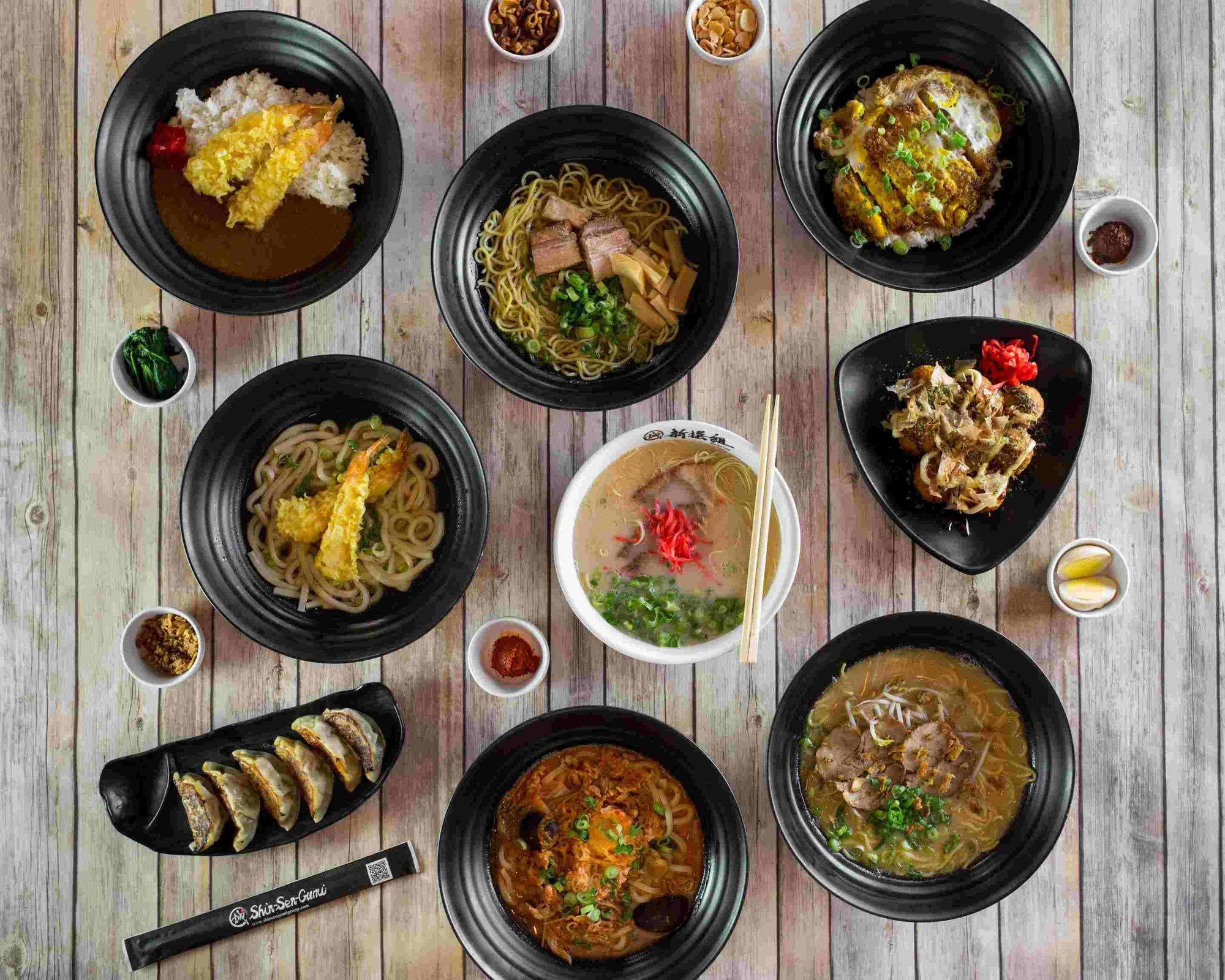
Fire, Smoke, and the Discipline of the Grill
Walk into a serious robata restaurant and the sensory register shifts immediately. The smell of binchōtan charcoal, that slow-burning white oak charcoal that burns cleaner and hotter than most alternatives, arrives before the food does. The sound is low and purposeful: the quiet crackle of embers, the occasional hiss of fat hitting the grate, the rhythm of a kitchen operating around a single cooking method rather than a sprawling menu. This is the atmosphere that defines the robata tradition, and it is the atmosphere that Shin-Sen-Gumi Robata & Yakitori brings to 18315 Brookhurst Street in Fountain Valley.
Robata, short for robatayaki, meaning "fireside cooking", has its origins in the communal cooking traditions of northern Japan's fishing communities, where food was grilled over open hearths and passed to diners on long wooden paddles. The format crossed to restaurant culture in postwar Japan and has since become one of the more disciplined corners of Japanese cuisine: the quality of the ingredient matters absolutely, because the cooking method does little to disguise it. A yakitori skewer of thigh meat or cartilage or liver reveals the sourcing almost immediately. There is nowhere to hide on a charcoal grill.
Where Shin-Sen-Gumi Sits in the Fountain Valley Japanese Dining Scene
Fountain Valley's Brookhurst Street corridor is one of Southern California's more concentrated zones for Japanese and broader Asian dining. The area has long attracted restaurants that serve specific, specialist formats rather than broad pan-Asian menus, and the Japanese options here span a reasonable range of registers. Kappo Honda represents the city's more formal Japanese tradition, while KIN Craft Ramen & Izakaya anchors the more casual, izakaya-adjacent tier. Shin-Sen-Gumi sits somewhere between those poles: the format is informal and convivial, but the cooking discipline behind a proper robata and yakitori operation requires genuine technique.
The Shin-Sen-Gumi group has operated in Southern California for decades, with locations spanning Hakata-style ramen and yakitori across the Los Angeles basin and Orange County. The Fountain Valley outpost focuses specifically on robata and yakitori, which gives it a narrower brief than some of the group's other addresses, and a clearer identity as a result. In a dining corridor that includes Vietnamese specialists like Brodard Restaurant and Italian options like INI Ristorante, the specificity of the robata format is itself a differentiator.
For a broader map of where Shin-Sen-Gumi fits within the city's options, our full Fountain Valley restaurants guide covers the range from casual to considered across cuisines.
The Logic of the Yakitori Menu
Yakitori menus are structured differently from most Western restaurant formats. Rather than organizing around protein categories or courses, they move through the bird almost anatomically: breast, thigh, wing, skin, liver, heart, cartilage, neck. Each cut has its own textural logic and its own relationship to the heat of the grill. Negima, chicken and scallion skewered together, is the format's most familiar entry point. Tsukune, the minced chicken meatball, tends to be where a kitchen signals its quality most clearly, because the blend, seasoning, and char require deliberate calibration.
The robata side of the menu extends beyond poultry into vegetables, seafood, and other proteins cooked on the larger grill. Where yakitori is precise and small-scale, robata cooking has more visual drama: whole pieces of fish, ears of corn, thick cuts of meat arriving with the grill marks and smoke that binchōtan produces. The two formats share a cooking philosophy, let the fire do the work, but produce different dining rhythms at the table.
How This Format Compares to the Broader Fine-Dining Spectrum
It is worth placing the robata and yakitori format in a wider context. At the formal end of American Japanese dining, counters like Atomix in New York City operate at a prix-fixe, reservation-intensive level that bears little resemblance to the convivial, order-as-you-go rhythm of a yakitori restaurant. American fine dining more broadly, from Le Bernardin in New York City and Alinea in Chicago to The French Laundry in Napa and Providence in Los Angeles, operates on a fundamentally different structural logic, where tasting menus, long service arcs, and significant per-head investment define the experience. Places like Single Thread Farm in Healdsburg, Blue Hill at Stone Barns in Tarrytown, Lazy Bear in San Francisco, Addison in San Diego, The Inn at Little Washington, and Emeril's in New Orleans each represent a different iteration of that formal register. Even internationally, addresses like 8½ Otto e Mezzo Bombana in Hong Kong speak to a formal dining grammar quite removed from the open-grill, share-and-order format of a robata counter.
None of that makes one format superior to another. A yakitori restaurant is not trying to compete with a twelve-course kaiseki counter; it is operating in a different tradition with different values. The point is that the robata and yakitori format rewards a specific kind of attention: arriving hungry, ordering progressively, and treating the progression of skewers as the experience rather than a preamble to something else. The format works well when diners engage with it on its own terms. First Class Pizza nearby serves a similar share-and-order logic, though the culinary tradition is entirely different.
Planning Your Visit
Shin-Sen-Gumi Robata & Yakitori is located at 18315 Brookhurst Street, Suite 1, in Fountain Valley, a strip-mall address typical of the corridor, which should not be read as a signal about the seriousness of the kitchen. The Brookhurst Street stretch rewards visitors who look past the retail-park format and into the dining rooms, where the cooking tells a cleaner story than the exteriors suggest. The Shin-Sen-Gumi group tends to draw consistent crowds at its Southern California locations, particularly on weekend evenings, so arriving earlier in the service or checking ahead for current booking options is advisable. Specific hours, current pricing, and reservation availability should be confirmed directly with the venue before visiting, as these details sit outside what the public record currently confirms with certainty.
Frequently asked questions
Where exactly is Shin-Sen-Gumi Robata & Yakitori - Fountain Valley?
Shin-Sen-Gumi Robata & Yakitori - Fountain Valley is located at 18315 Brookhurst St #1, Fountain Valley, CA 92708, Fountain Valley.
How does Shin-Sen-Gumi Robata & Yakitori in Fountain Valley fit into the broader Shin-Sen-Gumi restaurant group?
Shin-Sen-Gumi operates multiple concepts across Southern California, with this Fountain Valley address at 18315 Brookhurst Street focusing specifically on robata and yakitori rather than the hakata ramen format associated with other group locations. That specialization matters: robata requires dedicated grill infrastructure and sourcing, which typically indicates an operation built around the format rather than added as a menu section. It makes this location a distinct destination within the group's footprint.
What should I order at Shin-Sen-Gumi Robata & Yakitori - Fountain Valley?
The format here is built around the grill, so lead with the yakitori skewers and robata items rather than supplementary dishes. On Brookhurst Street's competitive Japanese dining corridor, Shin-Sen-Gumi has maintained a following specifically for its charcoal-fired execution, which points to the grill-centric menu as the reason to visit. Work through multiple skewer varieties rather than anchoring to a single order.
Is Shin-Sen-Gumi Robata & Yakitori - Fountain Valley reservation-only?
For a grill-format restaurant on a busy corridor like Brookhurst Street, walk-in availability tends to vary by day and time. Contacting the restaurant directly or checking third-party booking platforms is the practical approach before arrival.
What's the defining dish or idea at Shin-Sen-Gumi Robata & Yakitori - Fountain Valley?
The organizing principle is binchōtan charcoal, the slow-burning white oak charcoal that burns hotter and cleaner than standard wood or gas, producing char without bitterness. Both robata and yakitori formats depend on this heat source for their distinctive result. At the Fountain Valley location, that discipline around the grill is what separates the experience from broader Japanese restaurant options in the area.
What if I have allergies at Shin-Sen-Gumi Robata & Yakitori - Fountain Valley?
A yakitori and robata menu typically involves soy-based marinades, sesame, and wheat-containing sauces as standard components, so guests with gluten or soy sensitivities should confirm ingredient details directly with the kitchen at 18315 Brookhurst St. Cross-contact risk is also a practical concern in a live-fire grill environment.
Is a meal at Shin-Sen-Gumi Robata & Yakitori - Fountain Valley worth the investment?
The value argument rests on the charcoal-grill discipline: this format, done well, is technique-intensive and harder to replicate casually at home than most Japanese restaurant categories. For a grill-focused meal in Fountain Valley, that specificity tends to justify the visit.
Peers You’d Cross-Shop
Comparable venues nearby, for context on price, style, and recognition.
| Venue | Cuisine | Price | Awards | Notes |
|---|---|---|---|---|
| Shin-Sen-Gumi Robata & Yakitori - Fountain ValleyThis venue (the venue you are viewing) | Japanese Robata & Yakitori | $20–30 | Not listed | Not listed |
| KIN Craft Ramen & Izakaya | Modern Japanese Ramen & Izakaya | $30–50 | Not listed | Fountain Valley |
| Kappo Honda | Traditional Japanese Kappo | $20–30 | Not listed | Fountain Valley |
| Momoyama | Authentic Japanese Omakase | $150–200 | Not listed | Fountain Valley |
| First Class Pizza | Classic Italian Pizza | $10–20 | Not listed | Fountain Valley |
| NEP Cafe - Fountain Valley | Modern Vietnamese | $20–30 | James Beard Award Semi Finalist | Fountain Valley |
Continue exploring
More in Fountain Valley
Restaurants in Fountain Valley
All restaurants in Fountain Valley →
Bars in Fountain Valley
Browse all →
Hotels in Fountain Valley
Browse all →


Wineries in Fountain Valley
Browse all →
Details
- Lively
- Energetic
- Group Dining
- Casual Hangout
- Open Kitchen
- Sake Program
- Local Sourcing
- Small Plates
- A La Carte
- Sake
- Vegetarian Friendly
Current opening hours
- Monday
- 6–11 PM
- Tuesday
- 6–11 PM
- Wednesday
- 6–11 PM
- Thursday
- 6–11 PM
- Friday
- 6–11 PM
- Saturday
- 11 AM–11 PM
- Sunday
- 11 AM–10 PM
Hours can change for holidays and private events. Hours as of .
Busy and fun atmosphere with an energetic vibe from the open grill and lively bar area.