


SEM occupies a quiet stretch of Alfama with a tasting menu built around regenerative agriculture and fermentation, changing week to week in step with what local producers supply. Chefs George Mcleod and Lara Prado hold a 2025 Michelin Plate and are part of the We're Smart Movement, placing SEM among Lisbon's most considered addresses for vegetable-forward creative cooking at a mid-range price point.
Pearl is the En Primeur Club membership app — saves, bookings, and concierge access live there. Same editors, same standards.
- Address
- R. das Escolas Gerais 120, 1100-220 Lisboa, Portugal
- Phone
- +351 939 501 211
- Website
- restaurantsem.com
- Directions
- Get directions
 Saves & bookings on Pearl
Jars on the Wall, Seasons on the Plate
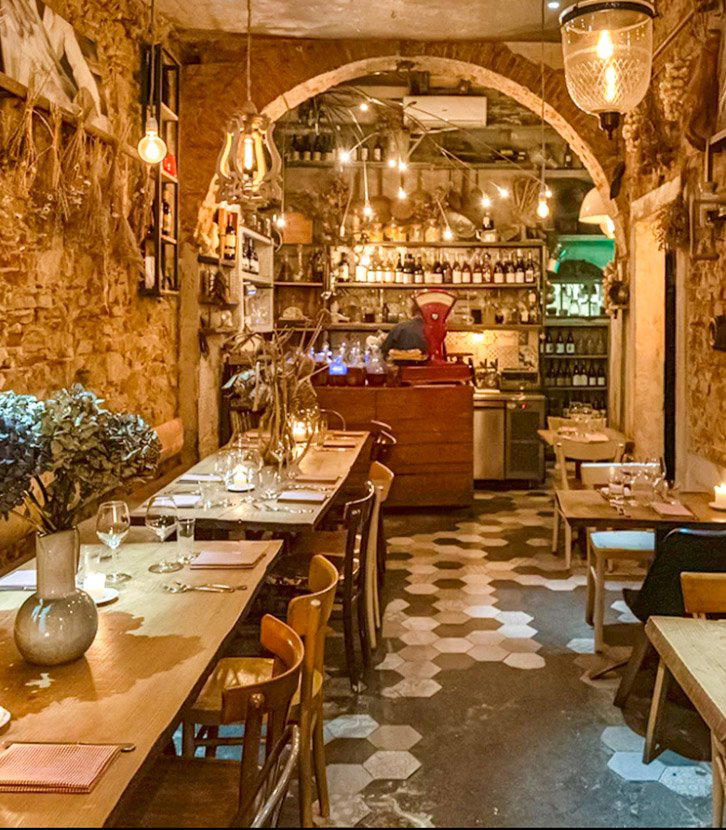
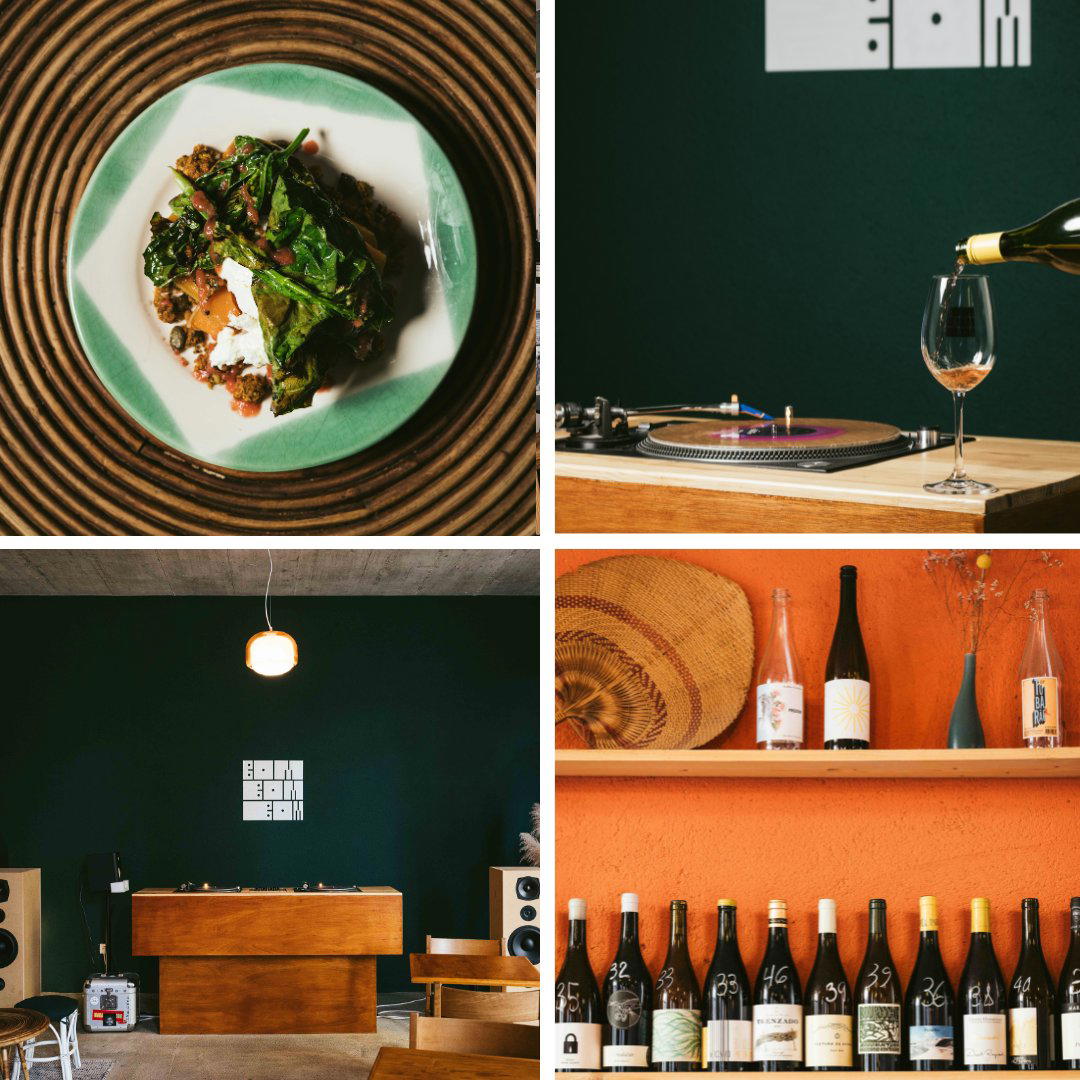
Walk into SEM on R. das Escolas Gerais and the first thing you register is the shelving. Floor-to-ceiling rows of preserving jars line the walls, some cloudy with lacto-fermented brine, others dense with pickled stems or preserved fruit, and they function as both decoration and working larder. The effect is closer to a well-organised farmhouse kitchen than a formal dining room, and that register is entirely deliberate. In a city where the higher end of creative cooking tends toward polished minimalism (see Belcanto or CURA), SEM has positioned itself at a different point on the spectrum: informal, tactile, and organised around the logic of preservation rather than theatre.
The smell that greets you is fermentation, a gentle, acidic warmth that signals something active and alive in the room. It is not unpleasant; it is the smell of process, of ingredients in mid-transformation. That sensory cue sets the correct expectation for what follows at the table, where a single tasting menu moves through fermented, pickled, and wild-foraged components alongside more conventionally prepared vegetables and proteins.
What the Single Menu Format Means in Practice
Lisbon's serious creative restaurants largely divide into two booking models: à la carte menus that allow lateral movement, and fixed tasting menus that demand full commitment. SEM runs the latter, but at the lighter end of the price spectrum. At €€, it sits well below the city's Michelin-starred counters and closer to the neighbourhood bistro tier in cost, which is an unusual position for a format that requires the kitchen to determine the meal entirely. The menu changes in line with supply from local producers rather than on a fixed seasonal schedule, meaning the same table returning two weeks apart may encounter an almost entirely different sequence of dishes.
That supply-dependency is not marketing language. It is the actual constraint that structures the kitchen's week. Ingredients sourced from regenerative agriculture operations tend to arrive in smaller, less predictable quantities than commodity supply chains, and the kitchen at SEM is designed to work within that variability rather than around it. Fermentation extends the life of surplus; zero-waste techniques ensure that trimmings and offcuts become components rather than bin material. The jar wall you noticed on arrival is the functional result of that system.
This approach places SEM firmly within the We're Smart Movement, an international network that recognises restaurants centred on vegetable-forward and ecologically conscious cooking. That credential, alongside the 2025 Michelin Plate, positions the restaurant within a comparable set defined less by classical technique and more by supply-chain integrity and seasonal fidelity. For comparison, Lisbon's starred rooms, Eleven, 50 Seconds from Martin Berasategui, operate at a price tier two to three steps above and with a different set of priorities. SEM is not competing with them; it is operating in a distinct category.
The Hands Behind the Menu
Portugal's creative dining scene has historically been led by chefs with classical European training and a strong connection to native ingredient traditions. SEM represents a different model: George Mcleod leads the kitchen, bringing a perspective on ingredient sourcing and ecological responsibility shaped by culinary cultures outside the Iberian mainstream. That international formation is relevant not as biography but as context: it explains why the restaurant's reference points in fermentation and regenerative sourcing connect to a global network of like-minded kitchens rather than emerging from a purely local lineage.
The chef combination also matters structurally. A two-chef operation at this scale, a small, informal room with a single evolving menu, requires a shared philosophy rather than a divided brief. At SEM, the alignment between Mcleod and Prado is evident in the coherence of the format: the same principles governing sourcing, preservation, and waste reduction apply across every element of the menu, from the first fermented snack to the final course.
SEM's Michelin Plate places it on the recognised tier without reaching for the star classification, a position that reflects both its price point and its deliberate informality.
The Alfama Setting and What It Adds
R. das Escolas Gerais runs through one of Lisbon's oldest and most densely residential neighbourhoods. Alfama is not the area where most of the city's creative restaurant energy concentrates, that gravitational pull tends toward Chiado, Príncipe Real, and the Santos corridor, which means SEM sits slightly outside the default circuit for visitors working through the obvious list. The address is a short walk from the fado houses and tourist-facing restaurants that cluster around the castle and viewpoints, but it operates at a different register: the room reads as genuinely local, with a clientele that mixes neighbourhood residents with visitors who have done specific research.
That positioning is relevant to the experience. A tasting menu in an informal setting, in a quieter residential street, without the backdrop of a designed dining destination, creates a particular kind of intimacy. The noise level is low enough to hear the kitchen. The lighting comes from practical sources rather than atmospheric installation. The jars on the wall are doing actual work, not performing the idea of fermentation for a design-conscious audience.
Placing SEM in the Wider Creative Cooking Conversation
Across Europe, particularly interesting creative restaurants are increasingly those that have resolved the tension between ecological ambition and culinary output, kitchens where the constraints of zero-waste or seasonal supply have become generative rather than limiting. In Paris, Alléno Paris au Pavillon Ledoyen operates at the maximalist end of creative ambition; in Milan, Enrico Bartolini represents a different model of Italian creative precision. SEM belongs to a third category: smaller, lower-cost, and oriented around ecological process as the primary creative driver.
For a small, informal room running a single changing menu, that score reflects a kitchen that manages the inherent variability of supply-dependent cooking without destabilising the guest experience. The We're Smart recognition reinforces that assessment from an independent credential focused specifically on vegetable-forward and ecologically grounded kitchens.
SEM occupies a specific position within that map: creative, ecologically serious, mid-range in price, and genuinely informal in format. Also worth considering nearby is 2Monkeys and, for a contrasting evening at full starred intensity, Il Gallo d'Oro in Funchal rounds out the Portuguese fine dining picture if your trip extends to Madeira.
Planning Your Visit
SEM is located at R. das Escolas Gerais 120, 1100-220 Lisboa, in the Alfama district. The format is a single tasting menu that changes according to producer availability, so arriving with a fixed expectation of specific dishes is inadvisable. The price tier sits at €€, placing it among the more accessible serious creative tables in Lisbon. Given the small scale of the room and the restaurant's Michelin Plate recognition, advance booking is advisable, particularly for weekend services. The informal atmosphere makes it a suitable choice for evenings when you want considered food without the formality that accompanies the city's higher-priced creative rooms.
Frequently Asked Questions
What's the leading thing to order at SEM?
SEM runs a single tasting menu, so there is no à la carte selection to navigate. The menu changes in response to what local producers supply each week, meaning any specific dish recommendation would be time-bound at leading. What remains consistent across visits is the emphasis on fermented and preserved components, wild plants and foraged herbs, and ingredients from regenerative agriculture sources. The 2025 Michelin Plate and We're Smart Movement recognition both speak to the overall quality and ecological coherence of the format rather than any single course. One reliable strategy is to arrive without a specific expectation and let the kitchen's current supply relationship with local producers determine the sequence.
Nearby-ish Comparables
Comparable venues nearby, for context on price, style, and recognition.
| Venue | Cuisine | Price | Notes |
|---|---|---|---|
| SEMThis venue — the venue you are viewing | Innovative | $$ | Not listed |
| Zunzum Gastrobar | Modern Portuguese Gastrobar | $$ | Santa Apolonia |
| Prado | Modern Farm-to-Table Portuguese | $$$ | Rossio |
| Pigmeu | Nose-to-Tail Portuguese Pork | $$ | Campo de Ourique |
| Boubou's | Modern International Tasting Menu | $$$ | Rato |
| Canalha | Modern Portuguese Small Plates | $$ | Belém |
Recognition history
Dated appearances from independent guides and award organizations, with the underlying list record or original source where available.
Michelin Plate
Michelin
Michelin Plate
Michelin
The Best Chef One Knife
The Best Chef
We're Smart World 3 Radishes
We're Smart World
Michelin Plate
Michelin
Continue exploring
More in Lisbon
Restaurants in Lisbon
Browse all →
Bars in Lisbon
Browse all →
Hotels in Lisbon
Browse all →

At a Glance
- Modern
- Sophisticated
- Trendy
- Intimate
- Date Night
- Special Occasion
- Business Dinner
- Standalone
- Natural Wine
- Craft Cocktails
- Beer Program
- Zero Waste
- Farm To Table
- Local Sourcing
- Natural Wine
Current opening hours
- Monday
- Closed
- Tuesday
- Closed
- Wednesday
- 6:30 PM–12 AM
- Thursday
- 6:30 PM–12 AM
- Friday
- 6:30 PM–12 AM
- Saturday
- 6:30 PM–12 AM
- Sunday
- 6:30 PM–12 AM
Hours can change for holidays and private events. Last verified .
A relaxed, thoughtful restaurant and wine bar with approachable service and a sustainability-focused, contemporary dining atmosphere.