
Sasagawa Mochiya places Niigata’s sasa dango tradition in a working wagashi shop rather than a formal dining room. Founded in 1883 and selected for Tabelog 100 Japanese traditional sweets / Japanese sweets cafe EAST 2023, it is a low-cost stop for mochi, manju, sekihan, seasonal kakigori, and local rice-sweets culture in Chuo Ward.
Pearl is the En Primeur Club membership app — saves, bookings, and concierge access live there. Same editors, same standards.
- Address
- 4 Bancho-739 Nishiborimaedori, Chuo Ward, Niigata, 951-8062, Japan
- Phone
- +81 25-222-9822
- Website
- sasagawamochiya.sakura.ne.jp
 Saves & bookings on Pearl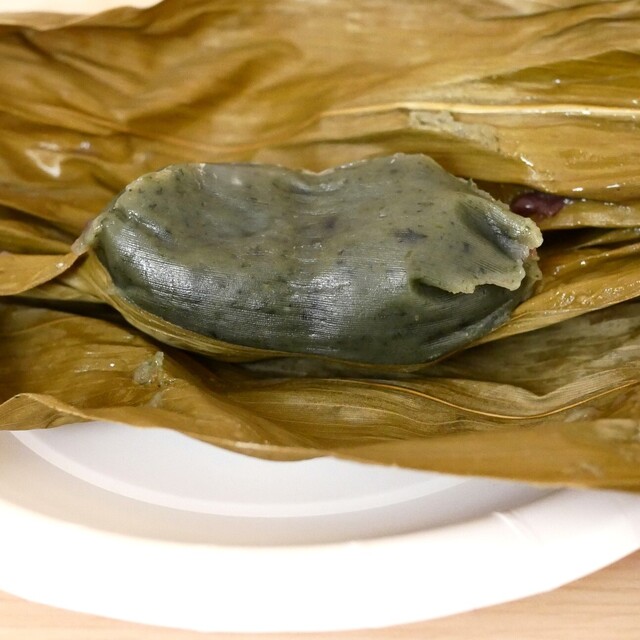
Approaching a traditional mochi shop in Niigata changes the pace of eating. The city’s serious dining reputation often points visitors toward sushi counters and kappo rooms, but its rice culture is just as legible in wagashi: steamed, pounded, wrapped, portioned, and bought for the train, the family table, or a seasonal observance. Sasagawa Mochiya belongs to that older register. The shop’s importance is not the theatre of a tasting menu; it is the persistence of a regional sweet that carries Niigata’s rice identity into everyday life.
Niigata has an unusually clear food grammar. Rice is not a side issue here, and the prefecture’s connection to snowmelt, grain quality, sake brewing, and preserved local foods gives even modest purchases a larger frame. Sasa dango, the bamboo-leaf rice dumpling associated with the region, sits at the center of that frame. It is portable, giftable, and tied to domestic memory, which makes it different from the formal wagashi culture of Kyoto or the department-store confectionery counters of Tokyo. Here, the point is regional continuity rather than display.
Sasa dango gives Niigata's rice culture a portable form
The useful comparison in Niigata is not only between restaurants, but between different expressions of the same agricultural base. A counter such as Chiyo Zushi or higher-spend dining at Amaranthus turns local seasonality into a seated meal; Burger Stand Tender reflects the city’s casual modern appetite; Echigo Ichie Juro and French Teppan Seikou An occupy other parts of the urban dining range. Wagashi works differently. It compresses place into a hand-carried purchase, and the price tier keeps the experience close to daily life rather than occasion dining.
That matters because sasa dango is not merely a sweet category pasted onto a tourist itinerary. Bamboo leaves, rice dough, and bean filling form a preservation logic as much as a flavor profile, and Niigata’s version has long functioned as a regional calling card. Sasagawa Mochiya’s history gives the shop unusual weight in that story: it was founded in 1883, and its fourth generation is associated with improving preservation for the 1964 Niigata National Sports Festival, a public moment that helped push the sweet beyond local consumption into national souvenir culture. The detail explains why a small purchase can carry more cultural information than a longer meal.
The shop’s 2023 selection for Tabelog 100 Japanese traditional sweets / Japanese sweets cafe EAST places it within a broader eastern Japan wagashi conversation rather than simply the local souvenir circuit. Tabelog’s recognition is not the same kind of signal as a Michelin star, but for traditional sweets it is a useful marker: it identifies shops with sustained public attention in a category where craft is often measured through repetition, freshness, and local trust rather than chef-led spectacle.
A sweets counter, not a restaurant performance
The experience is closer to buying from a specialist maker than dining at a restaurant. That distinction should shape expectations. There is no need to read the shop through the language of tasting menus, wine pairings, or formal service. The draw is the range of traditional sweets: sasa dango, manju, mochi, sekihan, kagami mochi, kiri mochi, issho mochi, and summer kakigori are listed among the offerings. Those categories map neatly onto Japanese food rituals, from celebratory rice dishes to New Year forms and children’s milestones.
For travelers, this is also a useful corrective to the way regional Japan is often consumed in a single expensive dinner. Niigata’s premium end can be substantial: Sushi Nakahisa Hoshino sits in a far higher spending bracket, while Sushi Yasu and Niigata Honcho Suzuki Sengyo occupy more moderate seafood lanes. A wagashi stop asks for a different kind of attention. It rewards curiosity about ingredients, calendar, gifting customs, and the way a city feeds itself outside reservation culture.
There is an editorial case for pairing the shop with a wider Niigata day rather than treating it as a standalone pilgrimage. The city’s food map stretches from rice sweets to sushi, sake, izakaya cooking, and contemporary formats. Readers building a fuller itinerary can use Our full Niigata restaurants guide as the dining spine, then widen the trip with Our full Niigata hotels guide, Our full Niigata bars guide, Our full Niigata wineries guide, and Our full Niigata experiences guide. Within that local circuit, nearby editorial reference points include Amaranthus, Burger Stand Tender, Chiyo Zushi, Echigo Ichie Juro, and French Teppan Seikou An.
How to read this stop in a Japan itinerary
Across Japan, specialist shops often explain a city more precisely than grand dining rooms. A mochiya in Niigata, an onigiri counter in California’s Japanese-American orbit, a curry specialist in Sapporo, or a sake bar abroad each shows how rice culture travels and changes. For cross-city context, compare the everyday format logic with Onigiri Time in Pasadena, the sake-facing lens at Jōdo Saké Bar in Los Angeles, or the single-category focus of [Curry Senmon Ten] Maruyama Kyoju. in Sapporo. The lesson is the same: narrow formats can reveal more about food culture than broad menus.
That focus also separates Sasagawa Mochiya from destination restaurants where the chef, room, and pacing dominate the experience. In Niigata, this is a purchase-led stop with cultural depth, useful for travelers who want the city’s rice identity in a form that locals recognize. It belongs beside the meal plan, not beneath it.
For a wider Japan dining map, the contrast stretches from regional specialists to urban formats such as -Grilled beef Sukiyaki- KAMAKURA TANUKIAN 鎌倉 たぬき庵 in Kamakura. 鮪と炭火焼き うお炭 秋葉原店 in Tokyo.cafe in Osaka.know in Kumamoto, and (Shoku) Vietnam in Kawasaki. Against that broader field, Niigata’s mochi tradition feels especially grounded: small in format, specific in origin, and unusually direct in what it says about the city.
Cost Snapshot
Comparable venues by cuisine and price in the same metro.
| Venue | Cuisine | Price | Notes |
|---|---|---|---|
| Sasagawa MochiyaThis venue — the venue you are viewing | Not listed | $ | Not listed |
| Goro Bandai ten | Not listed | $$ | Bandai / Chuo Ward, Niigata seafood izakaya |
| 兄弟寿し | 古町, 新潟前寿司 Omakase | $$$ | Not listed |
| Shukouya Ikkou | Not listed | $$$ | Chuo Ward, Niigata City, Niigata izakaya & sake bar |
| Goro Furumachi ten | Furumachi, Niigata seafood izakaya | $$ | Not listed |
| Sushi Nakahisa Hoshino | Niigata Furumachi, Edomae Sushi | $$$ | Not listed |
Recognition history
Dated appearances from independent guides and award organizations, with the underlying list record or original source where available.
Tabelog 100 #63 · No. 63
Tabelog · Tabelog 100 - Japanese traditional sweets / Japanese sweets cafe - EAST - 2023
Continue exploring
More in Niigata

At a Glance
- Classic
- Cozy
- Casual Hangout
- Family
- Solo
- Standalone
- Historic Building
- Local Sourcing
Current opening hours
- Monday
- 8 AM–5 PM
- Tuesday
- Closed
- Wednesday
- Closed
- Thursday
- 8 AM–5 PM
- Friday
- 8 AM–5 PM
- Saturday
- 8 AM–5 PM
- Sunday
- 8 AM–5 PM
Hours can change for holidays and private events. Last verified .
Old-school and traditional, with a heritage-shop feel centered on handmade wagashi rather than a dining-room experience.