Santa Maria
Santa Maria on Upper Street sits in Islington's competitive dining corridor, where neighbourhood restaurants increasingly operate with the ambition of destination addresses. The address places it inside a stretch of north London dining that rewards closer attention, particularly for those tracking how wine curation and kitchen craft interact at the mid-to-upper tier of the city's non-Michelin circuit.
Pearl is the En Primeur Club membership app — saves, bookings, and concierge access live there. Same editors, same standards.
- Address
- 189 Upper St, London N1 1RQ, United Kingdom
- Phone
- +44 20 7288 7400
- Website
- santamariapizzeria.com
- Directions
- Get directions
 Saves & bookings on Pearl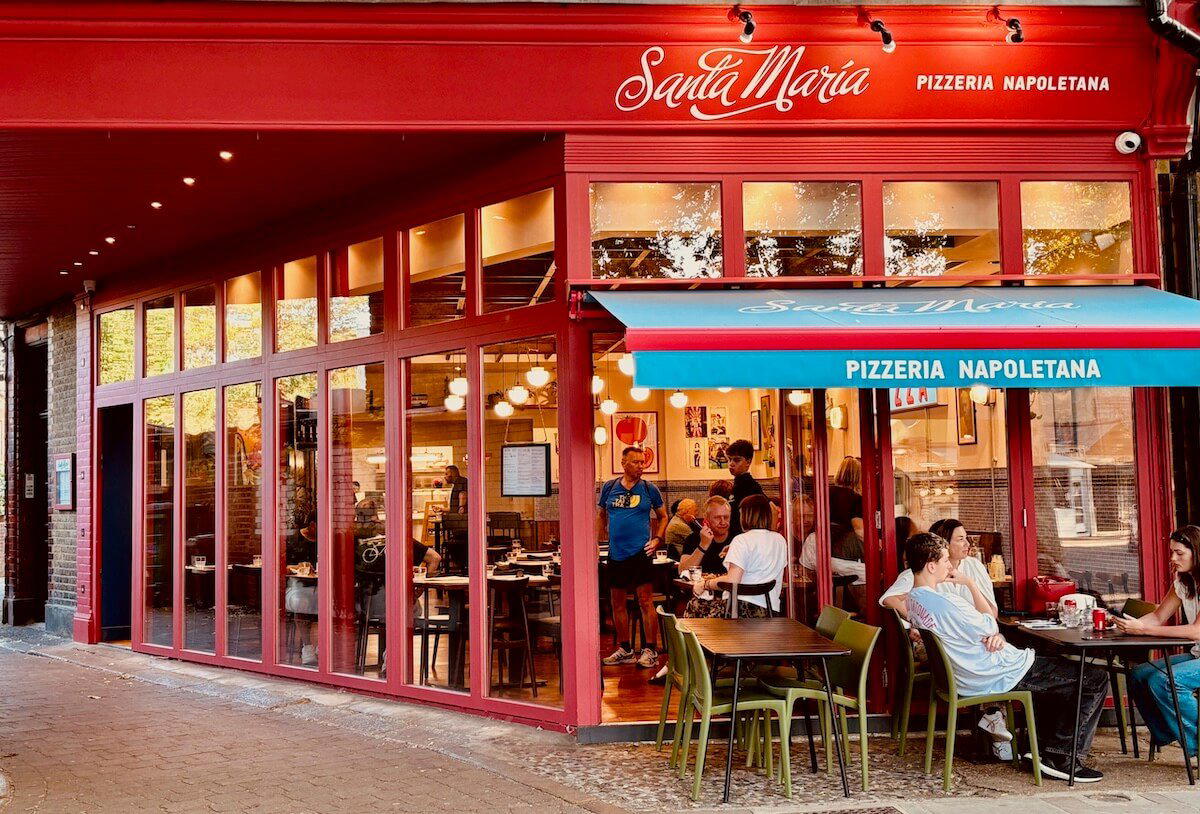
Upper Street and the North London Dining Shift
Islington's Upper Street has spent the better part of two decades oscillating between neighbourhood utility and genuine dining destination. The stretch running north from Angel tube carries a density of covers unusual for a non-West End postcode, and the better addresses there now compete less with each other than with the broader London dining circuit. Santa Maria, at 189 Upper St, is an authentic Neapolitan pizza restaurant in London.
Below that tier, a smaller cohort of neighbourhood rooms has moved toward serious wine lists and more considered kitchen output without adopting the full apparatus of formal fine dining. Santa Maria's Upper Street location places it in that second cohort by geography if not by confirmed category.
Wine as the Lens: Curation Over Volume
In the current London dining conversation, the wine list has become one of the more reliable indicators of a restaurant's actual ambitions. The Michelin circuit represented by Sketch's Lecture Room and Library or The Ledbury operates with deep cellars, aged stock, and in-house sommelier teams whose expertise matches the kitchen's. A different and more interesting question concerns how wine is curated at addresses without that institutional infrastructure.
The shift London has seen over the past decade is from list-as-status-symbol toward list-as-editorial-position. A well-curated short list, built around a specific region, producer philosophy, or drinking style, often says more about a restaurant's point of view than three hundred bins assembled for range. Islington, as a neighbourhood, has historically skewed toward the former model, long lists reflecting broad commercial appetite. The addresses that have moved the needle there tend to be the ones that have made a deliberate choice about what they are serving and why.
For restaurants at Santa Maria's address tier, the wine programme functions as the sharpest signal available to a first-time visitor trying to calibrate expectations before arriving. Where the kitchen ambitions are not immediately legible from a category or award, the list's depth, its producer selection, and the evident knowledge behind it do that communicative work instead.
Placing Santa Maria in the Wider British Context
London is one part of a broader British fine dining picture that includes rooms well outside the M25. The UK's most discussed kitchens include The Fat Duck in Bray, L'Enclume in Cartmel, Moor Hall in Aughton, Gidleigh Park in Chagford, Hand and Flowers in Marlow, and Le Manoir aux Quat' Saisons in Great Milton. Each of those has a clearly defined category, award history, or chef identity that makes their peer positioning legible at a glance.
Within London itself, the conversation around Dinner by Heston Blumenthal and its peers concerns a specific kind of high-concept British cooking anchored in technical research. The restaurant's Upper Street address puts it at some remove from that discourse, which is not a liability, neighbourhood rooms that operate with genuine seriousness often deliver the more considered experience precisely because they are not performing for a Michelin inspector on every cover.
The international frame also has relevance. Visitors familiar with the focused technical ambition of Le Bernardin in New York or the precision-led tasting format of Atomix will bring expectations calibrated to a different system. London's non-Michelin upper tier, of which Islington's better addresses are a part, operates with different signals and rewards a different kind of attention.
What to Expect at 189 Upper Street
The address itself is unambiguous: N1 1RQ puts the restaurant in the middle section of Upper Street, a ten-minute walk from Angel station and close to the density of restaurant options that makes the street both competitive and navigable on foot. For visitors building an Islington evening, the neighbourhood context matters, this is a part of London where pre- and post-dinner options are plentiful, and where the dining itself is often the anchor for a wider itinerary rather than an isolated destination event.
What the address and neighbourhood context do confirm is that the room operates in a part of London where the mid-to-upper neighbourhood tier has real competition, and where the addresses that sustain attention over time tend to be those with coherent wine and kitchen programmes rather than broad crowd-pleasing range.
Quick reference: the restaurant, 189 Upper St, London N1 1RQ. Open daily for lunch and dinner, with later service on Friday and Saturday. It is casual and walk-in friendly.
Awards and Standing
Comparable venues nearby, for context on price, style, and recognition.
| Venue | Cuisine | Price | Notes |
|---|---|---|---|
| Santa MariaThis venue — the venue you are viewing | Authentic Neapolitan Pizza | $$ | Not listed |
| Cotto | Authentic Neapolitan Italian | $$ | Waterloo |
| Rossella | Authentic Italian Trattoria | $$ | Dartmouth Park |
| Carmelina's | Italian | $$ | Markham |
| 64 Old Compton St | Authentic Italian Pasta | $$ | Soho |
| ADORA PIZZA | Neapolitan Pizza | $$ | Kensington Palace Gardens |
Continue exploring
More in London
Restaurants in London
Browse all →
Bars in London
Browse all →
Hotels in London
Browse all →



At a Glance
- Lively
- Rustic
- Casual
- Casual Hangout
- Group Dining
- Family
- Open Kitchen
- Standalone
- Local Sourcing
Current opening hours
- Monday
- 12–10 PM
- Tuesday
- 12–10 PM
- Wednesday
- 12–10 PM
- Thursday
- 12–10 PM
- Friday
- 12–10:30 PM
- Saturday
- 12–10:30 PM
- Sunday
- 12–10 PM
Hours can change for holidays and private events. Last verified .
Lively, bustling Italian atmosphere with a small intimate space; recently renovated with Maradona memorabilia; high turnover creates energetic but sometimes rushed dining experience.