Salvadoreno
Our verdict
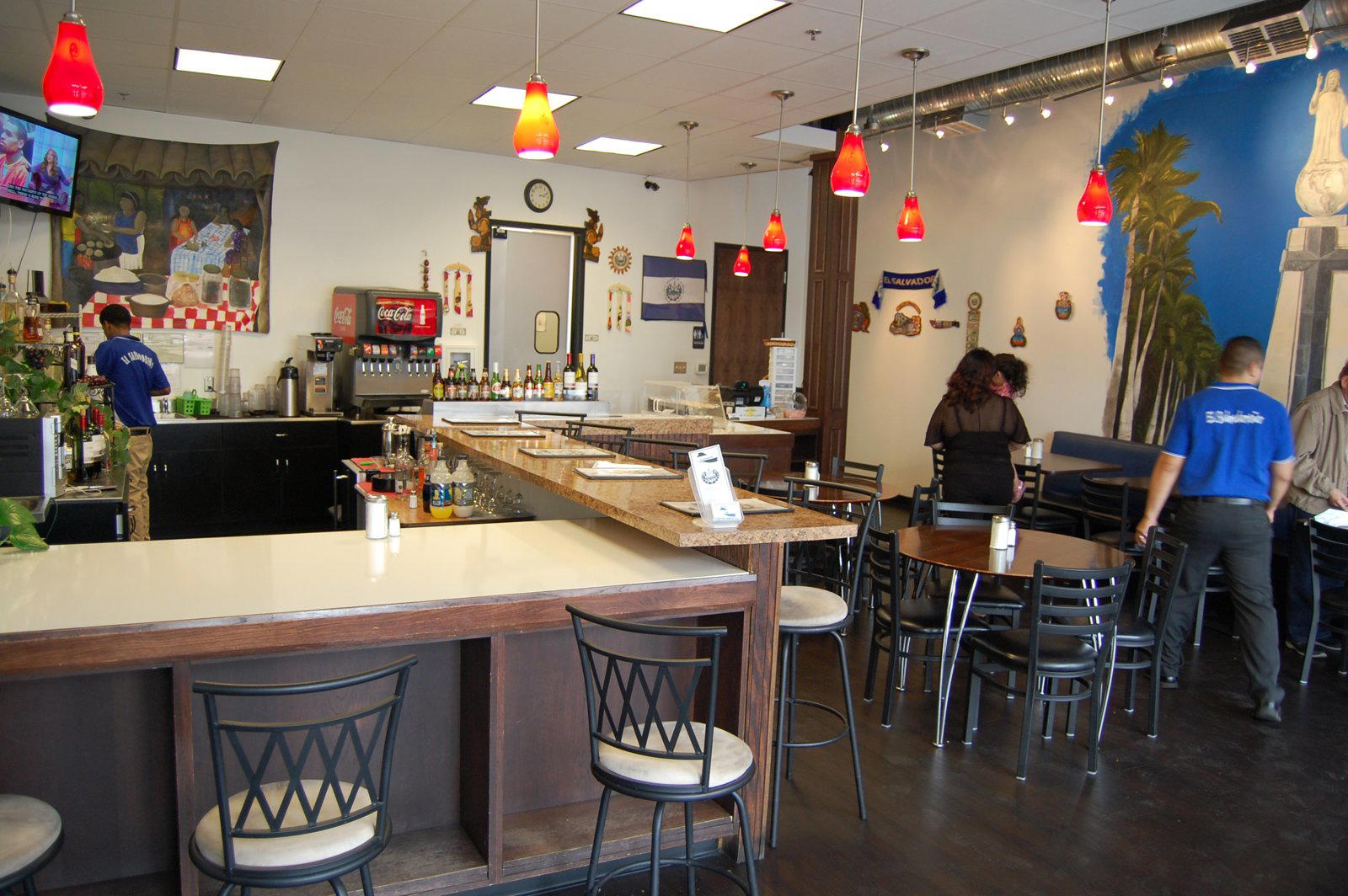
Salvadoreno sits at 720 N Main St in downtown Las Vegas, anchoring a stretch of the city where immigrant dining traditions hold more authority than resort-strip spectacle. The restaurant draws from El Salvador's home-cooking canon, operating in a part of the city where price points stay grounded and the room rewards regulars over tourists. For Las Vegas diners willing to cross north of the casino corridor, it represents a distinct counterpoint to the Strip's production-scale hospitality.

Pearl is the En Primeur Club membership app — saves, bookings, and concierge access live there. Same editors, same standards.
North of the Strip, Where the City Actually Eats
Downtown Las Vegas north of Fremont Street operates on different economics than the resort corridor. The addresses along N Main St are not positioned to capture convention traffic or hotel guests on expense accounts. The restaurants here earn their audience through repeat neighborhood custom, word-of-mouth from the city's working Latino communities, and the kind of consistency that no marketing budget replaces. Salvadoreno, at 720 N Main St, belongs to that fabric. It is not a concept restaurant or a chef-driven showcase. It is a place that exists because a community needed it to.
That distinction matters in a city where dining conversation defaults to the Strip. Las Vegas has world-recognized fine-dining operations — from tasting-menu formats comparable to Alinea in Chicago or The French Laundry in Napa to precision seafood programs that sit alongside Le Bernardin in New York City in critical conversations. But those venues serve a visitor economy. Salvadoreno serves Las Vegas residents, which gives it a different kind of credibility entirely.
Salvadoran Cooking in Context
El Salvador's culinary tradition is among the most internally consistent in Central America. Unlike Mexican regional cooking, which varies dramatically between states, Salvadoran cuisine centers on a relatively focused set of preparations: pupusas (thick corn or rice-flour discs filled with cheese, beans, chicharrón, or loroco), curtido (a lightly fermented cabbage relish), tamales wrapped in banana leaf, and slow-cooked meat dishes that draw on both indigenous and Spanish colonial technique. The flavors are direct rather than layered with dried-chile complexity. The cooking rewards restraint and repetition over invention.
In Las Vegas, Salvadoran restaurants serve a substantial Central American immigrant population concentrated in the north and northwest of the city. This is not a cuisine that has been reinterpreted for a fine-dining audience in the way that, say, contemporary Mexican cooking has been absorbed into tasting-menu formats at venues like Providence in Los Angeles or event-driven experiential restaurants like Lazy Bear in San Francisco. Salvadoran cooking in Las Vegas remains largely in its community-restaurant form, which is precisely why it retains authority.
The Room and the Dynamic
Community-anchored restaurants in the N Main St corridor tend to run lean on front-of-house formality and invest their energy in kitchen output and regulars' relationships. The team dynamic at venues like Salvadoreno operates differently from the choreographed service models at Strip properties. There is no sommelier program, no multi-course sequencing managed by a floor captain. Instead, the cohesion between kitchen and front-of-house is built through familiarity: with the menu, with the neighborhood clientele, with the rhythms of a room that does not turn over on a two-hour reservation window.
This is worth understanding before you arrive. Las Vegas has trained a generation of diners to expect production-scale hospitality, the kind of coordinated service you find at Craftsteak or the theatrical dining formats that dominate resort properties. Salvadoreno operates on an entirely different register. The value here is in the directness of the exchange between kitchen and table, not in elaborate ceremony around it.
For comparison, the downtown Las Vegas independent dining scene includes a range of approaches: 108 Eats, 18bin, and A Different Beast each represent different points on the independent dining spectrum. Salvadoreno sits apart from all of them by virtue of its community-restaurant identity rather than a chef-driven or concept-led one. 777 Korean Restaurant offers a closer structural parallel: an ethnically specific, community-rooted operation that earns its audience through consistency rather than critical positioning.
What Draws the Repeat Customer
The pupusa is the product that defines a Salvadoran restaurant's reputation within its community. Getting the masa texture right (neither too dense nor too thin), maintaining the right char on the griddle, and balancing the filling-to-dough ratio are the variables that regulars track across visits. Curtido quality — how well-fermented, how well-seasoned, is the secondary signal. These are not complex dishes in the culinary-technique sense, but they are exacting in execution, and a restaurant that does them consistently earns loyalty that is difficult to dislodge.
For Las Vegas diners accustomed to evaluating restaurants through award frameworks, the kind of credentials that matter at venues like Addison in San Diego, Atomix in New York City, or Blue Hill at Stone Barns in Tarrytown, Salvadoreno offers a different evaluative framework. The credibility signal here is community tenure and neighborhood loyalty, not Michelin recognition or 50 Best placement. That is not a consolation; it is a different kind of authority.
See our full Las Vegas restaurants guide for the broader range of dining options across the city, including Strip-side operations and the downtown independent scene.
Planning Your Visit
| Factor | Salvadoreno | Strip Fine Dining (e.g. Craftsteak) | Downtown Independents (e.g. 18bin) |
|---|---|---|---|
| Location | 720 N Main St (north downtown) | Resort corridor | Arts District / Fremont area |
| Price tier | Budget-accessible (data unconfirmed) | High / expense-account | Mid-range |
| Booking | Walk-in likely (data unconfirmed) | Advance reservation required | Varies |
| Audience | Local / community regulars | Visitors / conventioneers | Mixed local and visitor |
| Service style | Informal, direct | Full-service, choreographed | Casual to semi-formal |
We recommend verifying directly before visiting. The address at 720 N Main St places it north of the main downtown cluster, which is worth factoring into transport planning, particularly if arriving from the Strip without a vehicle.
Frequently asked questions
Does Salvadoreno work for a family meal?
Community-anchored Salvadoran restaurants in cities like Las Vegas are generally well-suited to family dining. The format is informal, the food familiar for diners with Central American backgrounds, and the price points at restaurants in this category tend to stay accessible. If you are traveling with children or a mixed-age group and are based in the downtown Las Vegas area, this type of restaurant is a more practical option than the production-scale dining formats on the Strip.
Is Salvadoreno better for a quiet night or a lively one?
The N Main St corridor north of downtown does not generate the ambient energy of the Fremont Street Experience or the Strip's resort properties. Community restaurants in this part of Las Vegas tend to run at a moderate volume, busier during peak local dining hours and quieter midweek. If the question is between Salvadoreno and a high-energy Strip venue like a resort brasserie, the distinction is clear: this is a neighborhood room, not a scene. For a lively night tied to Las Vegas's entertainment infrastructure, look elsewhere. For a grounded meal with genuine local character, the calculus shifts.
What dish is Salvadoreno famous for?
Salvadoran cuisine is structured around the pupusa as its central preparation, and any Salvadoran restaurant's reputation within its community rises or falls on how well it executes that dish. While we do not have confirmed menu data for Salvadoreno specifically, the pupusa with curtido and salsa roja is the standard against which Salvadoran restaurants are measured by their regulars. Secondary dishes in the canon include tamales de elote, sopa de res, and yuca frita. These are the categories to watch when forming a view of the kitchen's consistency.
How does Salvadoreno fit into Las Vegas's broader Central American dining scene?
Las Vegas has a significant Central American immigrant population, concentrated largely outside the resort corridor, and Salvadoran restaurants in the city tend to cluster in the north and northwest districts. Within that context, Salvadoreno's location on N Main St places it in an area with genuine community density rather than in a dining-destination zone. For diners interested in exploring that layer of the city alongside higher-profile operations covered in guides like Emeril's in New Orleans or The Inn at Little Washington, Salvadoreno represents the kind of ground-level dining that most curated Las Vegas guides do not reach. Confirming hours before visiting is advisable given the limited data currently available.
Peers You’d Cross-Shop
Comparable venues nearby, for context on price, style, and recognition.
| Venue | Cuisine | Price | Awards | Notes |
|---|---|---|---|---|
| SalvadorenoThis venue — the venue you are viewing | Salvadoran | $10–20 | Not listed | Not listed |
| VegeNation | Plant-Based Vegan Comfort Food | Not listed | Not listed | Las Vegas Boulevard Overlay District |
| El Jefe's Mexican street food | San Diego-Style Mexican Street Tacos | Not listed | Not listed | Sante Fe Haciendas |
| BBQ Mexicana | BBQ Mexican Fusion | Not listed | Not listed | Rhodes Ranch |
| With Love, Always | Smash Burgers | $10–20 | Star Wine List | Centennial Hills |
| Shanghai Taste | Authentic Shanghainese Dumplings | $20–30 | Not listed | The Asian District |
Continue exploring
More in Las Vegas
Restaurants in Las Vegas
All restaurants in Las Vegas →
Bars in Las Vegas
All bars in Las Vegas →
Details
- Cozy
- Family
- Casual Hangout
- Standalone
- A La Carte
- Vegetarian Friendly
Current opening hours
- Monday
- Closed
- Tuesday
- 10 AM–5:30 PM
- Wednesday
- 10 AM–5:30 PM
- Thursday
- 10 AM–5:30 PM
- Friday
- 10 AM–5:30 PM
- Saturday
- 10 AM–5:30 PM
- Sunday
- 10 AM–5:30 PM
Hours can change for holidays and private events. Last verified .
Casual, family-friendly with comfortable, unpretentious atmosphere.