Shanghai Taste
Our verdict
On West Spring Mountain Road, Las Vegas's most concentrated strip of Chinese regional dining, Shanghai Taste draws a crowd that knows the difference between Shanghainese and Cantonese cooking. The kitchen focuses on the braised, the delicate, and the sweet-savory register that defines Shanghai's culinary tradition, placing it in a different tier from the city's broader Chinese dining scene.

Pearl is the En Primeur Club membership app, where members save venues, book tables and use the concierge.
The menu
What to order
- Xiao Long Bao
- Sheng Jian Bao
- Cold Bean Curd Noodles
West Spring Mountain Road and the Case for Regional Chinese Dining in Las Vegas
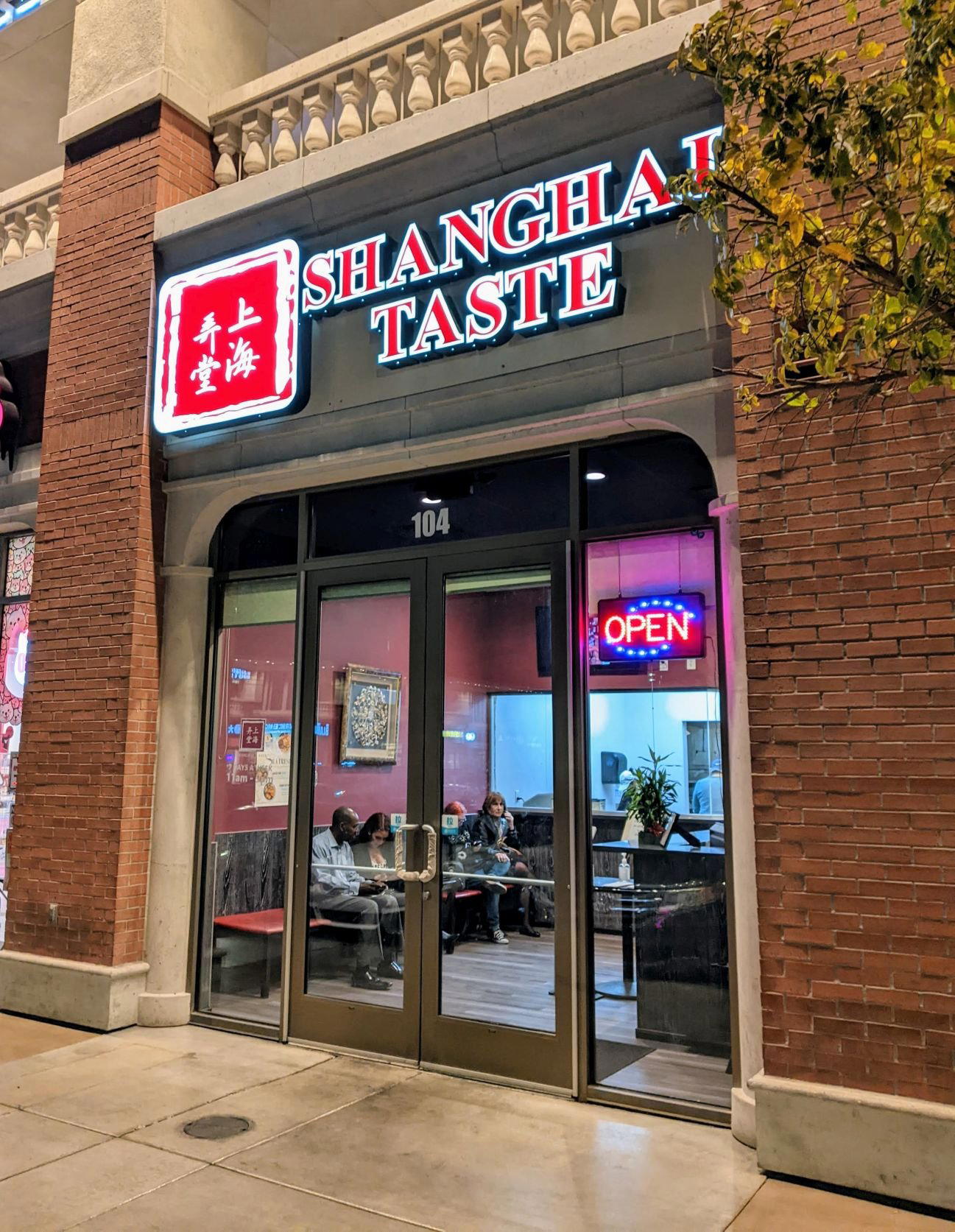
The stretch of West Spring Mountain Road running through the 89102 zip code functions as one of the most authentic corridors of Chinese regional cuisine in the American Southwest. This is not Chinatown in the tourist-district sense. The signage is often bilingual or Chinese-only, the parking lots fill early with local families rather than conventioneers, and the menus reward readers who know what they are looking at. Shanghai Taste sits at 4266 W Spring Mountain Rd, inside a strip-mall unit that, like most of its neighbors on this block, makes zero concessions to curb appeal. That is, in context, a reliable signal: the kitchen's energy goes somewhere other than the facade.
This part of Las Vegas operates as a genuine neighborhood dining zone rather than an entertainment product. Compare that to the high-production Chinese concepts on the Strip, where the room design often carries more investment than the wok. The West Spring Mountain corridor, by contrast, has built its reputation on food credibility maintained over years of repeat local business. Venues here compete for a different customer: one who will return weekly, who will order off-menu in the appropriate dialect, and who will notice immediately if a dish drifts from its regional template. Shanghai Taste occupies that environment, and its positioning within it matters for understanding what the kitchen is doing and for whom. For more on how this fits into the wider city picture, see our full Las Vegas restaurants guide.
Shanghainese Cooking: What the Tradition Actually Involves
Shanghai cuisine belongs to the broader Huaiyang tradition, one of the eight classical schools of Chinese cooking, characterized by precise knife work, a pronounced preference for braising and red-cooking, and a sweet-savory balance that separates it clearly from the heat of Sichuan or the seafood-forward lightness of Cantonese kitchens. The foundational technique is hong shao, or red-braising, in which proteins and vegetables are cooked slowly in soy sauce, Shaoxing rice wine, sugar, and aromatics until the liquid reduces to a lacquered, deeply flavored glaze. The results are richer and more yielding than most of what passes for Chinese food in mainstream American dining.
The cuisine also has a specific relationship with texture. Shanghainese cooks place significant weight on what the Chinese term nen, a quality of tenderness in protein that stops precisely before softness becomes collapse. Getting this right in a high-volume restaurant environment is a technical discipline, not a shortcut. It requires timing and attention that distinguish credible regional kitchens from generalist operations. Xiaolongbao, the soup dumplings now familiar to diners well beyond Shanghai's borders, are perhaps the most demanding example: a thin dough wrapper must hold a defined quantity of seasoned broth alongside the filling, survive steaming without rupturing, and arrive at the table at the precise moment the customer is ready to eat. The margin for error is narrow.
For readers whose reference points for serious Chinese cooking run more toward Cantonese fine dining, it is worth noting that the Shanghainese register is different in almost every dimension: richer in color, sweeter in base flavor, more reliant on braising than wok technique, and more focused on pork and freshwater ingredients than on seafood and poultry. It occupies a distinct place in the regional taxonomy, closer in some ways to the cooking of Jiangsu and Zhejiang provinces than to the Guangdong tradition that dominates Chinese-American dining history.
The West Spring Mountain Context: Where Shanghai Taste Sits Among Its Peers
The strip along West Spring Mountain has diversified considerably over the past decade. The earlier concentration of Cantonese restaurants has been joined by Shanghainese, Sichuan, Hunan, Taiwanese, and Hong Kong-style operations, creating a corridor where a diner willing to move between addresses can eat across a meaningful range of regional Chinese traditions in a single evening. This is not a pattern that replicates in many American cities outside New York, San Francisco, and Los Angeles.
Within this environment, restaurants occupy distinct regional niches. 108 Eats and 18bin represent different points on the corridor's dining spectrum, while 777 Korean Restaurant reflects the broader pan-Asian character of the neighborhood. A Different Beast draws a separate crowd further along the strip.
The contrast with Strip-adjacent Chinese dining is instructive. The high-production venues inside major casino properties, like the polished international rooms that surround a place such as Craftsteak on the American steakhouse side of the city's restaurant economy, are built for transactional hospitality at scale. West Spring Mountain's model is the opposite: lower overhead, higher specificity, and a customer base that self-selects based on regional knowledge. Neither model is inherently superior, but they serve entirely different purposes, and understanding the distinction prevents the wrong expectations on both sides.
How Shanghai Taste Compares to Chinese Dining at Other Reference Points
For diners whose benchmark for serious regional Chinese cooking is set by cities with deeper Chinese-American culinary histories, Shanghai Taste represents Las Vegas's access point to a tradition that has been refined over generations elsewhere. The Shanghainese cooking available in, say, the San Gabriel Valley outside Los Angeles or in Manhattan's Flushing neighborhood benefits from larger diaspora communities and longer institutional histories. Las Vegas arrived later to this regional specificity, and West Spring Mountain has had to build its critical mass of authentic regional operators more recently.
This is not a limitation unique to Chinese cuisine. The city's restaurant scene has matured unevenly: it has world-recognized fine dining at properties like those associated with Le Bernardin in New York City in terms of ambition tier, or the tasting-menu discipline of venues like Alinea in Chicago and The French Laundry in Napa, but its neighborhood dining infrastructure has developed along different timelines in different cuisines. For Chinese regional cooking, West Spring Mountain has compressed that development significantly, and Shanghai Taste is part of a cohort of restaurants that has accelerated the corridor's credibility.
Internationally, the benchmark for Chinese fine dining at the top of the market sits at places like 8 1/2 Otto e Mezzo Bombana in Hong Kong, where the production values and the ambition operate on a different scale entirely. Shanghai Taste makes no claim to that tier. Its reference point is the Shanghai neighborhood restaurant, a format built around daily regulars, reliable execution, and the kind of regional fidelity that a diaspora community uses as a proxy for home.
Planning Your Visit
Shanghai Taste is located at 4266 W Spring Mountain Rd, Suite 104A, Las Vegas, NV 89102, on a stretch of the corridor that is most active from late afternoon through late evening. The surrounding blocks include sufficient parking within the strip-mall lot. As a neighborhood restaurant serving a local clientele, walk-ins are the operating norm for this category, though arriving early in the evening is advisable during weekends when the corridor sees higher traffic from diners making a deliberate West Spring Mountain run. Reservations: Contact details are not currently listed publicly; visiting in person or checking current local directories is the most reliable approach. Dress: Casual, consistent with the neighborhood dining format. Budget: For the wider dining context across all categories in the city, the EP Club Las Vegas guide covers the full range from neighborhood operators to tasting-menu rooms.
Frequently asked questions
Where exactly is Shanghai Taste?
Shanghai Taste is located at 4266 W Spring Mountain Rd 104 A, Las Vegas, NV 89102, Las Vegas.
How does Shanghai Taste compare to other Chinese restaurants on West Spring Mountain Road in Las Vegas?
West Spring Mountain Road in the 89102 corridor has shifted considerably over the past decade, moving beyond its earlier Cantonese concentration to include operators specializing in Shanghainese, Sichuan, and other regional traditions. Shanghai Taste at Suite 104A represents the Huaiyang-rooted end of that spectrum, which distinguishes it from the numbing-spice focus of neighboring Sichuan spots. For diners specifically seeking the braised, wine-laced, and subtly sweet register of Shanghai cooking in Las Vegas, the Spring Mountain corridor is the practical place to look rather than the Strip.
What's the must-try dish at Shanghai Taste?
Shanghai Taste sits within the Huaiyang culinary tradition, which means the kitchen's strengths run toward braised preparations, precise knife work, and dishes built on depth of technique rather than heat. Shanghainese classics like red-braised pork and soup dumplings are the category anchors on Spring Mountain Road corridors of this type. Confirm current menu offerings directly with the restaurant, as dish availability shifts seasonally.
What's the best way to book Shanghai Taste?
Shanghai Taste is located at 4266 W Spring Mountain Rd, Suite 104A, Las Vegas, NV 89102, and walk-ins are common practice along this stretch of the corridor. For larger groups or weekend visits, calling ahead is the safer approach given the active dinner traffic the area draws from late afternoon onward. No online reservation platform is listed for this location.
What's the standout thing about Shanghai Taste?
The address places Shanghai Taste inside one of the few corridors in Las Vegas where regional Chinese cooking is taken seriously on its own terms, not filtered through a hotel banquet format or strip-facing tourist menu. West Spring Mountain Road in the 89102 zip code has accumulated enough Shanghainese, Sichuan, and Cantonese operators that the peer pressure to cook authentically is real. That competitive density is the most useful credential the location carries.
Do they accommodate allergies at Shanghai Taste?
Shanghainese cooking frequently involves soy, wheat-based wrappers, and shellfish as foundational ingredients, so guests with allergies to those categories should raise specific requests directly with the kitchen before ordering. Shanghai Taste is at 4266 W Spring Mountain Rd, Suite 104A, Las Vegas, and staff communication before the meal is the practical path for anyone with dietary restrictions. No formal allergy policy is published.
The Essentials
Comparable venues nearby, for context on price, style, and recognition.
| Venue | Cuisine | Price | Notes |
|---|---|---|---|
| Shanghai TasteThis venue (the venue you are viewing) | Authentic Shanghainese Dumplings | $20–30 | Not listed |
| Pearl Ocean | Chinese Dim Sum | Not listed | Northern Strip, Chinese Dim Sum |
| Ondori | Chinese & Japanese Fusion | $20–30 | Bracken, Chinese & Japanese Fusion |
| Yummy Rice | Hong Kong-Style Chinese Cafe | Not listed | Chinatown, Hong Kong-Style Chinese Cafe |
| Ellis Island Restaurant | American BBQ & Steakhouse | $20–30 | off-strip, American BBQ & Steakhouse |
| Jamms | American Breakfast & Lunch Cafe | $10–20 | Charleston, American Breakfast & Lunch Cafe |