Ristorante Casa Artusi
Our verdict
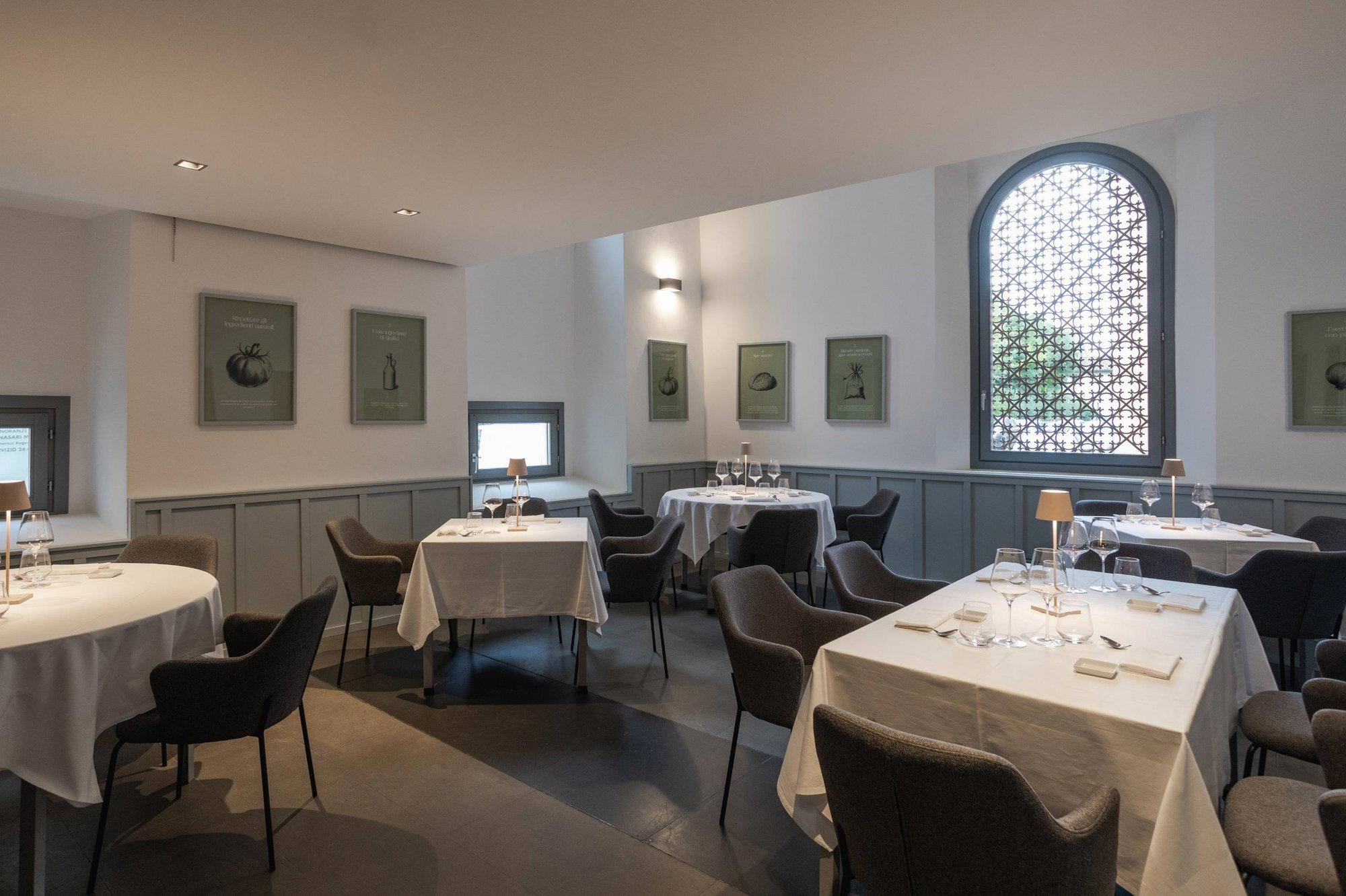
Ristorante Casa Artusi sits in Forlimpopoli, the birthplace of Pellegrino Artusi, and operates within the cultural complex dedicated to his foundational 1891 cookbook. The restaurant positions itself as a working expression of nineteenth-century Romagnola and broader Italian domestic cooking, making it one of the few dining rooms in the country where a specific culinary text functions as both menu source and institutional frame.

Pearl is the En Primeur Club membership app — saves, bookings, and concierge access live there. Same editors, same standards.
A Town Built Around a Cookbook
There are very few places in Italy where a single publication has shaped an entire town's identity. Forlimpopoli, a small comune in the Forlì-Cesena province of Emilia-Romagna, is one of them. This is the birthplace of Pellegrino Artusi, the merchant-turned-food writer whose 1891 volume La Scienza in Cucina e l'Arte di Mangiar Bene (Science in the Kitchen and the Art of Eating Well) effectively codified Italian bourgeois home cooking at a moment when the nation itself was barely two decades old. That book went through fifteen editions in Artusi's lifetime and remains in print today — a longer continuous run than almost any other Italian culinary text. Ristorante Casa Artusi exists inside that context, operating as the dining expression of the Casa Artusi cultural centre on Via Andrea Costa, the institution dedicated to preserving and transmitting what Artusi documented.
Understanding the restaurant means understanding what Artusi actually did. He was not a professional chef. He was a Romagnola gentleman who interviewed home cooks, tested their methods, and wrote for a literate, middle-class readership that was cooking at home rather than eating in grand restaurants. His recipes are rooted in the produce and techniques of Romagna and Tuscany, with a pragmatic domestic logic that high-end Michelin dining never adopted. The restaurant that bears his name operates from that same register: this is not a place chasing creative tasting-menu formats of the kind seen at Osteria Francescana in Modena or Reale in Castel di Sangro. It is something narrower in ambition and more specific in purpose.
The Ingredient Logic of Romagnola Tradition
Emilia-Romagna is one of the most ingredient-dense food regions in Europe. The Po Valley to the north produces some of Italy's most prized grains. The Apennine foothills that begin just south of Forlimpopoli have historically supplied game, chestnuts, and mushrooms. The Adriatic coast, less than an hour east, feeds the regional appetite for fish and brine-cured preparations. Artusi's cookbook drew on all of these, but the Romagnola thread — piadina, passatelli, garganelli, rabbit preparations, the whole grammar of egg-based pasta, runs through it most consistently.
What makes a restaurant operating in this tradition editorially interesting is precisely the sourcing question. Artusi's recipes were grounded in seasonal, local produce not as a philosophical position but as simple practicality: you cooked what was available and what your region grew. A dining room that takes that text seriously is implicitly committed to a similar sourcing discipline. The terroir of Forlì-Cesena, flatland wheat, hillside vines, the foraging culture of the Apennine margins, provides the ingredient vocabulary. Compare this to the €€€€ tier of Italian fine dining, where venues like Dal Pescatore in Runate or Quattro Passi in Marina del Cantone work with equally regional produce but through a contemporary fine-dining frame. Casa Artusi operates in a different register entirely, one where fidelity to a documented culinary tradition is the organising principle.
That positioning places it in a small category of Italian restaurants where a historical or scholarly function exists alongside the meal itself. The Casa Artusi centre houses a cooking school, a library, and event programming tied to Artusi's legacy. The restaurant is the gastronomic anchor of that complex. Visitors to Forlimpopoli who come specifically for the cultural dimension, and there is a meaningful cohort of food historians, culinary students, and serious home cooks who make this trip, find a dining room that functions as both a meal and an argument about what Italian cooking actually is when you strip away modernist technique and fine-dining theatrics.
Forlimpopoli on the Emilia-Romagna Circuit
Forlimpopoli sits between Forlì and Cesena on the Via Emilia, the ancient Roman road that still defines the spine of Emilia-Romagna. It is not a destination city in the way that Bologna or Rimini draws visitors independently. The town's principal draw is the Casa Artusi complex, and the restaurant is central to that draw. Practically speaking, it is reachable by train from Bologna in under an hour, or from the Adriatic coast towns in similar time. For travellers building a serious Emilia-Romagna food itinerary, it pairs logically with time in Modena, where the contemporary end of the regional spectrum plays out at the three-Michelin-star level, or with the coastal seafood tradition around Senigallia, where Uliassi represents a creative reworking of Adriatic produce at the opposite end of the ambition register.
The restaurant's address on Via Andrea Costa places it within the historic centre, walkable from the main piazza. Forlimpopoli rewards a slow morning of exploration before lunch, with the cultural centre itself worth time before sitting down to eat. Visitors planning around the cooking school or annual Artusi festival, held in late summer and drawing significant national attention from food scholars and cooking enthusiasts, should book well in advance, as both the programme and the dining room fill early during that period.
Where It Fits in the Broader Italian Dining Picture
Italy's premium restaurant tier has spent the last two decades building toward the international fine-dining model: tasting menus, creative technique, star recognition. The venues at that level, Enoteca Pinchiorri in Florence, La Pergola in Rome, Le Calandre in Rubano, share a certain ambition architecture regardless of their specific regional identity. Casa Artusi operates outside that architecture by design. Its reference point is a text, not a trend. That makes it genuinely useful to a different type of traveller: one who wants to understand what Romagnola cooking looked like before it was reformatted for modern fine dining, and who finds that documentation as compelling as innovation.
For those building a wider Italian itinerary that includes both ends of this spectrum, the contrast is instructive. A meal at Casa Artusi followed by a visit to Piazza Duomo in Alba or Villa Crespi in Orta San Giulio illustrates the full range of what Italian food culture holds, from scholarly reconstruction to high-wire contemporary expression. See our full Forlimpopoli restaurants guide for further context on what the town offers beyond the Casa Artusi complex.
Frequently asked questions
Is Ristorante Casa Artusi child-friendly?
Forlimpopoli is a small, quiet comune rather than a tourist-circuit town, and Casa Artusi sits within a cultural institution built around Pellegrino Artusi's cookbook legacy. That setting tends to suit families with older children who have an interest in food and Italian regional culture. check the venue's official channels to confirm seating arrangements ahead of a visit.
Is Ristorante Casa Artusi better for a quiet night or a lively one?
Given its position inside the Casa Artusi cultural complex in Forlimpopoli — a town of roughly 13,000 people on the Via Emilia — the atmosphere skews toward considered, unhurried dining rather than anything approaching a lively room. It draws food-focused visitors who come specifically for the Artusi connection, which sets the tone early. Expect conversation-level noise and deliberate pacing.
What is the connection between Ristorante Casa Artusi and Pellegrino Artusi's cookbook?
Ristorante Casa Artusi operates within the Casa Artusi cultural centre in Forlimpopoli, the birthplace of Pellegrino Artusi, whose 1891 text La Scienza in Cucina e l'Arte di Mangiar Bene is widely regarded as the foundational work of modern Italian home cooking. The restaurant functions as a living extension of that archive, placing Romagnola cuisine in direct conversation with the recipes and ingredient logic Artusi recorded over a century ago. For anyone tracking Emilia-Romagna's food heritage along the Via Emilia corridor, Forlimpopoli and this address are the primary reference point.
What should I order at Ristorante Casa Artusi?
The kitchen grounds itself in the Romagnola tradition that Pellegrino Artusi documented in La Scienza in Cucina e l'Arte di Mangiar Bene — the 1891 cookbook that effectively codified Italian bourgeois cooking. Emilia-Romagna's core ingredients, from hand-rolled pasta to local pork products, form the backbone of what appears on the table here. For specific current dishes, check directly with the restaurant, as menus follow seasonal produce logic.
What's the address for Ristorante Casa Artusi?
Ristorante Casa Artusi is located at Via Andrea Costa, 31, 47034 Forlimpopoli FC, Italy, Forlimpopoli.
How hard is it to get a table at Ristorante Casa Artusi?
Forlimpopoli draws a steady stream of visitors during the annual Festa Artusiana, typically held in late June, when demand for the restaurant rises sharply alongside the town's food festival programme. Outside that window, the restaurant operates in a small comune with limited walk-in foot traffic, so advance booking is advisable but rarely requires months of lead time. Contact details are best sourced directly through the Casa Artusi complex at Via Andrea Costa, 31.
At-a-Glance Comparison
Comparable venues nearby, for context on price, style, and recognition.
| Venue | Cuisine | Price | Notes |
|---|---|---|---|
| Ristorante Casa ArtusiThis venue — the venue you are viewing | Traditional Italian Home Cooking | $30–50 | Not listed |
| Trattoria la Famiglia | Contemporary Italian Trattoria | $50–100 | Correzzola |
| da Celeste Pellestrina | Traditional Venetian Seafood | $50–100 | Pellestrina |
| Val Pomaro | Veneto Regional Italian with Artisanal Pizza | $30–50 | Arquà Petrarca |
| Antica Trattoria Belletti | Traditional Bolognese / Emilian Trattoria | $30–50 | Montepastore |
| Fuorimodena Cucina Km 200 | Emilian Trattoria | $50–100 | Vicenza city center |
Continue exploring
More in Forlimpopoli
Restaurants in Forlimpopoli
All restaurants in Forlimpopoli →
Bars in Forlimpopoli
Browse all →
Hotels in Forlimpopoli
Browse all →

Ristorante Casa Artusi
The wine
- Wine program
- Curated wine list
- Extensive wine list
Details
- Classic
- Rustic
- Elegant
- Special Occasion
- Family
- Historic Building
- Extensive Wine List
- Local Sourcing
- A La Carte
- Vegetarian Friendly
- Vegan Options
- Gluten Free Options
Current opening hours
- Monday
- Closed
- Tuesday
- 12:30–3 PM, 7–11 PM
- Wednesday
- 12:30–3 PM, 7–11 PM
- Thursday
- 12:30–3 PM, 7–11 PM
- Friday
- 12:30–3 PM, 7–11:30 PM
- Saturday
- 12:30–3 PM, 7–11:30 PM
- Sunday
- 12:30–3 PM
Hours can change for holidays and private events. Last verified .
Warm and inviting atmosphere in a historic setting, focused on authentic Italian home cooking traditions.