Raymond's

Michelin Plate
Our verdict
Raymond's sits in Nottingham's Lace Market on Stoney Street, operating at the sharper end of the ££ bracket with a Michelin Plate in both 2024 and 2025. The format is counter seating, sharing plates, and a wine list weighted toward by-the-glass pours, a combination that has built. Fish crackling and a concise, seasonally inflected menu set the editorial tone.

Pearl is the En Primeur Club membership app, where members save venues, book tables and use the concierge.
The menu
What to order
- Fish crackling
- Pork chop
- Chicken schnitzel
The Lace Market's Approach to Modern British Sharing
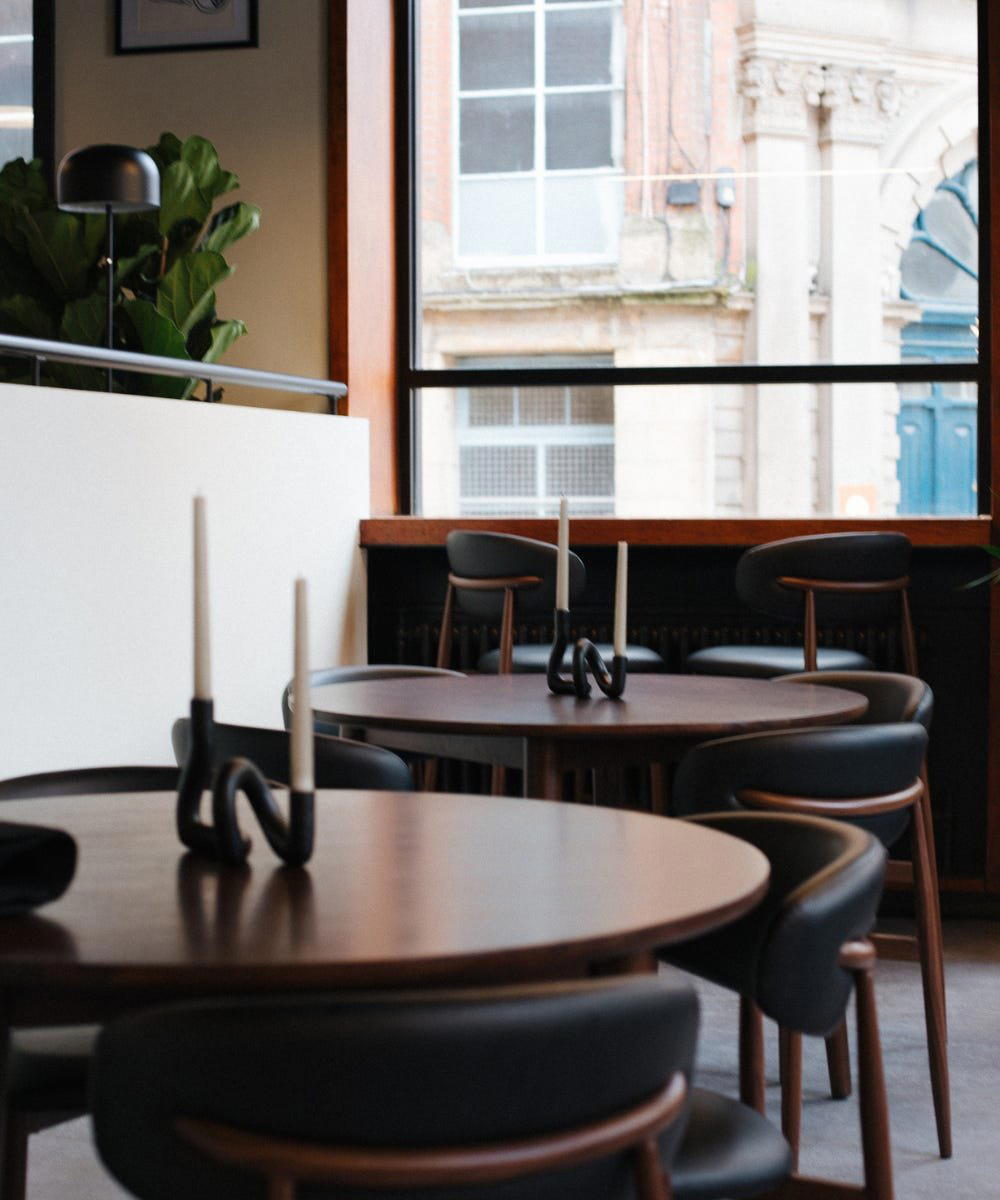
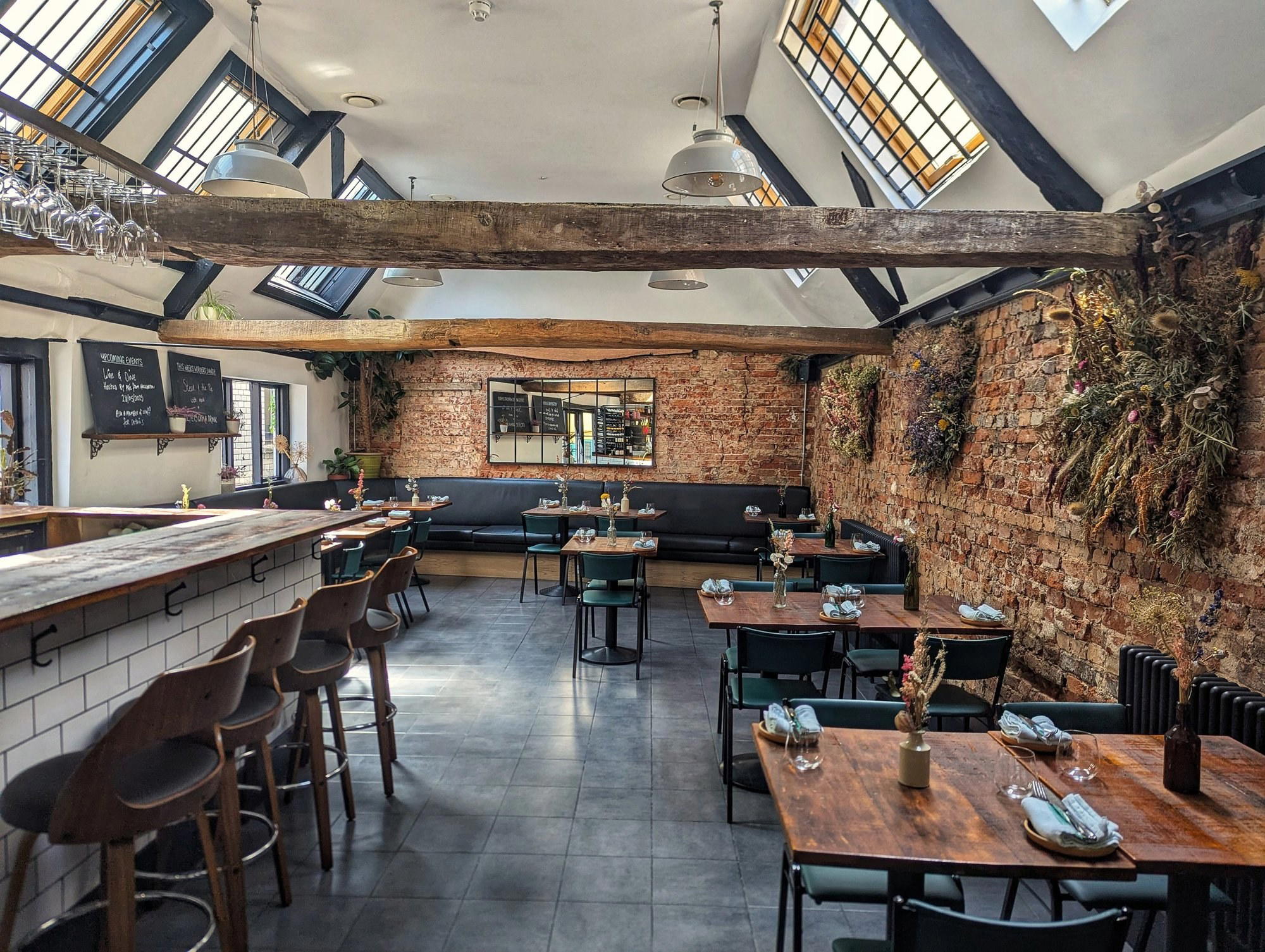
Nottingham's Lace Market has aged into one of the East Midlands' more credible dining addresses. The neighbourhood's Victorian warehouse bones, cast iron, exposed brick, narrow cobbled streets, provide the kind of atmosphere that no amount of interior design budget can manufacture, and restaurants have responded accordingly. The better rooms here earn their atmosphere from the architecture rather than from mood boards. Raymond's, on Stoney Street, follows that instinct: counter seating, moody lighting, and a stylishly restrained interior that lets the food and the room's natural character do most of the work.
The format belongs to a recognisable movement in British urban dining. Sharing plates replaced fixed courses in enough serious kitchens over the past decade that the format no longer signals novelty, it signals confidence in the kitchen's ability to pace a meal without the scaffold of a set menu. Counter seating, similarly, has migrated from Japanese omakase into Modern British contexts as a way of collapsing the distance between kitchen and guest. At Raymond's, both choices feel deliberate rather than trend-chasing.
Where Raymond's Sits in Nottingham's Dining Tier
Nottingham's restaurant scene has a clear upper bracket anchored by Restaurant Sat Bains and alchemilla, both operating at the ££££ level with tasting menus and the critical recognition to match. Below that tier, the city runs a competitive ££ bracket where format and identity matter as much as technique. Raymond's Michelin Plate in both 2024 and 2025 places it inside that bracket's more noticed cohort, alongside Kushi-Ya and Ibérico World Tapas, which share the ££ price point and a similar instinct for compact, produce-led menus. Harts represents a more formal expression of the same mid-range ambition. Raymond's differentiates through its counter format and a menu built for momentum rather than ceremony.
For context on what the Michelin Plate represents nationally: it appears alongside restaurants that inspectors consider worth visiting but that haven't yet been assessed for star candidacy. In a city where Sat Bains holds two stars, the Plate is an honest positioning signal. It tells you the kitchen is doing something inspectors noticed, not that it competes with the tasting-menu tier. Across the wider Modern British canon, the gap between a Plate restaurant and the country's star-holding rooms, CORE by Clare Smyth, The Ledbury, L'Enclume, Moor Hall, is significant, but it's not the point. Raymond's isn't priced or formatted to compete with The Fat Duck or Gidleigh Park. It's priced to be the room you return to mid-week.
The Menu's Logic, and Where Cheese Fits
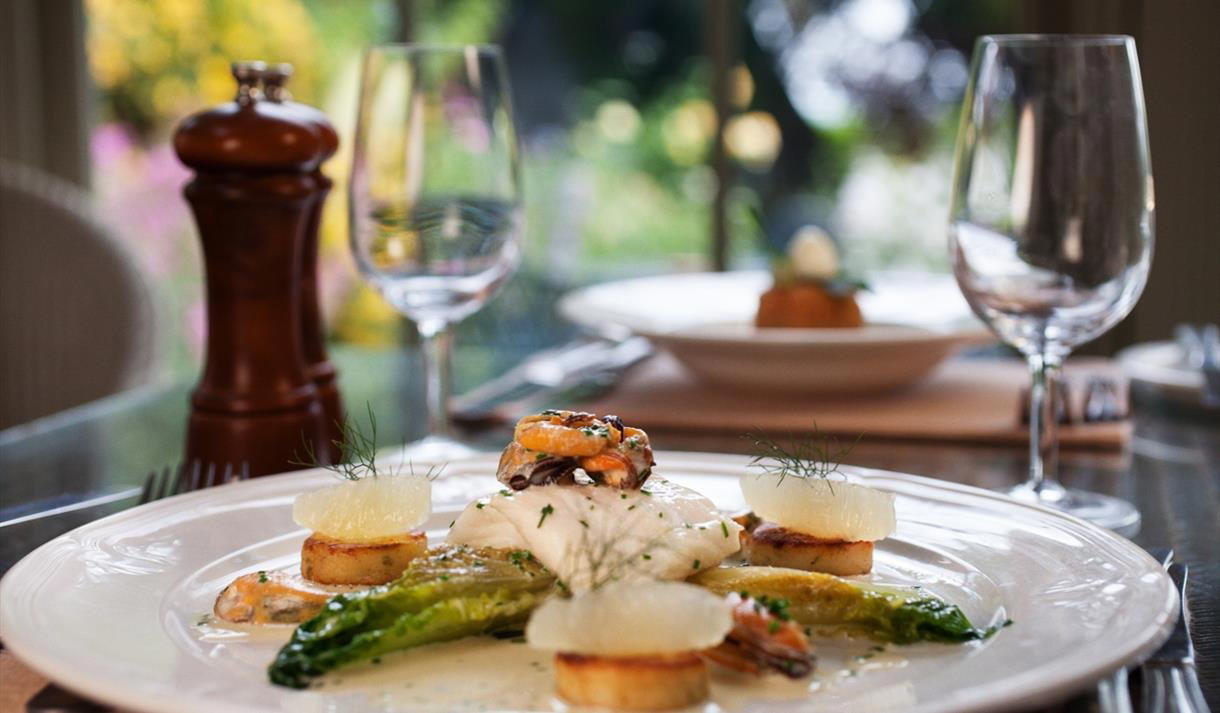
The Modern British sharing format at this level typically builds a menu around a few high-commitment snacks, a middle tier of plates designed for the table, and a closing sequence that rewards those who pace themselves. The fish crackling, singled out in inspector notes as an addictive opening snack that sets the tone for what follows, is a good signal of the kitchen's intent: technically simple, texturally decisive, and calibrated to prime the palate rather than overwhelm it.
Within this structure, the cheese course occupies a specific role that British kitchens have handled with increasing seriousness over the past decade. The UK's artisan cheese output has expanded considerably: Montgomery's Cheddar from Somerset, Colston Bassett Stilton from Nottinghamshire itself, Ogleshield, Berkswell, and a growing number of smaller regional producers have given kitchens a domestic selection that no longer requires a French cheese trolley to justify a cheese course. Colston Bassett is particularly relevant here given its geographic proximity, the dairy sits fewer than fifteen miles southeast of Nottingham, and its Stilton has been supplied to serious kitchens across the country for decades. A Lace Market kitchen working with Modern British produce and a menu built around satisfying, grounded dishes has logical reasons to lean into that kind of regional sourcing. The sharing format also suits cheese: a plate designed for the table, with good bread and a considered wine pairing, fits the rhythm of how Raymond's appears to have structured its offer. Hand and Flowers and The Ritz Restaurant represent opposite ends of the spectrum for how British cheese is handled formally, Raymond's sits somewhere more accessible, where the choice is about flavour rather than ceremony.
The Wine List as a Practical Signal
Wine lists at the ££ bracket tend to split between perfunctory house selections and genuinely considered shorter lists that reflect the kitchen's thinking. Raymond's falls into the latter category: inspector notes describe an interesting selection with a large choice by the glass, which at this price tier is a meaningful design decision. A broad by-the-glass offer reduces the commitment required per visit, supports the sharing-plate format where different plates call for different pours, and signals that the room understands how its guests actually drink. The combination of that wine approach and the counter seating format suggests a deliberate preference for flexibility over formality.
Planning Your Visit
Raymond's is at 8 Stoney Street, NG1 1LP, in the Lace Market, a neighbourhood that sits within easy walking distance of Nottingham city centre and the tram network. The address is close enough to the city's core that it works before or after other plans, but embedded enough in the Lace Market's grid to feel removed from the busier pedestrian streets. The ££ price bracket means the bill sits at a level where the experience can bear comparison with the city's more expensive options without requiring the same planning commitment. For a fuller picture of what else Nottingham offers, see our full Nottingham restaurants guide, alongside guides to hotels, bars, wineries, and experiences across the city.
What Regulars Order
What do regulars order at Raymond's?
The fish crackling is the most consistently cited starting point, inspector notes describe it as the dish that establishes the menu's register, and repeat visitors tend to treat it as a fixed opening rather than an optional snack. Beyond that, the sharing format means the table order tends to reflect what's current on the menu rather than a fixed set of signatures. The Michelin Plate recognition in both 2024 and 2025 suggests the kitchen has maintained a level of consistency that regulars can rely on, which in a sharing-plate format means confidence that whatever is ordered will be worth ordering. The wine list's by-the-glass breadth means regulars also tend to work through the list across visits rather than defaulting to a house pour.
Comparable Options
| Venue | Cuisine | Price | Awards | Notes |
|---|---|---|---|---|
| Raymond'sThis venue (the venue you are viewing) | Modern British Small Plates | Not listed | Michelin Plate | Not listed |
| Restaurant Sat Bains | Modern British Fine Dining | Not listed | 2 Michelin Stars · La Liste Top Restaurants | Modern British, Creative |
| alchemilla | Modern British Fine Dining | $100–150 | 1 Michelin Star · SquareMeal UK Top 100 Restaurants #27 | Modern European, Modern British |
| Kushi-Ya | Modern Japanese Izakaya | $30–50 | Michelin Bib Gourmand · The Good Food Guide GFG Very Good | Japanese |
| Ibérico World Tapas | World Tapas | $30–50 | Michelin Bib Gourmand | Mediterranean Cuisine |
| Piccalilli | Modern British Small Plates | $50–100 | Michelin Plate | Not listed |
Recognition history
Dated appearances from independent guides and award organizations, with the underlying list record or original source where available.
Michelin Plate
Michelin
Full recognition history (3 entries)
Michelin Plate
Michelin
Michelin Plate
Michelin
Continue exploring
More in Nottingham
Restaurants in Nottingham
All restaurants in Nottingham →
Bars in Nottingham
Browse all →
Details
- Trendy
- Elegant
- Cozy
- Date Night
- Group Dining
- Special Occasion
- Open Kitchen
- Extensive Wine List
- Local Sourcing
- Small Plates
- A La Carte
- Wine
Current opening hours
- Monday
- Closed
- Tuesday
- Closed
- Wednesday
- 5–11 PM
- Thursday
- 5–11 PM
- Friday
- 12–11 PM
- Saturday
- 1–11 PM
- Sunday
- 1–8 PM
Hours can change for holidays and private events. Hours as of .
Stylish and on-trend interior with moody lighting, comfortable seating, relaxed yet classy atmosphere.