Pod Bore sits on the Vela Luka waterfront at Obala 2, where the rhythms of a working Dalmatian fishing port shape what ends up on the plate. On Korčula island, this address puts you at the quieter, less-touristed end of the island's dining options, where ingredient provenance and local supply chains matter more than international reputation. For travellers seeking the genuine article over the polished version, Vela Luka is worth the ferry.
Pearl is the En Primeur Club membership app — saves, bookings, and concierge access live there. Same editors, same standards.
- Address
- Obala 2, 20270, Vela Luka, Croatia
- Phone
- +38520812123
- Directions
- Get directions
 Saves & bookings on Pearl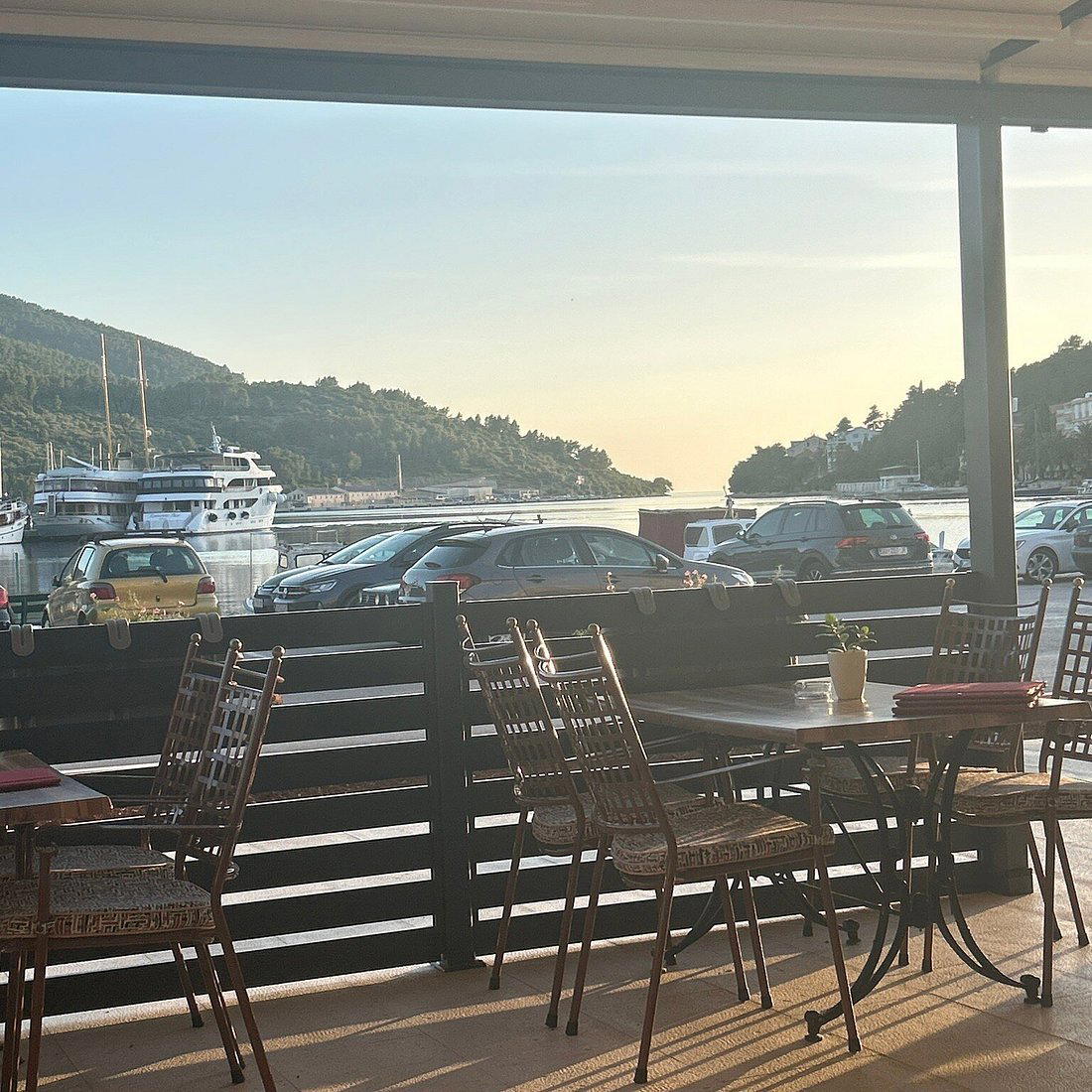
Where the Harbour Ends and the Table Begins
Vela Luka occupies the western tip of Korčula island, and it functions differently from the island's famous medieval town to the east. There are no cruise ships idling in the bay here, no selfie crowds in front of cathedral gates. The waterfront at Obala 2 is a working one: fishing boats moor alongside the promenade, catches change with season and weather, and the local supply chain runs short and direct. Pod Bore sits on this stretch, and that address is not incidental to how the food works.
In Croatian coastal dining, geography is often the determining factor in what a kitchen can honestly put forward. The further a restaurant sits from a central distribution hub, the more dependent it becomes on what arrives from the sea that morning and what the surrounding hills and smallholdings can provide. Vela Luka, connected to Split and to the Pelješac peninsula by ferry rather than motorway, operates within tight logistics that tend to produce the kind of sourcing discipline that urban restaurants pay consultants to simulate. For a broader picture of what Vela Luka's dining scene offers, see our full Vela Luka restaurants guide.
The Ingredient Logic of Dalmatian Island Cooking
Dalmatian island cuisine at its most honest is not a style so much as a set of constraints turned into a culinary vocabulary. Fish dominates because the Adriatic, particularly around the southern islands, still produces bream, dentex, mullet, and cephalopods at volumes that make them genuinely local rather than nominally so. Olive oil comes from trees that have been on these hillsides for centuries; the varietals are different from Istrian oil further north, and the flavour profile reflects limestone soil and salt air. Wine follows similar logic: Korčula produces Pošip, a white grape with enough body to carry oil-heavy coastal preparations, and Rukatac, lighter and aromatic. These are the structural ingredients of any serious kitchen in this part of the Adriatic.
What distinguishes a waterfront address like Pod Bore's from a comparable table in, say, Split's dining scene (where venues like Krug in Split operate within a larger urban supply network) is the compressed distance between sea and plate. Split receives fish from across Dalmatia; a kitchen on the Vela Luka waterfront has first access to what the local fleet landed. That proximity shows up in texture and freshness in ways that are harder to engineer when the logistics chain is longer.
Korčula in Context: An Island with Two Registers
Korčula's dining identity is split between the medieval town, which draws significant summer visitor numbers and supports a tier of restaurants that price and present accordingly, and the western end of the island, where Vela Luka operates at a quieter frequency. The island's most-discussed restaurant, LD Restaurant in Korčula, sits in the town and represents the polished, internationally recognised end of island dining. Vela Luka sits at the other pole: fewer international visitors in the mix, a more resident-facing economy for most of the year, and a hospitality culture shaped by that different clientele.
Across the broader Croatian Adriatic, the range of seriousness in coastal dining has expanded significantly over the past decade. Restaurants like Pelegrini in Sibenik and Restaurant 360 in Dubrovnik represent the high-production, destination-dining tier, with price points and tasting menu formats that have more in common with Agli Amici Rovinj in Rovinj on the Istrian coast than with the simpler konoba tradition. Vela Luka sits outside that particular competition. Its relevance is different: the question here is not whether the kitchen is technically ambitious, but whether it is rooted in the immediate geography in a way that produces food you cannot replicate two hundred kilometres away.
Dalmatian Waterfront Dining: What to Expect from the Format
Restaurants on working waterfronts in Croatia tend to follow a format shaped by the season and by who is actually in town. In high summer, July and August, Vela Luka receives visitors arriving by catamaran ferry from Split, plus a steady flow from sailing fleets using the bay as an anchorage. The kitchen adapts accordingly. Shoulder season, May through June and September through October, is when waterfront addresses in smaller Croatian towns typically produce their most coherent work: the produce is still at peak, the pace is less pressured, and the ratio of regulars to first-time visitors shifts toward the former.
A useful comparison point for understanding the range of Croatian coastal cooking is Boskinac in Novalja on Pag island, which has built a reputation around estate-grown ingredients and island terroir, or BioMania Bistro Bol in Bol, which leans into organic sourcing on Brač. These are distinct approaches to the same underlying question: what does it mean to cook from a specific Adriatic island rather than from a general Dalmatian template? The most persuasive answers to that question tend to come from places that are geographically isolated enough that the local supply chain is not a marketing choice but a practical reality.
Planning a Visit to Vela Luka
Vela Luka is reached by regular catamaran and ferry services from Split, with crossing times of roughly two hours on the fast catamaran. The town has limited accommodation compared to Korčula town, so most visitors either day-trip from the eastern end of the island or use Vela Luka as a ferry transit point. Those who stay find a port that operates on its own schedule, independent of the tour-group rhythms that shape larger Dalmatian destinations. Pod Bore's address at Obala 2 places it directly on the promenade, walkable from the ferry terminal. Given the absence of published booking information, arriving in person or via local inquiry is the practical approach, particularly in peak summer weeks when waterfront tables in small Croatian ports fill by early evening. Shoulder season visits, where feasible, give the leading combination of availability and produce quality.
A Quick Peer Check
| Venue | Cuisine | Price | Awards |
|---|---|---|---|
| Pod BoreThis venue — the venue you are viewing | This venue | Not listed | Not listed |
| Pelegrini | Mediterranean, Modern Cuisine | €€€€ | Michelin 1 Star |
| Restaurant 360 | International, Modern Cuisine | €€€€ | Michelin 1 Star |
| Foša | Croatian, Classic Cuisine | €€€ | Croatian, Classic Cuisine, €€€ |
| Nautika | Modern European, Classic Cuisine | €€€€ | Modern European, Classic Cuisine, €€€€ |
| Agli Amici Rovinj | Italian Contemporary | €€€€ | Michelin 2 Star |
Continue exploring
More in Vela Luka
Restaurants in Vela Luka
Browse all →
Bars in Vela Luka
Browse all →
Hotels in Vela Luka
Browse all →

At a Glance
- Scenic
- Rustic
- Family
- Casual Hangout
- Waterfront
- Terrace
- Extensive Wine List
- Organic
- Waterfront
Relaxed seaside atmosphere ideal for watching the harbor.
Know Before You Go
- Getting there
- Obala 2, 20270, Vela Luka, Croatia