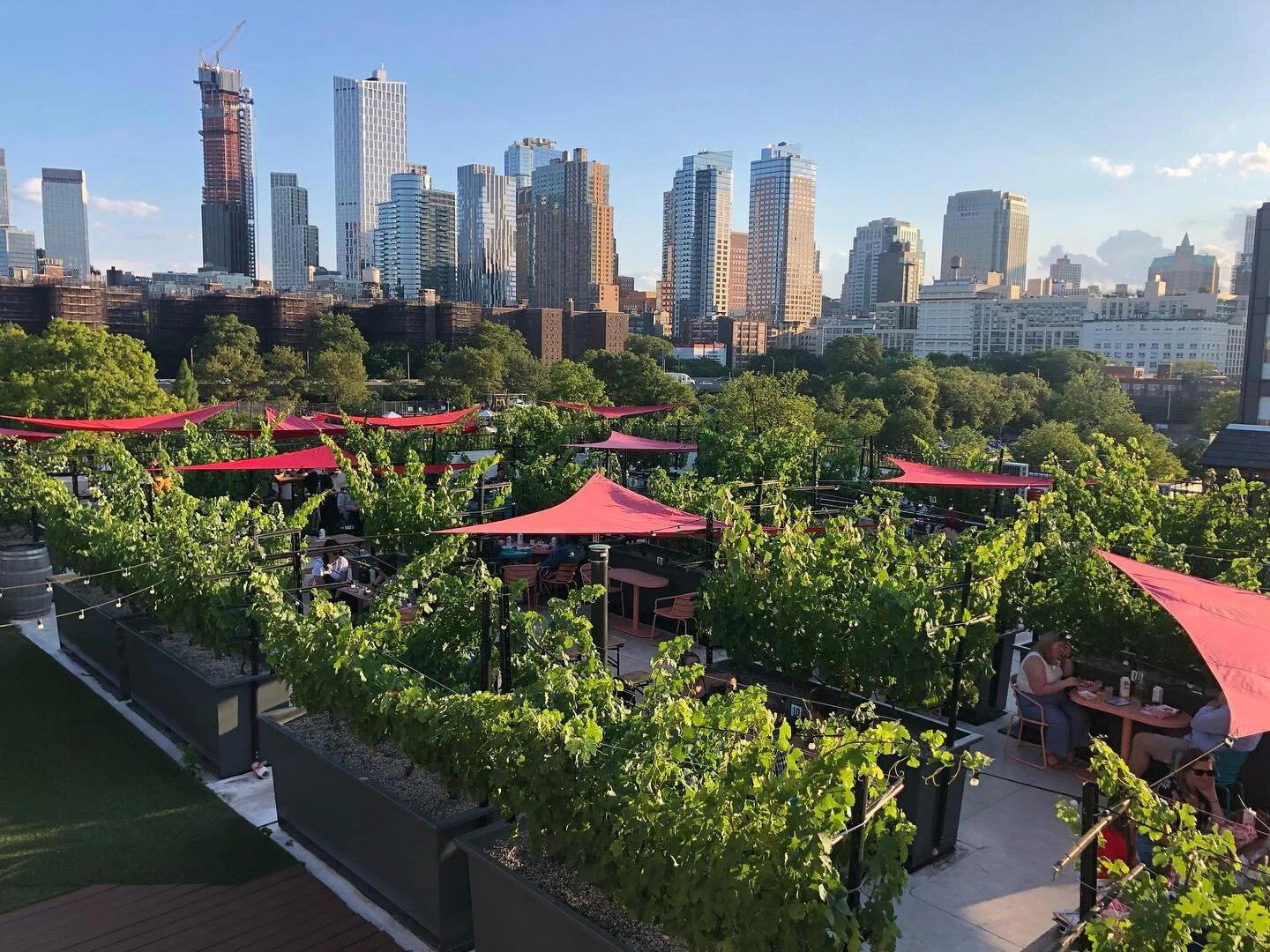
Pig Beach BBQ Queens
Our verdict
Pig Beach BBQ Queens brings serious smoke-and-pit tradition to Astoria, positioning itself among the borough's most deliberate takes on American barbecue. Situated at 35-37 36th Street, the restaurant draws from a long lineage of competitive and craft BBQ culture that has gradually migrated from the American South into New York's outer boroughs. It is a reference point for anyone mapping New York's evolving relationship with live-fire cooking.

Pearl is the En Primeur Club membership app, where members save venues, book tables and use the concierge.

American Barbecue's Long Road Into New York City
Barbecue has always had a complicated relationship with New York City. The city's density, real estate costs, and lack of the agricultural sprawl that defined pit culture in Texas, the Carolinas, or Memphis made serious smoke-driven cooking a structural oddity for most of its modern history. For decades, if you wanted the kind of low-and-slow cooking that required custom-built smokers and overnight wood burns, you left the city. That calculus began to shift in the 2010s, when a generation of cooks who had trained in or competed on the national barbecue circuit started opening brick-and-mortar operations in Brooklyn and Queens, treating the craft with the same discipline more commonly associated with tasting-menu kitchens.
Pig Beach BBQ Queens, operating out of Astoria at 35-37 36th Street, belongs to that current. It represents the outer-borough arm of a brand that grew out of competitive barbecue culture, a world where pit technique, regional wood selection, and rub formulas are argued with the same intensity that sommeliers bring to vintages. That competitive DNA matters as context: venues shaped by the circuit tend to prioritize technique legibility over ambiance, which sets them apart from the gastropub BBQ operations that proliferated in Manhattan during the same period.
Astoria as a Receiving Ground for Serious Cooking
Queens has long functioned as one of the most consequential food boroughs in the United States, not because of fine dining concentration, but because of the sheer density of first-generation cooking traditions operating at full authenticity. Astoria specifically has layered Greek taverna culture, Middle Eastern grocers, and now a wave of craft-focused American restaurants into a relatively compact corridor. In that context, a barbecue operation drawing from Southern and competitive American traditions is less an outlier than a continuation of the borough's pattern: serious technique transplanted and adapted.
The migration of barbecue into Queens also reflects a broader shift in how New York diners relate to American regional cooking. For much of the twentieth century, Southern food in New York meant soul food, fried chicken, cornbread, greens, served in Harlem and Bedford-Stuyvesant without much critical attention. The reframing of Texas brisket, Carolina pulled pork, and Memphis ribs as technically demanding craft cooking changed the category's cultural status and made it viable for a different kind of venue investment. Pig Beach fits that reframed version of the tradition.
The Cultural Weight Behind the Smoke
American barbecue carries more historical freight than its casual presentation usually signals. Pit cooking in the American South was shaped by African American foodways, by the labor of enslaved people who managed the fires and developed the techniques that white pitmasters later claimed as regional heritage. That history is increasingly acknowledged in the serious barbecue conversation, and venues that engage with the tradition critically tend to handle sourcing, wood provenance, and regional attribution with more deliberateness than those that treat it as pure comfort food.
The competitive barbecue world, from which Pig Beach's lineage emerges, has its own complicated relationship with that history. The Kansas City Barbeque Society circuit and similar organizations formalized a version of American BBQ that standardized judging criteria and created career pathways, but also tended to flatten regional distinctions in favor of a glossy, sweet-and-sauced competition style. The leading operators trained on that circuit know both the formulas required to win and the regional vernaculars those formulas sometimes obscure. Pig Beach's Astoria location gives it a borough identity that encourages specificity rather than generic crowd-pleasing.
Where Pig Beach Sits in the New York BBQ Picture
New York's serious barbecue tier is small by the standards of Austin or Nashville, but it is no longer thin. Williamsburg, Long Island City, and now Astoria each carry one or two operations that can be discussed alongside destination pits in other cities. Within that small peer group, the competitive-pedigree venues tend to attract a different customer than the gastropub crossovers: diners who arrive knowing what a smoke ring is, who can articulate a preference between brisket point and flat, and who are willing to make the outer-borough trip specifically for the food rather than the neighborhood. That is a narrower but more reliable audience, and it tends to generate the kind of repeat visitation and word-of-mouth that sustains operations in a high-rent market.
For a fuller read on where New York's dining scene sits across all categories and neighborhoods, see our full New York City restaurants guide.
Pairing Context: Drinks Alongside Smoke-Driven Food
Barbecue and craft cocktails have converged more deliberately over the past decade than either category's traditionalists might have predicted. The same urban diner who seeks out technically serious pit cooking often wants an equally considered drink program alongside it. In New York, bars that handle American spirits and low-intervention cocktails with genuine seriousness include Amor y Amargo, which concentrates on bitter-forward formats, and Attaboy NYC, operating on the Lower East Side with a format built around guest preference rather than fixed menus. For something in the Latin spirits register, Superbueno has built recognition for its agave-focused program. The quieter, more structured approach to bar culture associated with Angel's Share in the East Village represents a different end of that spectrum.
The broader American craft cocktail scene extends well beyond New York. Jewel of the South in New Orleans and Julep in Houston both engage with Southern American drinking traditions that parallel the regional food roots Pig Beach draws from. Kumiko in Chicago and ABV in San Francisco extend the conversation to other major American cities, while Allegory in Washington, D.C. and Bar Leather Apron in Honolulu show how the craft bar format has reached beyond the obvious coastal concentrations. For European perspective on serious cocktail programming, The Parlour in Frankfurt on the Main is a useful reference point.
Know Before You Go
| Address | 35-37 36th Street, Ground Floor, Astoria, NY 11106 |
|---|---|
| Neighbourhood | Astoria, Queens |
| Booking | Confirm current availability and reservation policy directly with the venue |
| Getting There | Astoria is accessible via the N and W subway lines; 36th Avenue station is the closest stop to this address |
| Ideal time to visit | Weekend afternoons tend to draw the most engaged barbecue-focused crowds; arrive early if attending without a reservation |
Frequently asked questions
Where can I find Pig Beach BBQ Queens?
Pig Beach BBQ Queens is located at 35-37 36th St Ground Floor, Astoria, NY 11106, New York City.
Is Pig Beach BBQ Queens a good option for groups visiting Astoria?
Pig Beach BBQ at 35-37 36th Street in Astoria is set up for the kind of communal, quantity-driven eating that American pit barbecue demands, large-format proteins and shared sides suit group dining better than tasting-menu formats. Queens' broader food scene means a group can extend the visit across the neighbourhood without backtracking into Manhattan. Confirm current capacity and reservation policy directly with the venue before booking for larger parties.
What's the must-try cocktail at Pig Beach BBQ Queens?
Pig Beach sits at the intersection of craft cocktails and smoke-driven food, a pairing that has grown more deliberate across American barbecue venues over the past decade. The drinks program is built to hold up against fat-rich, charred proteins, think spirit-forward builds rather than delicate, herb-driven pours. Given the Astoria location, expect the bar to reflect Queens' appetite for direct, no-fuss drinking alongside serious food.
What makes Pig Beach BBQ Queens worth visiting?
Pig Beach operates in Astoria, a borough that functions as one of the most consequential food neighbourhoods in the United States, not because of fine dining density, but because of the standard set by its immigrant-led cooking traditions. Serious barbecue is a small category in New York City compared to Austin or Nashville, and Pig Beach holds a position in that tier on the Queens side of the East River. The address at 35-37 36th Street places it in a part of Astoria that rewards deliberate trips rather than accidental walk-ins.
A Quick Peer Check
A short peer table to compare basics side-by-side.
| Venue | Price |
|---|---|
| Pig Beach BBQ QueensThis venue (the venue you are viewing) | $30–50 |