Pictures
Situated inside the Shepherd's Bush Pavilion, Pictures occupies a position in West London's evolving dining scene that rewards those paying attention to the neighbourhood's quiet transformation. The venue's address places it at the edge of a district historically overshadowed by the capital's more celebrated postcodes, making it a useful case study in how London's restaurant geography continues to shift westward.
 Discover on Pearl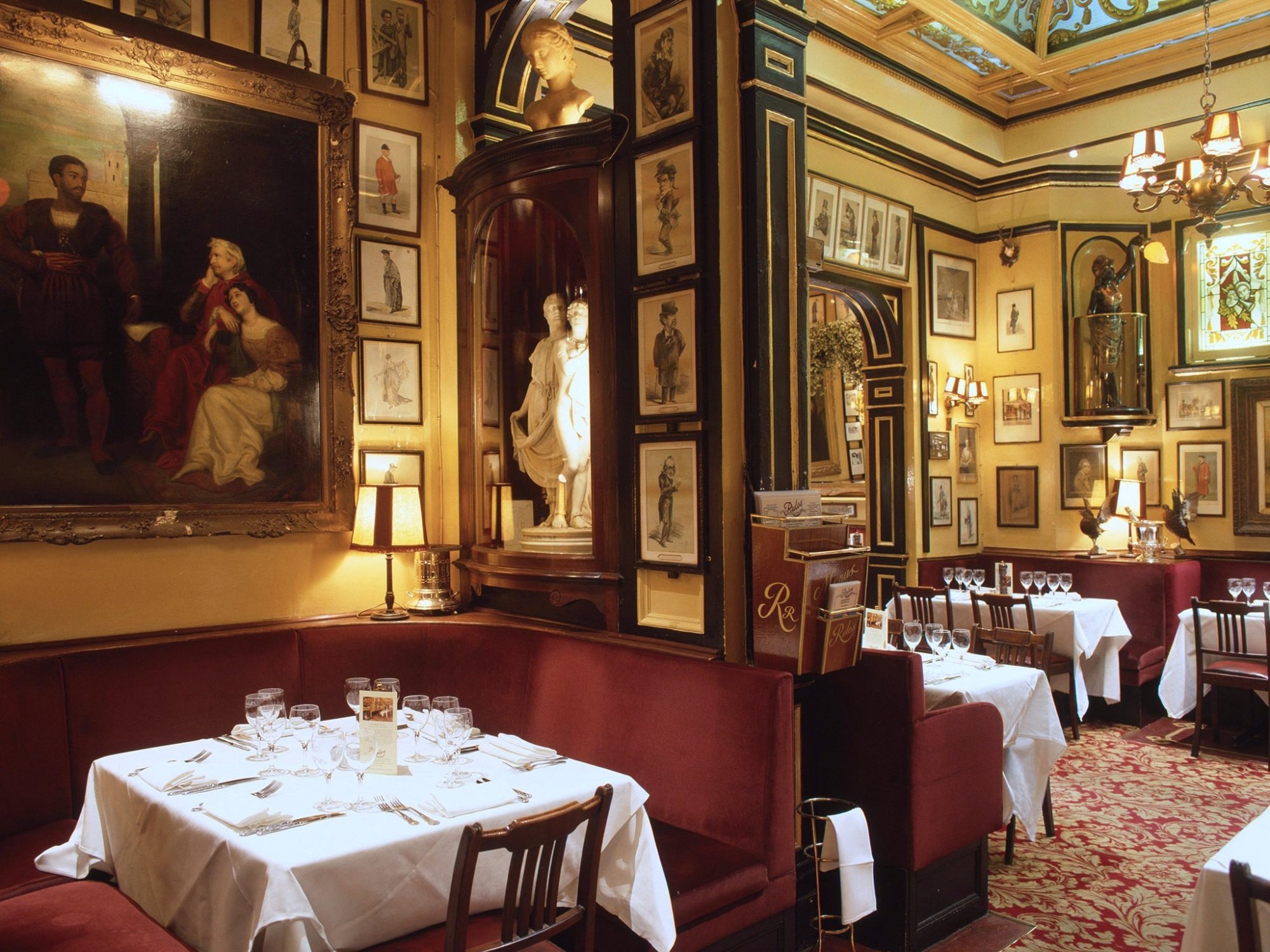
West London's Shifting Dining Geography
London's premium restaurant map has never been as fixed as outsiders assume. For decades, the gravitational pull ran through Mayfair, Chelsea, and Notting Hill, with Michelin's inspectors and the reservation-chasing public following the same corridors. The last decade has complicated that pattern. Shepherd's Bush and the surrounding W12 postcode have absorbed a wave of operators priced out of W1 and W8, and the Shepherd's Bush Pavilion — a Victorian-era building that has passed through several commercial lives — has become a focal point for that shift. Pictures, operating from 58 Shepherd's Bush Green, sits inside that broader narrative of westward migration and neighbourhood reinvention.
Understanding what Pictures represents today requires some grasp of what Shepherd's Bush has been. The area spent much of the 2000s and 2010s defined more by its transport infrastructure (the Overground, the Central line, the A40 arterial) than by its food culture. The Westfield development changed footfall patterns but not necessarily the quality tier of the dining it attracted. Independent operators with serious ambitions tended to leapfrog the area entirely. The presence of a venue operating out of the Pavilion building, with its prominent Green-facing address, reads as part of a more recent corrective.
The shortlist, unlocked.
Hard-to-book tables, cellar releases, and concierge-planned trips.
Get Exclusive Access →The Pavilion Setting and What It Signals
The Shepherd's Bush Pavilion carries architectural weight that most modern restaurant premises do not. Victorian civic buildings repurposed for hospitality carry a specific tension between grandeur and informality that contemporary operators have learned to work with rather than against. Across London, similar conversions , from Battersea Power Station's restaurant floors to the railway arches of Borough and Bermondsey , have demonstrated that the envelope of a building can do significant editorial work for a venue before a single dish is served.
For Pictures, the Pavilion address places it in a peer set that includes destination venues in converted or heritage-listed buildings: properties where the physical context is itself part of the proposition. This is meaningfully different from the purpose-built dining rooms that dominate the ££££ tier in central London, where venues like Sketch, The Lecture Room and Library or Restaurant Gordon Ramsay operate in spaces built or extensively refitted around a singular dining concept. The Pavilion's history precedes Pictures and will outlast it, which is either a constraint or an asset depending on how the operators have chosen to respond.
Evolution as an Operating Mode
Venues in transitional neighbourhoods tend to evolve differently from those in established dining postcodes. In W1, the competitive pressure is lateral , operators benchmark against immediate peers on the same street or in the same tier. In W12, the pressure is more vertical: a venue either consolidates its position as the area's reference point for its category, or it cedes that ground to the next entrant. Pictures has navigated that pressure across what appears to be multiple iterations of its format and offer.
This pattern of reinvention is not unusual in London's mid-to-upper tier. The Ledbury, operating in nearby Notting Hill, spent years recalibrating its identity before settling into its current position as one of London's most closely watched modern European kitchens. CORE by Clare Smyth, also in W11, built its reputation through a clear and consistent signal that attracted the kind of attention that follows conviction. For a West London venue to hold its position over time, it needs to give its audience a reason to seek it out rather than default to the well-worn paths toward Dinner by Heston Blumenthal in Knightsbridge or the destination restaurants of the country's wider circuit, from The Fat Duck in Bray to L'Enclume in Cartmel.
What changes over time at venues like Pictures is typically the relationship between ambition and execution. Early iterations often involve format experiments , the format is too ambitious for the catchment, or not ambitious enough for the building. The pivot toward whatever current form Pictures holds reflects that ongoing calibration. Venues that survive this process in transitional neighbourhoods tend to arrive at a format that serves both a local audience willing to travel within West London and a destination audience willing to cross the city.
Where Pictures Sits in the London Dining Conversation
London's restaurant conversation tends to compress around a handful of postcodes and a handful of names. The venues that draw the most sustained attention , the three-Michelin-star rooms, the 50 Best regulars , operate in a tier where the comparison set is increasingly international. A meal at a leading London counter now prices against Le Bernardin in New York or Atomix rather than against other London restaurants. Below that tier, but above the casual end of the market, sits a broad and contested middle ground where the most interesting decisions are being made.
Pictures occupies a position in that middle ground, defined more by its neighbourhood context than by national or international recognition. That is not a diminishment , it is an accurate description of where the most genuinely local dining culture tends to happen. The venues in the ££££ band in London's outer zones serve a different function from their Mayfair equivalents, and that function has become increasingly valued as the cost of central London dining has accelerated. For context, other notable UK restaurants in their own regional contexts , Moor Hall in Aughton, Gidleigh Park in Chagford, Hand and Flowers in Marlow, and Le Manoir aux Quat' Saisons in Great Milton , each built their reputations by serving specific audiences in specific places, rather than by competing on the same terms as London's most-publicised rooms.
Planning a Visit
Shepherd's Bush Green is well-connected by public transport, served by Shepherd's Bush Market on the Hammersmith and City line and Shepherd's Bush on the Central line and Overground. The Pavilion building sits directly on the Green, making orientation direct from either station. For visitors coming from central London, the journey from the West End runs under fifteen minutes on the Central line from Oxford Circus.
| Venue | Location | Tier | Transport |
|---|---|---|---|
| Pictures | Shepherd's Bush, W12 | Not confirmed | Central line / Overground (Shepherd's Bush) |
| The Ledbury | Notting Hill, W11 | ££££ | Central line (Notting Hill Gate) |
| CORE by Clare Smyth | Notting Hill, W11 | ££££ | Central line (Notting Hill Gate) |
| Sketch, The Lecture Room and Library | Mayfair, W1 | ££££ | Jubilee / Elizabeth line (Bond Street) |
For fuller coverage of the London dining and hospitality scene, see our full London restaurants guide, our full London hotels guide, our full London bars guide, our full London wineries guide, and our full London experiences guide.
The shortlist, unlocked.
Hard-to-book tables, cellar releases, and concierge-planned trips.
Get Exclusive Access →Frequently Asked Questions
Cuisine and Credentials
Comparable options at a glance, pulled from our tracked venues.
| Venue | Cuisine | Awards | Notes |
|---|---|---|---|
| Pictures | This venue | ||
| The Ledbury | Modern European, Modern Cuisine | Michelin 3 Star | Modern European, Modern Cuisine, ££££ |
| Sketch, The Lecture Room and Library | Modern French | Michelin 3 Star | Modern French, ££££ |
| CORE by Clare Smyth | Modern British | Michelin 3 Star | Modern British, ££££ |
| Restaurant Gordon Ramsay | Contemporary European, French | Michelin 3 Star | Contemporary European, French, ££££ |
| Dinner by Heston Blumenthal | Modern British, Traditional British | Michelin 2 Star | Modern British, Traditional British, ££££ |
Need a table?
Our members enjoy priority alerts and concierge-led booking support for the world's most difficult tables.
Get Exclusive AccessThe shortlist, unlocked.
Hard-to-book tables, cellar releases, and concierge-planned trips.
Get Exclusive Access →