.png)
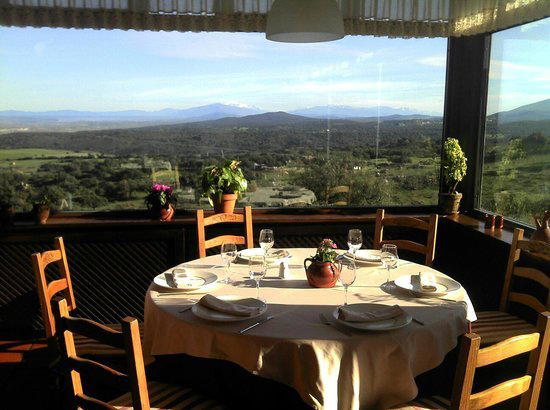
A former bus station café turned Michelin Plate-recognised bistro, Parada de la Reina-Martina Bistró brings globally inspired modern cuisine to the historic centre of Plasencia at a €€ price point. The à la carte divides into distinct sections, while two set menus, including the advance-booking-required Degusta, give the kitchen room to stretch. For Extremadura, this is an unusually ambitious format at a democratic price.
 Discover on Pearl
Pearl is the En Primeur Club membership app — saves, bookings, and concierge access live there. Same editors, same standards.
- Address
- C. Tornavacas, 2, 10600 Plasencia, Cáceres, Spain
- Phone
- +34 927 42 50 77
- Website
- paradadelareina.es
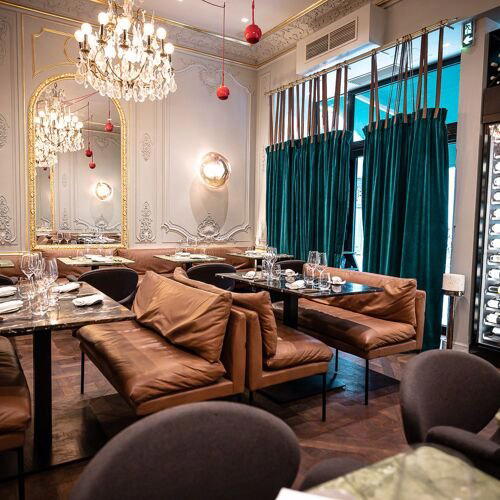
From Bus Station to Bistro: How Plasencia's Dining Scene Grew Up
Extremadura is not a region that announces itself loudly on Spain's gastronomic map. Its cured ibérico, its wild mushrooms, its paprika from La Vera, these are ingredients that end up in famous kitchens elsewhere, credited to other places, while the source region stays quietly in the background. Plasencia, the largest city in northern Extremadura and a staging post on the old routes into the Sierra de Gredos, has historically been a town people passed through rather than a destination they came to eat in. That dynamic is shifting, and Parada de la Reina-Martina Bistró is one of the clearest markers of how far it has shifted.
The venue's own history makes the point precisely. This is a restaurant that started life as a bus station café, the kind of functional, fluorescent-lit space that exists in every Spanish provincial town to serve travellers who have half an hour to kill. The transformation into a contemporary bistro serving modern, globally inspired cuisine is not just a renovation story, it is a read on what happens when a secondary city starts to take its own table seriously. The address on Calle Tornavacas, in the older part of the city, places it within reach of Plasencia's cathedral quarter, where the stone streets and medieval arcades give the approach a register that the original café format was never designed to match.
Extremadura's Larder and What a Kitchen Does With It
The editorial angle that matters most here is sourcing. Extremadura's food geography is unusually productive for a region of its size. The dehesa, the mosaic of holm oak parkland that covers much of the province of Cáceres, produces the acorn-fed black Iberian pig, whose legs hang in almost every bar in Spain but whose leading versions are a Extremaduran product. The region grows some of Spain's most prized peppers, smoke-dried into pimentón de la Vera. Game, wild herbs, and foraged fungi move through local markets in volume that more urbanised regions cannot match. Trout comes down from the mountain streams of the Ambroz and Jerte valleys, both within an hour of Plasencia.
A kitchen operating under a modern cuisine framework in this location has access to ingredients that many more-celebrated Spanish restaurants source from the same territory while absorbing the transport and intermediary costs. The editorial logic of a globally inspired menu in Plasencia is that it can layer technique drawn from broader cooking traditions over a raw material base that is, by proximity, closer to its origin than almost anywhere in the country. That is a structural advantage. Whether a kitchen uses it depends on what it chooses to prioritise, and the Michelin Plate recognition that Parada de la Reina-Martina Bistró has held in both 2024 and 2025 signals that the guide's inspectors consider the kitchen to be executing at a level worth flagging.
The Format: À La Carte, Destino, and Degusta
The menu structure here reflects a broader trend in Spanish provincial dining: the tiered offering, where an à la carte sits alongside set menus of different depth, allowing the kitchen to serve both casual visitors and guests who want a more structured progression. The à la carte at Parada de la Reina-Martina Bistró is organised into distinct sections, which is a practical decision that also signals ambition, a sectioned menu implies considered sequencing rather than a flat list of dishes.
Two set menus, named Destino and Degusta, extend the offering. Degusta requires 24-hour advance booking, which is standard practice for menus that involve sourcing specific produce or preparing components that cannot be held in volume. That kind of pre-commitment structure is more common at the €€€€ tier, at Arzak in San Sebastián, El Celler de Can Roca in Girona, or Disfrutar in Barcelona, and its presence at the €€ price point in Plasencia is notable. It implies that the kitchen is operating with a level of planning discipline that the pricing does not necessarily demand. Spain's most ambitious modern tables, from DiverXO in Madrid to Aponiente in El Puerto de Santa María, set the reference point for format ambition in the country, Parada de la Reina-Martina Bistró is not playing in that league, nor is it priced for it, but the structural choices it has made point in a similar direction.
For comparison, Atrio in Cáceres represents the upper tier of Extremaduran fine dining, two Michelin stars, a wine list that is one of the most discussed in Spain, and a price point to match. Parada de la Reina-Martina Bistró operates several tiers below that in price, within the same province, and with a format designed for accessibility rather than occasion dining. They are not in direct competition; they serve different purposes in the same regional story.
Placing Parada de la Reina-Martina Bistró in Plasencia's Dining Picture
At a €€ price point with Michelin recognition, the bistro occupies a position in Plasencia that has limited direct competition. Secondary Spanish cities of similar scale tend to support one or two restaurants that push beyond the local standard while keeping prices within reach of repeat visits rather than special occasions. That bracket, Michelin-acknowledged, moderately priced, format-conscious, is where Parada de la Reina-Martina Bistró sits, and it is a more interesting position than either the budget end of the market or the rarefied leading.
For visitors passing through Extremadura, and Plasencia functions as a logical base for exploring both the Jerte valley and the Monfragüe biosphere reserve, this is the kind of restaurant that justifies an extra night. The city's medieval core provides the surrounding context; accommodation options in Plasencia range from converted historic properties to practical mid-range hotels. For those building a wider picture of the city's eating and drinking, our full Plasencia restaurants guide maps the broader scene, and the bars guide covers where the evening extends after dinner. The region's wine culture, which draws on the Ribera del Guadiana DO and smaller local producers, is detailed in the wineries guide, and experiences in and around Plasencia are covered separately for those spending more than a day or two.
The restaurant sits at C. Tornavacas, 2, in the centre of Plasencia. The Degusta menu requires booking at least 24 hours ahead; for any visit where the full tasting format is the objective, confirming the reservation early is the direct move, particularly at weekends when Plasencia draws visitors from Madrid and Salamanca, both within two to two and a half hours by road.
Comparable Venues
Comparable venues nearby, for context on price, style, and recognition.
| Venue | Cuisine | Price | Awards |
|---|---|---|---|
| Parada de la Reina-Martina BistróThis venue — the venue you are viewing | Modern Cuisine | €€ | |
| Aponiente | Progressive - Seafood, Creative | €€€€ | Michelin 3 Star |
| Arzak | Modern Basque, Creative | €€€€ | Michelin 3 Star |
| DiverXO | Progressive - Asian, Creative | €€€€ | Michelin 3 Star |
| El Celler de Can Roca | Progressive Spanish, Creative | €€€€ | Michelin 3 Star |
| Quique Dacosta | Creative | €€€€ | Michelin 3 Star |
Continue exploring
More in Plasencia
At a Glance
- Modern
- Elegant
- Date Night
- Special Occasion
- Standalone
- Extensive Wine List
- Street Scene