
Michelin Plate
Our verdict
Among Belfast's mid-range modern dining options, Orā on Great Victoria Street takes a different route from the tasting-menu formality of nearby peers. A Michelin Plate holder running a globally-routed small-plates format, it earns.

Pearl is the En Primeur Club membership app — saves, bookings, and concierge access live there. Same editors, same standards.
- Address
- 12 Great Victoria St, Belfast BT2 7BA, United Kingdom
- Phone
- +44 28 9031 5565
- Hours
- Mon–Tue ClosedWed–Thu 5–9 PMFri 5–9:30 PMSat 3–9:30 PMSun Closed
- Website
- orabelfast.com
- Directions
- Get directions
- Booking
- Book on ResDiary
The menu
What to order
- Marinated Blackened Tempura Monkfish
- Orā Fish & Chips
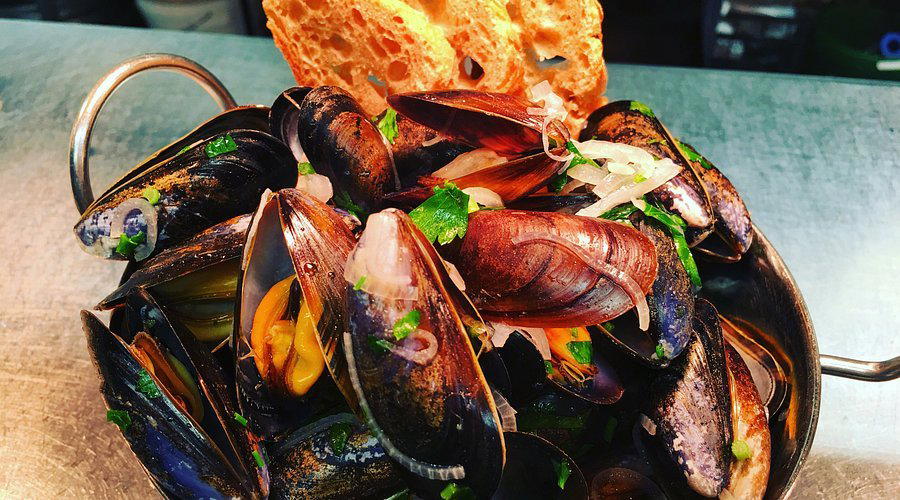
- Garlic Fermented Chilli and Lime Mussels
Great Victoria Street and the Small-Plates Shift in Belfast
Belfast's dining scene has moved in two distinct directions over the past decade. One current runs toward multi-course tasting menus and formal progression, represented by places like OX and The Muddlers Club, both operating at the £££ tier with structured, chef-driven formats. The other current, less formal but no less considered, runs toward the kind of sharing-table format that has reshaped mid-market dining across European cities over the same period.
The address places it squarely in Belfast's central hospitality corridor, within easy reach of the Cathedral Quarter and the stretch of restaurants that have collectively repositioned the city as a serious dining destination. For context on what surrounds it, our full Belfast restaurants guide maps the wider picture.
Walking In: Atmosphere Before Appetite
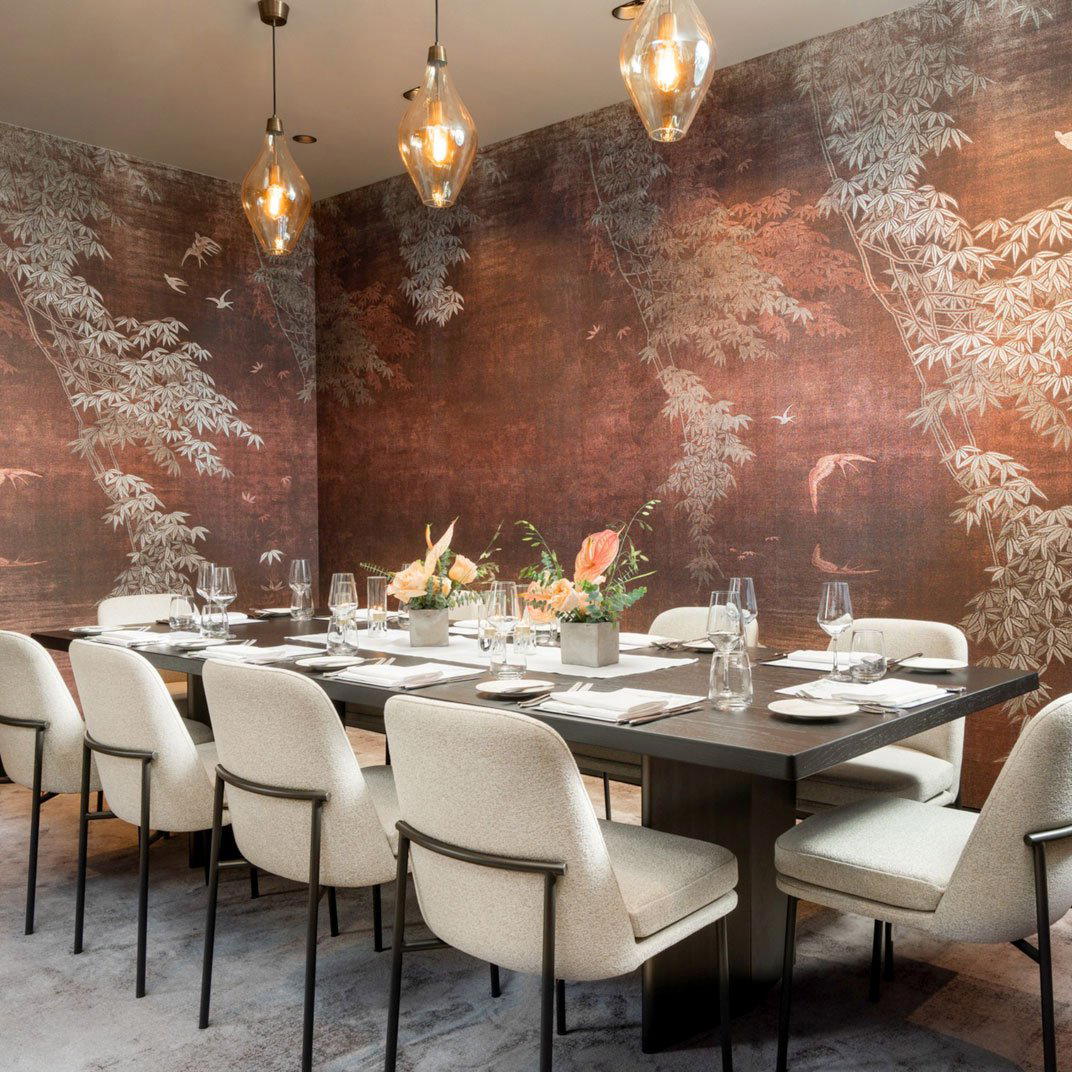
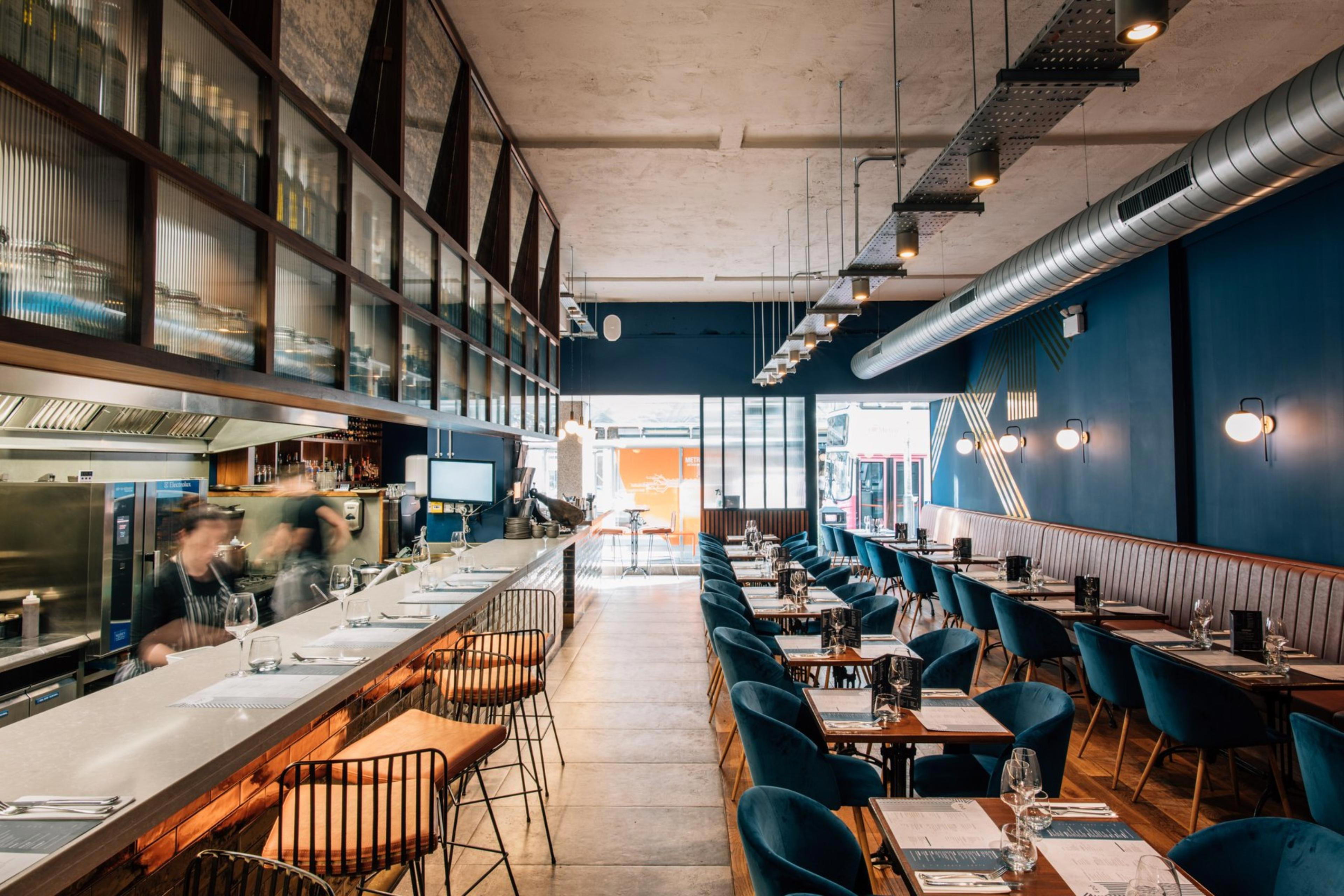
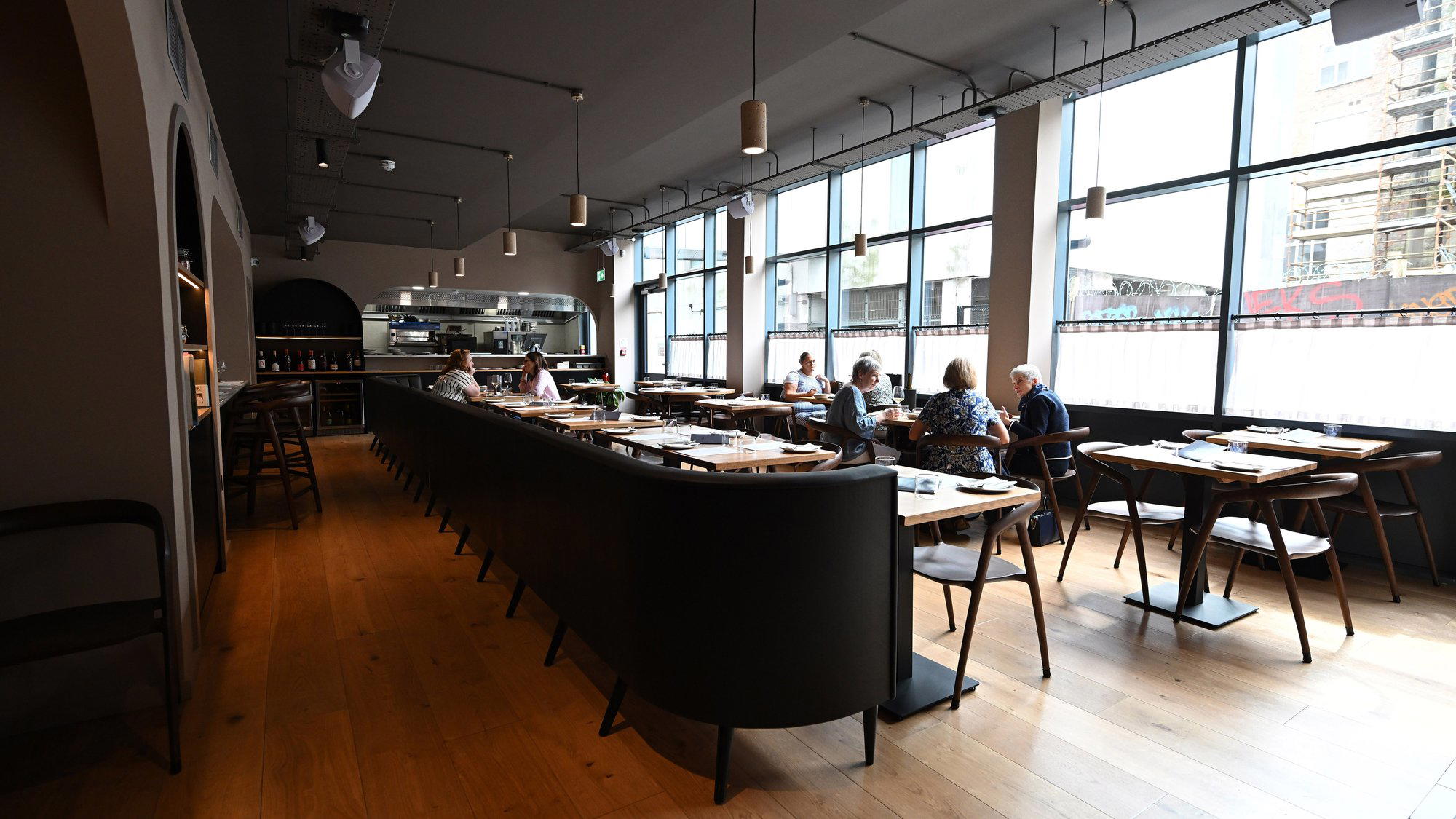
The room reads as deliberately casual. Bright, light-filled, and configured around a bar format, Orā's physical setup signals its intent before a single plate arrives. This is not a room that asks you to sit quietly and receive a chef's argument. It is a room that asks you to order, share, and come back to the menu. The format, widely used across the tapas-influenced small-plates category, thrives when the sourcing and preparation match the informality of the setting, and here the Michelin recognition suggests that alignment holds.
Plates arrive as they're ready rather than in structured courses, which changes the rhythm of the meal considerably. In a tasting-menu context, pacing is the kitchen's responsibility. Here, it becomes a shared experience between kitchen and table: anticipation builds for the next arrival, conversations pause and resume, and the meal assembles itself organically. It is a format that suits groups more readily than solo dining, and the room's social configuration reflects that.
The Menu's Geography
Range on the menu moves considerably. Arancini, the Sicilian fried rice ball that has become a staple across small-plates menus globally, sits alongside laksa, the Southeast Asian coconut-broth noodle dish more commonly found in Singapore or Kuala Lumpur than on the island of Ireland. That range is not arbitrary. It is described explicitly as reflecting the owner's travels, and it places Orā in a specific sub-category: the globally-influenced small-plates bar, as distinct from the regionally focused or produce-led version of the same format.
This approach carries both strengths and risks. The strength is range and accessibility: a table with mixed preferences can find common ground more easily across arancini and laksa than across a single-region tasting menu. The risk is coherence: globally-routed menus require consistent technical execution across very different culinary idioms. The Michelin Plate recognition, which indicates food worth stopping for, suggests the kitchen manages that range with sufficient discipline to merit the nod.
For comparison within Belfast's ££ bracket, mrDeanes, Stove Bistro, and Beau each take different positions on the spectrum between accessibility and specificity. Orā's distinguishing characteristic is its explicit cosmopolitan range within a sharing format.
Planning Your Visit: What to Know Before You Go
The editorial angle here is practical, because at Orā the booking experience and visit logistics matter as much as the menu. Great Victoria Street is central and well-connected, making the address easy to reach whether you're based at one of the hotels nearby or arriving from elsewhere in the city. For accommodation options that pair well with this area, our full Belfast hotels guide covers the relevant tier.
The ££ price point places Orā in the accessible bracket of Belfast's recognised dining tier, which tends to mean that demand is higher and booking earlier is advisable. Small-plates formats with Michelin recognition at this price level draw both local regulars and visitors working through the city's dining highlights, so walk-in availability at peak times should not be assumed. The venue does not publish hours or a direct booking link in standard directories at this time, so checking directly with the restaurant before visiting is the prudent approach. Similarly, the small-plates format means arriving hungry and planning to order several rounds: the per-plate cost at ££ is modest, but the meal builds through accumulation.
Sharing format also shapes group size. Two people can eat well and cover meaningful range; four or more gives you the table coverage to work through a broader cross-section of the menu without any single diner carrying the full load of variety. Solo dining is possible but works against the format's strengths.
For those building a broader Belfast evening, the city's bar scene is well-developed. Our full Belfast bars guide covers what's worth knowing on that front, and our full Belfast experiences guide maps the wider cultural options. The Belfast wineries guide rounds out the picture for drink-focused visitors.
Where Orā Sits in the Broader Recognised Dining Tier
Michelin's Plate recognition, introduced to mark restaurants serving food worth eating rather than to signal aspirational fine dining, has become a meaningful signal in cities where the full star tiers are sparsely distributed. In Belfast, where the full star tier includes names that compete in a different bracket entirely, the Plate sits at an important middle level: recognised, competent, and worth the detour, without the formality or price commitment of a starred evening.
Across the UK, the small-plates format at this recognition level has become a reliable way for cities to develop mid-market dining credibility. Comparable dynamics, though in different price tiers and culinary traditions, play out at Hand and Flowers in Marlow and Gidleigh Park in Chagford, where recognition and accessibility intersect differently. At the more formal end of the modern cuisine category globally, operations like Frantzén in Stockholm and FZN by Björn Frantzén in Dubai illustrate how far the Modern Cuisine label can stretch, while venues like The Fat Duck in Bray, The Ledbury in London, L'Enclume in Cartmel, and Moor Hall in Aughton define the formal upper register of the UK modern dining bracket. Orā occupies none of those tiers, which is precisely its utility: it delivers recognised-quality modern cooking in a low-barrier, socially fluid format that the upper tiers do not offer.
Frequently asked questions
What should I order at Orā?
The menu spans considerable geographic range, with arancini and laksa confirmed among the small plates. Dishes arrive as they're ready rather than in a fixed sequence, so ordering across several parts of the menu makes sense. The Michelin Plate recognition in 2024 points to the kitchen's consistency across that spread.
What's the price range at Orā?
Pricing at Orā is listed as ££.
Just the Basics
| Venue | Cuisine | Price | Awards | Notes |
|---|---|---|---|---|
| OrāThis venue — the venue you are viewing | Modern Fusion Tapas | $30–50 | Michelin Plate | Not listed |
| OX | Modern French with Irish Seasonal Ingredients | $100–150 | 1 Michelin Star · La Liste Top Restaurants | Argentinian, Irish - French, Modern British |
| The Muddlers Club | Modern British Fine Dining | $100–150 | 1 Michelin Star · SquareMeal UK Top 100 Restaurants #59 | Modern Cuisine |
| Deanes at Queens | Contemporary European | $50–100 | Michelin Bib Gourmand | Modern British |
| EDŌ | Modern Spanish Tapas | $30–50 | Michelin Bib Gourmand | European Contemporary |
| Cyprus Avenue | Modern Gastropub | $20–30 | Michelin Plate | Contemporary |
Recognition history
Dated appearances from independent guides and award organizations, with the underlying list record or original source where available.
Michelin Plate
Michelin
Full recognition history (3 entries)
Michelin Plate
Michelin
Michelin Plate
Michelin
Continue exploring
More in Belfast
Restaurants in Belfast
Browse all →

Bars in Belfast
Browse all →
Hotels in Belfast
Browse all →

Wineries in Belfast
Browse all →
Details
- Trendy
- Modern
- Lively
- Sophisticated
- Date Night
- Group Dining
- Special Occasion
- Open Kitchen
- Extensive Wine List
- Craft Cocktails
- Local Sourcing
- Small Plates
- Wine
- Cocktails
- Vegetarian Friendly
- Gluten Free Options
Current opening hours
- Monday
- Closed
- Tuesday
- Closed
- Wednesday
- 5–9 PM
- Thursday
- 5–9 PM
- Friday
- 5–9:30 PM
- Saturday
- 3–9:30 PM
- Sunday
- Closed
Hours can change for holidays and private events. Last verified .
Bright, buzzy atmosphere with clean architectural lines, pared-back interior, dark wooden floors, and exposed brickwork, creating a stylish and sumptuous setting.