Okoja

Tabelog 100 #65
Our verdict
Okoja gives Hiroshima-style okonomiyaki a low-key rural Saeki Ward setting rather than a central-city counter narrative. Its Tabelog 100 Okonomiyaki selections in 2023, 2024, and 2025 make it a serious reference point for travelers tracking the region’s everyday griddle culture beyond Hiroshima’s station-area circuits.

Pearl is the En Primeur Club membership app — saves, bookings, and concierge access live there. Same editors, same standards.
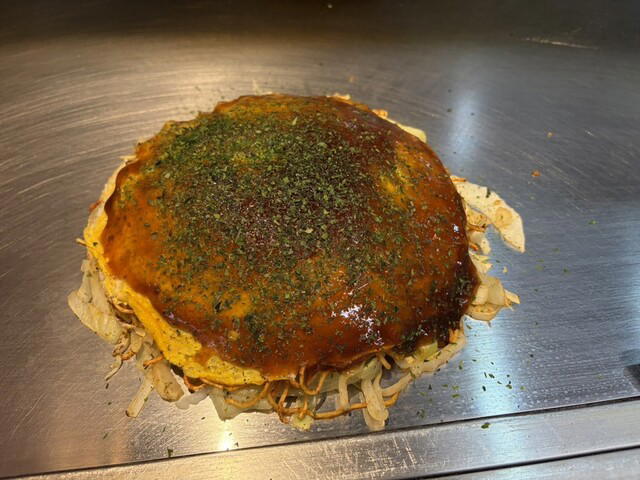
Approaching yukichoufushidani, the restaurant scene changes register. The dense, neon-lit okonomiyaki lanes associated with busier urban dining give way to a quieter rhythm: local roads, practical meals, and a griddle culture that belongs as much to daily life as to tourism. That context matters. Okonomiyaki is not a luxury format pretending to be humble; it is a regional staple built around layering, heat control, sauce, texture, and the judgment of the person working the iron plate.
Okoja sits in that tradition with a sharper signal than its modest category might suggest. Selection for Tabelog 100 Okonomiyaki in 2025 places it among a recognized group of okonomiyaki specialists rather than simply among neighborhood lunch counters. The useful reading is not that awards make the meal formal. The useful reading is that a low-price, approachable format can still be evaluated with the same seriousness applied to other specialist Japanese dining when the craft is specific enough.
Okonomiyaki outside the central circuit
Okonomiyaki is a study in assembly rather than batter-heavy comfort. The local grammar often depends on sequencing, texture, and the way ingredients are managed on the griddle. Ingredient handling matters here because the dish has little room to hide weak produce or careless timing. The core components need to survive heat without losing structure; texture needs enough resilience to hold sauce and pressure; supporting elements should not take over the plate.
That is why local okonomiyaki rooms can be more revealing than polished destination operations. They often serve regulars who know the difference between a rushed stack and one cooked with patience. In yukichoufushidani, the appeal is not spectacle. It is the way a regional dish travels beyond tourist geography and remains legible as daily food. For travelers using our full yukichoufushidani restaurants guide, Okoja is the kind of stop that explains the area’s food culture better than another generic all-purpose dining room would.
The comparison set also clarifies the point. Itsukaichi Hassho is another okonomiyaki reference, while Napul and CHILAN point toward different kinds of dining altogether. Those names are useful not as direct substitutes but as markers of how broad the area’s dining can feel: griddle craft, casual meals, and higher-spend destination dining all answer different questions. Okoja answers the question of where okonomiyaki remains local, repeatable, and serious.
The griddle as ingredient test
Okonomiyaki rewards cooks who understand sequencing. Too much moisture, too little heat, or an impatient turn on the griddle can make the same ingredient list feel heavy. The better versions tend to read as balance rather than abundance: structure preserved rather than collapsed, elements integrated rather than pasted on, sauce used as punctuation rather than camouflage. Without naming unlisted dishes or house variations, that is the standard by which a place like this should be judged.
The room’s format reinforces that reading. Okoja is best understood as a focused okonomiyaki specialist rather than a broad, multi-course dining room. The practical appeal sits in its directness: a recognizable category, accessible pricing, and a meal centered on the griddle rather than on ceremony. That keeps the experience close to everyday Japan rather than internationalized hospitality.
Recognition by Tabelog matters here because okonomiyaki is a category where national attention can flatten regional nuance. A Tabelog score of 3.66 is not a luxury signal; it is a crowd-calibrated sign of sustained approval within a highly specific food type. In Japan, that kind of score in a narrow specialist genre often carries more meaning than a higher number attached to a broader, trend-led venue. The 2025 Tabelog 100 Okonomiyaki selection gives the stronger clue: consistency and specialist execution, not novelty, are the story.
How to fit it into a wider Yukicho Fushidani plan
This is not a restaurant to treat as an isolated trophy stop. It works better as part of a day shaped around yukichoufushidani, where meals, transport, and timing can require more intention than in a major central district. Travelers building a fuller itinerary can pair the restaurant research with our full yukichoufushidani hotels guide, our full yukichoufushidani bars guide, our full yukichoufushidani wineries guide, and our full yukichoufushidani experiences guide rather than assuming central-city convenience.
For readers comparing Japanese casual dining across regions, the broader EP Club archive shows how differently everyday formats behave by city: unnamed casual counters, local griddle rooms, cafes, specialist curry shops, burger venues, and mountain huts can all sit under the broad umbrella of approachable dining while operating by very different local rules. Overseas Japanese-inspired formats underline the contrast: outside Japan, familiar forms often become identity cuisine; in Japan, okonomiyaki can remain working food with demanding local standards.
The editorial case for Okoja is therefore narrow and strong. Go for a regional dish in its own habitat, not for ceremony. The 2025 recognition supplies trust, the yukichoufushidani setting supplies context, and the format keeps attention on ingredients that have to perform under direct heat. For a traveler who wants okonomiyaki without reducing it to a central-city checklist, this is a serious stop.
Frequently asked questions
Can I bring kids to Okoja?
Okoja is an okonomiyaki spot in yukichoufushidani. For family visits or group details, confirm current policies directly with the venue before going.
What's the overall feel of Okoja?
It reads as a focused okonomiyaki spot rather than a broad all-purpose dining room. The Tabelog 100 selection for 2025 and a listed score of 3.66 point to a recognized local specialist in yukichoufushidani.
Is Okoja expensive?
Pricing at Okoja is listed as Dinner: JPY 1,000 - JPY 1,999; Lunch: - JPY 999.
What is Okoja known for?
Okoja is known for okonomiyaki in yukichoufushidani, with recognition from the 2025 Tabelog 100 Okonomiyaki list.
Comparable Spots, Quickly
Comparable venues by cuisine and price in the same metro.
| Venue | Cuisine | Price | Awards | Notes |
|---|---|---|---|---|
| OkojaThis venue (the venue you are viewing) | Okonomiyaki (Japanese savory pancakes) | $10–20 | Tabelog 100 #65 | Not listed |
| KARLY tonomachi | Japanese Spice Curry | Not listed | Not listed | Tonomachi |
| Uogashi Nihon-ichi (魚がし日本一) | Standing Sushi Bar | $10–20 | Not listed | Shibuya |
| Machida Shiruba Shio-Ramen Shinka (町田汁場 しおらーめん進化) | Shio Ramen Specialist | Not listed | Not listed | Machida |
| 幻の中華そば加藤屋 百万遍にぼ次朗 | Niboshi (Dried Sardine) Jiro-Style Ramen | Not listed | Not listed | Hyakumanben, Sakyo Ward |
| Suzaki Foods Shop | Sanuki Udon | $1–10 | Not listed | Takasecho, Mitoyo City |
Recognition history
Dated appearances from independent guides and award organizations, with the underlying list record or original source where available.
Tabelog 100 #65 · No. 65
Tabelog · Tabelog 100 - Okonomiyaki - 2025
Continue exploring
More in yukichoufushidani
Restaurants in yukichoufushidani
All restaurants in yukichoufushidani →
Bars in yukichoufushidani
Browse all →
Details
- Solo
- Casual Hangout
- Family
- Group Dining
- Late Night
- Standalone
- Beer Program
- A La Carte
- Counter Dining
- Beer
Current opening hours
- Monday
- Closed
- Tuesday
- Closed
- Wednesday
- 11 AM–2 PM, 5–7:30 PM
- Thursday
- 11 AM–2 PM, 5–7:30 PM
- Friday
- 11 AM–2 PM, 5–7:30 PM
- Saturday
- 11 AM–2 PM, 5–7:30 PM
- Sunday
- 11 AM–2 PM, 5–7:30 PM
Hours can change for holidays and private events. Last verified .
Casual, no-smoking neighborhood okonomiyaki joint with a lively but relaxed atmosphere typical of small local Hiroshima-area griddle restaurants.