Nozawa Bar


Nozawa Bar holds a Michelin star and a consistent position inside Opinionated About Dining's North America rankings, operating from a discreet address on Canon Drive in Beverly Hills. Chef Osamu Fujita runs an omakase format that sits at the upper end of the Los Angeles sushi tier, priced against peer counters rather than entry-level options. Service runs Tuesday through Saturday evenings, with Sunday and Monday closed.
 Discover on Pearl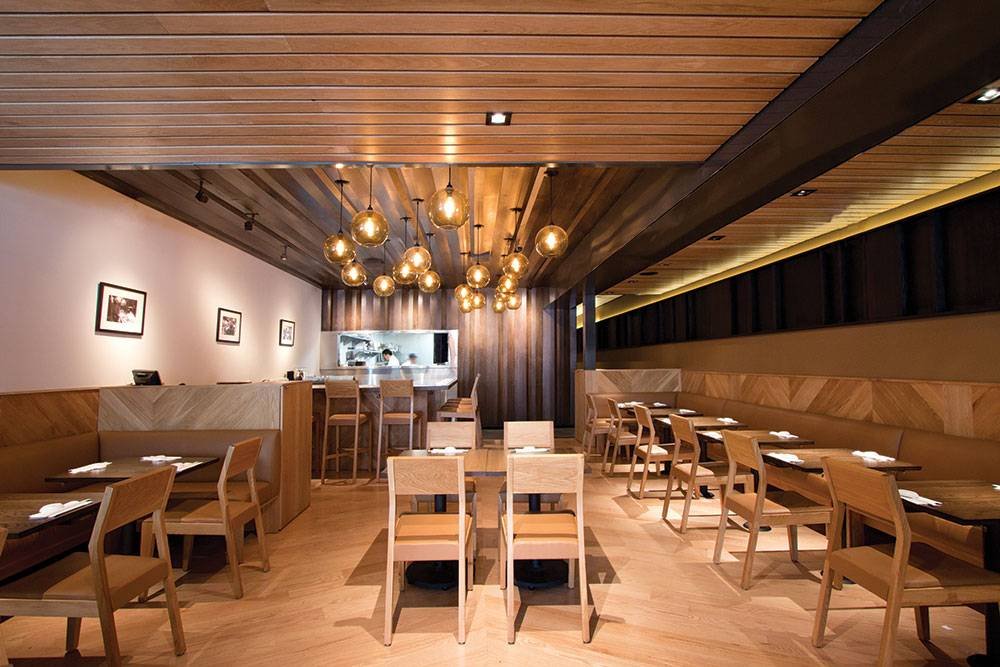
A Counter in Beverly Hills, and What It Says About L.A. Sushi
Beverly Hills has never been the obvious address for serious omakase. The neighbourhood's restaurant culture has historically skewed toward power-lunch formats and large-format Italian, with sushi occupying the more accessible, rolls-and-sashimi end of the spectrum. That's changed. Over the past decade, the city's upper sushi tier has quietly consolidated around a handful of counters that price and operate on par with the leading rooms in Tokyo's mid-tier omakase circuit. Nozawa Bar, at 212 North Canon Drive, is one of the counters that anchors that shift.
The setting matters here as context, not decoration. Canon Drive sits at the quieter end of Beverly Hills' commercial core, removed from the foot traffic of Rodeo. Arriving on a weekday evening, the building reads low-key relative to what's happening inside — a deliberate compression that is common to the better omakase formats in this city. The experience begins before the first course.
The shortlist, unlocked.
Hard-to-book tables, cellar releases, and concierge-planned trips.
Get Exclusive Access →Where the Food Comes From, and Why That Question Matters
The ingredient sourcing argument is central to understanding why a small number of Los Angeles omakase counters command the prices and attention they do. Premium nigiri omakase lives or dies by access: access to specific fishing regions, to trusted tsukiji-adjacent brokers, to suppliers willing to air-freight fish on tight turnaround. The gap between a $150 and a $400 omakase in Los Angeles is largely explained not by labour or real estate but by where the fish originates and how it arrives.
At the level Nozawa Bar operates — Michelin-starred, consistently ranked in Opinionated About Dining's top 130 restaurants across North America in both 2024 and 2025 , the sourcing infrastructure is a prerequisite rather than a differentiator. Chef Osamu Fujita works within the tradition that defines this tier: fish sourced to order, rice handled as a primary variable rather than an afterthought, and a progression built around seasonal availability rather than a fixed rotation. The menu changes because the sourcing dictates it, not because novelty is the goal. That's a meaningful distinction in a city where many restaurants treat omakase as a format rather than a discipline.
Seasonality in Japanese seafood is less legible to most Western diners than, say, stone crab season or white truffle windows, but it operates on similarly strict logic. Fatty yellowtail behaves differently in winter than in summer. Certain shellfish are at their peak in the brief window before spawning. A counter serious about sourcing builds its calendar around these windows rather than standardising its supply chain for consistency. The Opinionated About Dining ranking, which places Nozawa Bar at #72 in 2023 before settling at #121 and #129 in subsequent years, is in part a recognition of how tightly the kitchen manages this seasonal sourcing discipline across time.
Placing Nozawa Bar Inside the Los Angeles Omakase Tier
Los Angeles now supports a deeper omakase tier than most American cities outside New York. Counters like Sushi Kaneyoshi, Shin Sushi, Morihiro, Q Sushi, and Asanebo have collectively established that the city can sustain a serious sushi scene beyond the celebrity-facing rooms that defined its earlier reputation. Nozawa Bar competes within this cohort, not against the city's broader Japanese dining market.
The relevant comparison set, rather than Los Angeles alone, extends nationally. Masa in New York City represents the apex of American omakase pricing and sourcing ambition; Nozawa Bar occupies a different position on that spectrum, one that places it in reach of a broader audience while maintaining the sourcing standards that Michelin recognition implies. Internationally, counters like Sushi Masaki Saito in Toronto demonstrate that the omakase format has taken root at serious levels outside Japan's home market. Nozawa Bar sits within that broader North American omakase conversation, consistently cited by OAD across three consecutive years.
Within Beverly Hills specifically, the restaurant operates in a different register than the neighbourhood's other $$$$-tier options. The format , counter, omakase, relatively short service , is structurally different from the extended tasting menus at places like Alinea in Chicago or the farm-anchored formats of Single Thread Farm in Healdsburg. It's also structurally different from the ingredient-showcase approach of Le Bernardin in New York City, even though all four rely on sourcing quality as the foundation of their value proposition. The omakase counter format is its own discipline, with its own pace and its own logic.
How the Format Works
Omakase at this price tier runs on a chef's-choice basis by definition: the diner surrenders selection entirely and the counter controls pacing, portion, and progression. This format rewards kitchens with genuine sourcing depth, because the menu is only as interesting as what arrived that day or week. It punishes kitchens that treat omakase as a fixed script, because the absence of choice becomes apparent quickly when the same pieces appear regardless of season.
Nozawa Bar operates evenings only, Tuesday through Saturday, with service beginning at 7:30 pm on Monday and Tuesday and at 6 pm Wednesday through Saturday. Sunday is closed. The narrower operating window is consistent with high-end counter formats generally: kitchen teams operating at this sourcing and preparation intensity rarely run lunch service at the same level, and many close entirely on additional days to allow for sourcing rhythm and prep depth. Restaurants of similar standing , Lazy Bear in San Francisco or The French Laundry in Napa, for different formats , manage service windows with similar care.
The Google rating of 4.6 across 63 reviews reflects a volume consistent with a low-seat, high-barrier format. Counters operating at this tier typically serve small numbers of diners per evening, and review volume accumulates slowly. The score itself is less informative than the review count, which signals a room that operates at limited capacity by design.
Planning Your Visit
Nozawa Bar is at 212 North Canon Drive, Beverly Hills. Evening service runs Tuesday through Saturday; the counter is closed Sunday and Monday. At the $$$$-tier price point, booking lead time is expected to be significant , plan well ahead, particularly for weekend sittings. The format is omakase, meaning no à la carte selection.
For broader context on dining at this level in Los Angeles, see our full Los Angeles restaurants guide. For hotels positioned near Beverly Hills and West Hollywood's dining core, see our full Los Angeles hotels guide. If the evening extends beyond the counter, our Los Angeles bars guide covers the post-dinner tier, and our Los Angeles wineries guide and experiences guide round out the city picture. For reference on what comparable premium dining in other American cities looks like, Emeril's in New Orleans and Vespertine in Los Angeles offer instructive contrasts in how different formats build their case at the leading of the market.
Quick reference: 212 N Canon Dr, Beverly Hills , Michelin 1 Star (2025) , OAD Top 130 North America (2024, 2025) , Evening service only, Tue–Sat , Closed Sun & Mon , Omakase format , $$$$
What Visitors Recommend at Nozawa Bar
Given the omakase format, there is no fixed dish to single out , the menu shifts with sourcing and season, which is the point. Visitors and critics consistently reference the nigiri progression as the core of the experience, with the sourcing quality and rice temperature control cited as distinguishing details across reviews. The Michelin recognition and OAD ranking position it within the tier of Los Angeles counters where seasonal fish handling and procurement access are the primary variables. Chef Osamu Fujita leads the kitchen. For those calibrating expectations: the format is chef-driven and the progression is intentional, not negotiable. Come for the sourcing discipline, not for a customisable experience.
Peers Worth Knowing
A quick look at comparable venues, using the data we have on file.
| Venue | Cuisine | Price | Notes |
|---|---|---|---|
| Nozawa Bar | Sushi, Japanese | $$$$ | This venue |
| Kato | New Taiwanese, Asian | $$$$ | New Taiwanese, Asian, $$$$ |
| Hayato | Japanese | $$$$ | Japanese, $$$$ |
| Vespertine | Progressive, Contemporary | $$$$ | Progressive, Contemporary, $$$$ |
| Camphor | French-Asian, French | $$$$ | French-Asian, French, $$$$ |
| Gwen | New American, Steakhouse | $$$$ | New American, Steakhouse, $$$$ |
Need a table?
Our members enjoy priority alerts and concierge-led booking support for the world's most difficult tables.
Get Exclusive AccessThe shortlist, unlocked.
Hard-to-book tables, cellar releases, and concierge-planned trips.
Get Exclusive Access →